
Loading, please wait...

LOT 0514
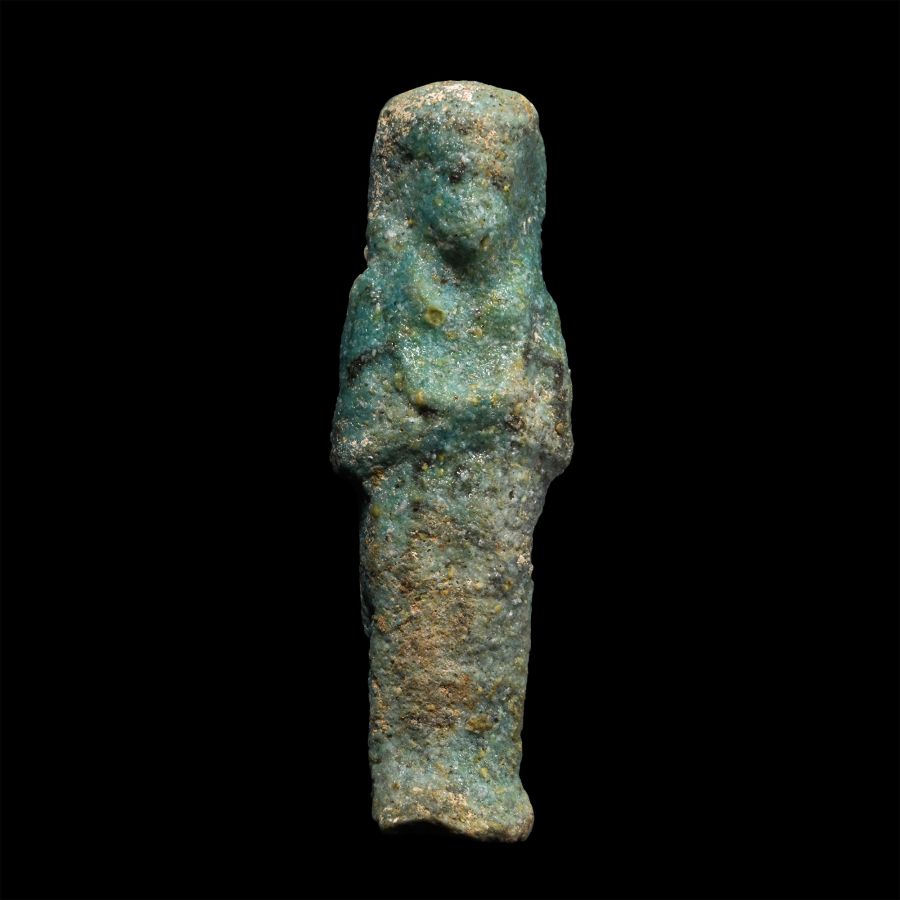
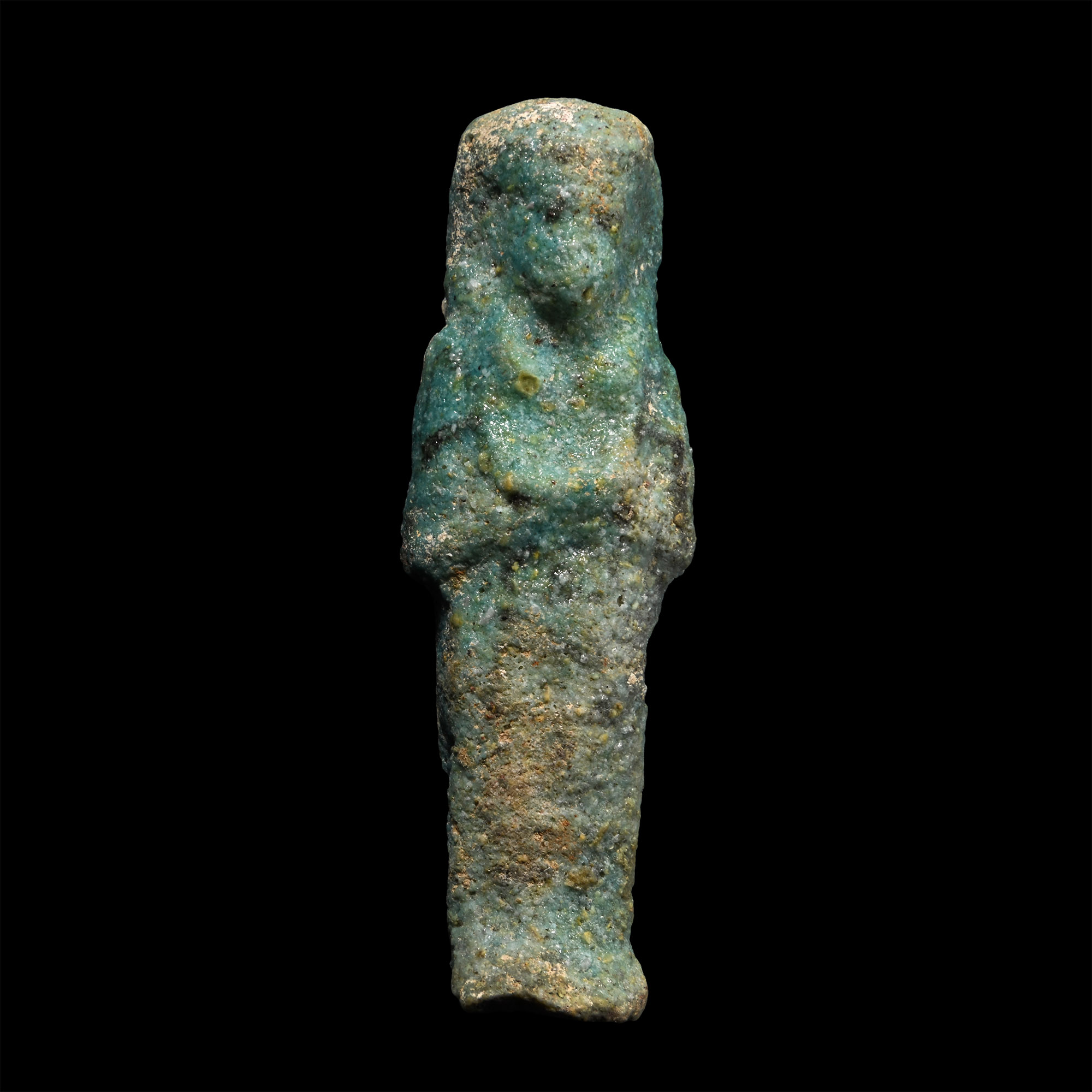
Egyptian Blue Faience Shabti
THIRD INTERMEDIATE PERIOD, 22ND DYNASTY, CIRCA 945-715 B.C.
2 7/8 in. (20.77 grams, 73 mm).
Mummiform figure wearing a lappet wig with a black hair sash, hands crossed at the chest, holding agricultural implements, a seed bag at the back, and a column of hieroglyphic inscription down the front.
ProvenanceFrom the collection of a London gentleman, 2000s.
CONDITIONTimeLine Auctions follows a vetting process to ensure the authenticity and legality of all items, reinforcing our commitment to integrity and responsible trading. Each antiquity, antique, and coin lot undergoes thorough examination by a vetting committee of at least ten external specialists, professional trade association members, scientists, and archaeologists: Our Vetting Process
AUCTIONS:
TimeLine is a leading auction house specialising in antiquities, ancient art, collectables, natural history, coins, medals, and books. Our auctions offer museums, collectors, historians, and enthusiasts the opportunity to acquire unique and historically significant pieces.
LOT 0514
Egyptian Blue Faience Shabti
Estimate £100 - 140€120 - 160 (for guidance only)$140 - 190 (for guidance only)
Opening Bid
£50 (EUR 58; USD 68) +BP*
-
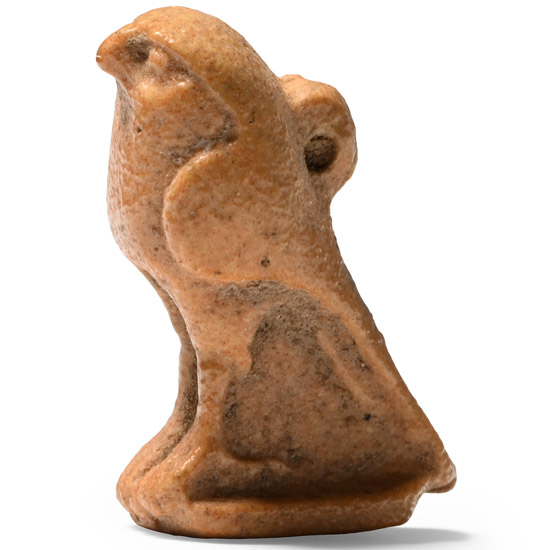
Egyptian Horus Amulet
Late Period, 664-332 B.C.Estimate: £150 - 200 (+bp*)
Bids: 2 | Current Bid: £100
Perching Horus falcon with talons gripping the front edge of the integral plinth; detailed wings and head and a suspension loop on the back. 1.24 grams, 19 mm
Ex London gentleman's collection, by descent 1980s.
Horus is one of the most significant and widely worshipped gods in ancient Egyptian mythology. His importance spans many aspects of Egyptian religion, including serving as a symbol of the living king, offering protection, representing the sky, and symbolising the sun. -
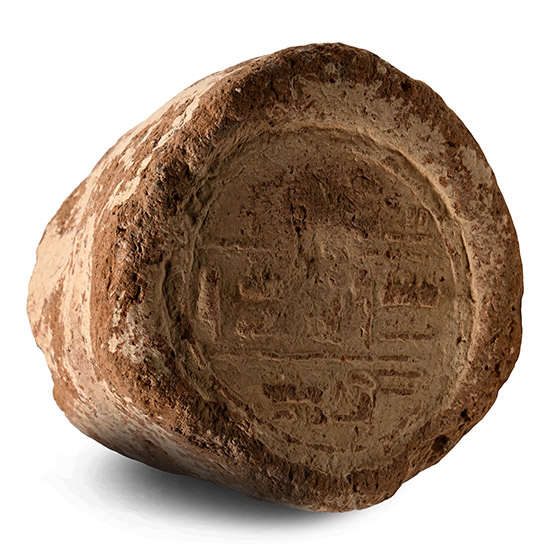
Egyptian Terracotta Funerary Cone of Amenhotep
New Kingdom, 18th Dynasty, 15th-14th century B.C.Estimate: £300 - 400 (+bp*)
Bids: 4 | Current Bid: £135
Conical, with three horizontal lines of hieroglyphic text to the end, reading: 'Scribe of reckoning barley of Amun, Amenhotep, true of voice'; tip absent. 350 grams, 78 mm wide
Acquired from Abdoul Rassoul on the West Bank at Luxor, 1974-1980 when a guest lecturer. From the private collection of Peter Clayton, FCILIP, Dip, Arch, FSA, FRNS, Hemel Hempstead, Hertfordshire, UK; formed since the late 1950s.
Although funerary cones of Amenhotep have been in circulation for a long time, his tomb was documented only in 1996 by Friederike Kampp-Seyfried, who assigned it the number 336. -
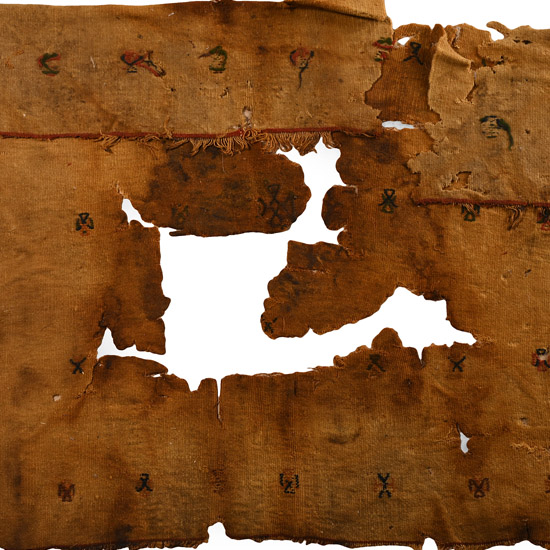
Large Egyptian Coptic Wall Tapestry Textile Fragment with Geometric Ornaments
Circa 7th century A.D.Estimate: £150 - 200 (+bp*)
Bids: 1 | Current Bid: £5
Fragment from a tapestry or a cloak in light fabric, S-twist tapestry, embroidered with red, green, yellow, and blue geometric ornaments in wool and linen. 236 grams total including paper folder, 55 cm wide
Acquired 1970s-1996. Property of a North American collector. London collection, 2016.
Most of the linen or wool garments found by A. Gayet in the Antinoe necropolis were woven in a specific pattern, in a single piece, on a horizontal warp. Another relatively common pattern for linen garments consisted of assembling three pieces woven on a single warp and forming the upper part of the garment, with the collar and sleeves.
