
Loading, please wait...
LOT 0044
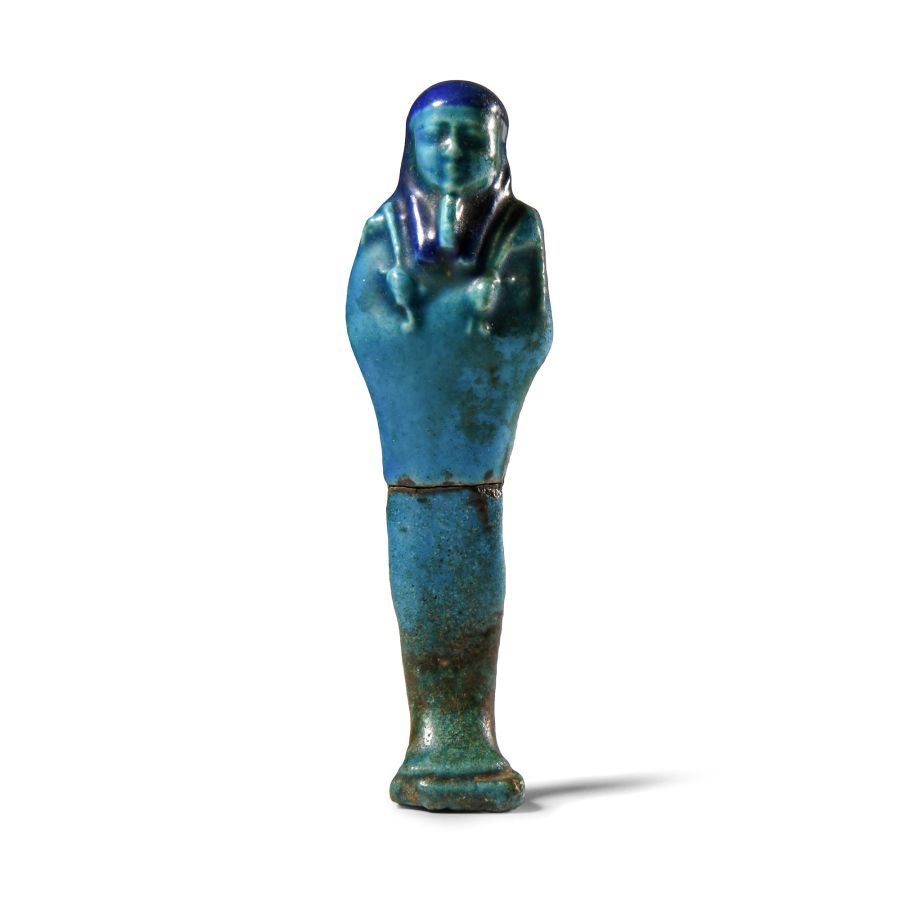
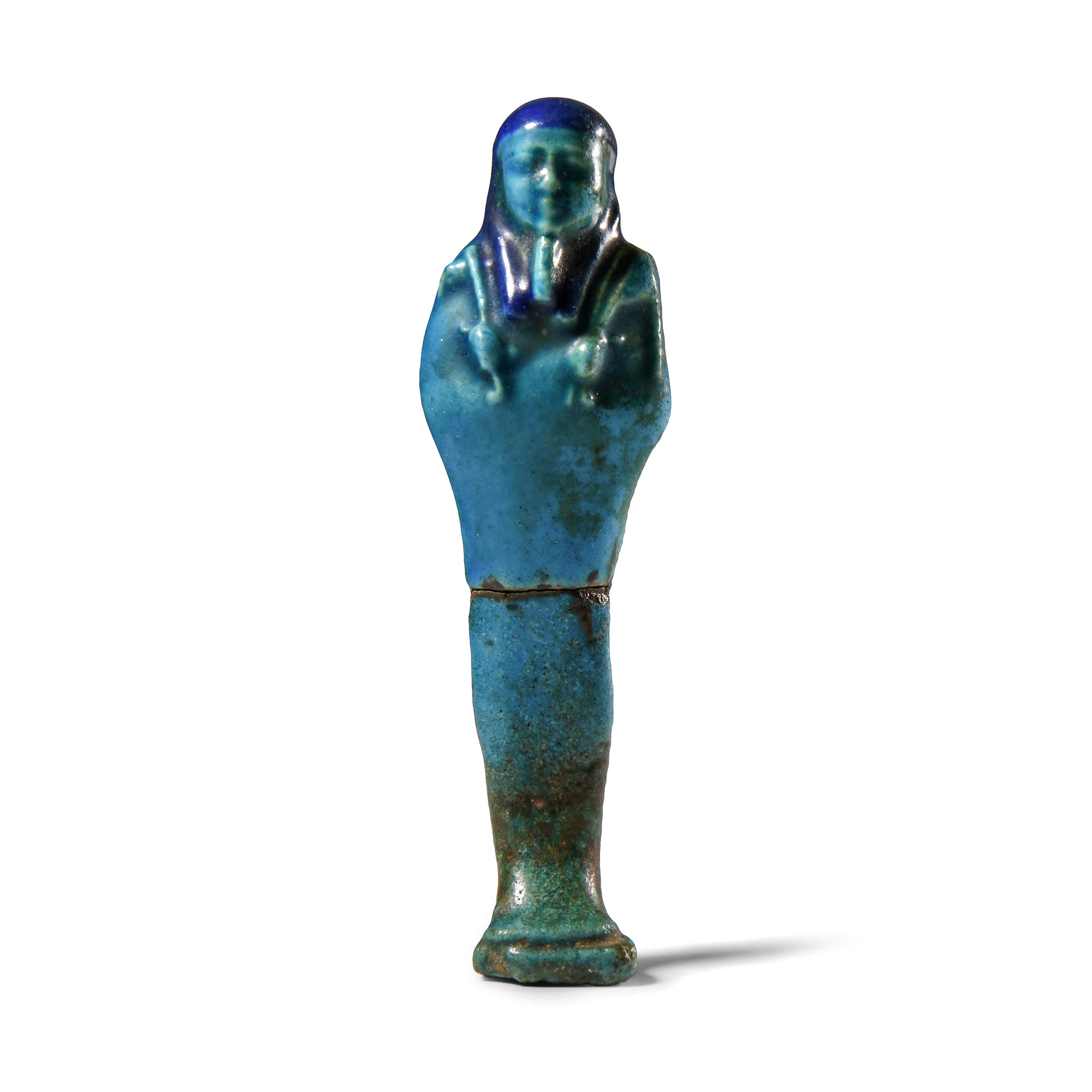
Egyptian Blue Faience Shabti
EARLY PTOLEMAIC PERIOD, CIRCA 3RD CENTURY B.C.
4 1/2 in. (44 grams, 11.5 cm high).
With a thick and lustrous turquoise glaze, sporting a tripartite wig highlighted in darker blue glaze, and a long beard; holding a pick, hoe and a cord for a seed bag hanging over the left shoulder; raised dorsal pillar and an integral plinth; repaired.
ProvenanceEx collection of Jacques René Fiechter, Switzerland (1920-1950).
with Auction Martin, Egyptian Collection André Bircher, 1949.
Accompanied by an academic report by Egyptologist Paul Whelan.
Cf. Janes, G., The Shabti Collections 6: A Selection from World Museum, Liverpool, Cheshire, 2016, p.518, nos.272a-b, p.521, no.275; Fitzwilliam Museum, no. E.GA.2636.1943, for similar.
FootnotesThe lack of inscription hinders positive identification, but the shabti’s proportions, elegant modelling, and lustrous glaze closely match others considered to have come from an area of the extensive necropolis at Abydos, labelled “Cemetery G” by its excavator Flinders Petrie, where hundreds of blue lustrous-glazed shabtis of varying qualities were recovered. This figure is closest in style to those belonging to Petosiris, son of Djed-hor. Both were buried with similar blue lustrous-glazed shabtis that were mostly plain although a few were inscribed with an inscription.
CONDITIONTimeLine Auctions follows a vetting process to ensure the authenticity and legality of all items, reinforcing our commitment to integrity and responsible trading. Each antiquity, antique, and coin lot undergoes thorough examination by a vetting committee of at least ten external specialists, professional trade association members, scientists, and archaeologists: Our Vetting Process
AUCTIONS:
TimeLine is a leading auction house specialising in antiquities, ancient art, collectables, natural history, coins, medals, and books. Our auctions offer museums, collectors, historians, and enthusiasts the opportunity to acquire unique and historically significant pieces.
LOT 0044
Egyptian Blue Faience Shabti
Estimate £800 - 1,000€930 - 1,160 (for guidance only)$1,080 - 1,350 (for guidance only)
-
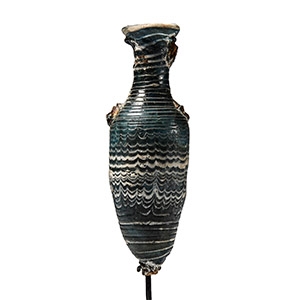
Phoenician Marvered Glass Amphoriskos
5th-4th century B.C.Sold for (Inc. bp): £169
Elegantly proportioned vessel with marvered trails to the body, neck and mouth; handles absent; mounted on a custom-made stand. 404 grams total, 18.5 cm including stand
Acquired from Arte Primitivo, New York City, U.S.A., circa 2010. Private collection of Professor Kenneth Graham, London, UK. -
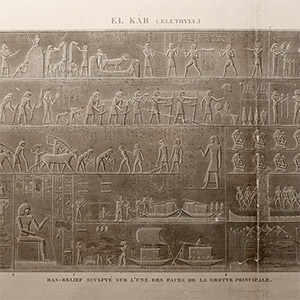
Large Egyptian Expedition Lithograph Print of Elethyia
1809 A.D.Sold for (Inc. bp): £117
Charlin - El Kab (Elethyia) - Bas-relief sculpté sur l'une des faces de la grotte principale - Proof etching on laid paper of plate 68 from La Description de l’Égypte (first volume) with later backing sheet. 360 grams, 130.5 x 87 cm
From the collection of a North American priest. Acquired between 1981-1996. Property of a North American collector.
Produced between February 1802 and 1830 on the orders of Napoleon Bonaparte; published between 1809 and 1828. Just 1,000 copies were distributed to various institutions, printed on on laid paper with an 'Égypte ancienne et moderne' watermark. The book is subtitled Recueil des observations et des recherches qui ont été faites en Égypte pendant l’expédition de l’Armée française, publié par les ordres de Sa Majesté l’Empereur Napoléon le Grand (Gathering of observations and discoveries which were made in Egypt during the expedition of the French army, published on the orders of His Majesty the Emperor Napoleon the Great). It was the world's first encyclopaedia devoted exclusively to the remains of ancient Egypt. The image depicts wall-carvings from the main chamber. -
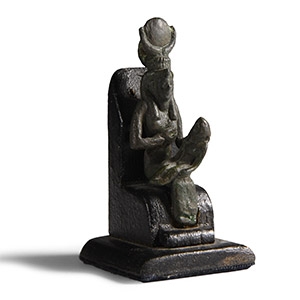
Egyptian Bronze Figure of Isis and Horus
Late Period, 664-332 B.C.Sold for (Inc. bp): £572
Amuletic pendant of seated Isis, wearing a cow's horn headdress with a solar disc, suckling the infant Horus with sidelock of youth, resting on her lap; mounted on a custom-made throne-shaped stand. 30.8 grams total, 65 mm high including stand
Acquired on the London art market prior to 2000. Private collection of Anthony Scammel (1937-2019). Ex Artemission, London SW5, UK. Private collection of Mr T.H., Norfolk, UK. Accompanied by a previous dealer's certificate of authenticity and invoice.
