
Loading, please wait...
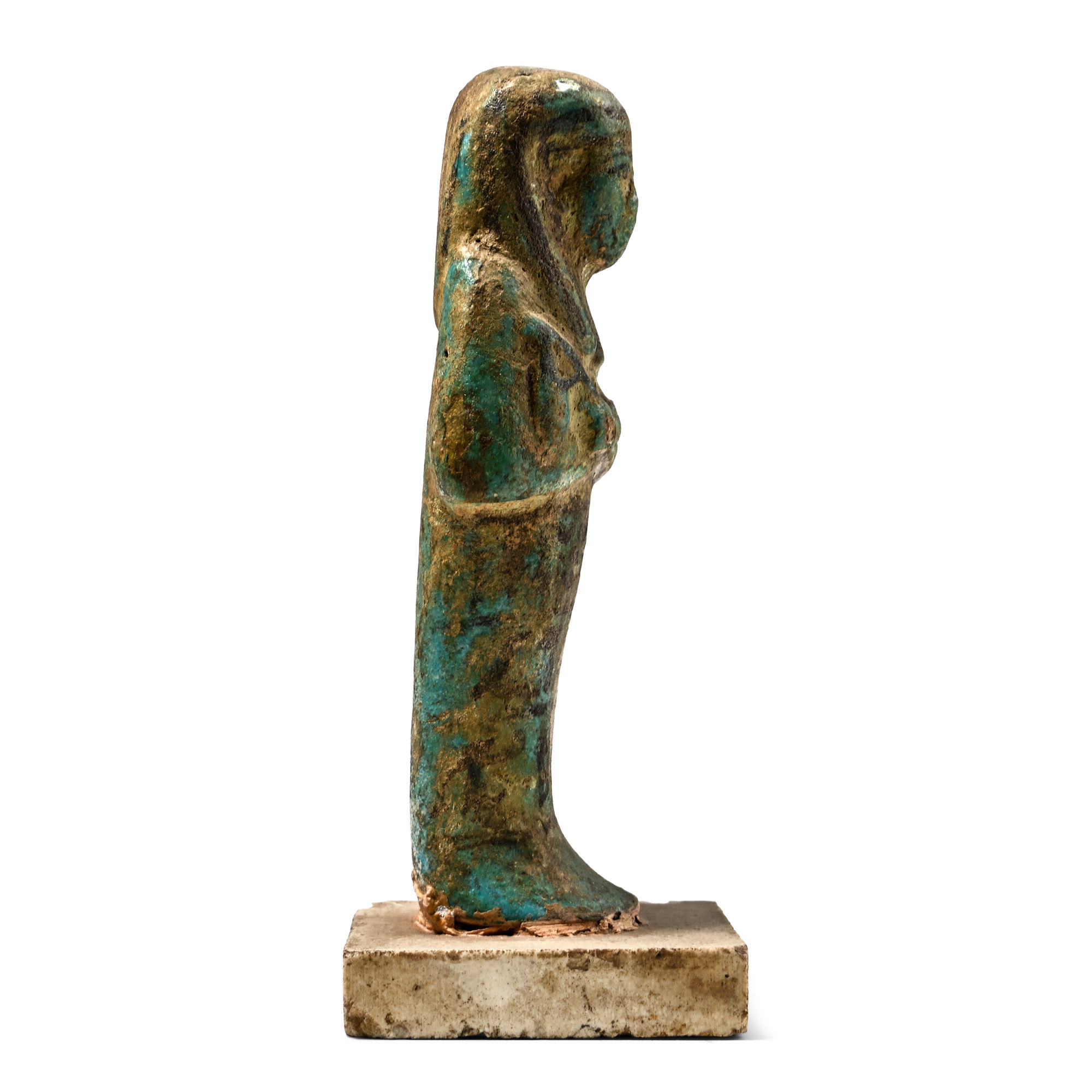
LOT 0021
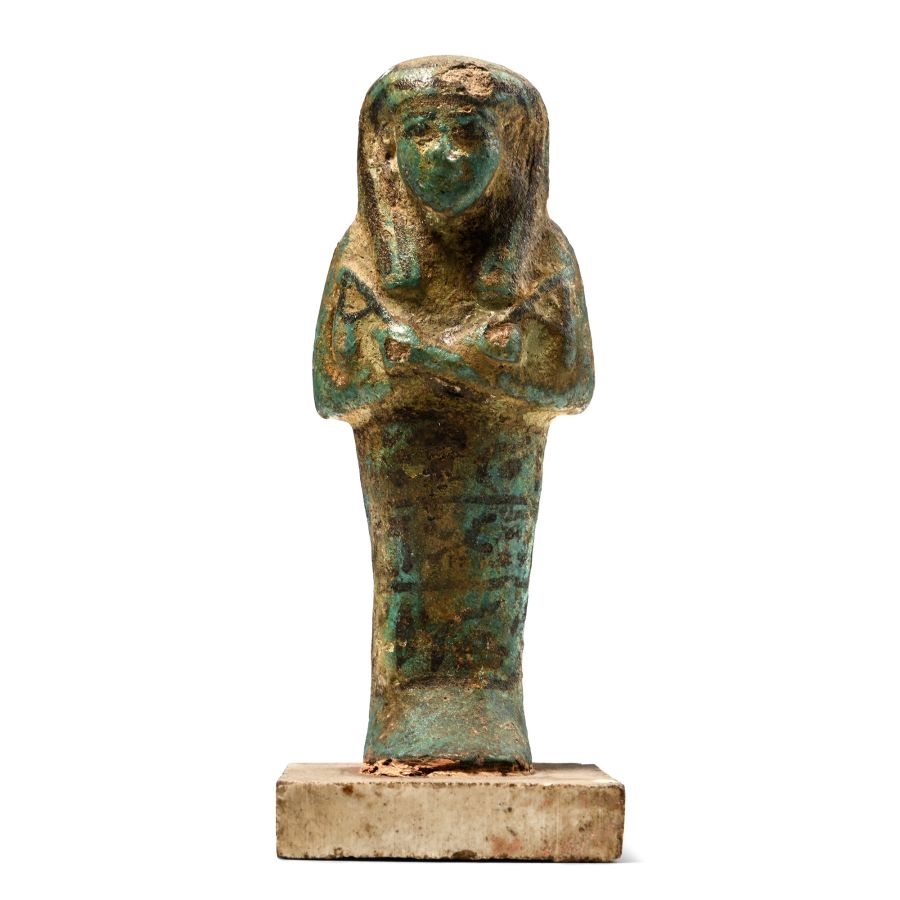
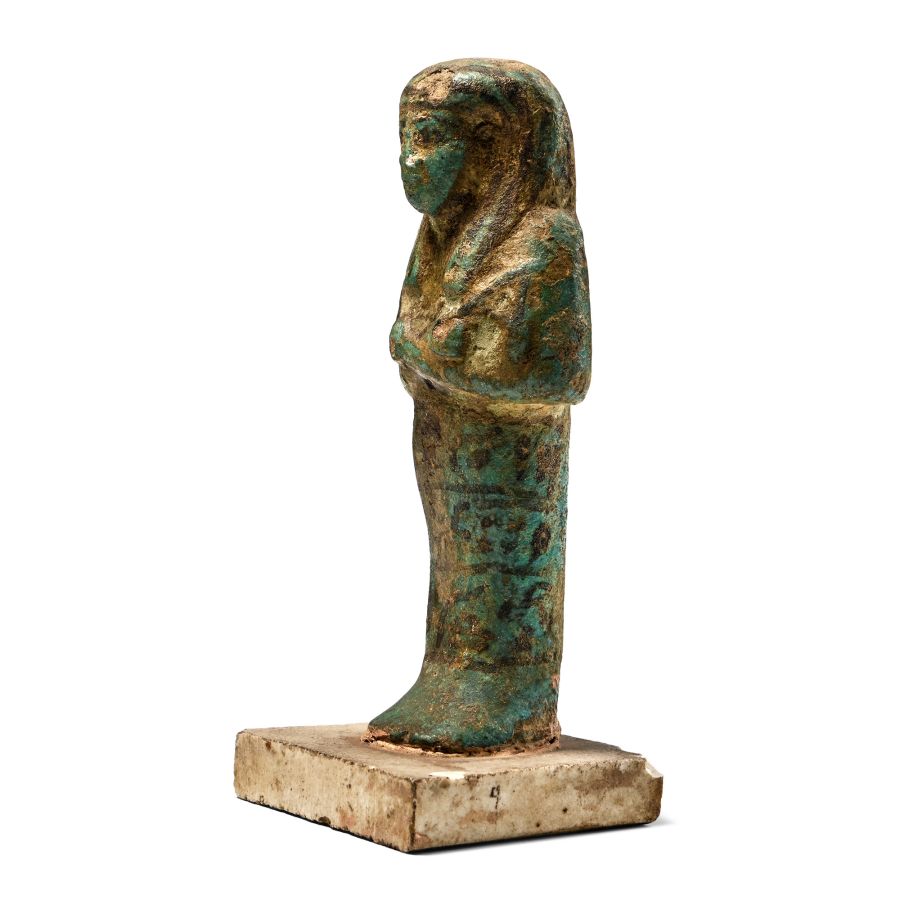
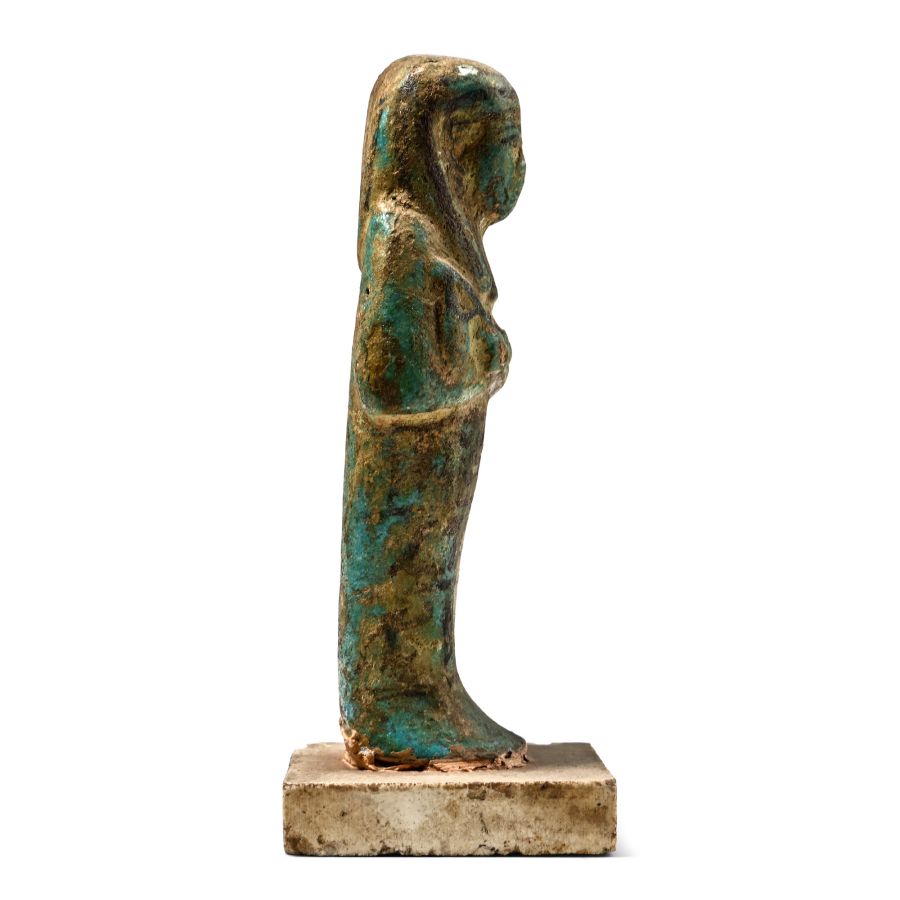
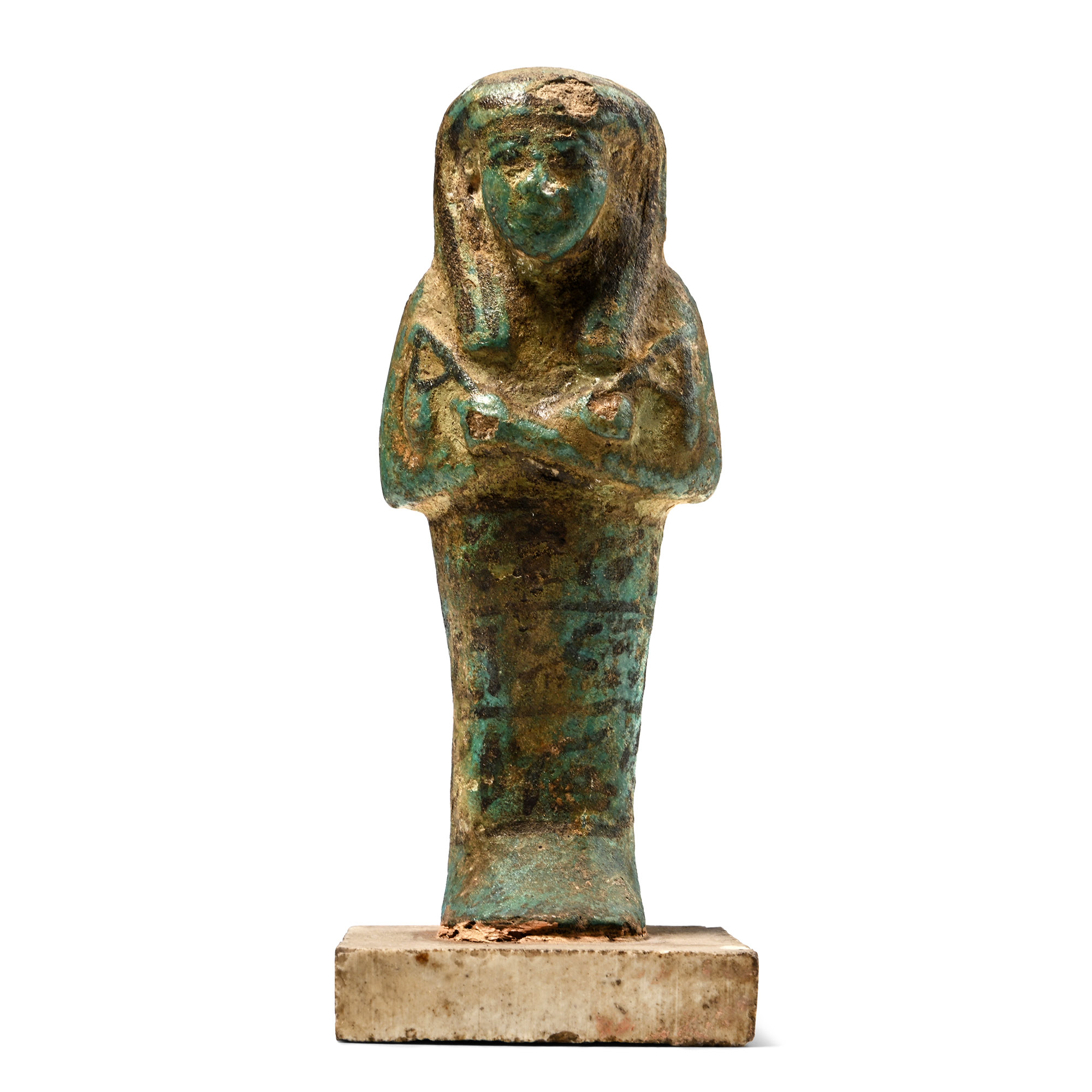
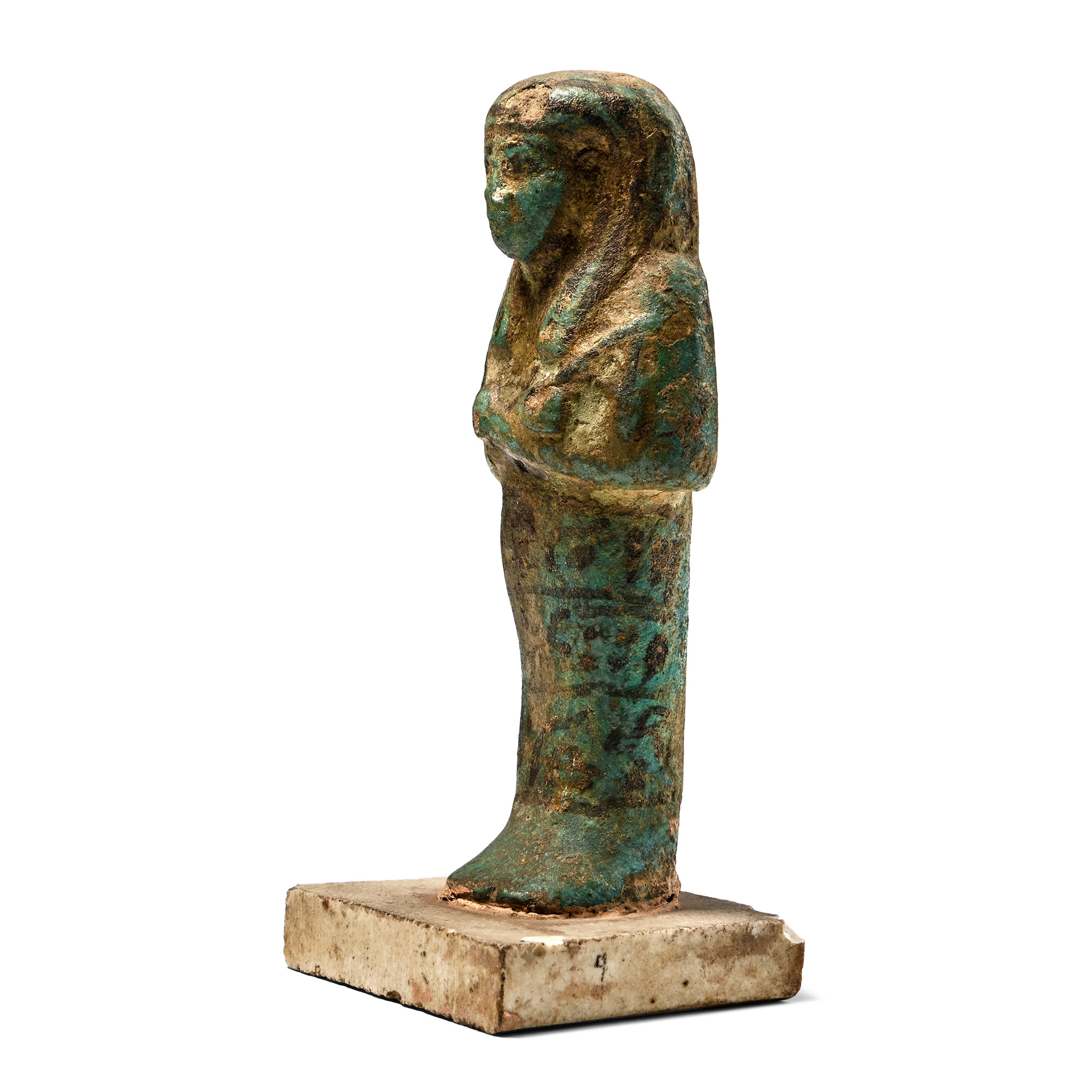
Egyptian Blue Faience Shabti of Pa-Ka
THIRD INTERMEDIATE PERIOD, 21ST DYNASTY, CIRCA 980-935 B.C.
5 1/8 in. (192 grams total, 13 cm including stand).
Mummiform type wearing a lappet wig, with arms crossed and hands holding hoes; the wig, facial details, and hoes are highlighted in black; three horizontal lines of hieroglyphic text on the lower body, giving the owner's name and an abbreviated version of the shabti spell; mounted on a stand. [No Reserve]
ProvenanceEx E.B.W. Chappelors collection, July 1958.
From the private collection of Peter Clayton, FCILIP, Dip, Arch, FSA, FRNS, Hemel Hempstead, Hertfordshire, UK; formed since the late 1950s.
Accompanied by an old handwritten information card by Peter Clayton, collection no.42.
TimeLine Auctions follows a vetting process to ensure the authenticity and legality of all items, reinforcing our commitment to integrity and responsible trading. Each antiquity, antique, and coin lot undergoes thorough examination by a vetting committee of at least ten external specialists, professional trade association members, scientists, and archaeologists: Our Vetting Process
AUCTIONS:
TimeLine is a leading auction house specialising in antiquities, ancient art, collectables, natural history, coins, medals, and books. Our auctions offer museums, collectors, historians, and enthusiasts the opportunity to acquire unique and historically significant pieces.
LOT 0021
Egyptian Blue Faience Shabti of Pa-Ka
Estimate £500 - 700€580 - 810 (for guidance only)$680 - 950 (for guidance only)
-
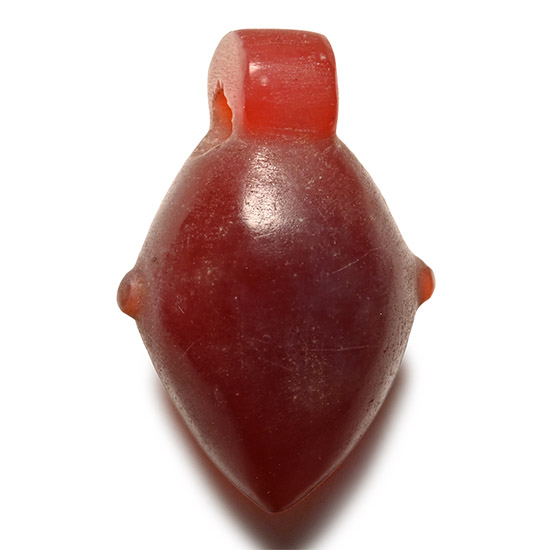
Egyptian Carnelian Heart Amulet
Late Period, 664-332 B.C.Estimate: £100 - 140 (+bp*)
Bids: 1 | Current Bid: £50
Carved with tiny lateral lugs, surmounted by a suspension loop. 1.04 grams, 15 mm
Ex London collection, 1990s. -
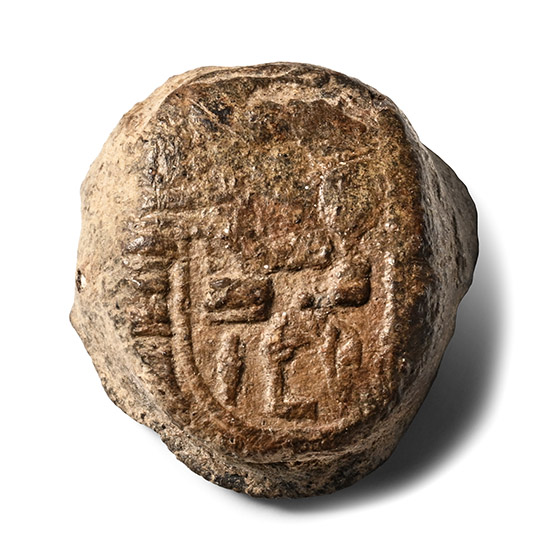
Egyptian Terracotta Bulla with Royal Cartouche
New Kingdom, circa 1400-1292 B.C.Estimate: £60 - 80 (+bp*)
Bids: 1 | Current Bid: £5
Discoid seal impression with one face preserving a partial impressed cartouche, the other side bearing the impression of a cord and linen. 1.92 grams, 17 mm
London, UK, art market, 1980s. Private collection, London, UK.
Clay seals were used to secure doors and containers holding valuable commodities and goods. The impression on the underside of this example indicates that it once sealed a linen bag or a linen lid cover. -
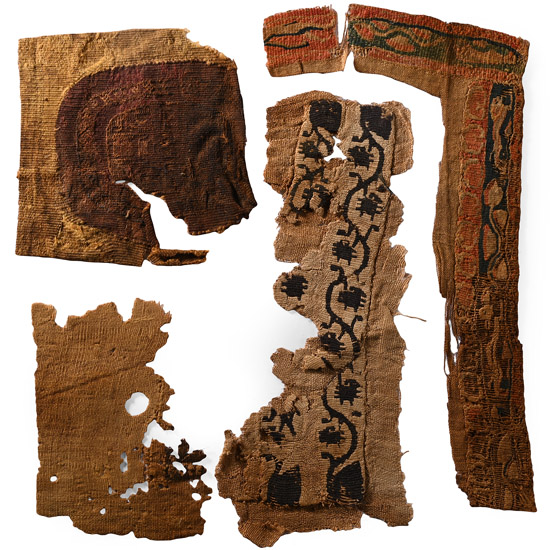
Egyptian Coptic Tunics Textile Fragments of Orbiculus and Segmenta with Animals and Geometric Decoration
Circa 4th-7th century A.D.Estimate: £70 - 90 (+bp*)
Bids: 1 | Current Bid: £5
Comprising a purple-red wool orbiculus on linen, decorated with geometric patterns; a clavus fragment featuring a double row of vegetal interlaces in natural and dark blue wool (S-twist); a fragment of green, red, and blue wool textile on linen, decorated with vegetal motifs; and an indistinct linen fragment with traces of geometric borders. 30 grams total, 13-27 cm
Acquired 1970s-1996. Property of a North American collector. London collection, 2016.
The fragments are decorative parts of tunics. These are fabrics of great decorative finesse, with some elements displaying an unusual and extremely well-preserved colour palette. The plant designs are related to the so-called Nilotic decorative pattern.
