
Loading, please wait...
LOT 0517
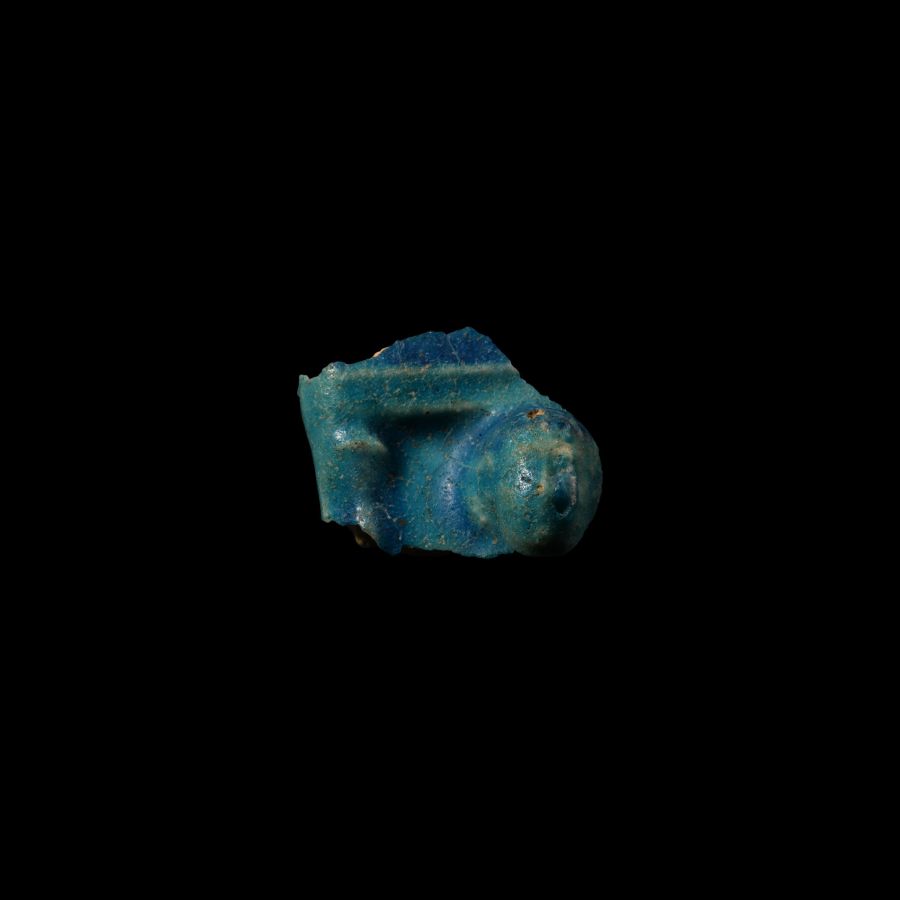
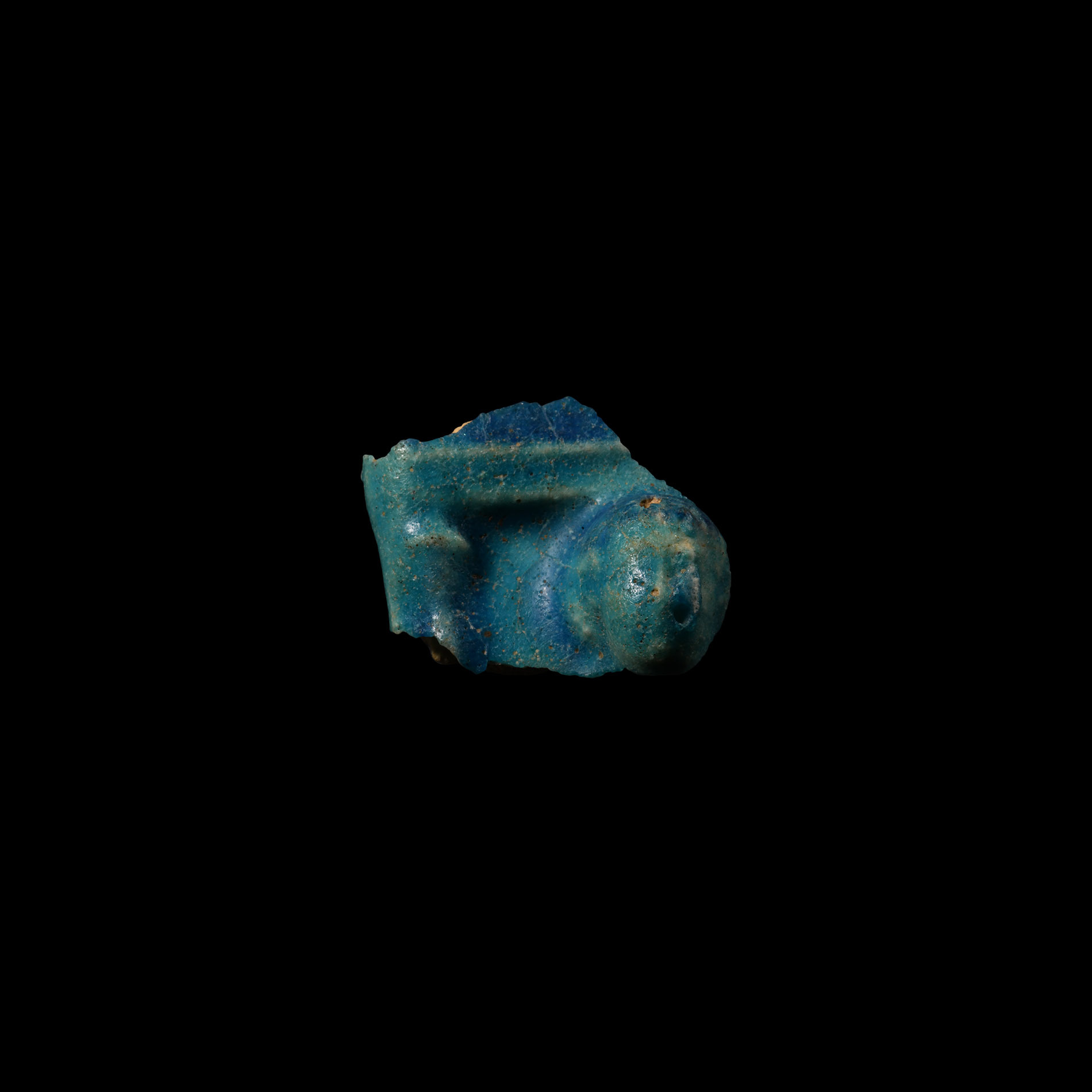
Egyptian Blue Faience Plaque Fragment
PTOLEMAIC PERIOD, 332-30 B.C.
1 1/4 in. (4.68 grams, 31 mm).
A fragment of a glazed composition frieze with corner-angle frame and head wearing a tripartite wig, possibly from a divine triad group; set within a kiosk with supporting papyrus columns. [No Reserve]
ProvenanceFrom a UK private collection, 1975-1978.
LiteratureCf. Andrews, C., Amulets of Ancient Egypt, London, 1994, fig.13.
CONDITIONTimeLine Auctions follows a vetting process to ensure the authenticity and legality of all items, reinforcing our commitment to integrity and responsible trading. Each antiquity, antique, and coin lot undergoes thorough examination by a vetting committee of at least ten external specialists, professional trade association members, scientists, and archaeologists: Our Vetting Process
AUCTIONS:
TimeLine is a leading auction house specialising in antiquities, ancient art, collectables, natural history, coins, medals, and books. Our auctions offer museums, collectors, historians, and enthusiasts the opportunity to acquire unique and historically significant pieces.
-
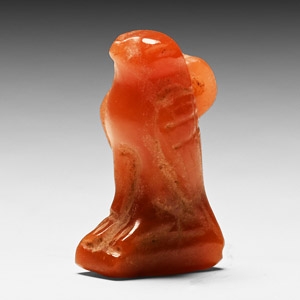
Egyptian Seated Falcon Amulet
Ptolemaic Period, 332-30 B.C.Sold for (Inc. bp): £338
A carved carnelian amuletic pendant of the falcon god Horus, sitting on a rectangular base; suspension loop behind the shoulders. 1.65 grams, 17 mm
Acquired 1980s. Private collection of L.H., Staffordshire, UK. Property of a Sussex, UK, teacher. -
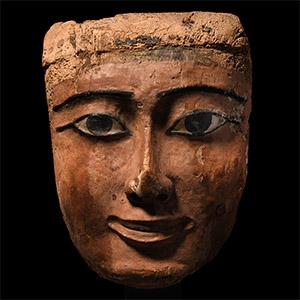
Egyptian Wooden Painted Mask
Late New Kingdom, 1350-1070 B.C.Sold for (Inc. bp): £2,925
A wooden funerary mask with finely delineated painted eyes and eyebrows on a gesso ground; holes to accept attachment pegs to the reverse; mounted on a custom-made display stand. 1.14 kg, 32.5 cm high including stand
Ex private Swiss collection, before 1960. This lot has been checked against the Interpol Database of stolen works of art and is accompanied by search certificate no.11600-199042.
The mask is typical of Phoenician-Punic production and likely had a funerary purpose. -
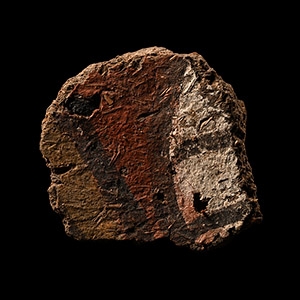
Egyptian Palace of Amenophis III Painted Wall Plaster
New Kingdom, 18th Dynasty, 1386-1349 B.C.Sold for (Inc. bp): £117
An amorphous plaster fragment from a wall of the palace of Amenophis III; polychrome painted motif to one face; from Malkata, Thebes. 17.6 grams, 50 mm
From an old UK collection. From the private collection of Alf Baxendale (1941-2016) part 2, keen Egyptologist, member of the Egyptology Society, trustee of the Amarna Trust; thence by descent. Accompanied by an identification display card. Accompanied by a copy of his obituary published in Horizon, The Amarna Project and Amarna Trust newsletter, Issue 18, 2017, p.21, by Barry John Kemp, CBE, FBA, Professor Emeritus of Egyptology at the University of Cambridge and directing excavations at Amarna in Egypt.
