
Loading, please wait...
LOT 0036
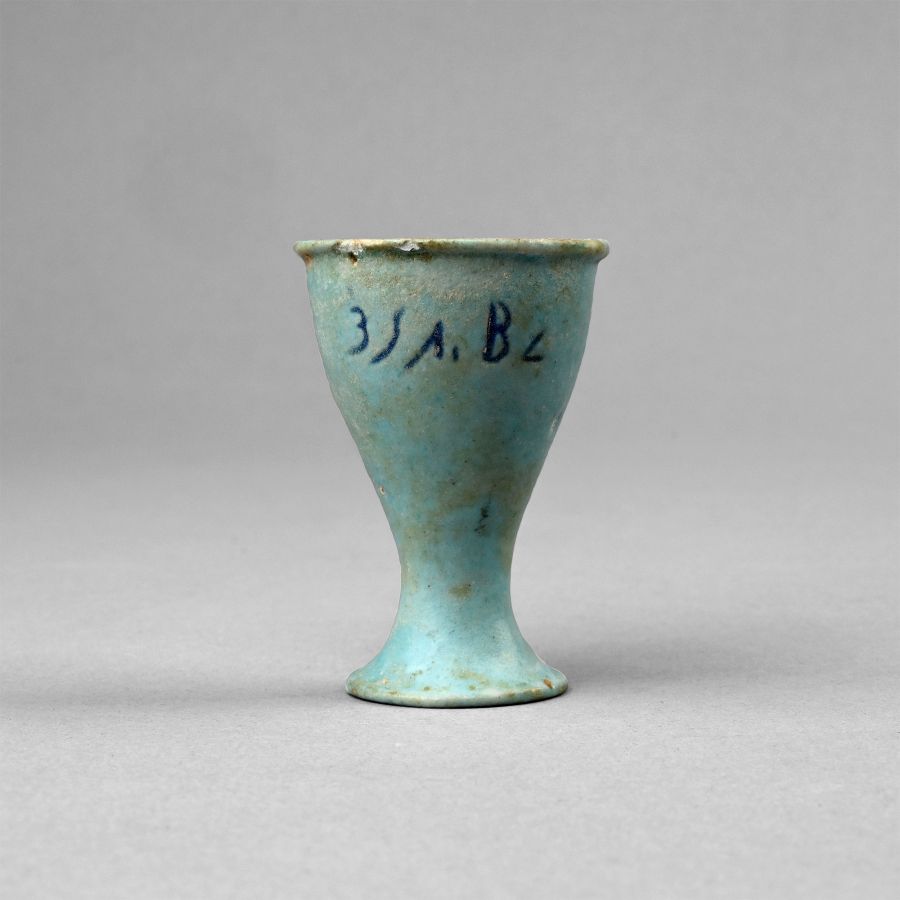
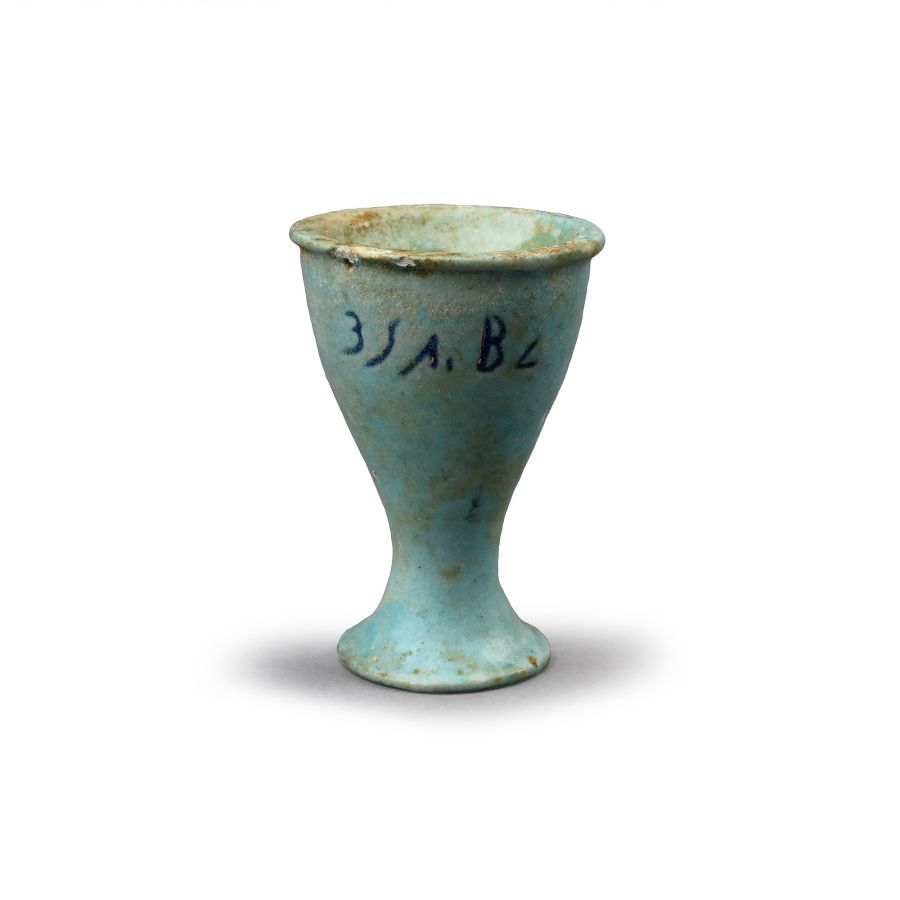
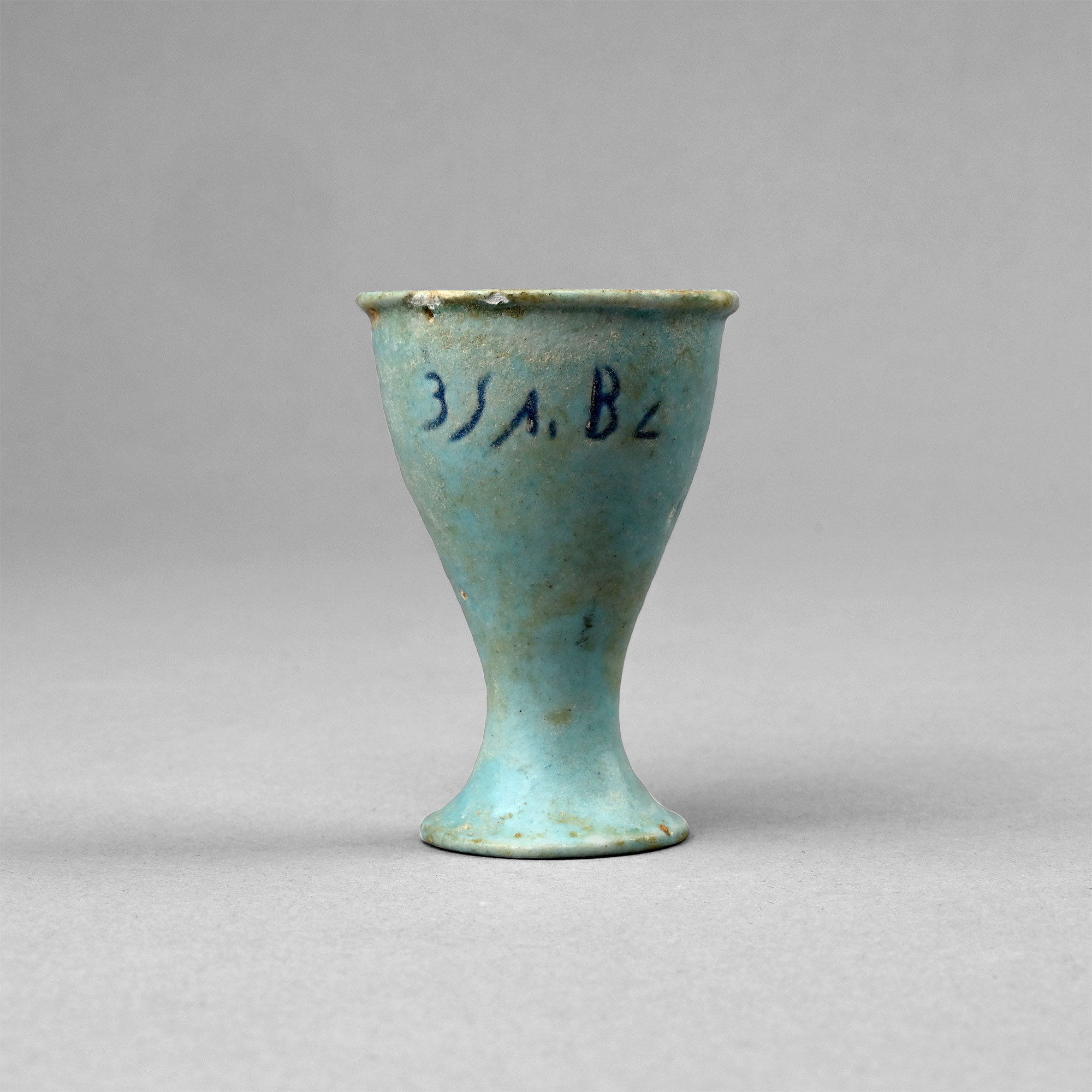
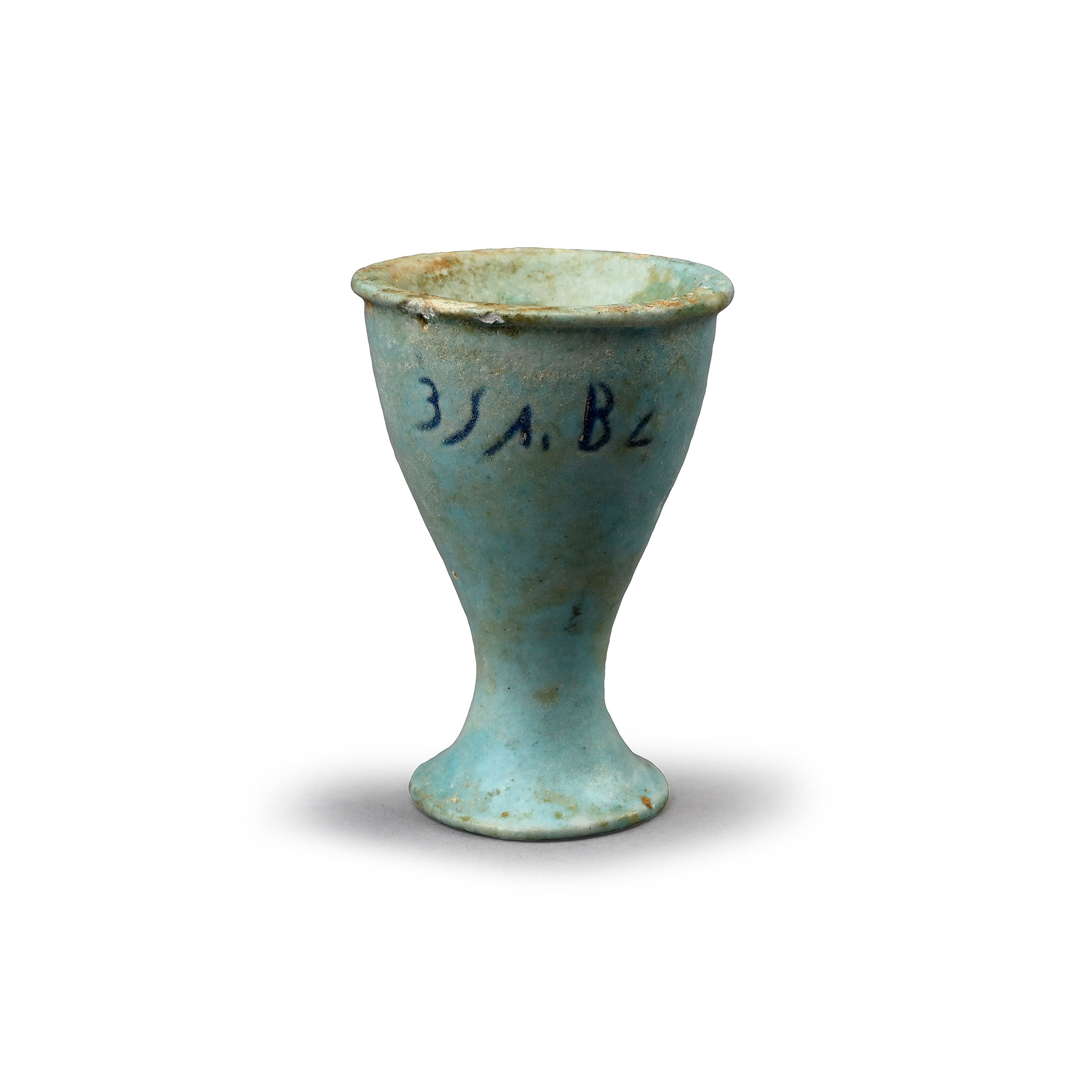
Egyptian Blue Faience Offering Cup with Inscription
LATE PERIOD-PTOLEMAIC PERIOD, 664-30 B.C.
2 1/2 in. (57 grams, 62 mm).
Conical in profile with a wide base and a shallow interior hollow; inscription in a darker blue glaze, consisting of a single line of demotic-script text.
ProvenanceMariaud de Serres, Drouot, Paris, 1999.
with Christie’s, New York, 5-6 December 2001, no.354.
Accompanied by copies of the relevant Christie's catalogue pages.
Demotic script was an ancient Egyptian writing system that was used from approximately the 7th century B.C. to the 4th century A.D. It represented a more simplified and cursive form of writing compared to hieroglyphs and hieratic script. Demotic text was employed for a wide range of purposes in ancient Egypt, including administrative, legal, religious, and literary documents. Deciphering Demotic has played a pivotal role in enhancing our understanding of ancient Egyptian culture, history, and everyday life.
CONDITIONTimeLine Auctions follows a vetting process to ensure the authenticity and legality of all items, reinforcing our commitment to integrity and responsible trading. Each antiquity, antique, and coin lot undergoes thorough examination by a vetting committee of at least ten external specialists, professional trade association members, scientists, and archaeologists: Our Vetting Process
AUCTIONS:
TimeLine is a leading auction house specialising in antiquities, ancient art, collectables, natural history, coins, medals, and books. Our auctions offer museums, collectors, historians, and enthusiasts the opportunity to acquire unique and historically significant pieces.
-
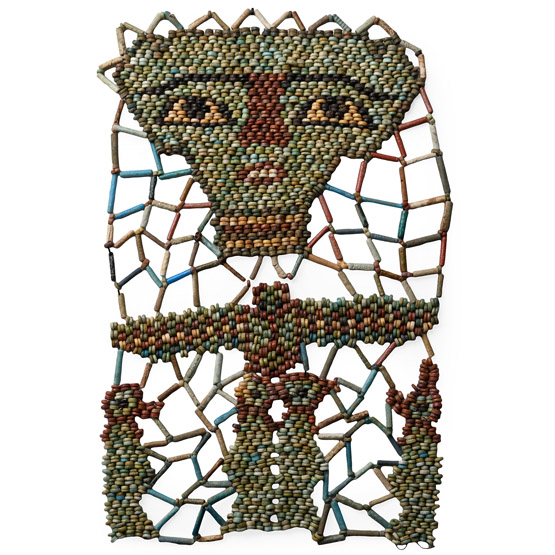
Egyptian Faience Mummy Bead Mask with Scarab and Four Sons of Horus
Ptolemaic Period, 332-30 B.C.Sold for (Inc. bp): £780
A restrung netted beadwork panel of annular and tubular glazed composition beads in blues, greens, black, cream and red-brown colours, depicting a mummy face mask with false beard, a scarab with extended wings below, the 'Four Sons of Horus’ beneath the scarab, joined together with areas of open netting of tubular beads. 100 grams, 24 cm
Ex North London, UK, gallery. Ex Cambridgeshire, UK, collection.
The Four Sons of Horus were deities responsible for protecting the deceased's internal organs. The human-headed Imsety protected the liver, the baboon-headed Hapy protected the lungs, the jackal-headed Duamutef protected the stomach, and the falcon-headed Qebehsenuef protected the intestines. -
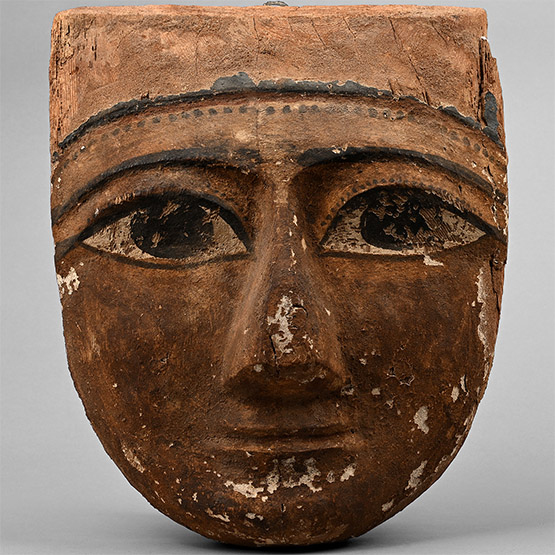
Egyptian Painted Wooden Mummy Mask
Ptolemaic Period, circa 3rd century B.C.Sold for (Inc. bp): £3,900
D-shaped in plan with carved facial detailing, thick nose and full lips; painted bands to the brow, pierced in three places for attachment. 1.04 kg, 30 cm
Swiss private collection, Zurich, assembled in the 1950s. Private collection. Acquired on the Zurich art market in 2013. This lot has been checked against the Interpol Database of stolen works of art and is accompanied by a search certificate number no.12847-241680.
The cartonnage mask from the Ptolemaic Period (305-30 BC) was a funerary covering made of wood or layers of papyrus/linen and plaster, modelled and painted, which covered the face of the mummy, often gilded, decorated with coloured glass and stones, and depicted the deceased with an idealized face and golden skin to protect him and guarantee him rebirth as a deity in the afterlife, combining Egyptian tradition with Graeco-Roman influences. -
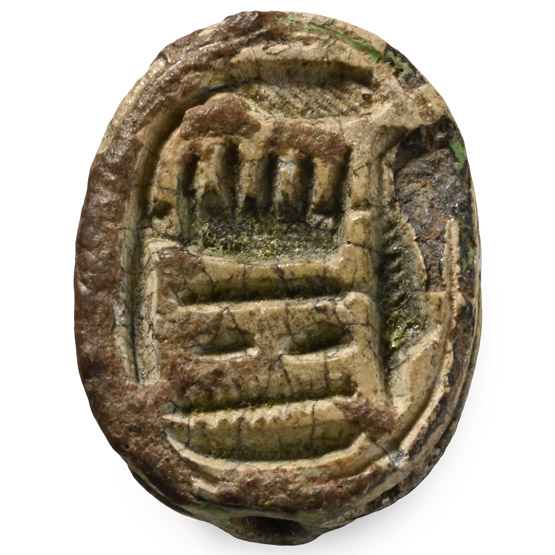
Egyptian Steatite Scarab with Hieroglyphs
New Kingdom, circa 1300 B.C.Sold for (Inc. bp): £92
A scarab with detailing to the upper face; the underside inscribed with hieroglyphs writing the name of Amun-Re, accompanied by a wab sign on the left and neb sign below; pierced longitudinally. 2.09 grams, 15 mm
Ex Constable collection, 1990s. Ex P. Morris collection.
