
Loading, please wait...
LOT 0524
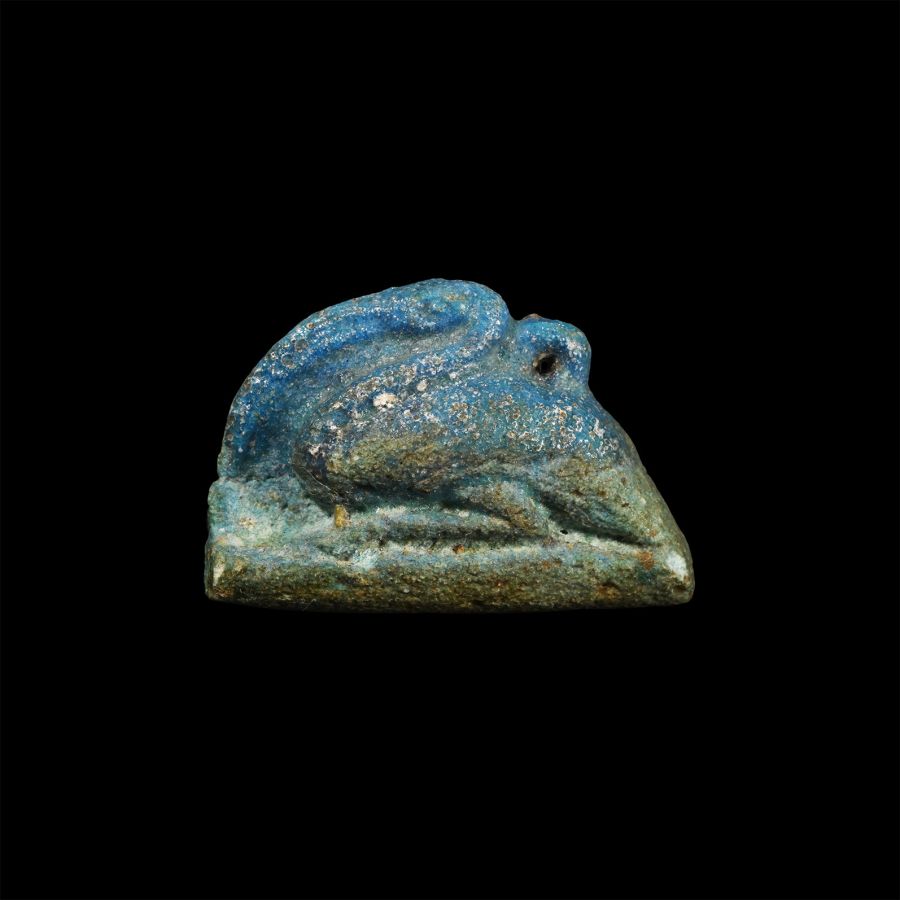
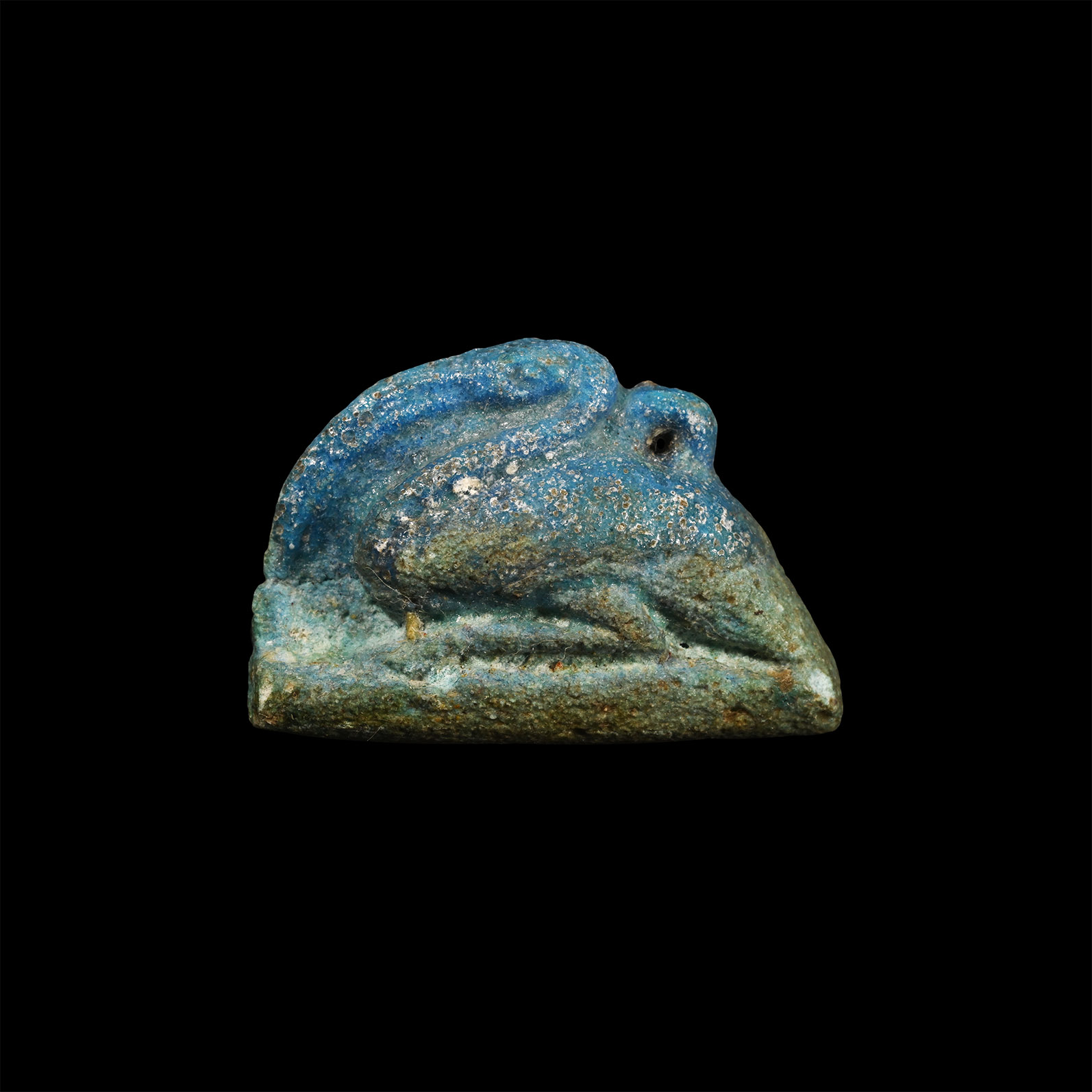
Egyptian Blue Faience Ibis Amulet
PTOLEMAIC PERIOD, 1550-1070 B.C.
1 1/8 in. (4.25 grams, 28 mm).
A glazed composition amuletic pendant of an ibis standing on a rectangular base, its curved beak resting on its chest. [No Reserve]
ProvenanceFrom a UK private collection, 1975-1978.
LiteratureSee Andrews, C., Amulets of Ancient Egypt, London, 1994, pp.27, 44.
CONDITIONTimeLine Auctions follows a vetting process to ensure the authenticity and legality of all items, reinforcing our commitment to integrity and responsible trading. Each antiquity, antique, and coin lot undergoes thorough examination by a vetting committee of at least ten external specialists, professional trade association members, scientists, and archaeologists: Our Vetting Process
AUCTIONS:
TimeLine is a leading auction house specialising in antiquities, ancient art, collectables, natural history, coins, medals, and books. Our auctions offer museums, collectors, historians, and enthusiasts the opportunity to acquire unique and historically significant pieces.
-
Egyptian Blue Faience Ibis Amulet
Ptolemaic Period, 1550-1070 B.C.Sold for (Inc. bp): £156
A glazed composition amuletic pendant of an ibis standing on a rectangular base, its curved beak resting on its chest. 4.25 grams, 28 mm
From a UK private collection, 1975-1978. -
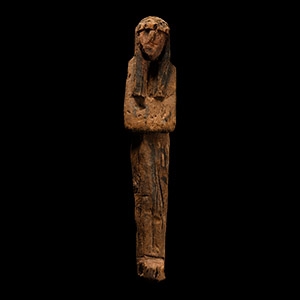
Egyptian Wooden Shabti
New Kingdom, 19th-20th Dynasty, circa 1315-1081 B.C.Sold for (Inc. bp): £286
A carved wood shabti figure modelled mummiform with arms folded across the chest and wearing a tripartite wig, painted detailing to the front and rear of the body; remains of polychrome pigmentation. 46 grams, 19 cm high
Acquired early 1990s. Ex private American collection; thence by descent. Private Swiss collection since 1998.
Many crude wooden shabtis of this type were found at Gurob and Sedment; they range from having minimal decoration and no inscription to being entirely painted and inscribed. -
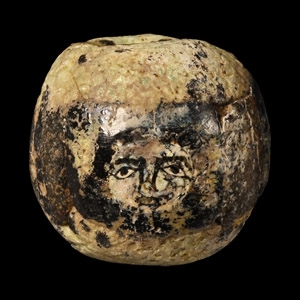
Phoenician Bead with Faces
7th-4th century B.C.Estimate: £300 - 400 (+bp*)
Opening Bid: £150
A glass spherical bead with three millefiori faces in the median dark blue band. 2.9 grams, 15 mm
Acquired 1969-1999. London collection of the late S.M., thence by descent.
