
Loading, please wait...

LOT 0506
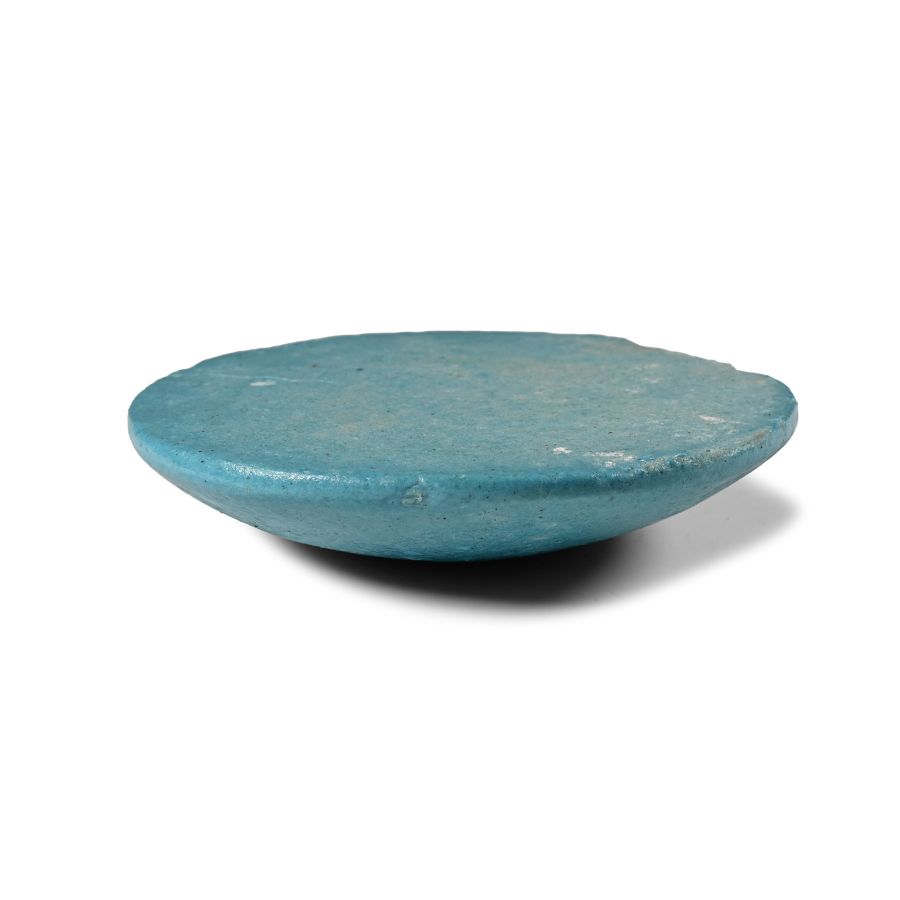
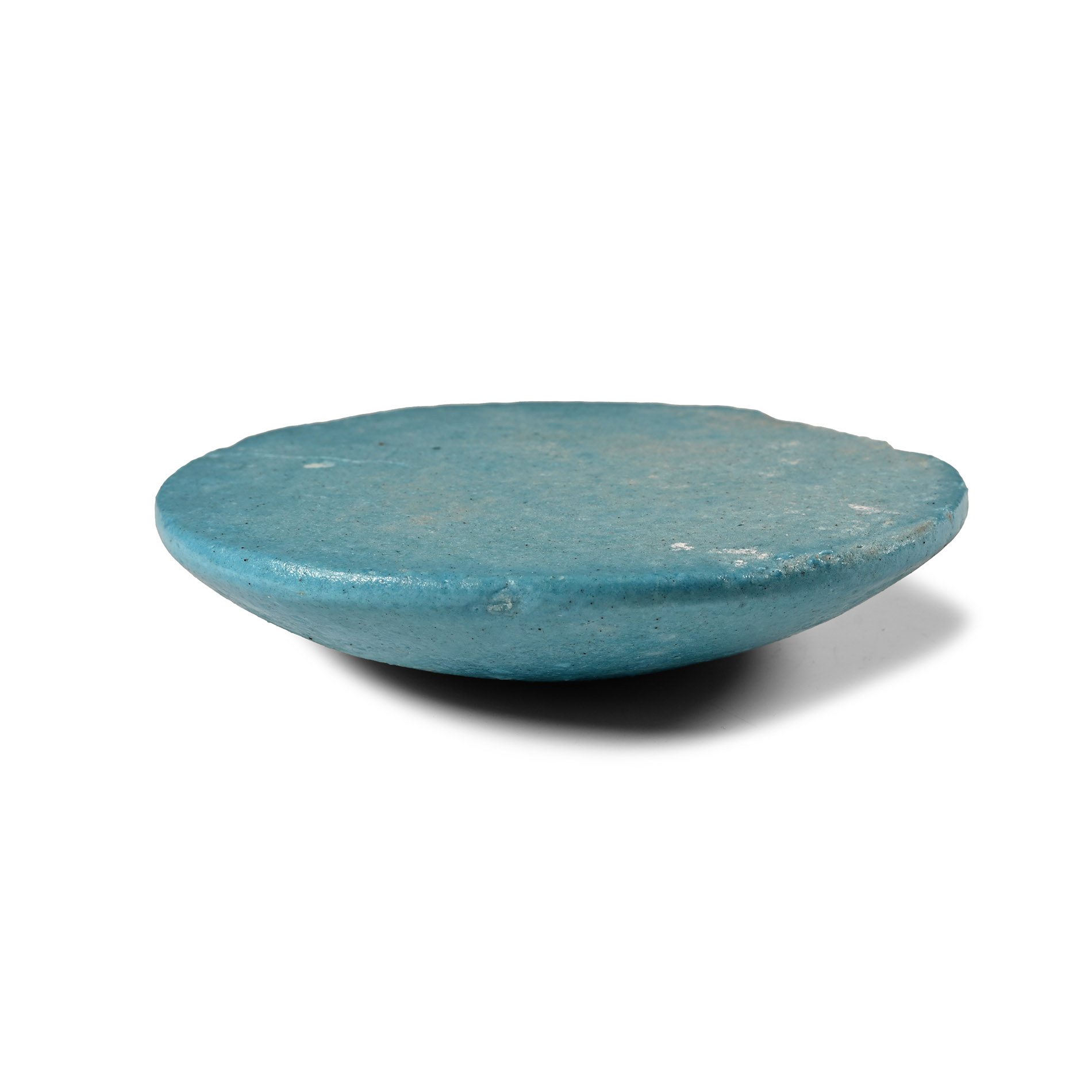
Egyptian Blue Faience Funerary Dish for Modelled Food
MIDDLE KINGDOM, 12TH DYNASTY, 1991–1802 B.C.
4 3/8 in. (252 grams, 11.1 cm).
Shaped as a shallow circular dish.
ProvenanceAcquired on the German art market, 1989-1995.
with The Museum Gallery, 19 Bury Place, London, WC1, UK, 1998-2003.
Property of a London based academic, 2003-present.
Cf. Friedman, F.D., Borromeo, G., Leveque, M. (eds.), Gifts of the Nile: Ancient Egyptian Faience, London, 1998, p.151 and p.239, for a similar dish in the Musée du Louvre, Paris (inv. no. E14188).
FootnotesFaience food and dish simulacra replaced the wooden food preparation models of the earlier Middle Kingdom.
CONDITIONTimeLine Auctions follows a vetting process to ensure the authenticity and legality of all items, reinforcing our commitment to integrity and responsible trading. Each antiquity, antique, and coin lot undergoes thorough examination by a vetting committee of at least ten external specialists, professional trade association members, scientists, and archaeologists: Our Vetting Process
AUCTIONS:
TimeLine is a leading auction house specialising in antiquities, ancient art, collectables, natural history, coins, medals, and books. Our auctions offer museums, collectors, historians, and enthusiasts the opportunity to acquire unique and historically significant pieces.
LOT 0506
Egyptian Blue Faience Funerary Dish for Modelled Food
Sold for (Inc. bp): £1,170
-
Egyptian Wooden Funerary Shabti Figurine
2nd-1st millennium B.C.Estimate: £1,500 - 2,000 (‡+bp*)
Opening Bid: £750
Carved in the round with D-shaped base, carefully modelled hair and ears with beard absent, the right hand visible, not holding any work tools, the body has the appearance of a mummy entirely draped in a shroud with rather elongated proportions, the broad and rounded face with a slightly ‘smiling’ expression, framed by a tripartite hairstyle without stripes, which continues down the back and two lappets on the chest. 39 grams, 14.5 cm
Ex R. Liechti (1934-2010) Geneva, Switzerland, formed between 1950-1990s. This lot has been checked against the Interpol Database of stolen works of art and is accompanied by a search certificate number no.12079-218221. -
.jpg)
Egyptian Bronze Head of a Pharaoh with Inlaid Eyes
Third Intermediate Period, 21st-22nd Dynasty, circa 1069-900 B.C.Sold for (Inc. bp): £49,400
Hollow-formed mask with integral tripartite wig and mount for a uraeus; impassive facial detailing and applied gold cosmetic lines to eyes, eyebrows, and lateral chin straps of the braided 'false beard'; segment of the wesekh-collar visible between the lappets of the wig; some restoration; mounted on a custom-made stand within a padded wooden display case. 1.2 kg, 22.5 cm high including stand (3.27 kg total, 27 cm including case)
Old French family collection of Monsieur and Madame D., 1960s. Ex Rennes Enchères, Hôtel des Ventes, France, 11 March 2003, no.117 (front-cover) for 150,000.00 euros. Acquired from Mansour Gallery, London W1, UK, in 2013. From the collection of a Kensington gentleman. Private collection, UK. Accompanied by the original Rennes Enchères catalogue. Accompanied by a copy of French passport no.058205 dated 15 April 2003. Accompanied by a copy of Mansour Gallery’s invoice, 2013. Accompanied by previous typed and illustrated collection cataloguing pages. Accompanied by an academic report by Egyptologist Paul Whelan. This lot has been checked against the Interpol Database of stolen works of art and is accompanied by a search certificate number no.12372-225585. -
Egyptian Gold Cobra Amulet
Late Period, 664-332 B.C.Sold for (Inc. bp): £195
Depicting a rearing cobra with incised detailing and a suspension loop behind the head. 0.17 grams, 11 mm
From the private collection of the late Mrs Belinda Ellison, a long time member of the Egyptian Exploration Society, c.1940-2020.
