
Loading, please wait...


LOT 0635
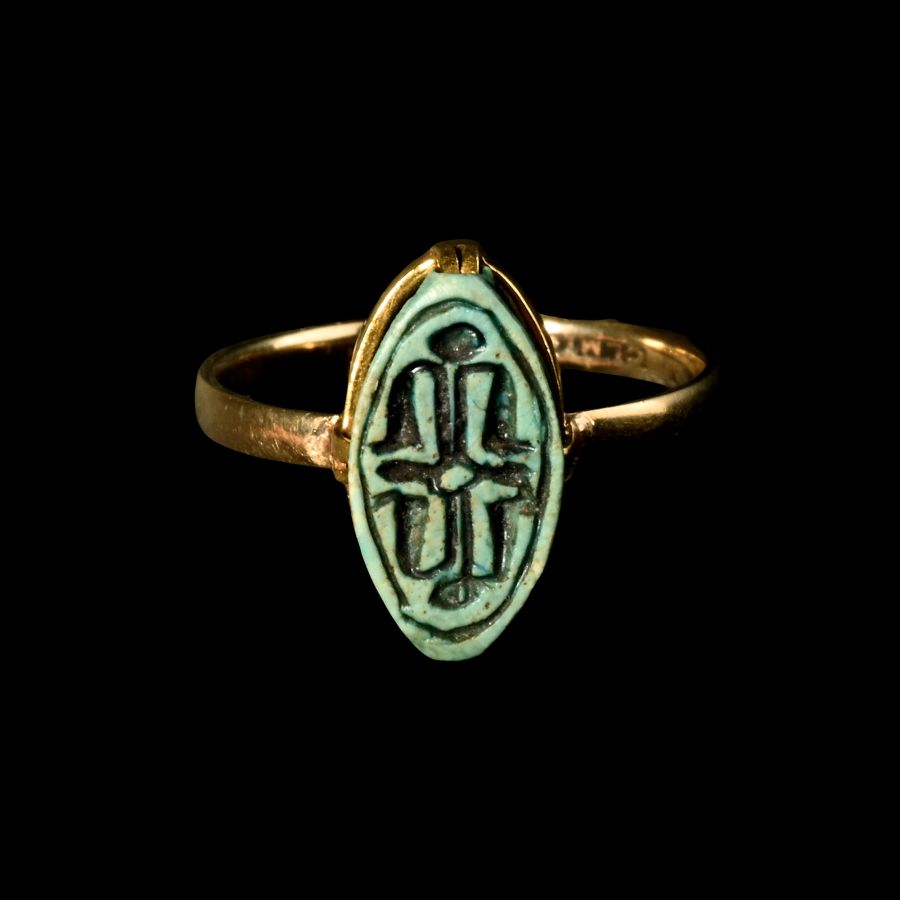
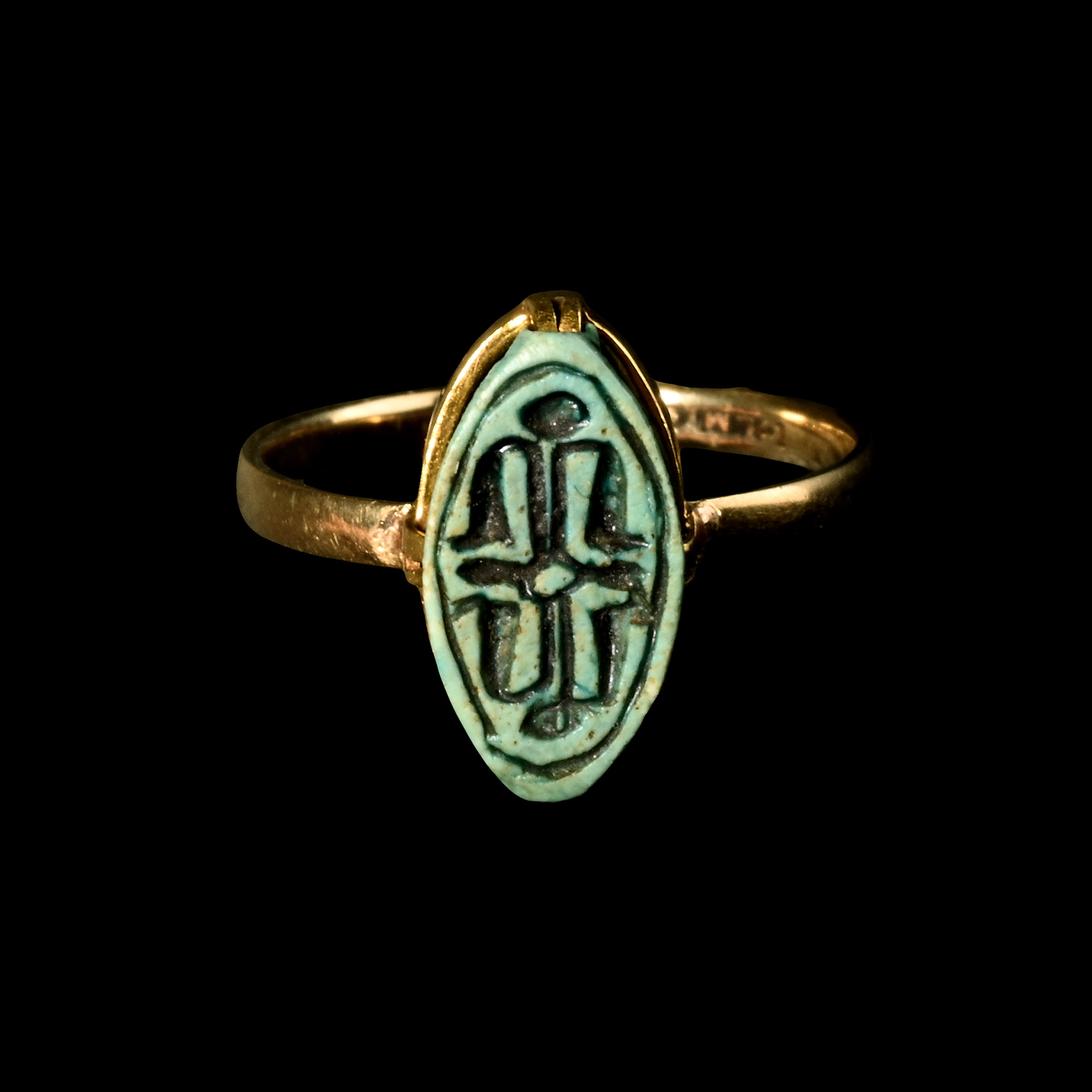
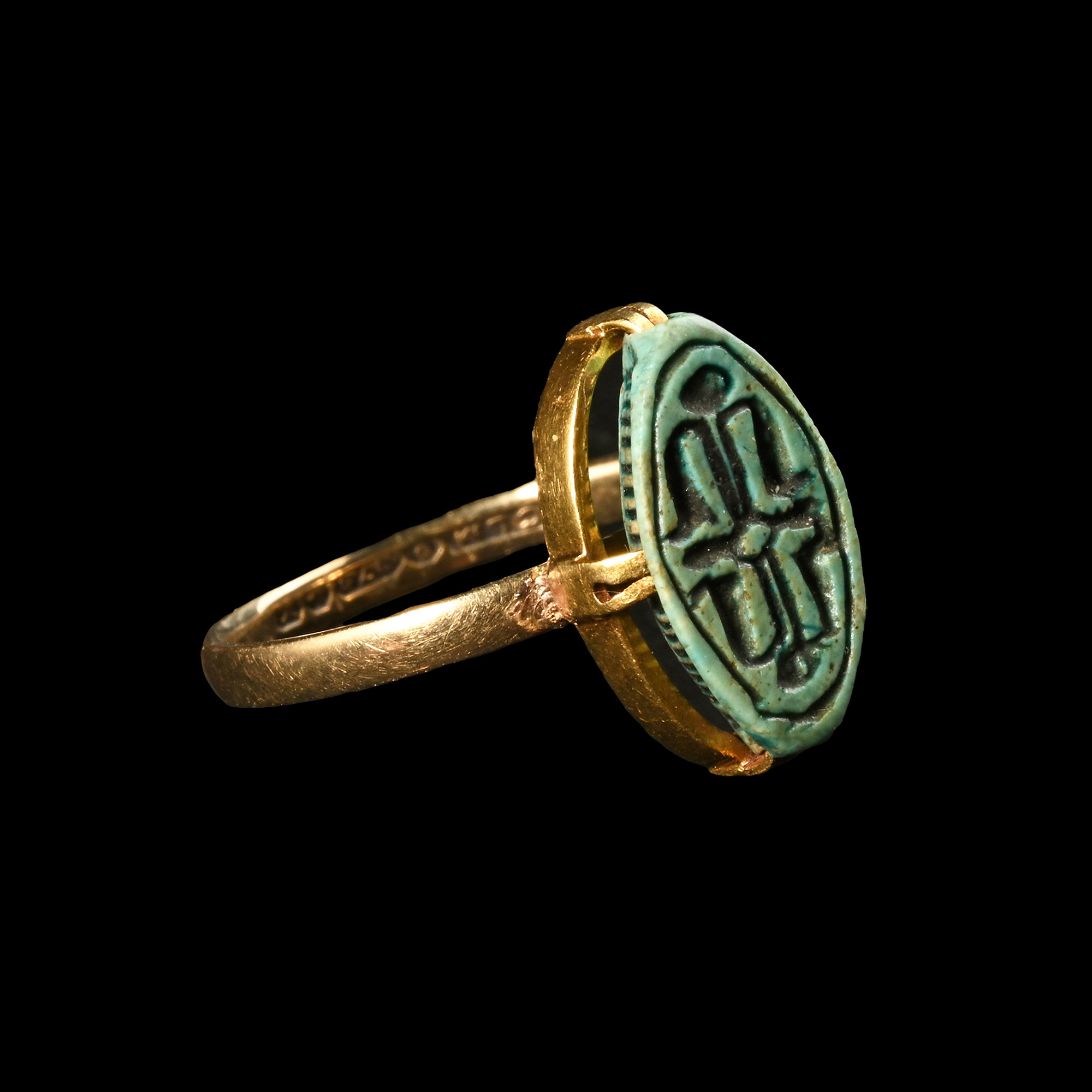
Egyptian Blue Faience Cowroid with Uraei in Gold Ring
THIRD INTERMEDIATE PERIOD, 1069-860 B.C.
7/8 in. (2.33 grams, 22.62 mm overall, 16.76 mm internal diameter (approximate size British M, USA 6, Europe 12.46, Japan 12)).
Slender, lentoid form with a finely striated edge design; the main motif comprises four outward-facing uraei, one in each quadrant, with a sun disc at each end, mounted in a modern gold ring.
ProvenancePrivate collection, London.
LiteratureCf. Petrie, W.M.F., Button and Design Scarabs, London, 1925, pl. XVIII, no. 1404, for a comparable design.
CONDITIONTimeLine Auctions follows a vetting process to ensure the authenticity and legality of all items, reinforcing our commitment to integrity and responsible trading. Each antiquity, antique, and coin lot undergoes thorough examination by a vetting committee of at least ten external specialists, professional trade association members, scientists, and archaeologists: Our Vetting Process
AUCTIONS:
TimeLine is a leading auction house specialising in antiquities, ancient art, collectables, natural history, coins, medals, and books. Our auctions offer museums, collectors, historians, and enthusiasts the opportunity to acquire unique and historically significant pieces.
LOT 0635
Egyptian Blue Faience Cowroid with Uraei in Gold Ring
Estimate £500 - 700€580 - 810 (for guidance only)$680 - 950 (for guidance only)
Opening Bid
£250 (EUR 290; USD 338) +BP*
-
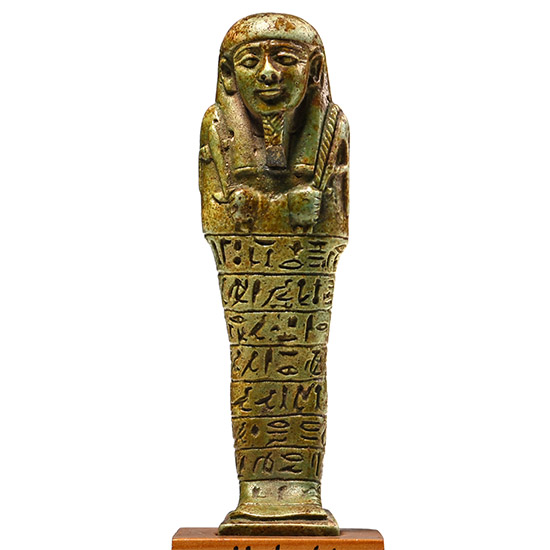
Egyptian Green Glazed Faience Shabti of Wedjahor
Late Period, 26th Dynasty, 664-525 B.C.Estimate: £800 - 1,000 (+bp*)
Bids: 9 | Current Bid: £320
Mummiform figure wearing a plain tripartite wig with horizontal line detailing at the lappet ends, a braided false beard, a finely modelled face, arms crossed with the left hand holding a pick and the right a hoe, and a tightly twisted cord of a long rectangular seed bag, which hangs over the left shoulder; seven horizontal bands of hieroglyphs on the body, with an eighth on the foot, and more entirely filling the dorsal pillar, giving Chapter 6 of the Book of the Dead; with a display stand bearing the legend 'Ushabti of Wedjahor XXVI Dyn'. 63.9 grams, 10.9 cm (81.2 grams total, 12.6 cm including stand)
Acquired at Michael's, Crawford Street, 6th January 1960, £3:5:0 for two. From the private collection of Peter Clayton, FCILIP, Dip, Arch, FSA, FRNS, Hemel Hempstead, Hertfordshire, UK; formed since the late 1950s. Accompanied by an old handwritten information card by Peter Clayton, collection no.69A. -
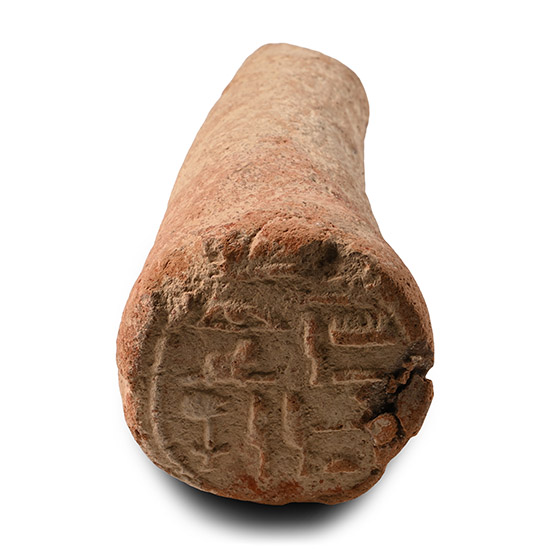
Egyptian Terracotta Funerary Cone for Hat
New Kingdom, 18th Dynasty, circa 15th-14th century B.C.Estimate: £400 - 600 (+bp*)
Bids: 4 | Current Bid: £135
Almost complete funerary cone of typical tapering form, with the circular flat end impressed with two unbordered horizontal lines of hieroglyphic text, reading: "The Osiris, corn measurer of Amun, Hat (or Hat-Amun)". 365 grams, 16 cm
Acquired from Abdoul Rassoul on the West Bank at Luxor, 1974-1980 when a guest lecturer. From the private collection of Peter Clayton, FCILIP, Dip, Arch, FSA, FRNS, Hemel Hempstead, Hertfordshire, UK; formed since the late 1950s.
This individual's tomb remains unknown. -
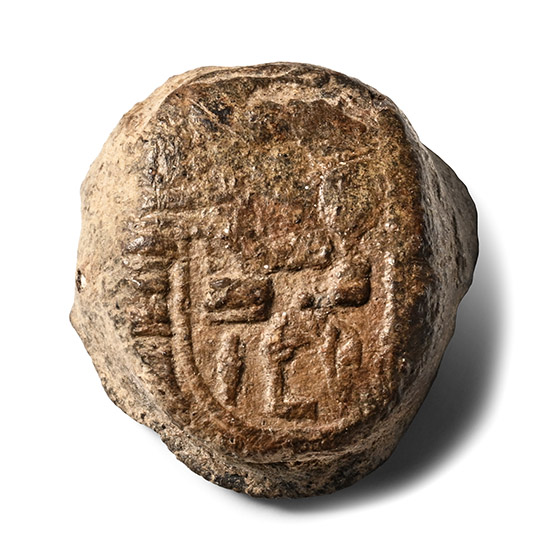
Egyptian Terracotta Bulla with Royal Cartouche
New Kingdom, circa 1400-1292 B.C.Estimate: £60 - 80 (+bp*)
Bids: 1 | Current Bid: £5
Discoid seal impression with one face preserving a partial impressed cartouche, the other side bearing the impression of a cord and linen. 1.92 grams, 17 mm
London, UK, art market, 1980s. Private collection, London, UK.
Clay seals were used to secure doors and containers holding valuable commodities and goods. The impression on the underside of this example indicates that it once sealed a linen bag or a linen lid cover.
