Loading, please wait...

Use mousewheel to zoom in and out, click to enlarge

Details

LOT 0499

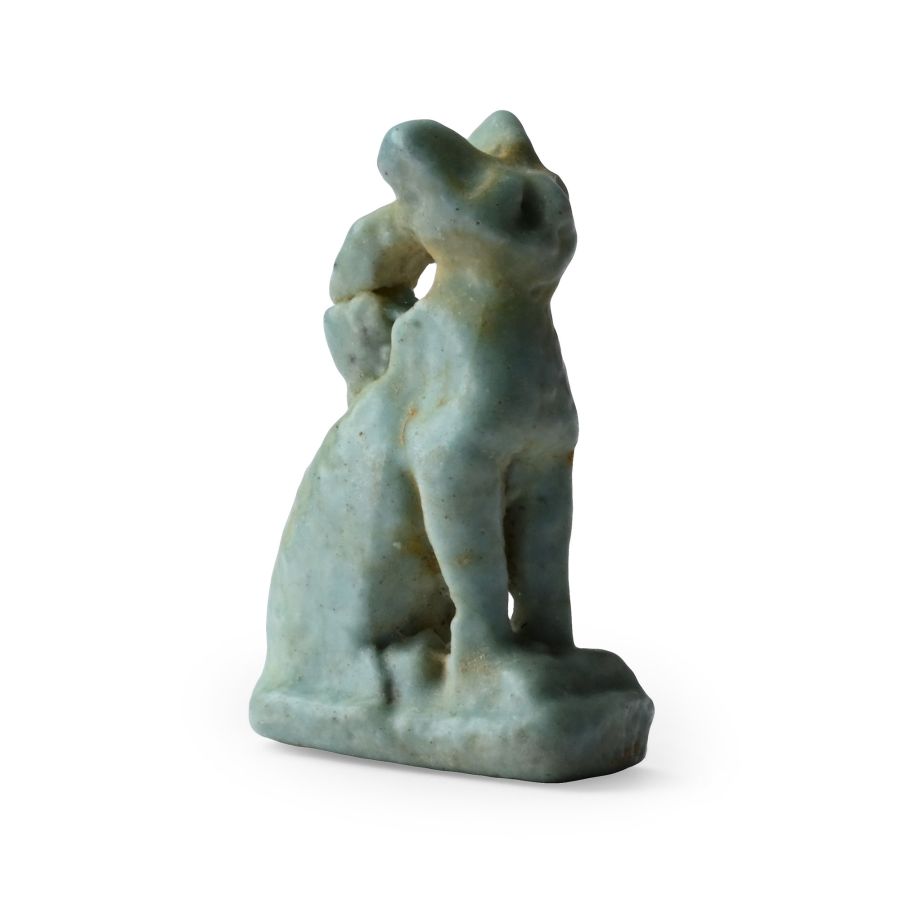
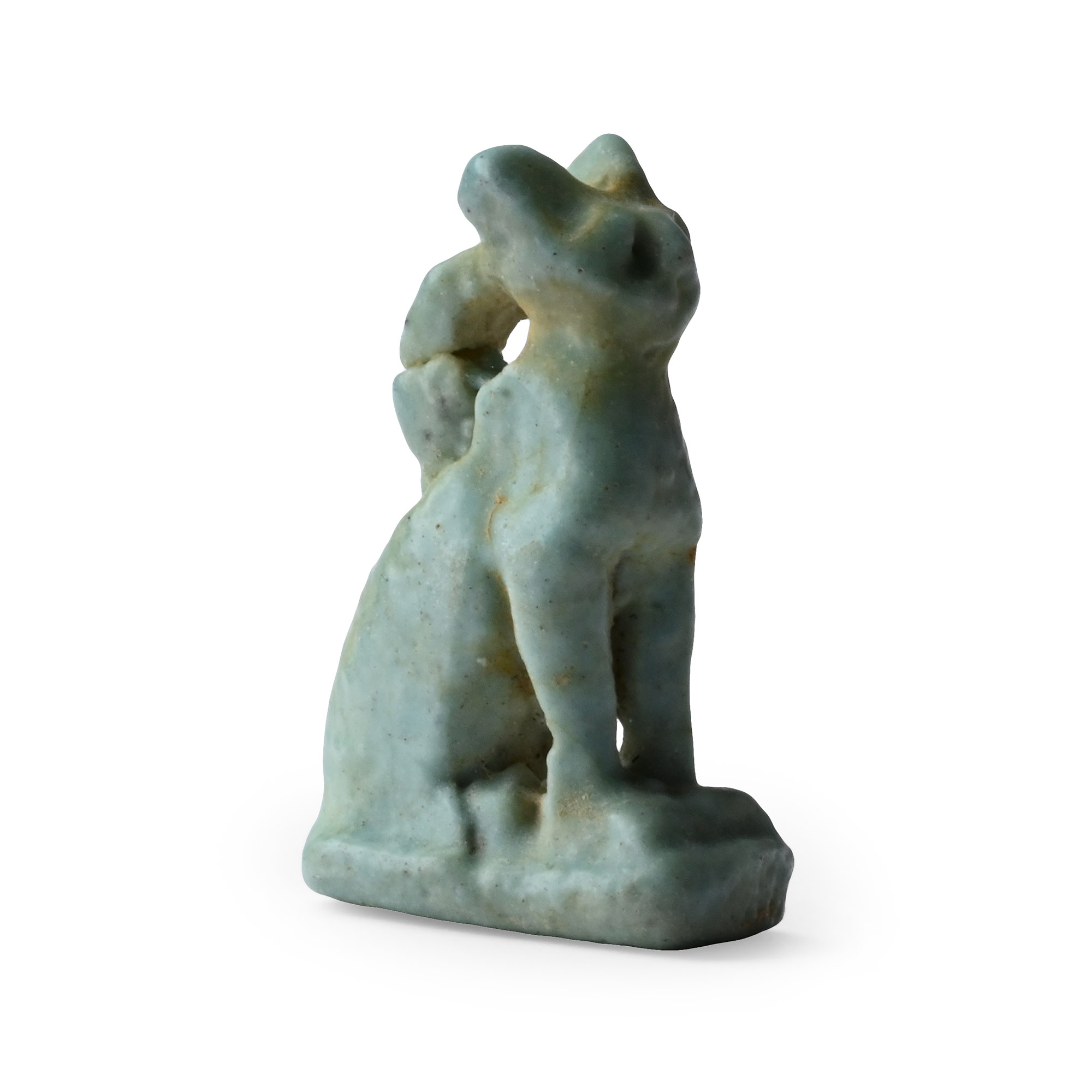
Egyptian Blue Faience Cat Amulet

LATE PERIOD, 664-332 B.C.

5/8 in. (0.65 grams, 16 mm).

Sitting cat on a tongue-shaped base, suspension loop behind the shoulders.

Provenance

Ex London gentleman's collection, by descent 1980s.

Literature

Cf. Andrews, C., Amulets of Ancient Egypt, London, 1994, item 29(c).

CONDITION

VETTING:

TimeLine Auctions follows a vetting process to ensure the authenticity and legality of all items, reinforcing our commitment to integrity and responsible trading. Each antiquity, antique, and coin lot undergoes thorough examination by a vetting committee of at least ten external specialists, professional trade association members, scientists, and archaeologists: Our Vetting Process


AUCTIONS:

TimeLine is a leading auction house specialising in antiquities, ancient art, collectables, natural history, coins, medals, and books. Our auctions offer museums, collectors, historians, and enthusiasts the opportunity to acquire unique and historically significant pieces.

LOT 0499

Egyptian Blue Faience Cat Amulet

Sold for (Inc. bp): £156

Print page

RELATED LOTS

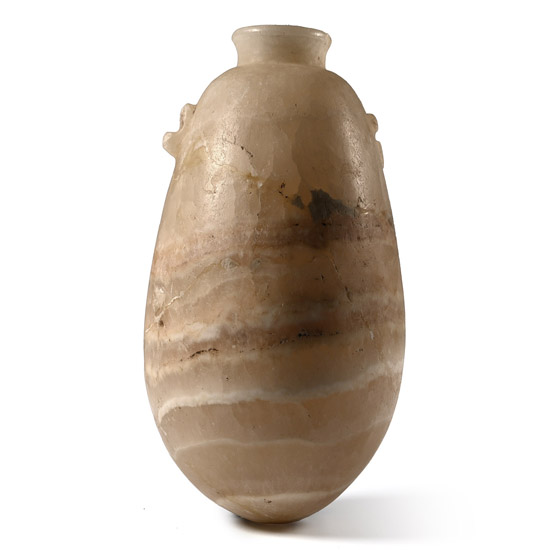
  • Large Phoenician Alabaster Alabastron with Hieroglyphic Inscription
    Large Phoenician Alabaster Alabastron with Hieroglyphic Inscription
    Circa 600 B.C.

    Estimate: £15,000 - 20,000 (‡+bp*)

    Opening Bid: £7,500

    Barrel-shaped in profile with a rounded base, broad shoulder and flared mouth, two lateral integral loop handles; incised hieroglyphic legend to the shoulder. 420 grams, 37 cm


    Formerly in a private collection, Beirut, Lebanon, 1990s. Swiss private collection, acquired from Mr H., Geneva, 2010. This lot has been checked against the Interpol Database of stolen works of art and is accompanied by search certificate number no.13221-249178. Accompanied by a copy of an Art Loss Register certificate, no.S00059830

    In the Phoenician necropolises of Andalusia, the ashes of the deceased were enclosed in luxurious alabaster urns of Egyptian manufacture. In the Phoenician necropolis of Almuñécar, for example, some urns preserved inscriptions and emblems of various Egyptian pharaohs, who ruled the Nile region between the 16th and 8th centuries B.C. Alabaster vessels of this type, originally containing fine wines, have been discovered, albeit in smaller numbers, in the royal palaces of Assur and Samaria in the East, as part of war booty or gifts exchanged between royal houses.

    Lot Details

  • Egyptian Faience Shabti with Hieroglyphics
    Egyptian Faience Shabti with Hieroglyphics
    Late Period, 664-332 B.C.

    Sold for (Inc. bp): £585

    Mummiform shabti wearing a tripartite wig, with arms crossed and holding a pick and hoe, seed bag suspended over the shoulder; horizontal band to the waist and vertical column to the legs, each with an impressed hieroglyphic inscription. 80 grams, 13.5 cm


    Private collection, USA and Switzerland, acquired in the early 1980s; thence by descent.

    Lot Details

  • Large Egyptian Bronze Wepwawet Amulet
    Large Egyptian Bronze Wepwawet Amulet
    Third Intermediate-Late Period, 1069-332 B.C.

    Sold for (Inc. bp): £5,200

    Showing the jackal deity Wepwawet standing with ears pricked on a sledge, the slender body modelled with long legs and a tail, suspension loop on the back; two rearing cobras before the jackal; mounted on a custom-made display stand. 54 grams, 91 mm (162 grams total, 11.7 cm including stand )


    Ex Dr R. and Mrs L.B., Zumikon, Switzerland. with Galerie Rhéa, Zurich, Switzerland. This lot has been checked against the Interpol Database of stolen works of art and is accompanied by a search certificate number no.12627-236406.

    This object may have been the decorative element of a ceremonial standard, examples of which have survived (cf. Petrie, W.M.F., Tanis: Part II / Nebesheh (Am) and Defenneh (Tahpanhes), London, 1886, pl. VII, no. 3). Wepwawet, meaning "Opener of the Ways," was an ancient Egyptian god associated primarily with warfare, protection, and funerary practices. Depicted as a jackal or a man with a jackal's head—often mistaken for Anubis—Wepwawet was believed to guide souls through the afterlife and open paths both in battle and in the spiritual realm. He originated in Asyut (ancient Lycopolis) in Upper Egypt and was one of the oldest deities in the Egyptian pantheon, with worship dating back to at least the First Dynasty (c. 3100–2900 BCE). Over time, Wepwawet became closely linked to Anubis, and the two were sometimes conflated, though Wepwawet retained his distinct identity as a god who preceded and cleared the way. In military contexts, Wepwawet was invoked to "open the way" for pharaohs and armies, ensuring victory and safe passage. In funerary texts, he was described as clearing the path to the afterlife, acting as a scout or guide for the deceased.

    Lot Details

Stay up-to-date with the latest from TimeLine Auctions by joining our mailing list