
Loading, please wait...
LOT 0411
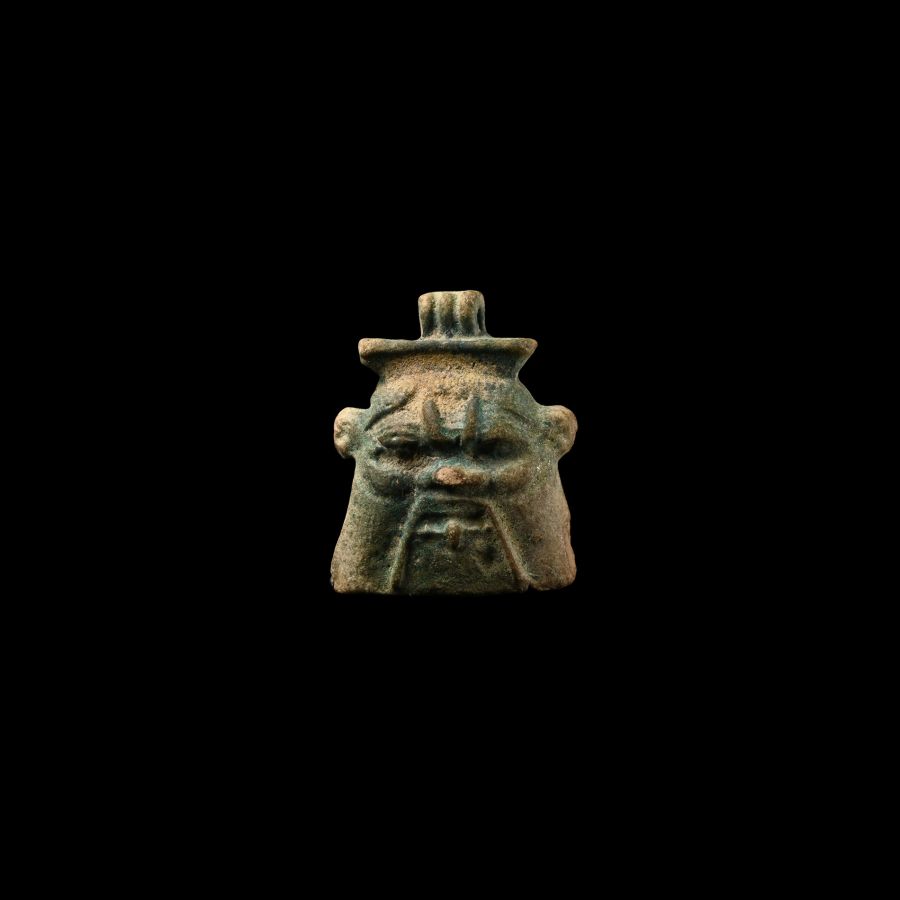
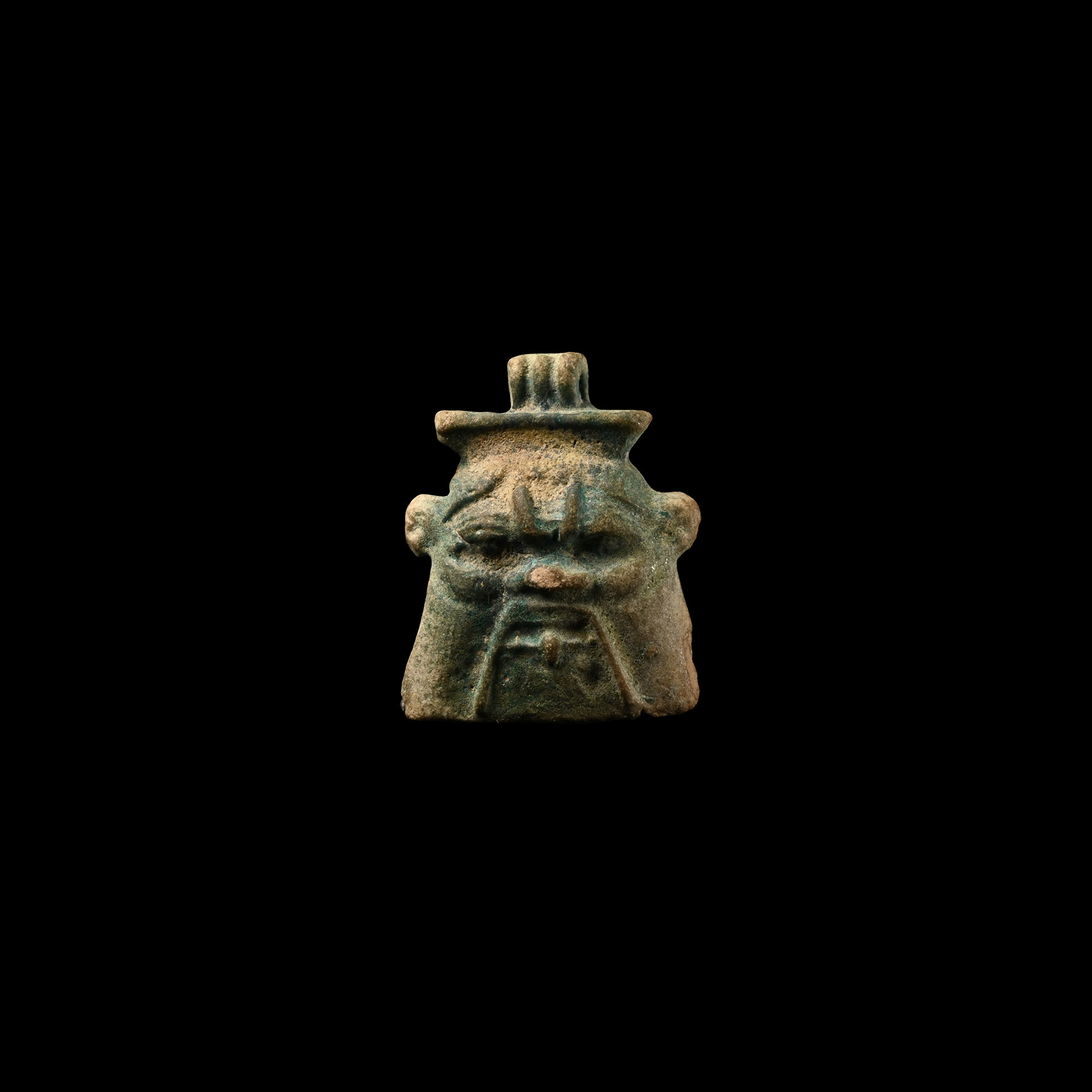
Egyptian Blue Faience Bes Amulet
LATE PERIOD, 664-323 B.C.
1 1/8 in. (4.49 grams, 30 mm).
Formed as the head of the dwarf god Bes, depicted with a substantial beard and wearing a headdress; integral loop for suspension. [No Reserve]
ProvenanceFrom an early 20th century collection, Caernarfon, North Wales, UK.
LiteratureCf. Petrie, W.M.F., Amulets. Illustrated by the Egyptian Collection in University College, London, London, 1914, pl.XXXIV 190c-d, for similar amulets.
CONDITIONTimeLine Auctions follows a vetting process to ensure the authenticity and legality of all items, reinforcing our commitment to integrity and responsible trading. Each antiquity, antique, and coin lot undergoes thorough examination by a vetting committee of at least ten external specialists, professional trade association members, scientists, and archaeologists: Our Vetting Process
AUCTIONS:
TimeLine is a leading auction house specialising in antiquities, ancient art, collectables, natural history, coins, medals, and books. Our auctions offer museums, collectors, historians, and enthusiasts the opportunity to acquire unique and historically significant pieces.
-
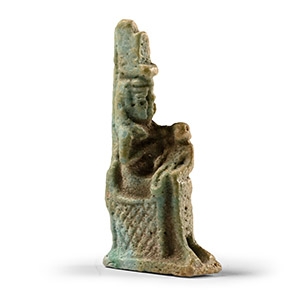
Egyptian Faience Isis with Horus Amulet
Ptolemaic Period, 332-30 B.C.Sold for (Inc. bp): £221
The goddess seated on a throne and wearing a vulture headdress with her hieroglyph above, the infant god Horus with Sidelock of Youth being nursed on her knee; turquoise glaze. 4.25 grams, 40 mm
Acquired in Europe before 1992.
In ancient Egyptian belief, the image of Isis suckling her son Horus was a potent symbol of rebirth. The goddess sits on the throne (which was the hieroglyphic form of her name). -
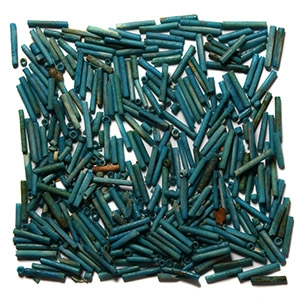
Egyptian Bright Blue Faience Tubular and Other Bead Group
New Kingdom, 1315-332 B.C.Sold for (Inc. bp): £247
Comprising a group of mostly tubular blue faience beads, with a few round examples; each pierced for stringing. 19 grams total, 2-16 mm
UK gallery, early 2000s. -
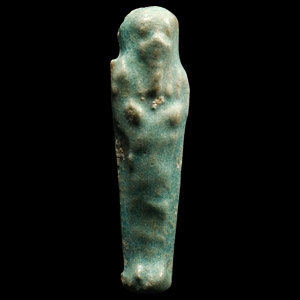
Egyptian Blue Faience Ushabti
Ptolemaic Period, 332-30 B.C.Estimate: £100 - 140 (‡+bp*)
Opening Bid: £50
Decorated with a blue glaze and displaying remains of facial, wig, beard and crossed arm detailing to the mummiform figure. 17.9 grams, 70 mm
Acquired in Europe before 1990.
