
Loading, please wait...
LOT 0492
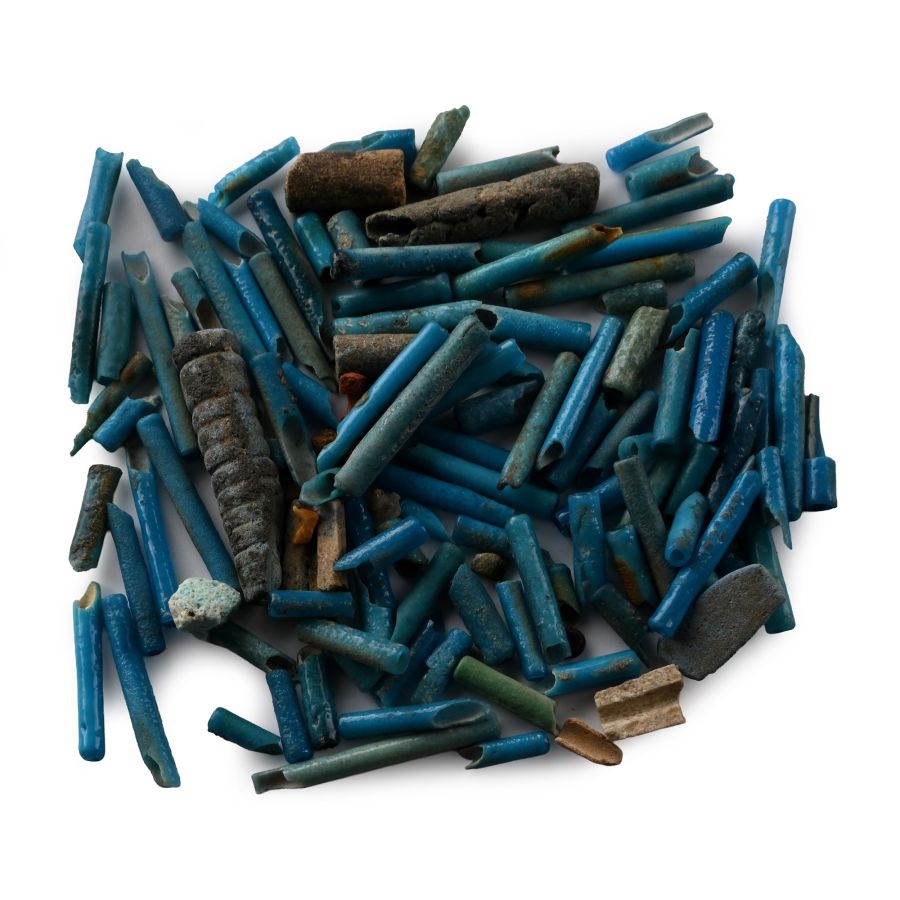
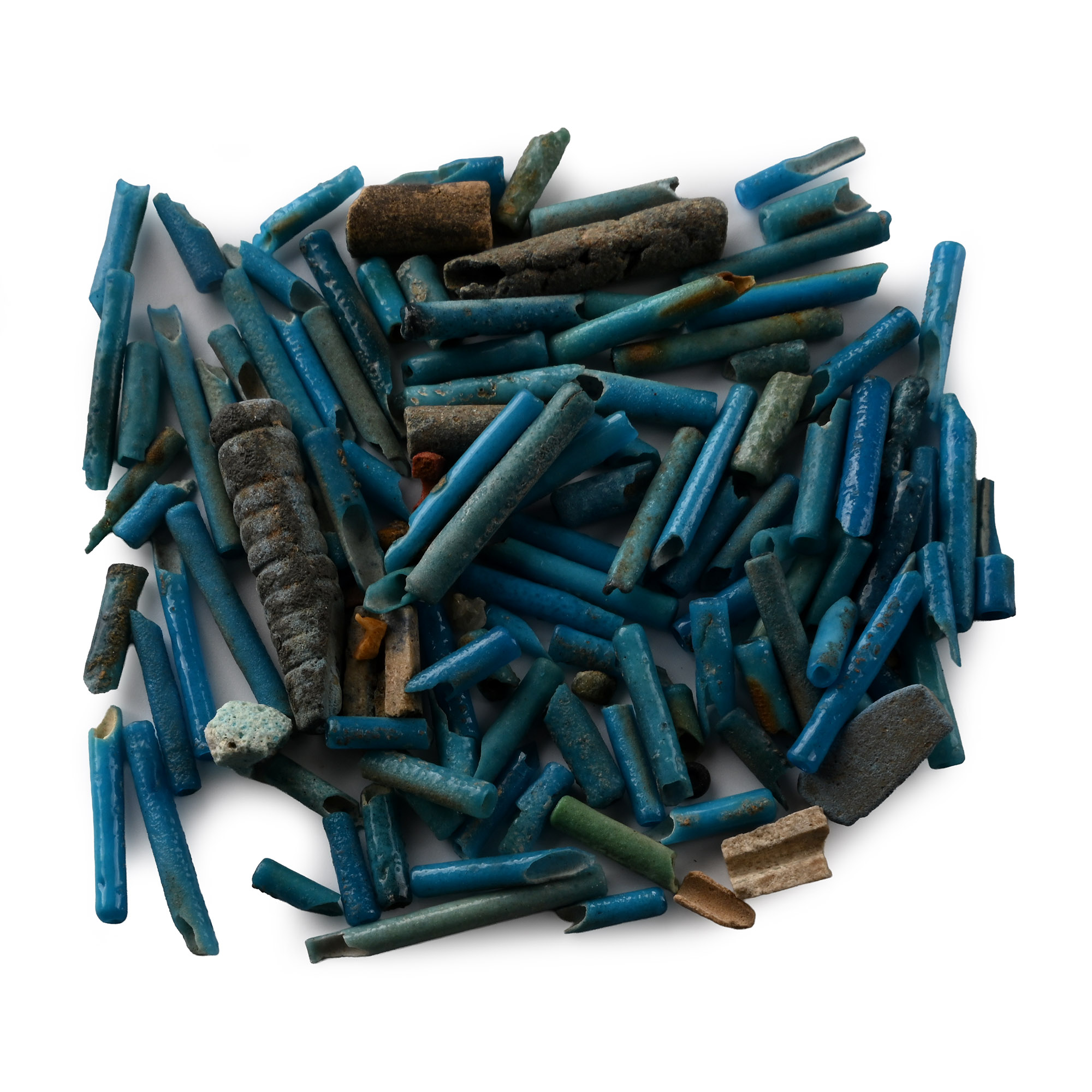
Egyptian Blue Faience Bead Group
LATE PERIOD, 664-332 B.C.
1/8 - 1 in. (7.7 grams total, 2-24 mm).
Comprising mainly long cylindrical beads with some larger beads. [110+, No Reserve]
ProvenancePart of a group excavated by Petrie at Gurob, latterly in a London, UK, collection.
This lot is accompanied by an illustrated lot declaration signed by the Head of the Antiquities Department, Dr Raffaele D'Amato.
TimeLine Auctions follows a vetting process to ensure the authenticity and legality of all items, reinforcing our commitment to integrity and responsible trading. Each antiquity, antique, and coin lot undergoes thorough examination by a vetting committee of at least ten external specialists, professional trade association members, scientists, and archaeologists: Our Vetting Process
AUCTIONS:
TimeLine is a leading auction house specialising in antiquities, ancient art, collectables, natural history, coins, medals, and books. Our auctions offer museums, collectors, historians, and enthusiasts the opportunity to acquire unique and historically significant pieces.
-
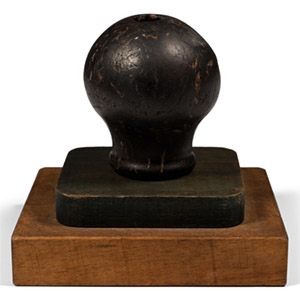
Egyptian Haematite Mace Head
4th-3rd millennium B.C.Estimate: £600 - 800 (+bp*)
Opening Bid: £300
Globular body with short socket and thickened rim; accompanied by a custom-made display stand. 457 grams total, mace: 60 mm high
Ex Norman Fargo collection. with Olympia Auctions, 26 June 2024, no.119. This lot is accompanied by an illustrated lot declaration signed by the Head of the Antiquities Department, Dr Raffaele D'Amato.
Norman Fargo was born in Los Angeles, California in 1945, the son of Hungarian immigrant Frank and his wife, Rose. His lifelong passion for collecting began at the age of six with a simple interest in rocks. By the 1960s, Norman had become a dedicated student of antique arms and armour, developing a deep appreciation for both craftsmanship and historical context. He began collecting at a time when many items now considered rare were still relatively accessible. A friendship with renowned collector Howard Curtis—whose important collection was partially sold at Christie’s, London in 1984—opened doors to early and exceptional material. Norman also acquired outstanding pieces from respected figures such as Frank Bivens and others known today through museum and auction catalogue provenance. Alongside his core collection of arms and armour (c.1450-1700), Norman developed an eye for period furniture and accessories. He also built a growing collection of Pre-Columbian art with an emphasis on Southern Mexican cultures, particularly Veracruz, as well as fine examples of Japanese Satsuma ware and cloisonné. -
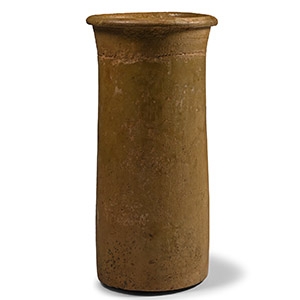
Egyptian Terracotta Cylindrical Jar
Early Dynastic Period, Naqada IIIC, circa 3100 B.C.Sold for (Inc. bp): £520
Band of imitation rope-twist decoration encircling the top of the jar, the mouth slightly flaring with a slightly damaged rolled lip. 950 grams, 22 cm
with Bonhams, London, 1 May 2008, no.432 [Part]. Accompanied by a copy of an Art Loss Register certificate no.S00035996. Accompanied by a copy of relevant Bonhams catalogue pages. This lot is accompanied by an illustrated lot declaration signed by the Head of the Antiquities Department, Dr Raffaele D’Amato. This lot is accompanied by an illustrated lot declaration signed by the Head of the Antiquities Department, Dr Raffaele D'Amato.
These vessels often exhibit different surface treatments; the rim and area above the rope twist show marks where the vessel was rotated to produce the rim, and below, the rest of the jar has a scrape-smoothed surface. -
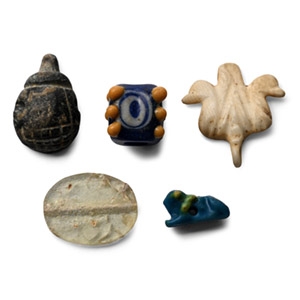
Egyptian Stone and Glass Artefact Group
Late 1st millennium B.C. and laterSold for (Inc. bp): £338
Including cuboid hot-worked eye bead with applied granules to the edges, a recumbent lion, double bird, and stylised hedgehog amulets, and iridescent plaque. 83.7 grams total, 13-22 mm
Acquired on the European art market in the early 2000s. with Galerie Rhéa, Zurich, Switzerland. This lot is accompanied by an illustrated lot declaration signed by the Head of the Antiquities Department, Dr Raffaele D'Amato.
