
Loading, please wait...
LOT 0492
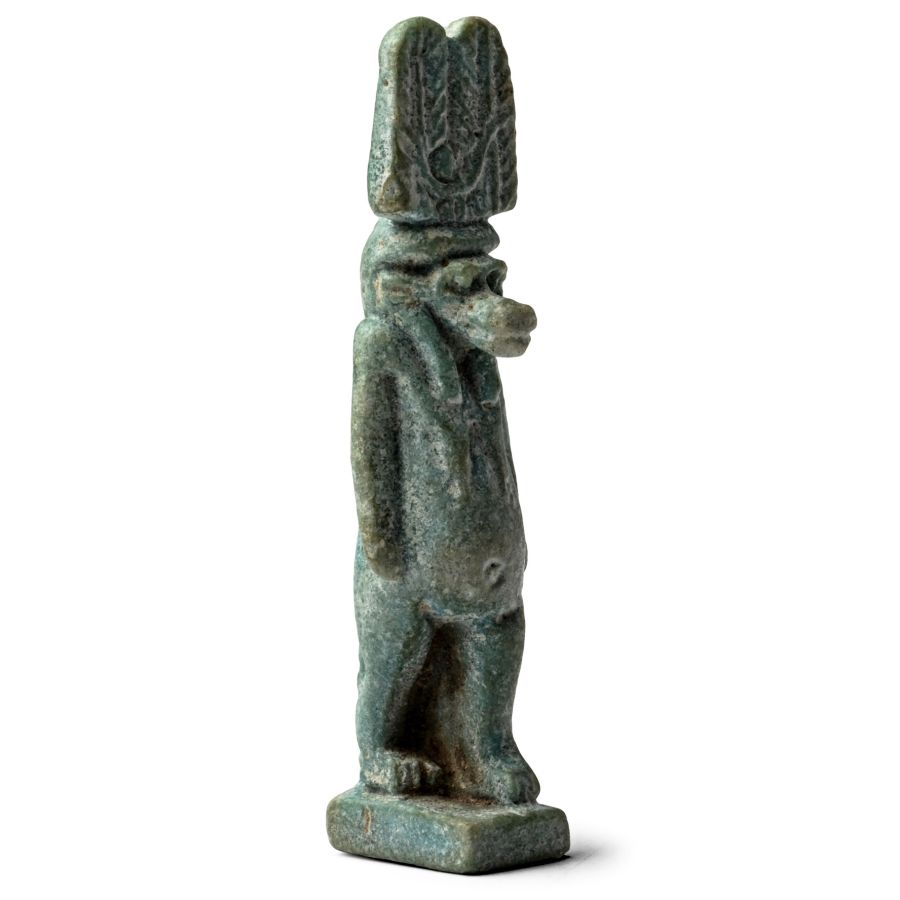
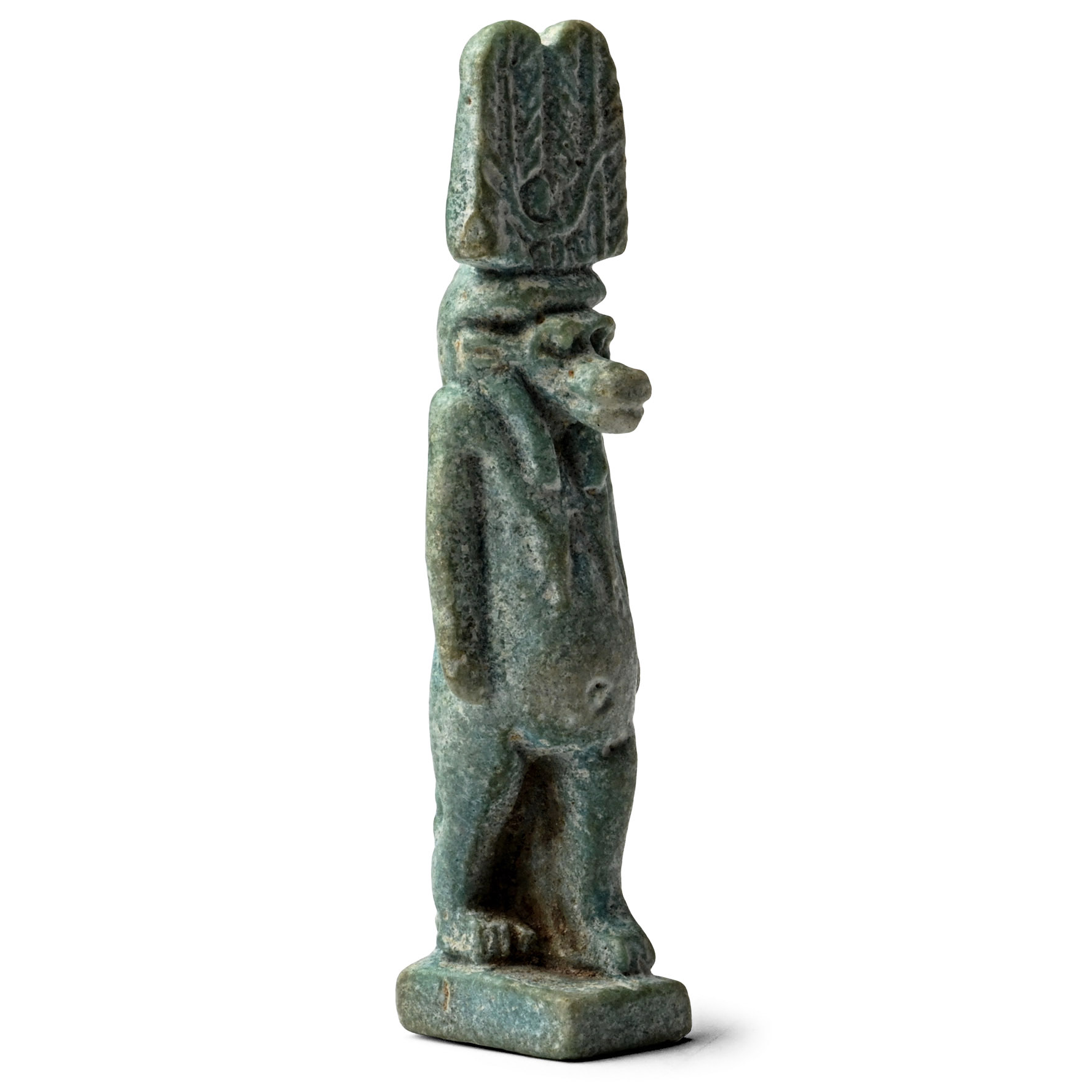
Egyptian Blue Faience Amulet Representing Taweret
LATE PERIOD, 664-332 B.C.
2 in. (5.18 grams, 52 mm).
Modelled standing on a rectangular base in characteristic hippopotamus-headed form with a dorsal pillar, pierced for suspension at the rear of the tall two-feather headdress.
ProvenancePrivate collection, Carouge, Switzerland, assembled in the 1980s-1990s.
Thence by descent to the collection of Mr S.P., since 2020.
Cf. Petrie, W.M.F., Amulets. Illustrated by the Egyptian Collection in University College, London, 1914, pl. XL, 236q, for a similar Taweret with headdress.
CONDITIONTimeLine Auctions follows a vetting process to ensure the authenticity and legality of all items, reinforcing our commitment to integrity and responsible trading. Each antiquity, antique, and coin lot undergoes thorough examination by a vetting committee of at least ten external specialists, professional trade association members, scientists, and archaeologists: Our Vetting Process
AUCTIONS:
TimeLine is a leading auction house specialising in antiquities, ancient art, collectables, natural history, coins, medals, and books. Our auctions offer museums, collectors, historians, and enthusiasts the opportunity to acquire unique and historically significant pieces.
-
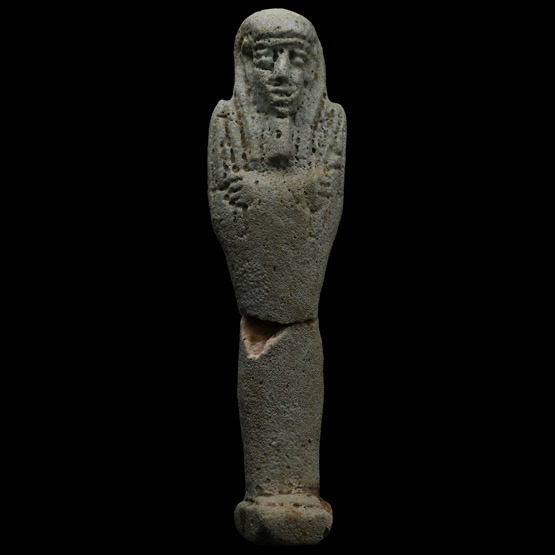
Egyptian Faience Shabti
Late Period, 664-332 B.C.Sold for (Inc. bp): £143
Mummiform figure with plain dorsal pillar, standing with arms crossed and holding agricultural implements, seedbag suspended over the left shoulder; wearing a tripartite wig and a false beard; repaired. 41.6 grams, 10.5 cm
Ex H Norri collection, Milton Keynes, Bedfordshire, UK, 1980s-1990s. -
.jpg)
Historic Collection of 565 Slides of Egyptian Archaeological Sites and Artefacts
1960s-1980s A.D.Sold for (Inc. bp): £845
Housed in five linen-covered boxes, covering ancient Egypt, Tutankhamun jewellery, Nefetari, Amun Hr Khopshef, Khaemwast, Tuthmosis IV, Tye, Archaic stele, maceheads, inscriptions, pottery, sculpture, Saqqara tombs, Esna etc. 3.85 kg total, 26.5 x 16.5 x 6.5 cm each box
Property of archaeologist Stephanie Gee, N.W. London, UK, 1960s-1980s.
Stephanie Gee was a prominent archaeologist who took part in several expeditions in Egypt. She was a trusted assistant to the British-Australian archaeologist Veronica Seton-Williams, who excavated in Egypt, Britain, and the Near East. Stephanie also took part in the Tell El-Farâ'în expeditions of 1965-1968, and assisted Seton-Williams with preparing the 1966 expedition report. Their collaboration continued and Stephanie helped with the manuscript of Seton-Williams’ book ‘The Road to El-Aguzein’, a narrative account of her life that was first published in 1988. -
.jpg)
Large Phoenicio-Egyptian Faience Amulet of a Feline Head
Late 1st millennium B.C.Estimate: £800 - 1,000 (+bp*)
Opening Bid: £400
Modelled in the half-round with fine detailing and a ribbed suspension loop. 31.9 grams, 46 mm
Ex collection of a Surrey lady, circa 1940s.
It is unclear which deity the head represents, though either Sekhmet or Bastet is likely.
