
Loading, please wait...
LOT 0479
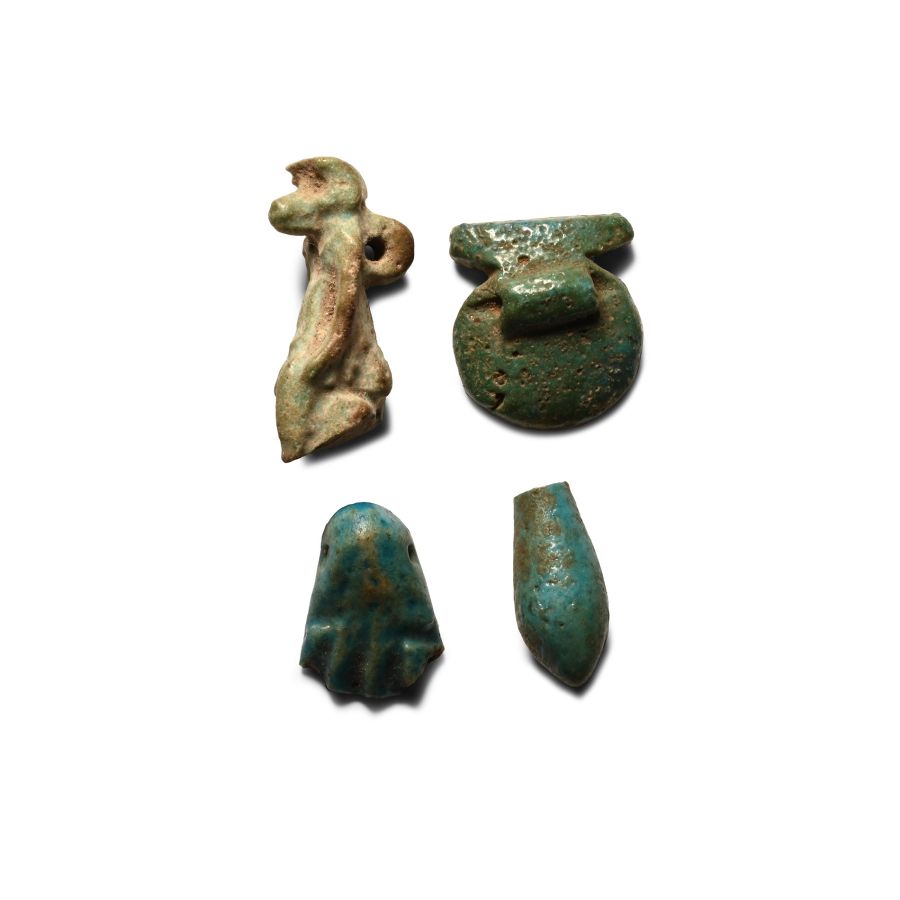
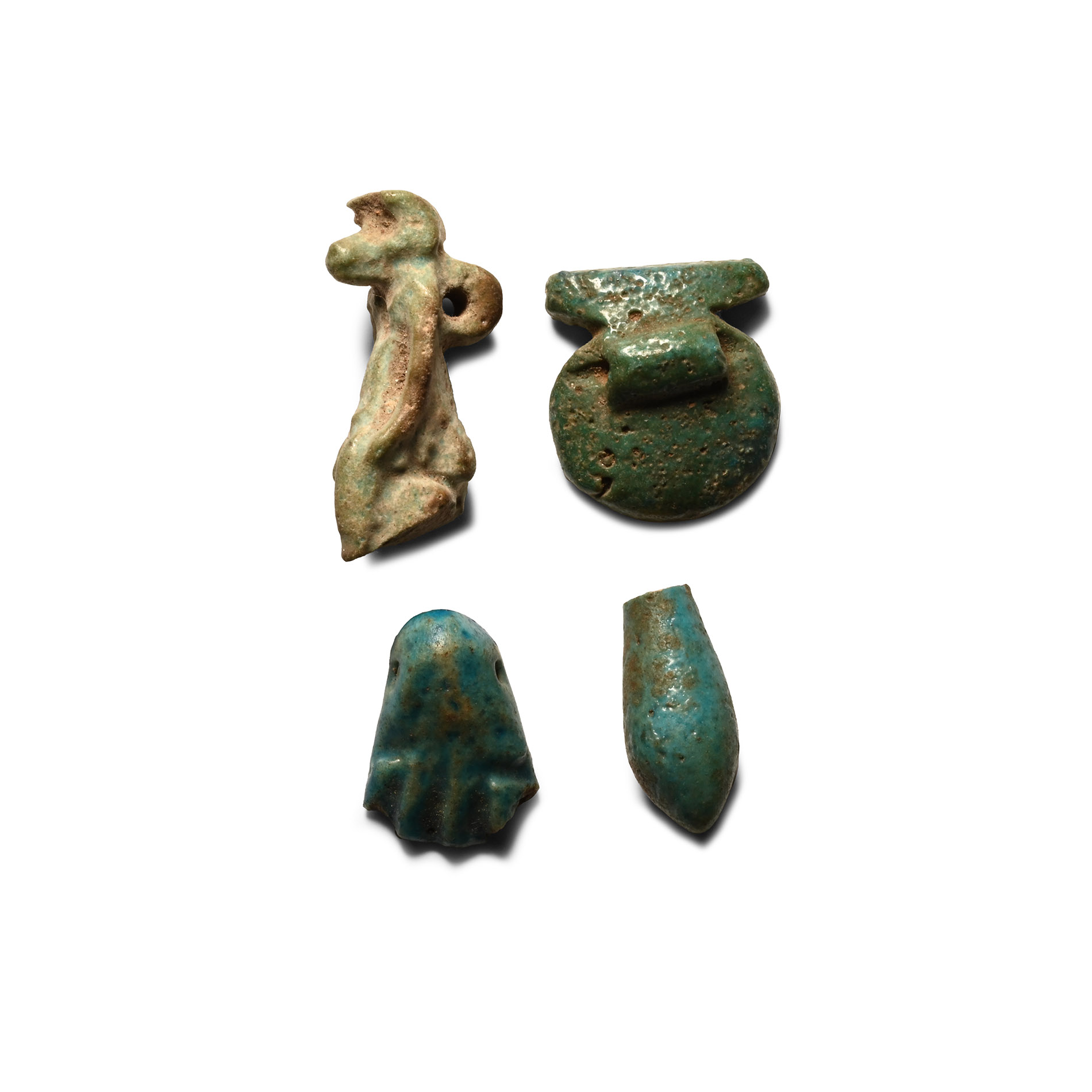
Egyptian Blue Faience Amulet Collection
LATE PERIOD, 664-323 B.C.
3/4 - 1 1/8 in. (7.3 grams total, 18-29 mm).
Four amulets decorated with a turquoise glaze; a shen symbol; the god Thoth in baboon form; possible bud with seal to reverse; the bottom part of a papyrus sceptre; three pierced for suspension. [4, No Reserve]
ProvenanceFrom an early 20th century collection, Caernarfon, North Wales, UK.
LiteratureCf. Petrie, W.M.F., Amulets. Illustrated by the Egyptian Collection in University College, London, London, 1914, pls. IV 43a (shen), XXXVII 205d (baboon).
CONDITIONTimeLine Auctions follows a vetting process to ensure the authenticity and legality of all items, reinforcing our commitment to integrity and responsible trading. Each antiquity, antique, and coin lot undergoes thorough examination by a vetting committee of at least ten external specialists, professional trade association members, scientists, and archaeologists: Our Vetting Process
AUCTIONS:
TimeLine is a leading auction house specialising in antiquities, ancient art, collectables, natural history, coins, medals, and books. Our auctions offer museums, collectors, historians, and enthusiasts the opportunity to acquire unique and historically significant pieces.
-
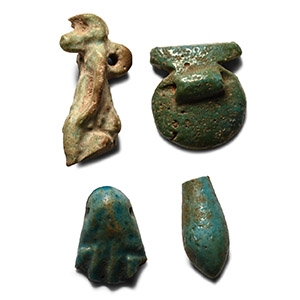
Egyptian Blue Faience Amulet Collection
Late Period, 664-323 B.C.Sold for (Inc. bp): £52
Four amulets decorated with a turquoise glaze; a shen symbol; the god Thoth in baboon form; possible bud with seal to reverse; the bottom part of a papyrus sceptre; three pierced for suspension. 7.3 grams total, 18-29 mm
From an early 20th century collection, Caernarfon, North Wales, UK. -
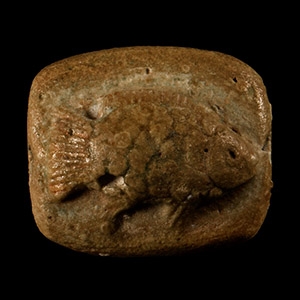
Egyptian Bifacial Steatite Amulet with Tilapia Fish and Hieroglyphs
Late Period, 664-332 B.C.Sold for (Inc. bp): £143
Of roughly rectangular form, displaying a scaled fish in relief to the upper face and hieroglyphs to the underside; pierced for suspension. 2.9 grams, 20 mm
Collected since the 1970s. Ex Everitt collection, acquired by descent 2017. -
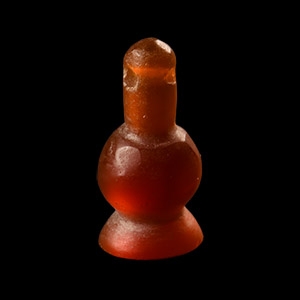
Egyptian Carnelian Poppy Head Amulet
New Kingdom, 18th Dynasty, 1550-1292 B.C.Sold for (Inc. bp): £156
Polished and with integral pierced suspension loop. 0.53 grams, 13 mm
UK gallery, early 2000s.
