
Loading, please wait...
LOT 0457
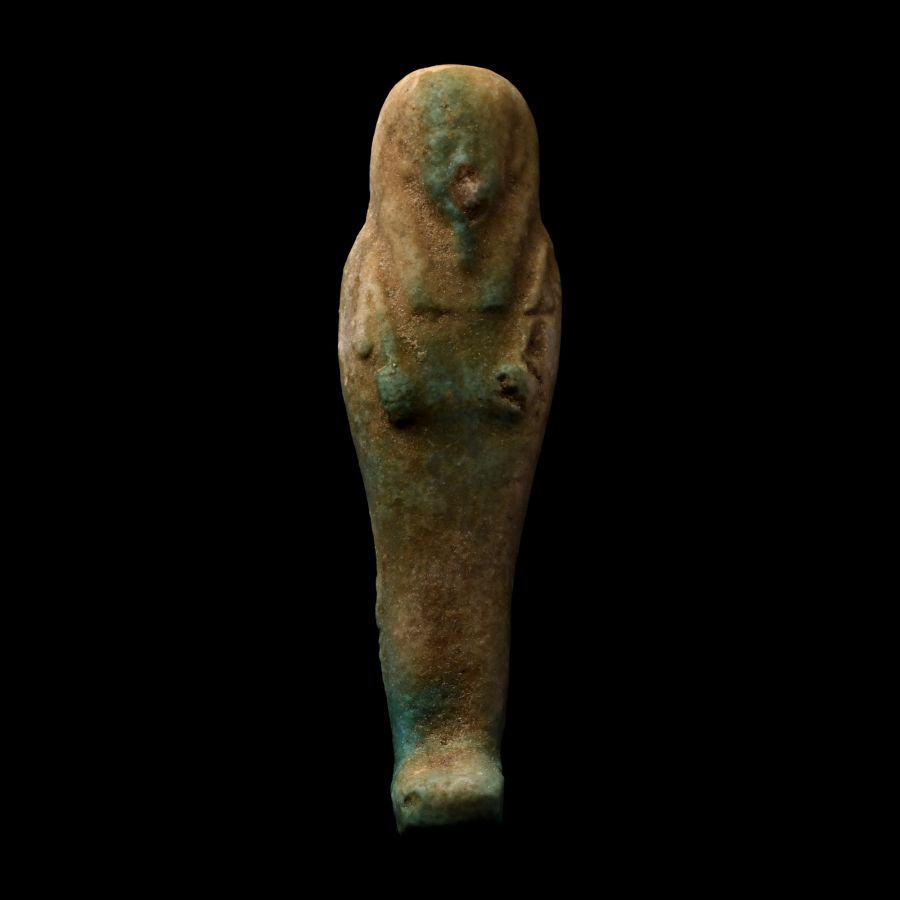
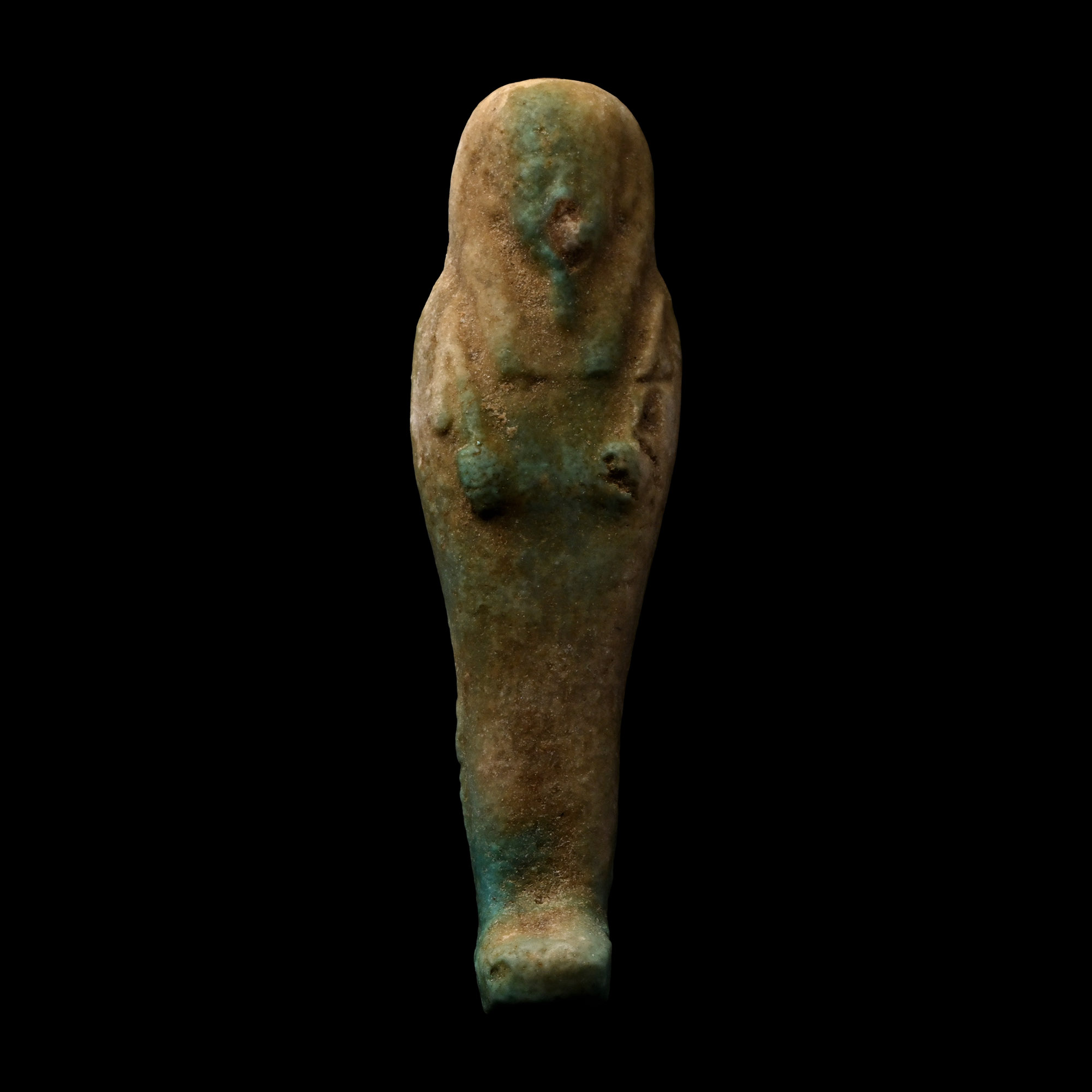
Egyptian Blue and Ochre Faience Shabti
LATE PERIOD, 4TH CENTURY B.C.
2 5/8 in. (12.9 grams, 67 mm).
Plano-convex in section with mould-formed facial detailing, crossed arms and agricultural tools. [No Reserve]
ProvenanceEx private collection, London, UK, 1970s-1990s.
LiteratureCf. Martin, G.T., et al, The Tomb-Chapels of Paser and Raia at Saqqâra, London, 1985, p. 26 (no. 55), pl. 31, for examples of 310 similar complete and 56 fragmentary shabtis.
CONDITIONTimeLine Auctions follows a vetting process to ensure the authenticity and legality of all items, reinforcing our commitment to integrity and responsible trading. Each antiquity, antique, and coin lot undergoes thorough examination by a vetting committee of at least ten external specialists, professional trade association members, scientists, and archaeologists: Our Vetting Process
AUCTIONS:
TimeLine is a leading auction house specialising in antiquities, ancient art, collectables, natural history, coins, medals, and books. Our auctions offer museums, collectors, historians, and enthusiasts the opportunity to acquire unique and historically significant pieces.
-
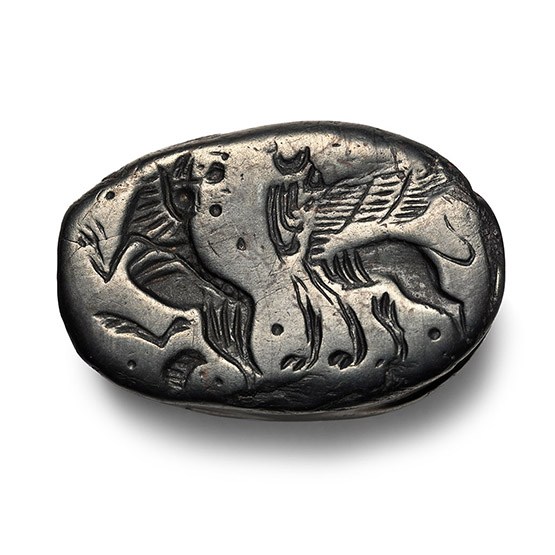
Egypto-Phoenician Haematite Scaraboid Seal
Circa 5th century B.C.Estimate: £2,000 - 3,000 (‡+bp*)
Opening Bid: £1,000
With rampant lion and statant winged gryphon. 8.35 grams, 21 mm
Acquired in the mid 1980s-1990s. Private collection, Switzerland, thence by descent. Private collection, since the late 1990s. Accompanied by a copy of an Art Loss Register certificate, no.3095.WW. This lot has been checked against the Interpol Database of stolen works of art and is accompanied by a search certificate number no.12715-234628. -
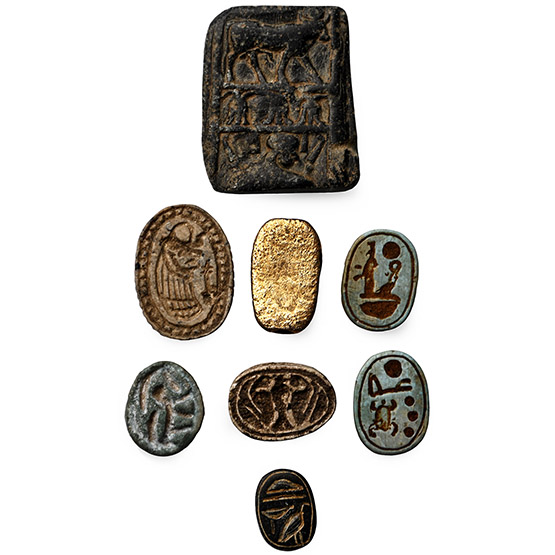
Egyptian Mixed Scarab Collection
2nd-1st millennium B.C. and laterSold for (Inc. bp): £780
Stone plaque with raised relief depictions of the Apis bull and a falcon deity beneath; a mixed group of scarabs and scaraboids, most bearing text or motifs on the underside, including: a rope border enclosing the head of a lion wearing a sun disc and uraeus; a plain gold scaraboid; a line border enclosing the throne name of Amenhotep III (neb-maat-Re); an indeterminate standing figure; a central hes- vase flanked by rearing cobras; a group of hieroglyphs, perhaps a slightly incorrect spelling of the throne name of Amenhotep II (akheperu-Re); and a group of four hieroglyphs. 36.9 grams total, 14-35 mm
From the collection of a gentleman, acquired on the London art market in the 1990s. -
.jpg)
Egyptian Carnelian Scarab Amulet
Late Period, 664-332 B.C.Sold for (Inc. bp): £98
Carved in the round scarab with longitudinal piercing. 0.40 grams, 8.5 mm
Ex Belinda Elliston collection, 20th century.
