
Loading, please wait...


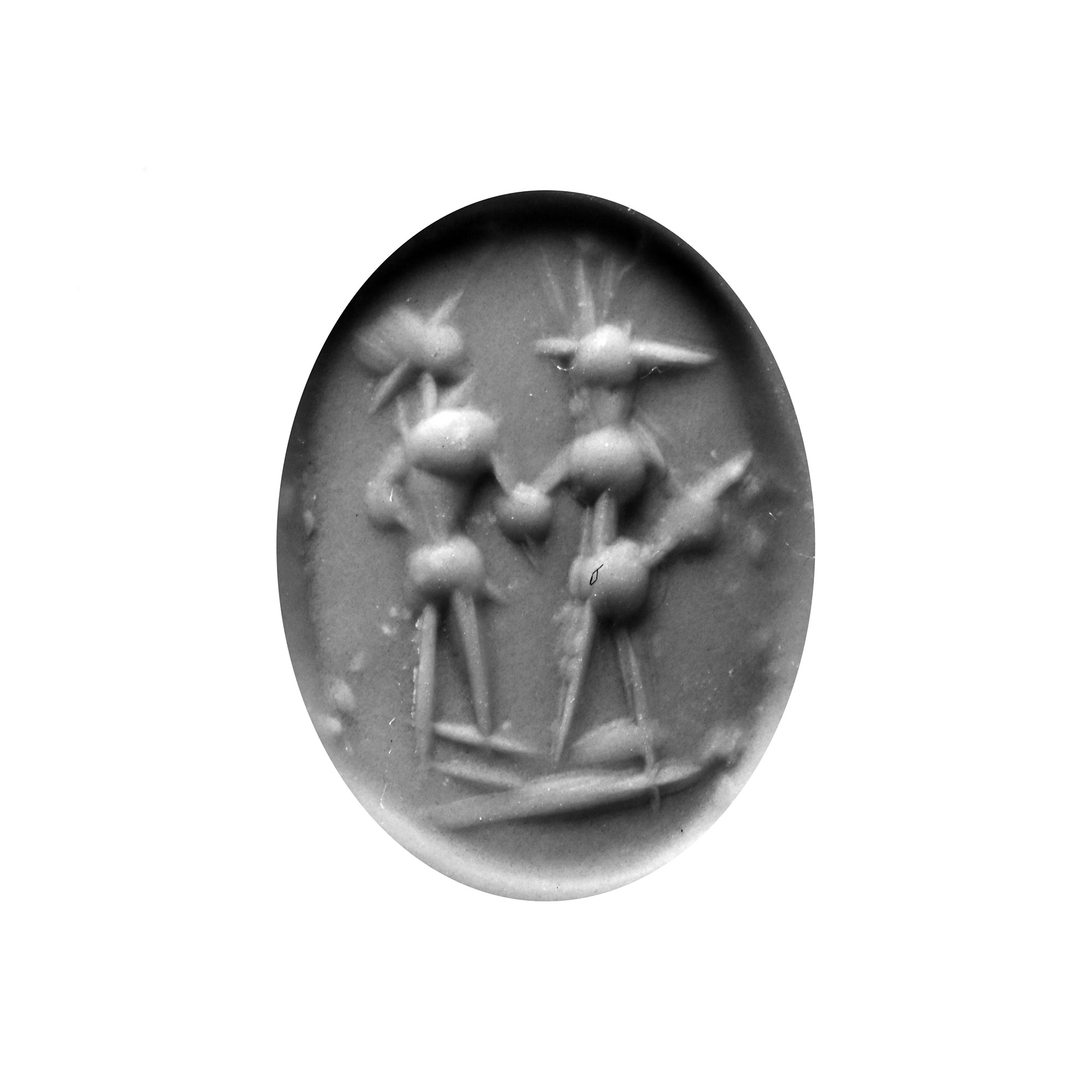
LOT 0467
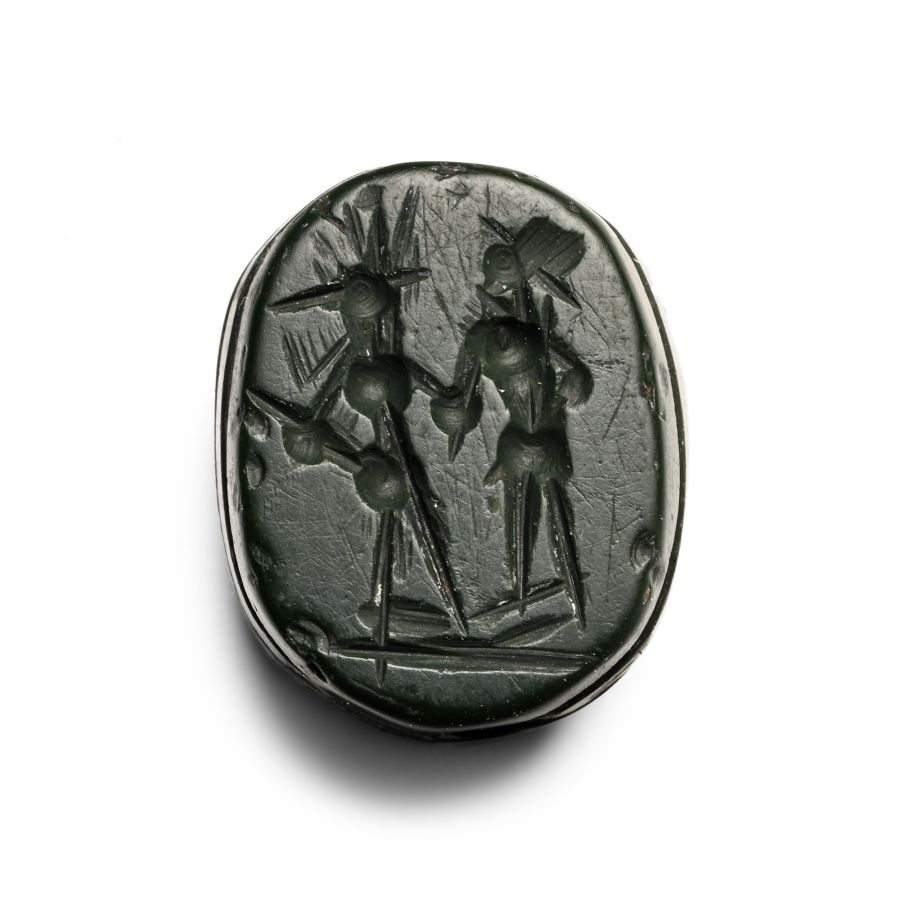
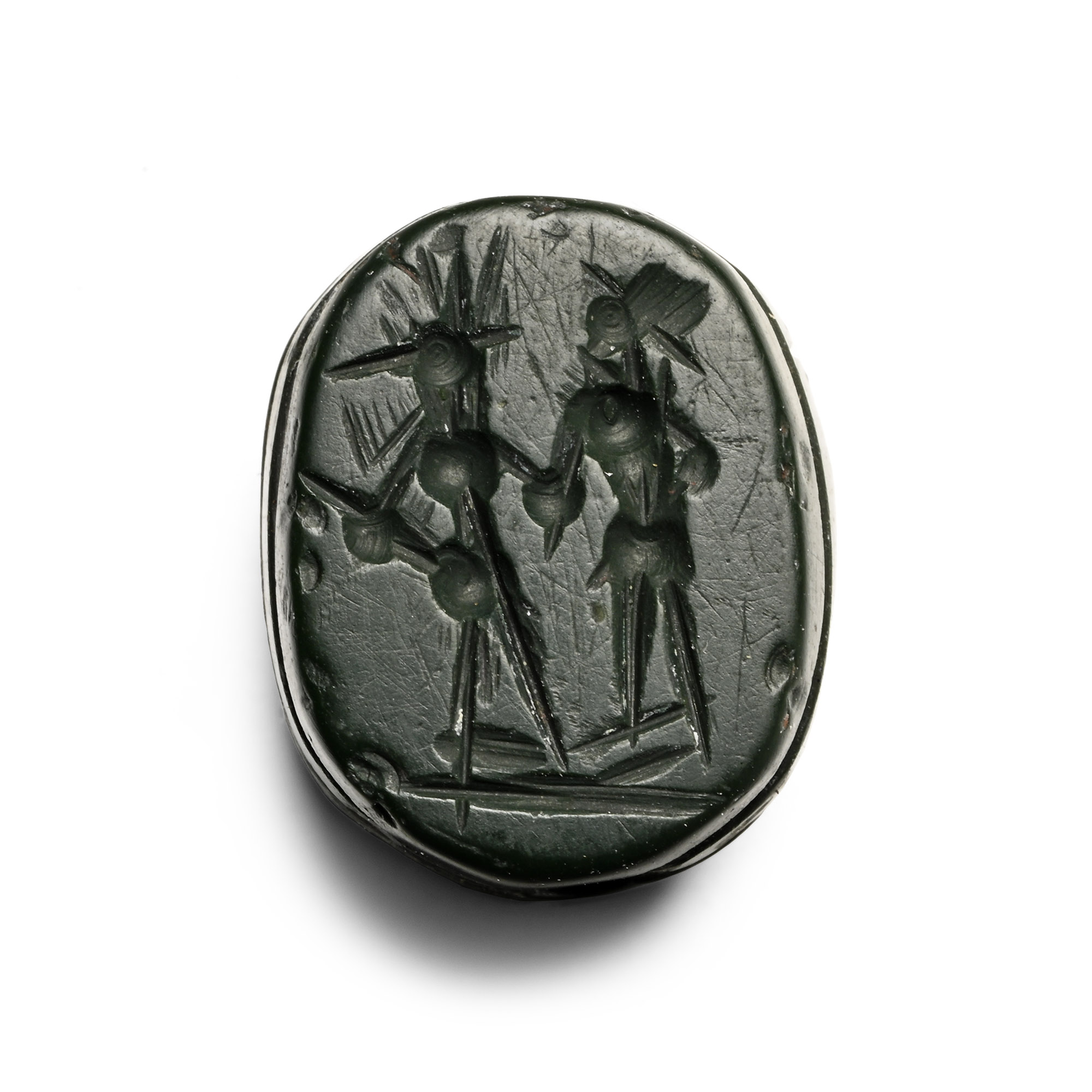
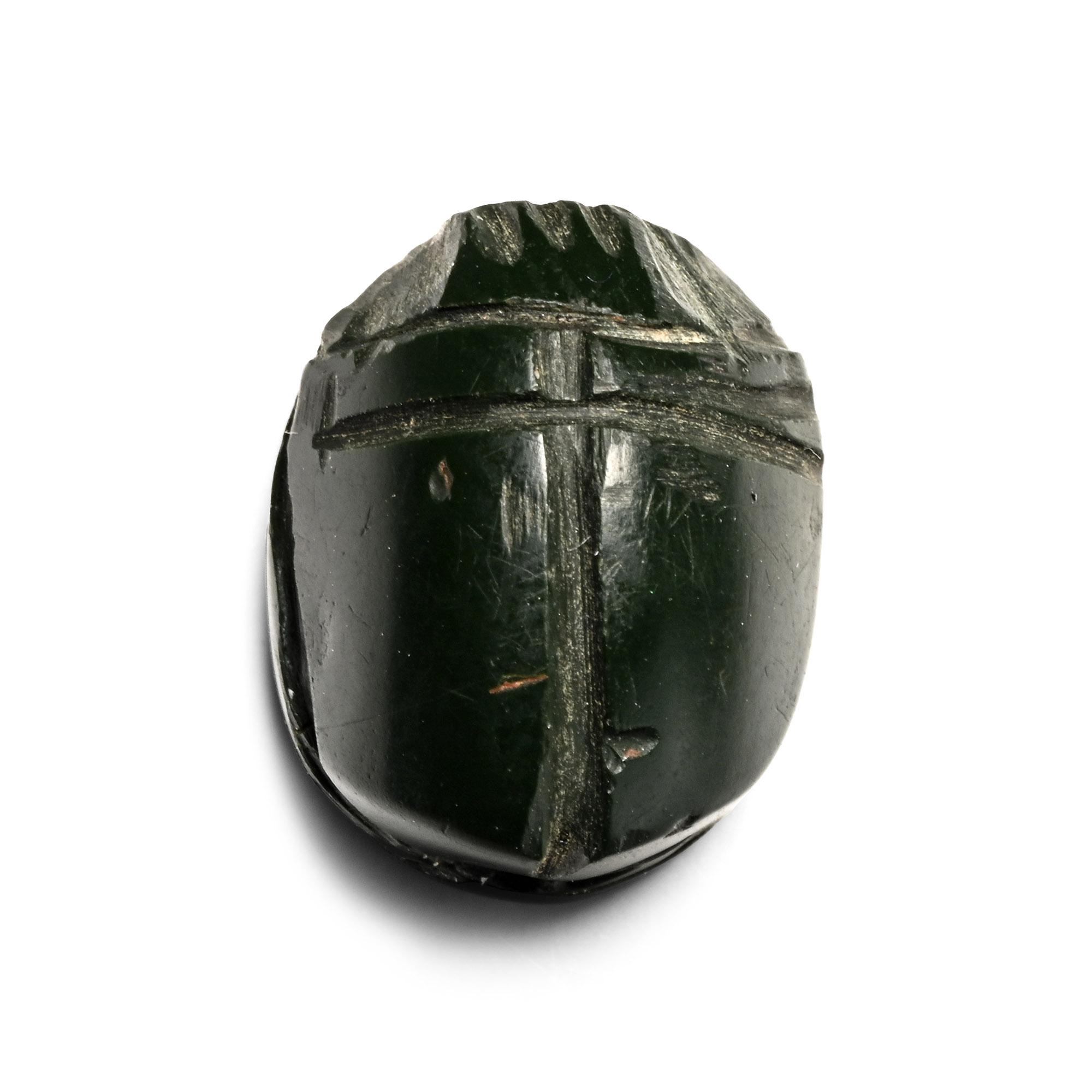
Egyptian Black Stone Scarab
LATE PERIOD, 664-332 B.C.
1/2 in. (2 grams, 13 mm).
With linear detailing to the carapace, the underside with a drilled image of two figures holding hands on a baseline; supplied with a museum-quality impression. [No Reserve]
ProvenanceFrom the private collection of a European gentleman (1942-2024), formed since the 1970s.
CONDITIONTimeLine Auctions follows a vetting process to ensure the authenticity and legality of all items, reinforcing our commitment to integrity and responsible trading. Each antiquity, antique, and coin lot undergoes thorough examination by a vetting committee of at least ten external specialists, professional trade association members, scientists, and archaeologists: Our Vetting Process
AUCTIONS:
TimeLine is a leading auction house specialising in antiquities, ancient art, collectables, natural history, coins, medals, and books. Our auctions offer museums, collectors, historians, and enthusiasts the opportunity to acquire unique and historically significant pieces.
-
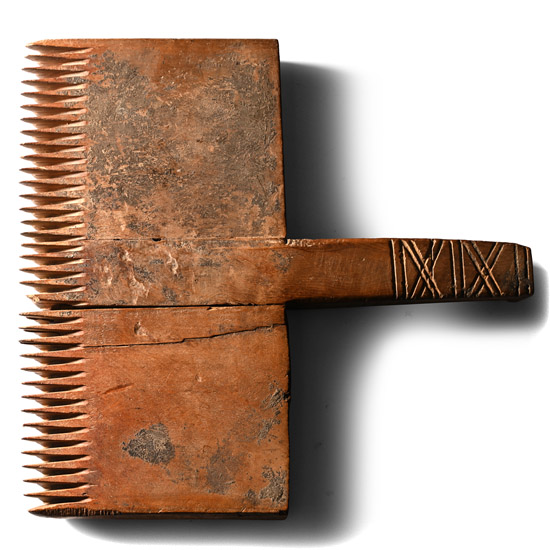
Egyptian Wood Weaving Comb
Coptic, 6th-7th century A.D.Sold for (Inc. bp): £234
With rectangular handle to the rear, teeth to the forward edge; incised saltire decoration to the upper face of the handle. 640 grams, 24.2 cm
Previously belonging to J Stewart, Mayfair, London, UK; acquired in the early 1980s. Property of a Middlesex gentleman. -
.jpg)
Egyptian Steatite Scarab Collection
Hyksos Period and New Kingdom, 18th-13th century B.C.Sold for (Inc. bp): £910
Each with a domed carapace, two with a figure on the underside surrounded by hieroglyphs, two inscribed with hieroglyphic signs. 15 grams total, 18-24 mm
Acquired in Europe before 1992. Ex private collection, UK.
The term ‘Hyksos’ comes from the Egyptian phrase ‘heka khasuwt’, which means ‘rulers of foreign (hill) lands’. The 15th Dynasty was governed by these Hyksos during the Second Intermediate Period. They were not of Egyptian origin but were believed to be Canaanites, and their names were carved on their scarabs. -
.jpg)
Egyptian Bronze Statuette of Young Horus
Late Period, 664-332 B.C.Sold for (Inc. bp): £1,430
Modelled in the round in striding pose with one arm resting along the body and the right hand raised to his mouth, wearing an elaborate side-lock of youth and Pschent crown fronted by uraeus; mounted on a display stand. 202 grams total, 12.8 cm including stand
with R.H. Blanchard's Egyptian Museum, Cairo, early 20th century. Private collection, London, UK. Accompanied by its original base, retaining the Blanchard label.
Harpocrates is the Greek equivalent of the Egyptian name Hor-pa-khered, which means 'Horus the Child'. This name refers to Horus as the divine infant of Isis and Osiris. Wearing an amulet of Harpocrates was believed to provide the same protection that Isis granted to her beloved son. Larger bronze statuettes, such as this, were probably votive offerings to Harpocrates, intended to secure his favour and protection.
