
Loading, please wait...
LOT 0490
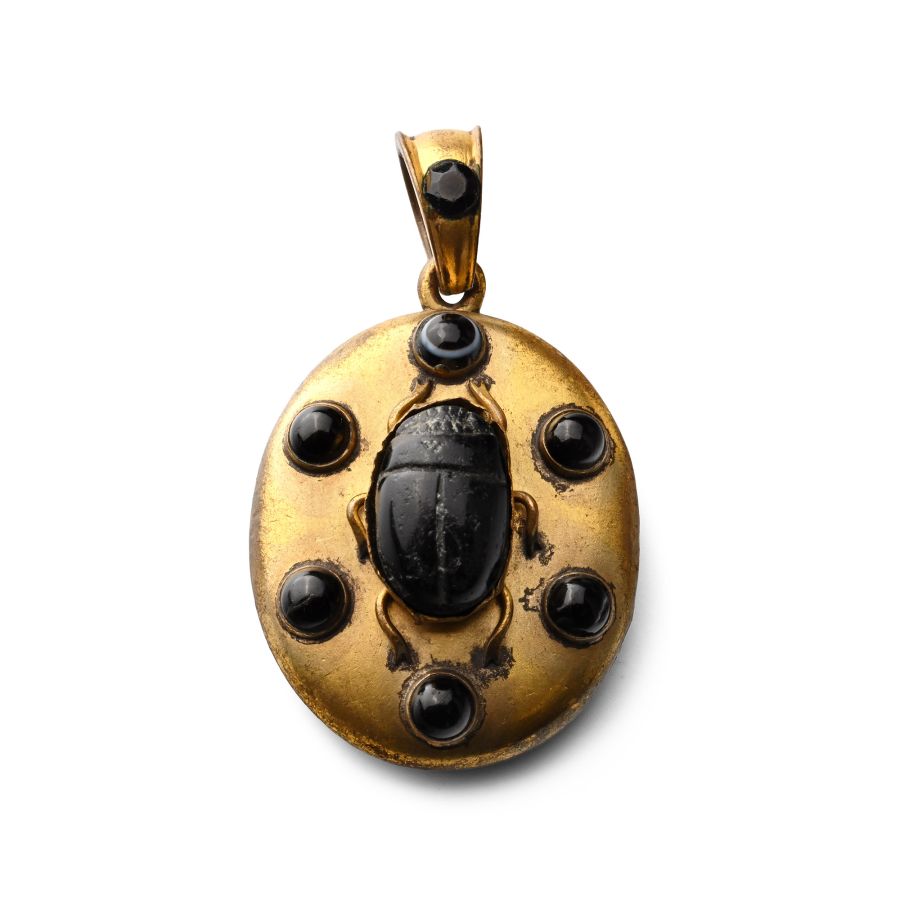
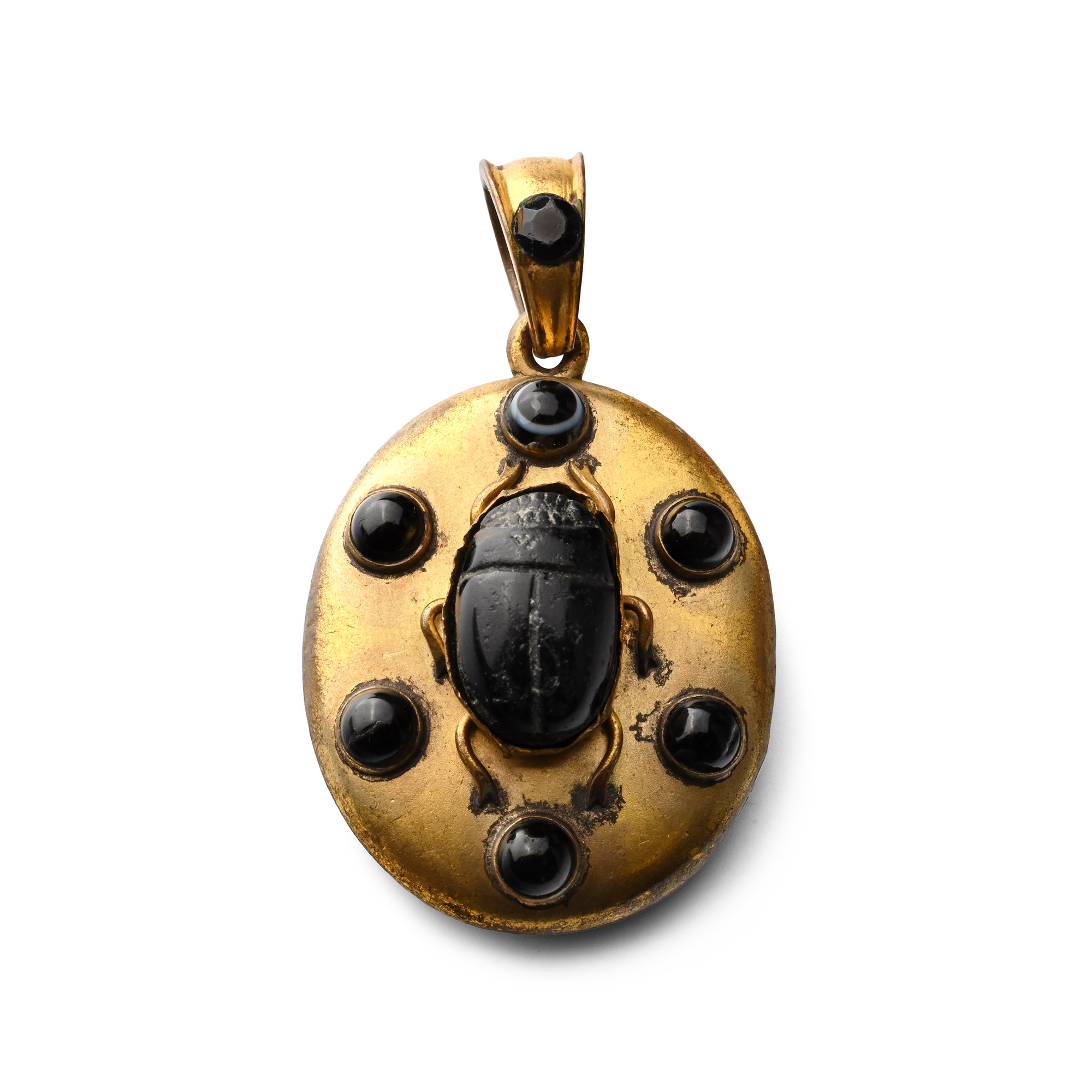
Egyptian Black Stone Scarab in Gilt Bronze Memorial Locket
LATE PERIOD, 664-332 B.C. AND LATER
2 in. (24.95 grams, 53 mm).
Haematite scarab with carapace and mouth, mounted in the centre of a 19th century memorial locket with glazed inner chamber, obverse with six agate cabochons in cells and applied filigree around the central cell mimicking legs.
ProvenanceFrom a 19th century collection based on the locket.
Acquired on the UK art market.
From the collection of G.M.R.H., London, UK.
This lot is accompanied by an illustrated lot declaration signed by the Head of the Antiquities Department, Dr Raffaele D'Amato.
TimeLine Auctions follows a vetting process to ensure the authenticity and legality of all items, reinforcing our commitment to integrity and responsible trading. Each antiquity, antique, and coin lot undergoes thorough examination by a vetting committee of at least ten external specialists, professional trade association members, scientists, and archaeologists: Our Vetting Process
AUCTIONS:
TimeLine is a leading auction house specialising in antiquities, ancient art, collectables, natural history, coins, medals, and books. Our auctions offer museums, collectors, historians, and enthusiasts the opportunity to acquire unique and historically significant pieces.
LOT 0490
Egyptian Black Stone Scarab in Gilt Bronze Memorial Locket
Sold for (Inc. bp): £572
-
Egyptian Black Stone Scarab in Gilt Bronze Memorial Locket
Late Period, 664-332 B.C. and laterSold for (Inc. bp): £572
Haematite scarab with carapace and mouth, mounted in the centre of a 19th century memorial locket with glazed inner chamber, obverse with six agate cabochons in cells and applied filigree around the central cell mimicking legs. 24.95 grams, 53 mm
From a 19th century collection based on the locket. Acquired on the UK art market. From the collection of G.M.R.H., London, UK. This lot is accompanied by an illustrated lot declaration signed by the Head of the Antiquities Department, Dr Raffaele D'Amato. -
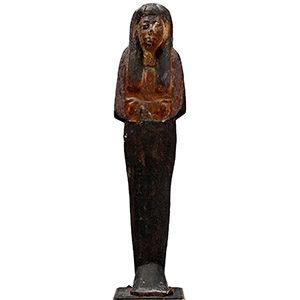
Egyptian Wooden Shabti
New Kingdom, 19th Dynasty, 1293-1185 B.C.Sold for (Inc. bp): £2,080
Carved in the round with detailed tripartite wig, hands crossed at the chest; some painted and gilded(?) plaster surface; mounted on a later base. 332 grams, 26.9 cm
From the collection of Mrs Kilvert, who fled from France to England during the French Revolution. Received by gift to the Hodge family from Mrs Kilvert at Bath in 1864-1865; thence by descent to the grandchildren of Mr John Hodge, a private London tutor. From the collection of a New Zealand family; thence by descent. This lot has been checked against the Interpol Database of stolen works of art and is accompanied by a search certificate number no.12846-239090. This lot has been cleared against the Art Loss Register database, and is accompanied by an illustrated lot declaration signed by the Head of the Antiquities Department, Dr Raffaele D'Amato.
A shabti, also known as ushabti or shawabti, is a small funerary figurine found in ancient Egyptian tombs, dating from around 2000 BCE to 30 BCE. Its main purpose was to serve as a servant for the deceased in the afterlife, carrying out manual tasks such as farming or irrigation. Shabtis were often inscribed with a magical formula from the Book of the Dead to ensure they would animate when summoned. The distinctive, lighter-coloured, and previously part-gilded upper body decoration, contrasting with the black used for the rest of the figure, may symbolise the moment of rebirth, when the face of the deceased was bathed in the sun's rays. -
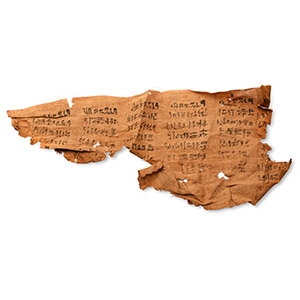
Egyptian Mummy Shroud Section with Hieratic Text
Late-Ptolemaic Period, circa 480-30 B.C.Sold for (Inc. bp): £1,170
A section of woven linen textile featuring lines of neat hieratic text in black. 5.61 grams, 16 cm
From the collection of a gentleman, acquired on the London art market in the 1990s. This lot is accompanied by an illustrated lot declaration signed by the Head of the Antiquities Department, Dr Raffaele D'Amato.
From the fifth century B.C., mummy wrappings for the affluent frequently display lines of hieratic script—a cursive variant of Egyptian hieroglyphs used for both daily and religious writings. These often include excerpts from funerary texts like the Book of the Dead, along with prayers and invocations designed to safeguard and guide the deceased in the afterlife. These texts, sometimes accompanied by vignettes, were inscribed directly on the linen strips before or during the mummification process. Some of these bandages could be remarkably long; one example from Brussels, measuring only 6.2 cm in width, spans an incredible 26 metres.
