
Loading, please wait...


LOT 0002
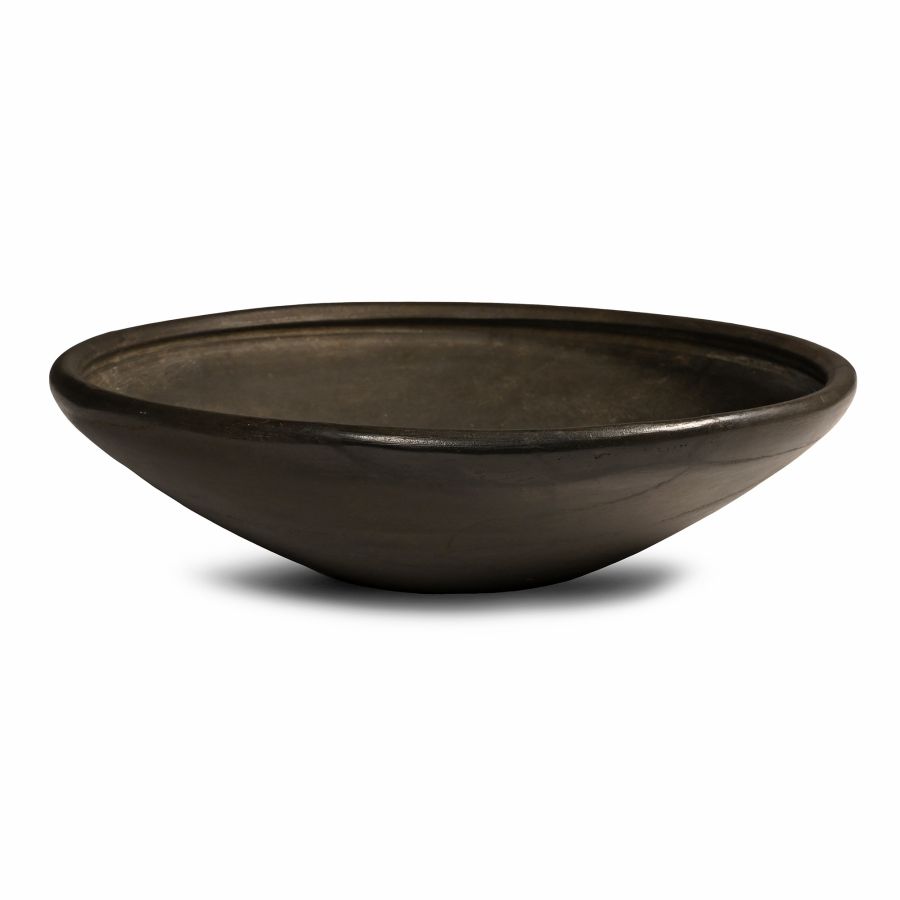
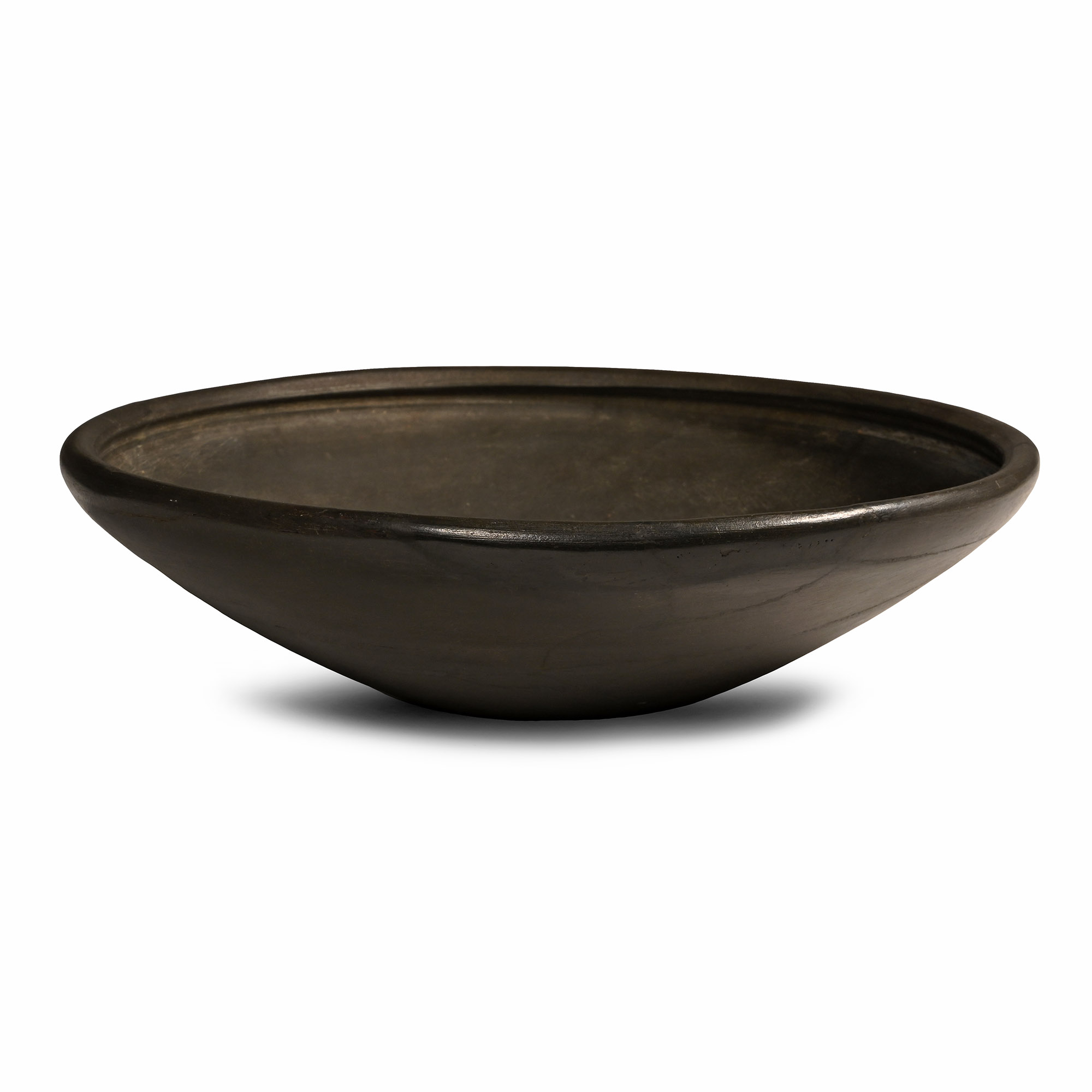
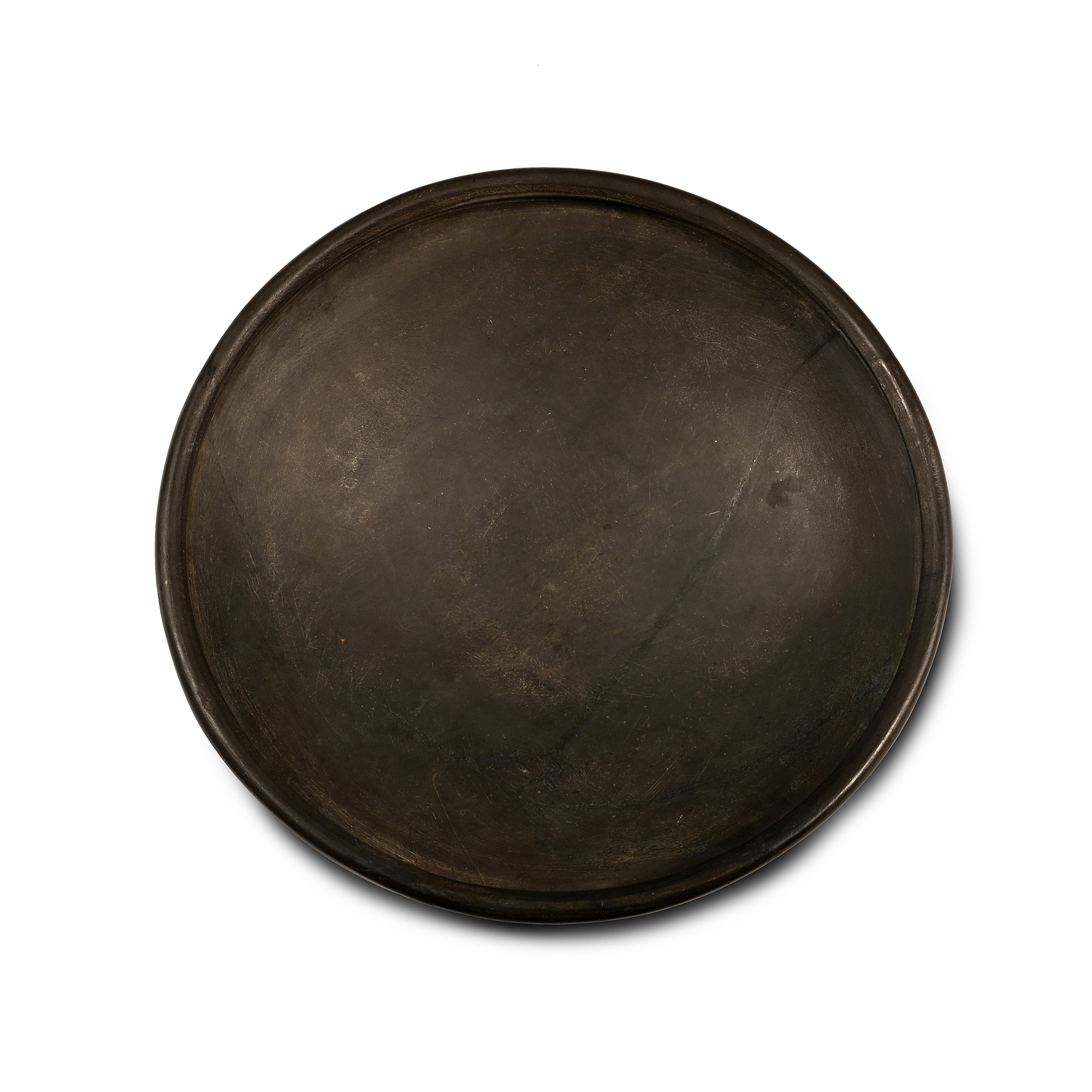
Egyptian Black Stone Lipped Bowl
2ND-3RD DYNASTY, 2860-2640 B.C.
7 7/8 in. (627 grams, 20 cm).
Shallow and broad in profile with carinated rim.
ProvenanceFrom the private collection of Mr K.A., acquired in the 1990s-early 2000s.
This lot has been checked against the Interpol Database of stolen works of art and is accompanied by a search certificate number no.12367-225768.
Cf. El-Khouli, Egyptian Stone Vessels: Predynastic Period to Dynasty III, vol.3, London, 1974, pl. 105, 4152-4153, for a vessel of similar profile.
FootnotesStone vessels, made from various styles and types of stone, were commonly found in Early Dynastic and Old Kingdom tombs as funerary equipment. One of the most significant discoveries was the recovery of over 30,000 stone vessels in King Djoser's Step Pyramid complex.
CONDITIONTimeLine Auctions follows a vetting process to ensure the authenticity and legality of all items, reinforcing our commitment to integrity and responsible trading. Each antiquity, antique, and coin lot undergoes thorough examination by a vetting committee of at least ten external specialists, professional trade association members, scientists, and archaeologists: Our Vetting Process
AUCTIONS:
TimeLine is a leading auction house specialising in antiquities, ancient art, collectables, natural history, coins, medals, and books. Our auctions offer museums, collectors, historians, and enthusiasts the opportunity to acquire unique and historically significant pieces.
-
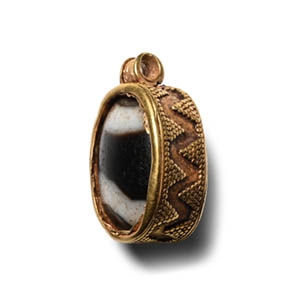
Gold Pendant with Agate Scaraboid
5th-3rd century B.C.Sold for (Inc. bp): £1,170
Banded agate scaraboid with openwork gold frame, tubular suspension loop, triangular clusters of granules to the edge; Phoenician or Achaemenid. 4.20 grams, 21 mm
Acquired in the mid 1980s-1990s. Private collection, Switzerland, thence by descent. Private collection, since the late 1990s. -
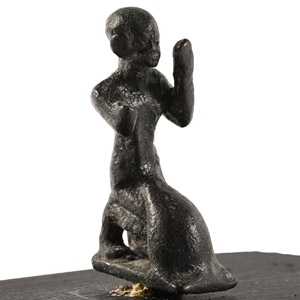
Egyptian Bronze Statue of a Kneeling Priest
Late Period, 664-332 B.C.Estimate: £250 - 350 (+bp*)
Opening Bid: £139
Kneeling on a rectangular platform with a wide apron covering his thighs, clean-shaven head and hands raised in adoration; tang on the underside for attachment; mounted on a display stand. 41 grams total, statue: 30 mm high
From an early 20th century Home Counties, UK, collection.
Priest figurines like this were commonly placed before a larger figurine of a deity, both attached to a base, e.g., Schulz, R., Seidel, M., Egyptian Art. The Walters Art Museum, London, 2009, for a kneeling priest before a standing figure of Anubis. -
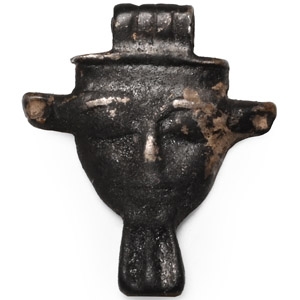
Egyptian Silver Hathor Head Amulet
Late Period, 664-332 B.C.Sold for (Inc. bp): £124
A finely detailed head of the goddess Hathor with a human face, divine beard, and cow ears, with a ribbed suspension loop on top. 0.68 grams, 11 mm
From an early 20th century collection.
