
Loading, please wait...
LOT 0023
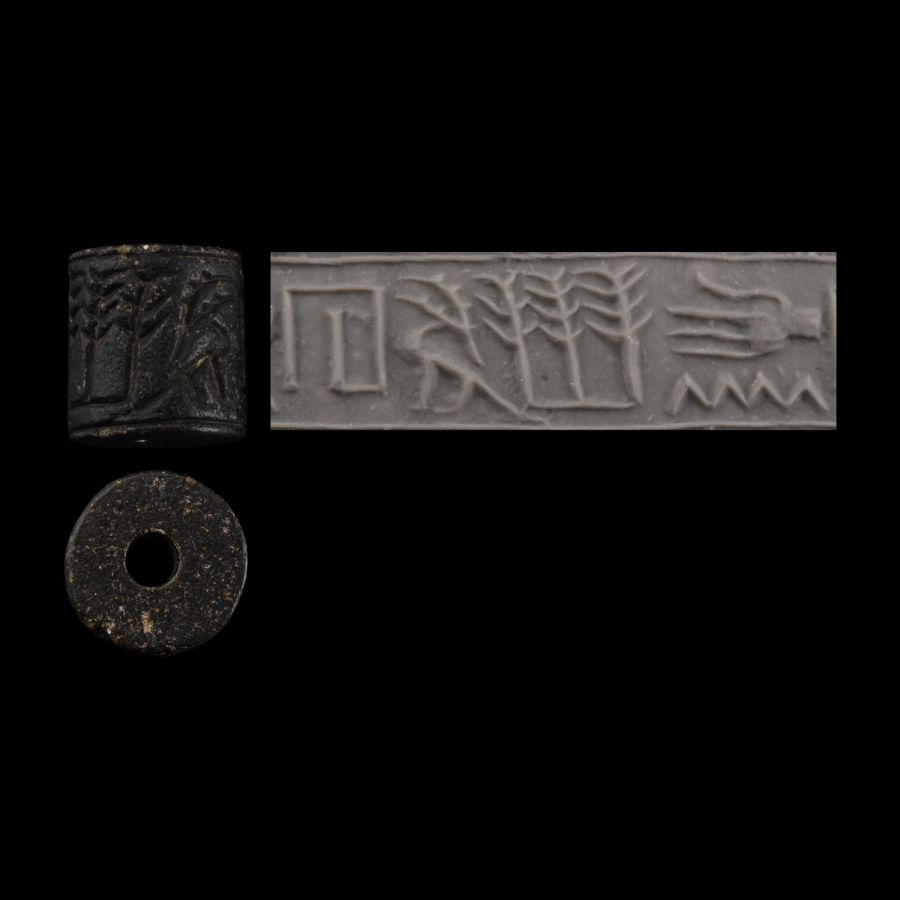
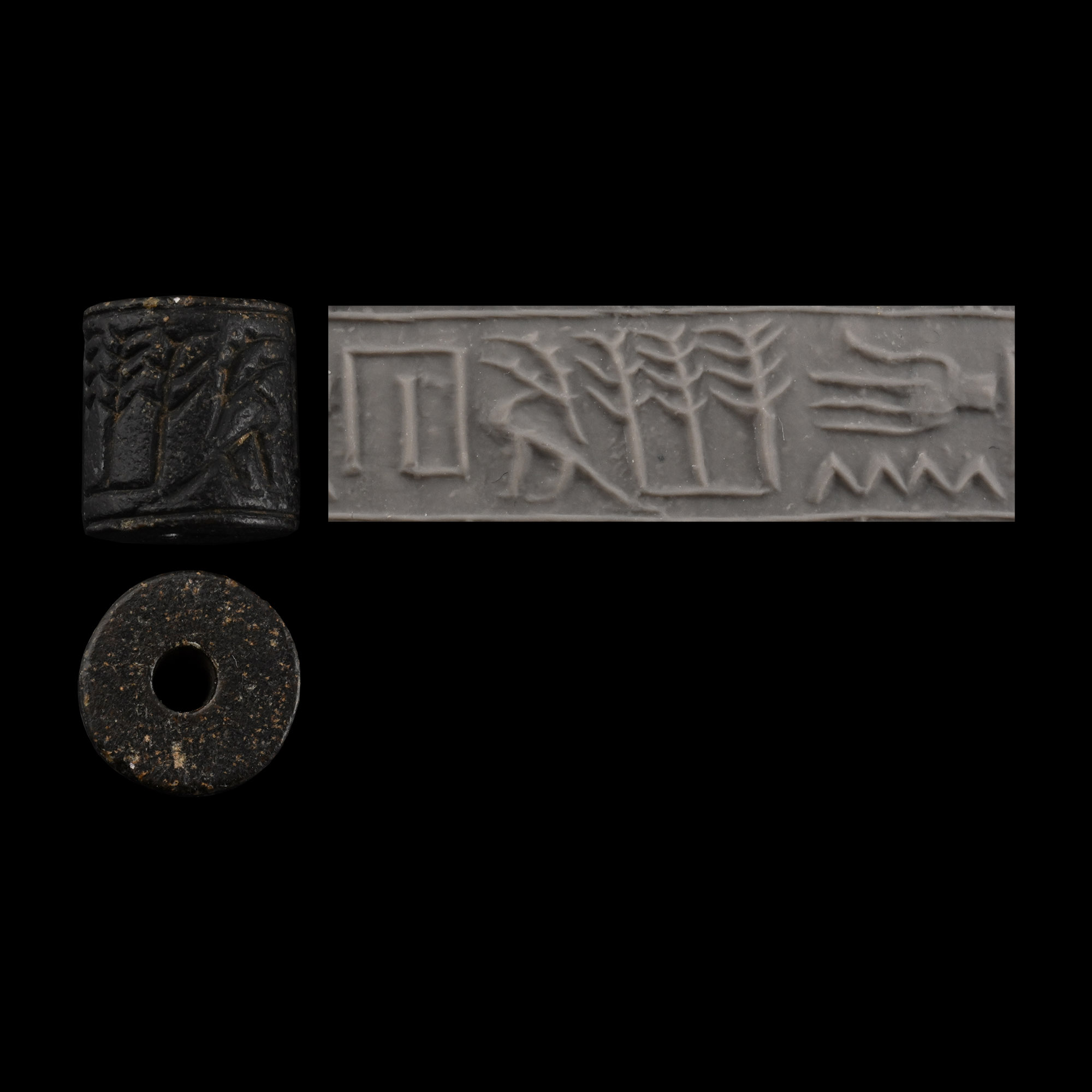
Egyptian Black Stone Cylinder Seal Inscribed with Hieroglyphs for the Name Deneh
CIRCA 2900 B.C.
1/2 in. (6.5 grams, 14 mm).
With hieroglyphic inscription, restrung pair of red stone beads, old handwritten label '1633'; accompanied by a copy of an old scholarly note, typed and signed by W.G. Lambert, late Professor of Assyriology, University of Birmingham, 1970-1993, which states: 'Cylinder Seal of Soft Black Stone, 15 x 13.5 mm. Between upper and lower rules five Egyptian hieroglyphs are engraved skillfully. The bird is 'akh', "soul", the following house, hand and wavey line, are probably a personal name Deneh or Dehen, and the remaining sign consisting of three trees or plants may be a title. This is an old Egyptian cylinder seal from the Second Dynasty, c. 2900 B.C., and the inscriptions are still in the process of being deciphered. The occurrence of "soul" suggests mortuary use, but the Egyptians made preparations for such things during life, so the owner may well have had this object during his life. It is in fine state of preservation.'; accompanied by a museum-quality impression. [No Reserve]
ProvenanceUK private collection, acquired 1980-1983.
Accompanied by a copy of a scholarly note, typed and signed by Professor Wilfrid George Lambert in 1992.
This lot is accompanied by an illustrated lot declaration signed by the Head of the Antiquities Department, Dr Raffaele D'Amato.
Cylinder seals are typically engraved, cylindrical stone objects designed to be rolled over clay, leaving impressions of images and often text carved in reverse. In Egypt, they appeared early in the historical record, likely due to Mesopotamian influence, with the more familiar button and stamp seals becoming prevalent later, particularly during the First Intermediate Period.
CONDITIONTimeLine Auctions follows a vetting process to ensure the authenticity and legality of all items, reinforcing our commitment to integrity and responsible trading. Each antiquity, antique, and coin lot undergoes thorough examination by a vetting committee of at least ten external specialists, professional trade association members, scientists, and archaeologists: Our Vetting Process
AUCTIONS:
TimeLine is a leading auction house specialising in antiquities, ancient art, collectables, natural history, coins, medals, and books. Our auctions offer museums, collectors, historians, and enthusiasts the opportunity to acquire unique and historically significant pieces.
LOT 0023
Egyptian Black Stone Cylinder Seal Inscribed with Hieroglyphs for the Name Deneh
Sold for (Inc. bp): £2,470
-
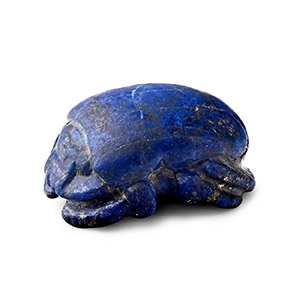
Egyptian Lapis Lazuli Heart Scarab
Late Period, 664-332 B.C. or laterSold for (Inc. bp): £780
Carved in the round with carapace detailing to the upper face, ribbed loop to the underside. 6.59 grams, 23 mm
From an early 20th century collection. This lot is accompanied by an illustrated lot declaration signed by the Head of the Antiquities Department, Dr Raffaele D'Amato. -
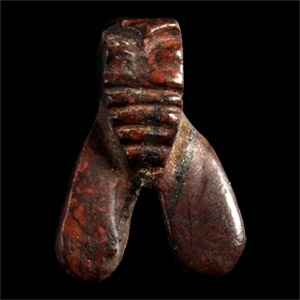
Egyptian Carnelian Fly Amulet
Late Period, 664-332 B.C.Sold for (Inc. bp): £104
Carved with ribbed body and eye detailing; drilled through the body for suspension. 0.34 grams, 10 mm
Ex London, UK, 1990s. This lot is accompanied by an illustrated lot declaration signed by the Head of the Antiquities Department, Dr Raffaele D'Amato.
Small fly amulets first appeared in burials during the Naqada II Period, c. 3200 B.C. These amulets grew in popularity and the materials used to make them expanded during the New Kingdom. They are crafted from a variety of materials such as gold, silver, lapis lazuli, carnelian, amethyst, faience, and bone. These amulets were thought to protect against insect bites and to ward off troublesome flying creatures through apotropaic magic. Some believe they may have even been intended to symbolise the fly’s fecundity. Additionally, pharaohs would bestow gold fly-shaped pendants as military awards to honour the bravery and fly-like persistence of soldiers in battle. -
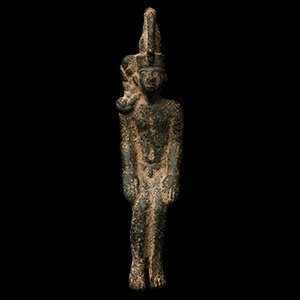
Egyptian Bronze Seated Harpocrates
Late Period, 664-332 B.C.Estimate: £1,000 - 1,400 (+bp*)
Opening Bid: £500
Substantial cast figurine modelled in the round of Harpocrates sitting with hands on his thighs, double crown and sidelock. 389 grams, 16.2 cm
From the collection of a gentleman, acquired on the London art market in the 1990s. This lot is accompanied by an illustrated lot declaration signed by the Head of the Antiquities Department, Dr Raffaele D'Amato.
Harpocrates is the Greek rendering of the Egyptian Hor-pa-khered, which means ‘Horus the Child’. This name refers to Horus as the divine infant of Isis and Osiris. Wearing an amulet of Harpocrates was believed to give the wearer the same protection that Isis offered to her beloved son. Larger bronze statuettes probably served as votive offerings to Harpocrates to secure his favour and protection.
