
Loading, please wait...
LOT 0507
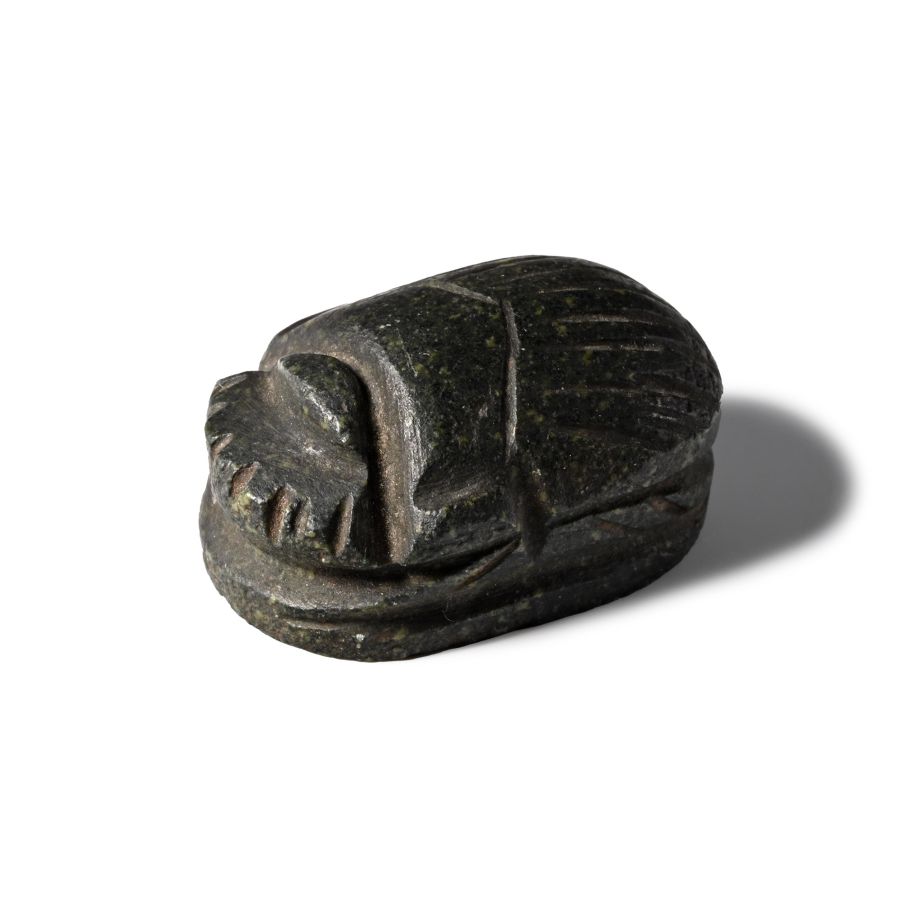
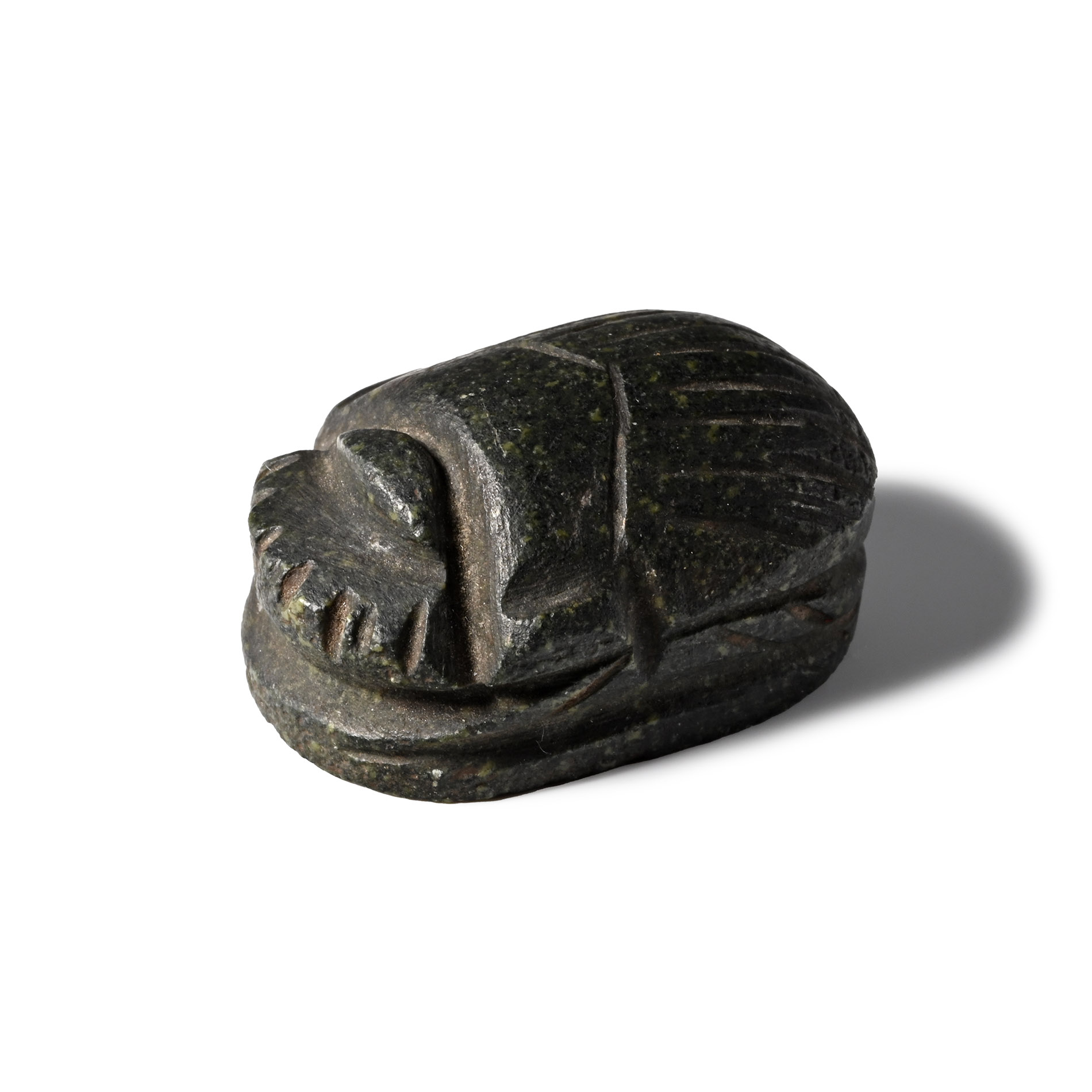
Egyptian Black Hardstone Scarab
LATE PERIOD, 664-332 B.C.
1 1/8 in. (17 grams, 29 mm).
Dark green hardstone with paler speckles; with a boldly carved head, clypeus, prothorax and elytra, and legs indicated at the sides; plain underside.
ProvenanceEx Irene Newman, Birdham, Chichester, West Sussex, England.
with Stride & Son Auctioneers, Chichester, West Sussex, England, 23 April 2015, no.1599 [Part].
Acquired by the present owner at the above sale.
This lot is accompanied by an illustrated lot declaration signed by the Head of the Antiquities Department, Dr Raffaele D'Amato.
Cf. Schulz, R., Seidel, M., Egyptian Art. The Walters Art Museum, Oakville, 2007, pl.18, cat. no. 126, for a similar example.
FootnotesThe scarab, which represented the dung beetle, was the most popular amulet in ancient Egypt for approximately two thousand years until the Ptolemaic Period when it gradually fell out of favour. The popularity of scarabs extended beyond the borders of Egypt, and they were also distributed and produced in other regions, such as Phoenicia and Israel. The beetle is named khepri, derived from the verb 'to come into existence', and was considered the embodiment of the creator god Khepri, who was self-engendered. The ancient Egyptians mistakenly believed that the young beetle emerging from the dung ball was the result of an act of self-creation.
CONDITIONTimeLine Auctions follows a vetting process to ensure the authenticity and legality of all items, reinforcing our commitment to integrity and responsible trading. Each antiquity, antique, and coin lot undergoes thorough examination by a vetting committee of at least ten external specialists, professional trade association members, scientists, and archaeologists: Our Vetting Process
AUCTIONS:
TimeLine is a leading auction house specialising in antiquities, ancient art, collectables, natural history, coins, medals, and books. Our auctions offer museums, collectors, historians, and enthusiasts the opportunity to acquire unique and historically significant pieces.
LOT 0507
Egyptian Black Hardstone Scarab
Estimate £350 - 450€410 - 520 (for guidance only)$470 - 610 (for guidance only)
-
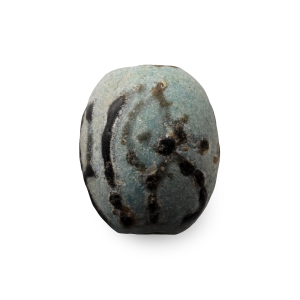
Egyptian Faience Bead with Eye of Horus and Ankh Symbols
Late Period, 664-332 B.C.Estimate: £100 - 140 (+bp*)
Opening Bid: £50
Barrel-shaped bead with blue glaze, wedjat and ankh in black glaze. 2.09 grams, 14 mm
From an early 20th century collection. This lot is accompanied by an illustrated lot declaration signed by the Head of the Antiquities Department, Dr Raffaele D'Amato.
The wedjat-eye amulet is a representation of the healed eye of the god Horus, featuring both human and falcon elements. The name wedjat in ancient Egyptian means ‘the one that is sound.’ According to Egyptian mythology, Horus' eye was wounded or taken by the god Seth and restored by Thoth. The wedjat-eye amulet was thought to protect its wearer and bestow the power of recovery and regeneration onto them. It was very popular and used by both the living and the dead. -
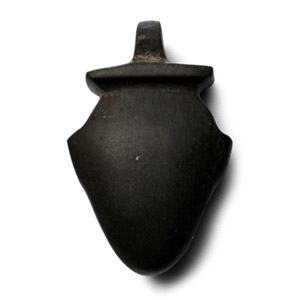
Egyptian Hardstone Heart Amulet
New Kingdom, 1550-1070 B.C.Estimate: £200 - 300 (+bp*)
Opening Bid: £100
A heart, ib, amulet of classic egg-form with shallow lugs on either side with short flared top and tubular suspension loop. 1.5 grams, 17 mm
From an early 20th century collection. This lot is accompanied by an illustrated lot declaration signed by the Head of the Antiquities Department, Dr Raffaele D'Amato.
According to ancient Egyptian beliefs, the heart (ib) was considered to be the centre of intelligence, emotions, and behaviour. The heart was also believed to store an individual's memories. During the Weighing of the Heart ceremony in the afterlife, the heart could speak up for the deceased and account for their lifetime of actions before Osiris. For this reason, heart amulets were placed on the mummy to safeguard the organ and ensure a favourable outcome during judgment. -
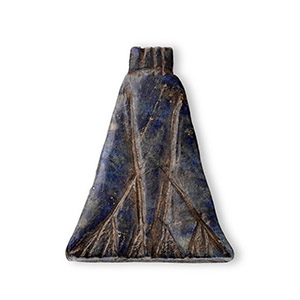
Egyptian Hardstone Amulet of Lotus Flower
New Kingdom, 1550-1070 B.C.Sold for (Inc. bp): £104
Bifacial with ribbed suspension loop and carved petals. 2.23 grams, 22 mm
From an early 20th century collection. This lot is accompanied by an illustrated lot declaration signed by the Head of the Antiquities Department, Dr Raffaele D'Amato.
