
Loading, please wait...
LOT 0007
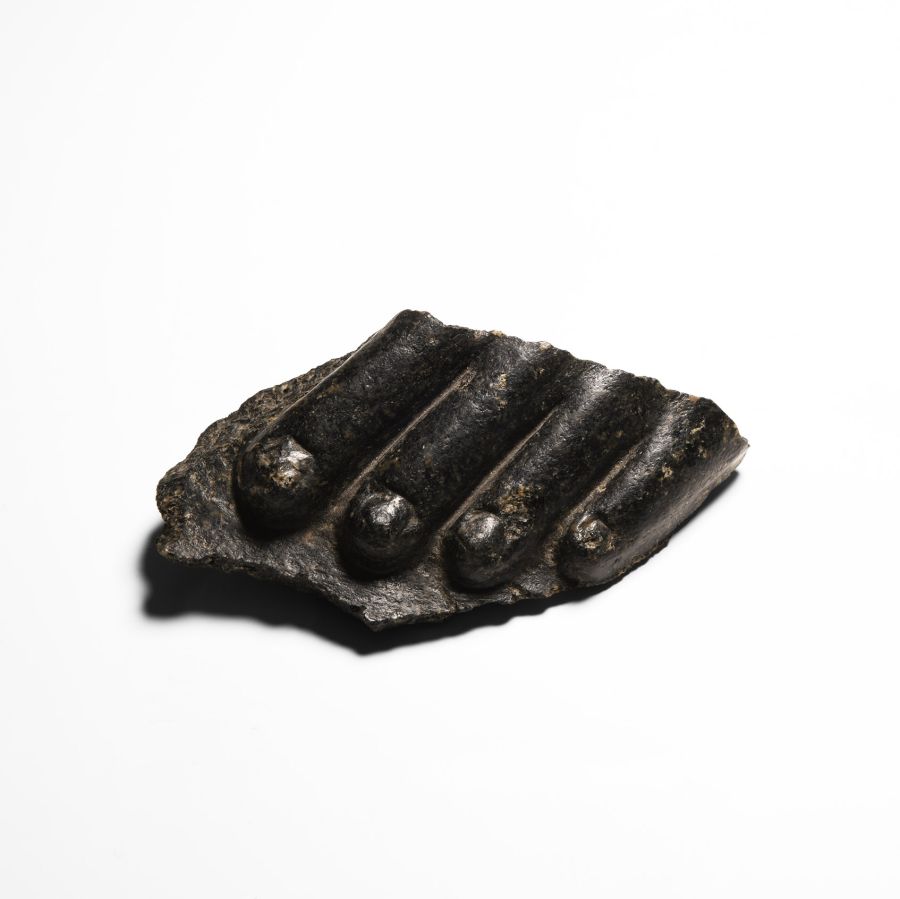
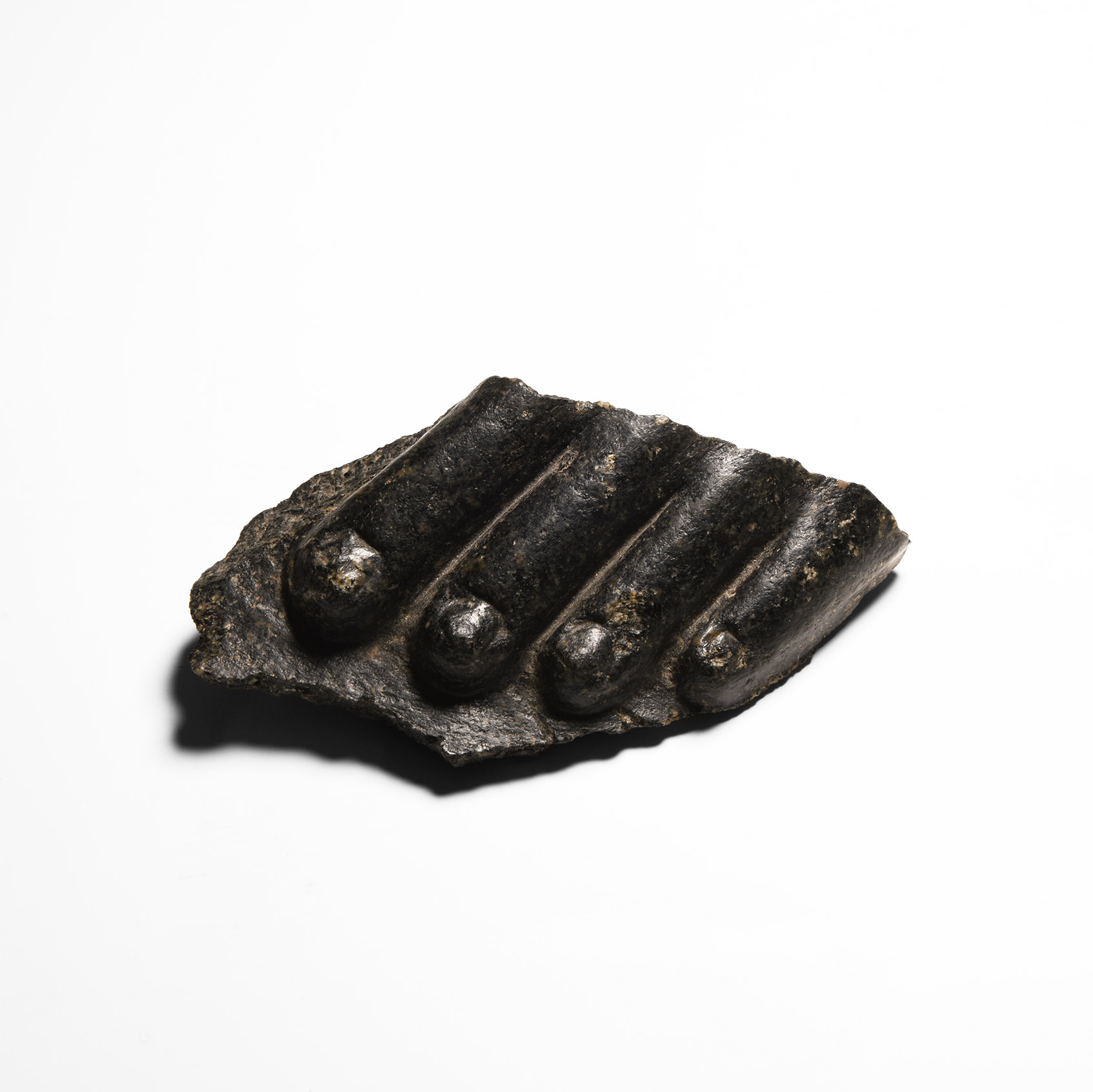
Egyptian Black Granite Foot Fragment
LATE NEW KINGDOM, 1550-1070 B.C.
4 5/8 in. (253 grams, 11.8 cm).
A carved black granite statue base fragment with four toes modelled in the round, with delineated nails of a left foot.
ProvenanceAcquired from France, 2015.
English private collection.
Accompanied by a copy of the French cultural passport no.167713.
Accompanied by an academic report by Dr Alberto Maria Pollastrini.
TimeLine Auctions follows a vetting process to ensure the authenticity and legality of all items, reinforcing our commitment to integrity and responsible trading. Each antiquity, antique, and coin lot undergoes thorough examination by a vetting committee of at least ten external specialists, professional trade association members, scientists, and archaeologists: Our Vetting Process
AUCTIONS:
TimeLine is a leading auction house specialising in antiquities, ancient art, collectables, natural history, coins, medals, and books. Our auctions offer museums, collectors, historians, and enthusiasts the opportunity to acquire unique and historically significant pieces.
-
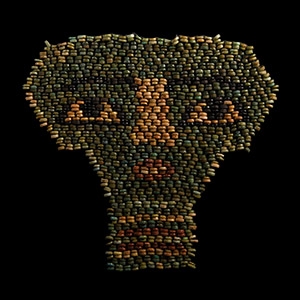
Egyptian Beaded Mummy Face Mask
Late Period, 664-332 B.C.Sold for (Inc. bp): £187
A restrung panel of small glazed composition beads in various colours representing a mummy face mask with false beard. 44 grams, 13 cm wide
Acquired 1990s. Ex Mariaud des Serres, Paris, France.
The practice of providing a bead mask as additional protection for the face of the mummy developed in the Late Period. The green beads used as the principal colour in the creation of the stylised face symbolise regeneration and re-birth. An example discovered at Esna in Upper Egypt and still attached to the face of a mummy is on display in the World Museum Liverpool (accession number 7.6.20.60). -
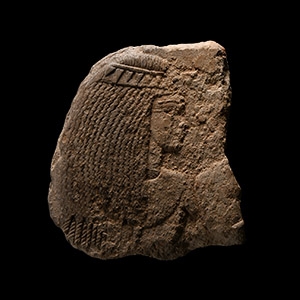
Egyptian Head of a Noblewoman from a Banquet Scene
New Kingdom, late 18th-9th Dynasty, circa 1410-1201 B.C.Sold for (Inc. bp): £1,170
A limestone frieze section which once part of a banquet scene, the fragment carved with the head and upper body of a noblewoman facing right, wearing a broad collar and an elaborate wig of long, tightly curled locks with a fringe of twisted strands, decorative headband with a lotus flower to the front; remains of pigmentation. 138 grams, 84 mm
From an old UK collection. From the private collection of Alf Baxendale (1941-2016) part 2, keen Egyptologist, member of the Egyptology Society, trustee of the Amarna Trust; thence by descent. Accompanied by an identification display card. Accompanied by a copy of his obituary published in Horizon, The Amarna Project and Amarna Trust newsletter, Issue 18, 2017, p.21, by Barry John Kemp, CBE, FBA, Professor Emeritus of Egyptology at the University of Cambridge and directing excavations at Amarna in Egypt. Accompanied by an academic report by Egyptologist Paul Whelan. -
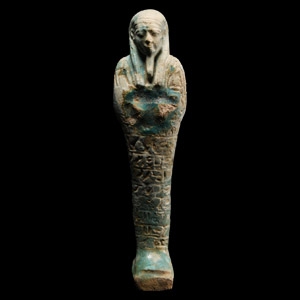
Egyptian Faience Shabti with Hieroglyphic Text
7th-1st century B.C.Sold for (Inc. bp): £910
A glazed composition shabti with square base and plain dorsal pillar, tripartite wig and false beard, arms folded across the chest holding agricultural tools and a seed bag to the left shoulder; nine horizontal bands of worn hieroglyphic text from Chapter Six of the Book of the Dead to the lower body. 212 grams, 19.5 cm high
Acquired early 1990s. Ex private American collection; thence by descent. Private Swiss collection since 1998.
