Loading, please wait...

Use mousewheel to zoom in and out, click to enlarge

Details

LOT 0413

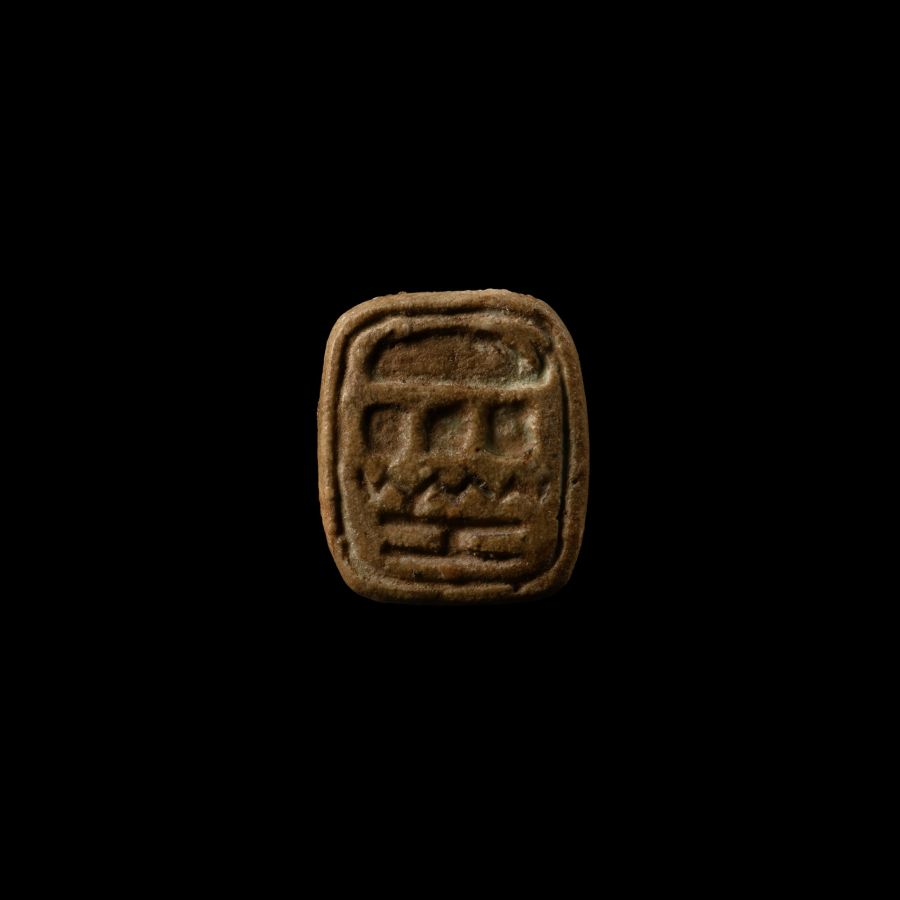
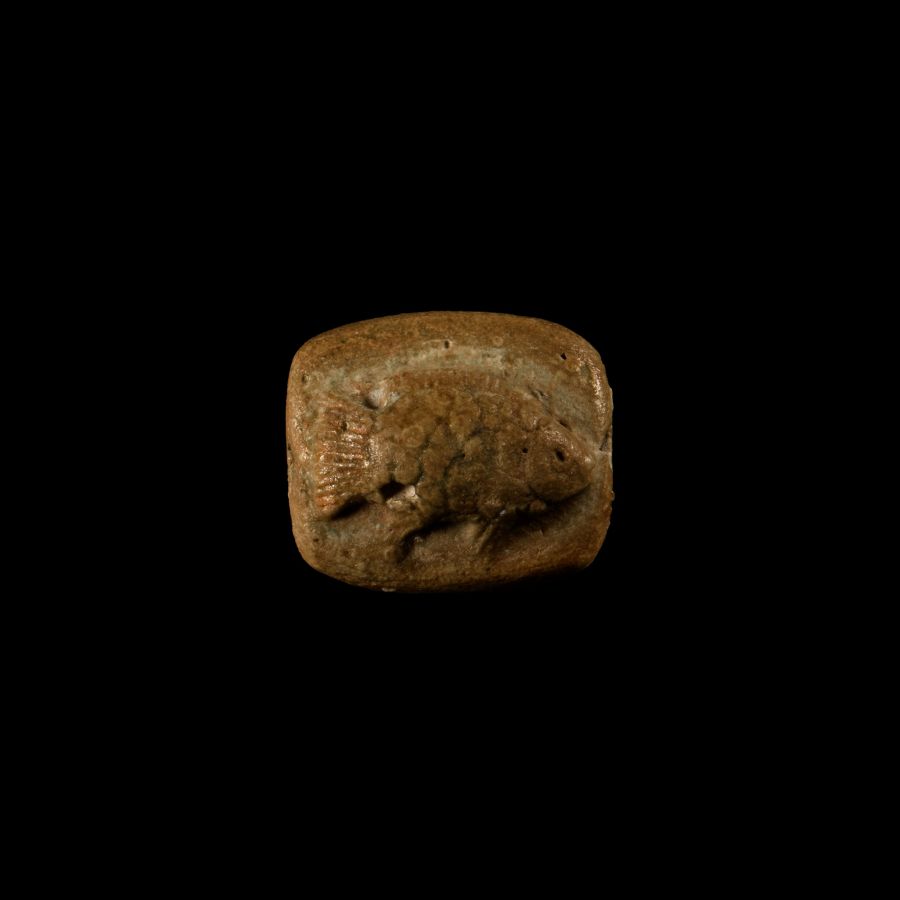
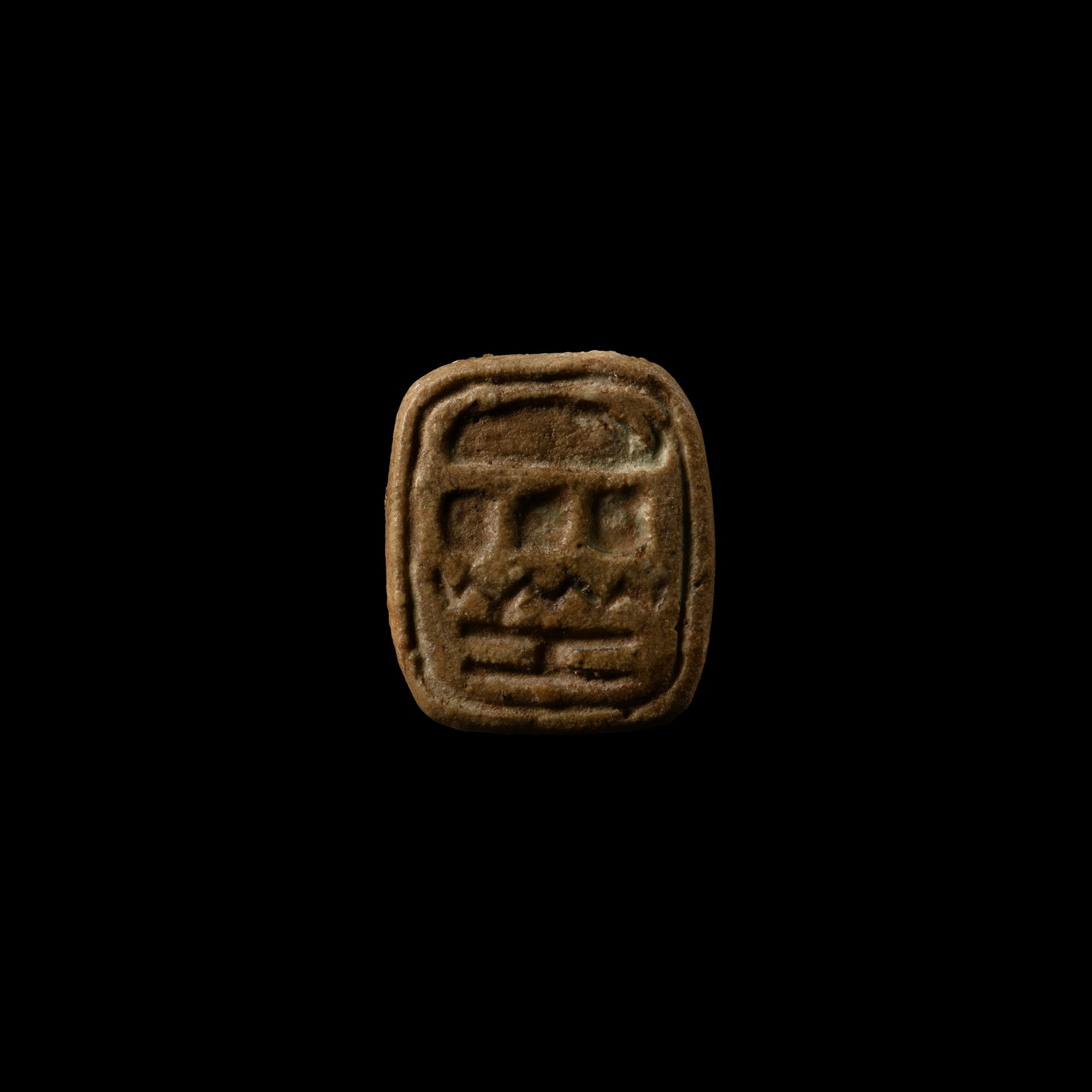
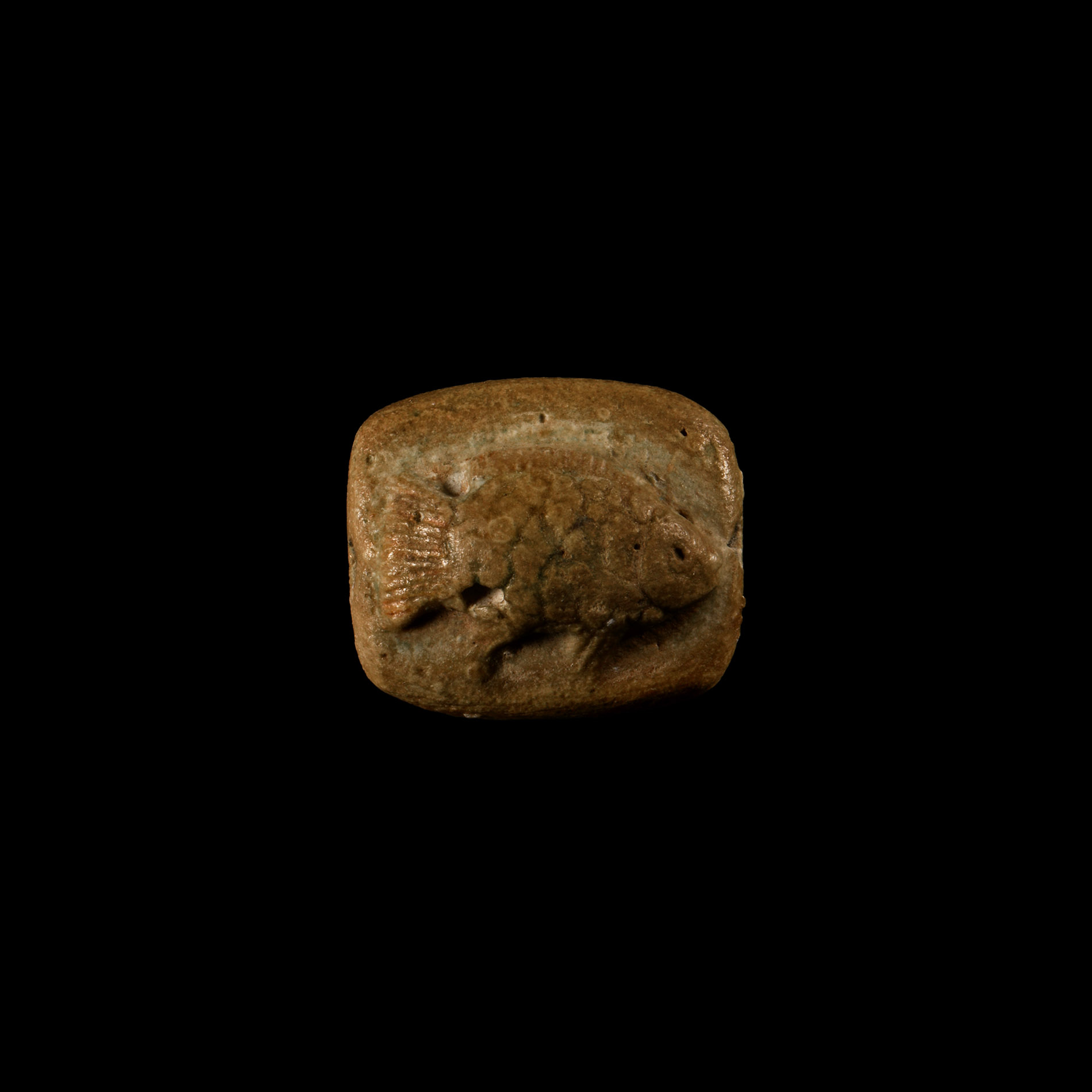
Egyptian Bifacial Steatite Amulet with Tilapia Fish and Hieroglyphs

LATE PERIOD, 664-332 B.C.

3/4 in. (2.9 grams, 20 mm).

Of roughly rectangular form, displaying a scaled fish in relief to the upper face and hieroglyphs to the underside; pierced for suspension. [No Reserve]

Provenance

Collected since the 1970s.
Ex Everitt collection, acquired by descent 2017.

CONDITION

VETTING:

TimeLine Auctions follows a vetting process to ensure the authenticity and legality of all items, reinforcing our commitment to integrity and responsible trading. Each antiquity, antique, and coin lot undergoes thorough examination by a vetting committee of at least ten external specialists, professional trade association members, scientists, and archaeologists: Our Vetting Process


AUCTIONS:

TimeLine is a leading auction house specialising in antiquities, ancient art, collectables, natural history, coins, medals, and books. Our auctions offer museums, collectors, historians, and enthusiasts the opportunity to acquire unique and historically significant pieces.

LOT 0413

Egyptian Bifacial Steatite Amulet with Tilapia Fish and Hieroglyphs

Sold for (Inc. bp): £143

Print page

RELATED LOTS

  • Large Egyptian Composition Shabti for Pa-di-Osiris
    Large Egyptian Composition Shabti for Pa-di-Osiris
    Late Period, 26th-30th Dynasty, 664-343 B.C.

    Estimate: £8,000 - 10,000 (+bp*)

    Opening Bid: £4,000

    Of mummiform type and decorated with a blue-green glaze; inscribed for a priest named Pa-di-Osiris, whose mother’s name is Sed-irt-binut; the shabti wearing a striated tripartite wig and long plaited divine beard; holding a pick in the left hand, the right hand holding a hoe and the cord of a seed bag hanging over his left shoulder; the face expertly modelled with carefully rendered cosmetic lines around the eyes, narrow eyebrows, and slightly smiling lips giving it a serene expression characteristic of the finest ushabtis of the period; standing on an integral plinth from which a plain back pillar terminating at the base of the wig extends; twelve horizontal rows of hieroglyphic inscription, the Sixth Chapter of the Book of the Dead; accompanied by a custom-made display base. 248 grams, 19.5 cm high (410 grams total, 23.5 cm high including stand)


    Acquired on the Geneva art market, 1980. Swiss collection, early 1980s until 2000. UK private collection, 2000. Accompanied by an academic report by Egyptologist Paul Whelan. This lot has been checked against the Interpol Database of stolen works of art and is accompanied by search certificate no.11802-206400.

    The epithet 'true of voice' following the mother’s name, but not that of the owner, is a rather infrequent arrangement in shabti/ushabti inscriptions but can be found on other fine examples from this period. Pa-di-Osiris’s title is unusual, but may belong to the cult of the god Shu whose name is sometimes followed by the epithet, 'he who supports heaven'. The text contains Schneider’s version VIIA of The Book of the Dead Chapter 6.

    Lot Details

  • Egyptian Bronze Atef Crown Feather From a Life-Sized Statue
    Egyptian Bronze Atef Crown Feather From a Life-Sized Statue
    Late Period, circa 664-332 B.C.

    Estimate: £5,000 - 7,000 (+bp*)

    Opening Bid: £2,500

    The ostrich feather with deep recessed cells, likely once inlaid, and a tapering mounting lug to one side; mounted on a custom-made display stand; remnants of gilding. 1.2 kg total, 33.5 cm high including stand


    Seward Kennedy collection, acquired 1960s. This lot has been checked against the Interpol Database of stolen works of art and is accompanied by search certificate number no.11840-207822.

    This large feather would have been attached to a wooden statue of Osiris. The Atef crown identified Osiris, god of the underworld, in Ancient Egyptian symbolism. The two ostrich feathers adorning the crown represent truth, justice, morality, equilibrium and the cult centre of Osiris in Abydos. The ostrich feather was also associated with Ma'at.

    Lot Details

  • Egyptian Mounted Coptic Textile
    Egyptian Mounted Coptic Textile
    Circa 5th-6th century A.D.

    Sold for (Inc. bp): £33

    The decorative border from a garment (cloak?), wool weaving on linen and purple, tendril pattern; the wide, undecorated central red purple panel framed with purple wavy tendrils with arrowhead-shaped leaves. 131 grams, 41.5 x 26 cm


    Acquired 1970s-1996. Property of a North American collector. London collection, 2016.

    Cloaks and mantles were the main type of outer garments worn by men in late antiquity. They are mentioned in the sources under a variety of names: birrus, caracallus,cucullus, lacerna, sagum, paenula and paludamentum. Unfortunately, despite the fact that cloaks were such important garments they are preserved in far fewer numbers from burials in Egypt than tunics, except as fragments.

    Lot Details

Stay up-to-date with the latest from TimeLine Auctions by joining our mailing list