
Loading, please wait...
LOT 0002
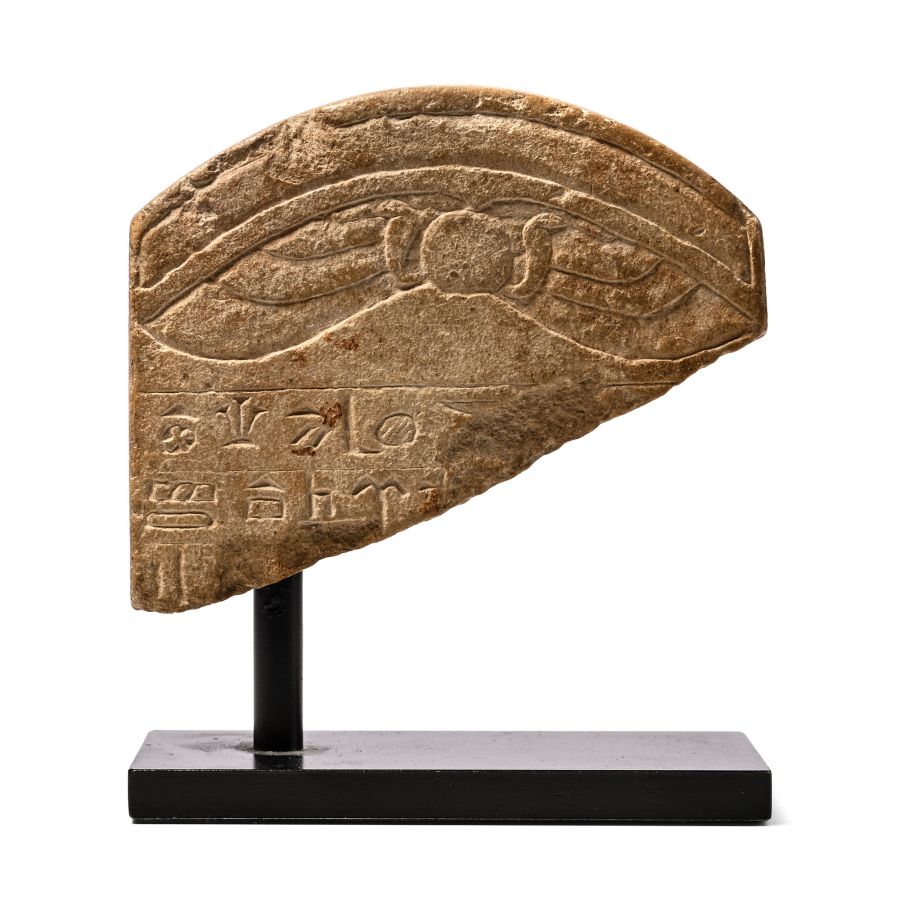
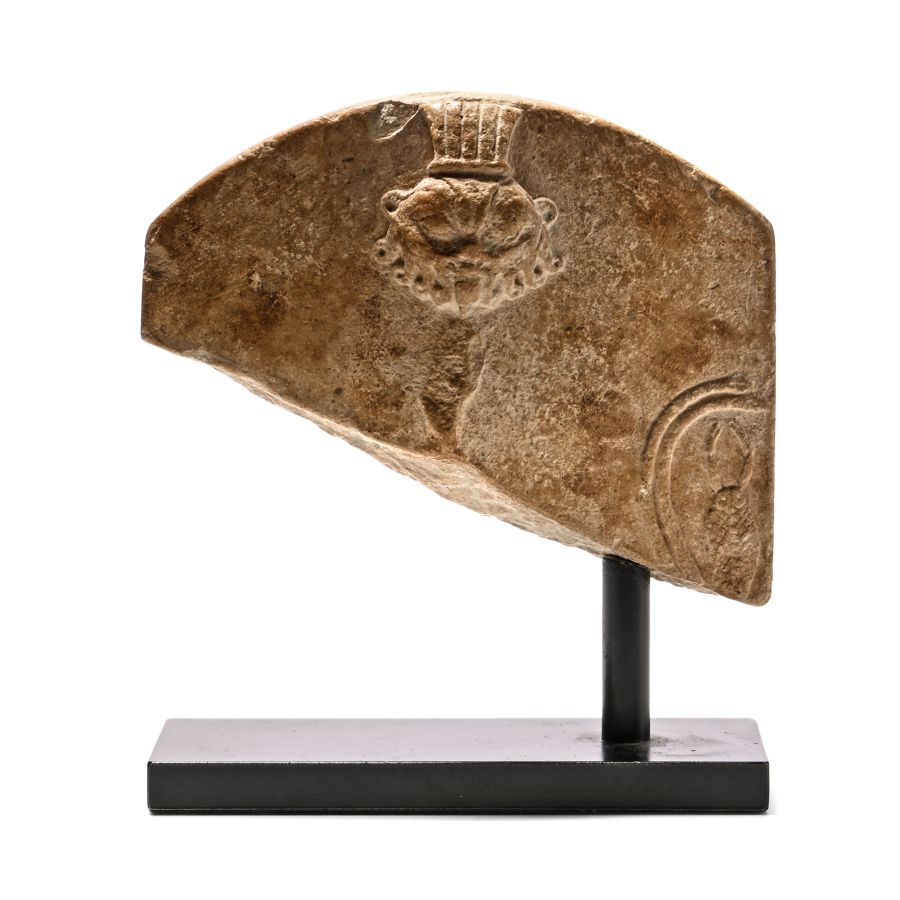
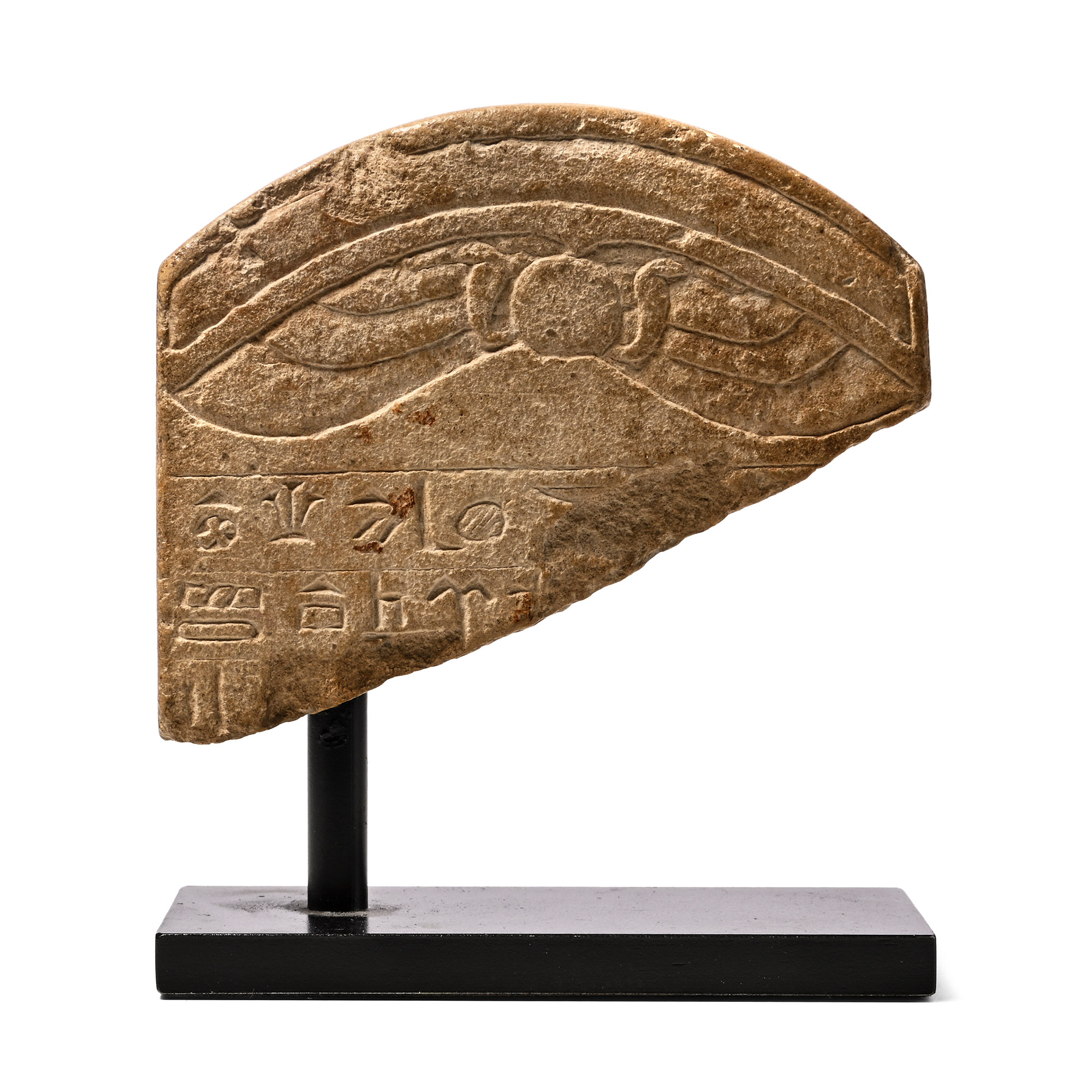
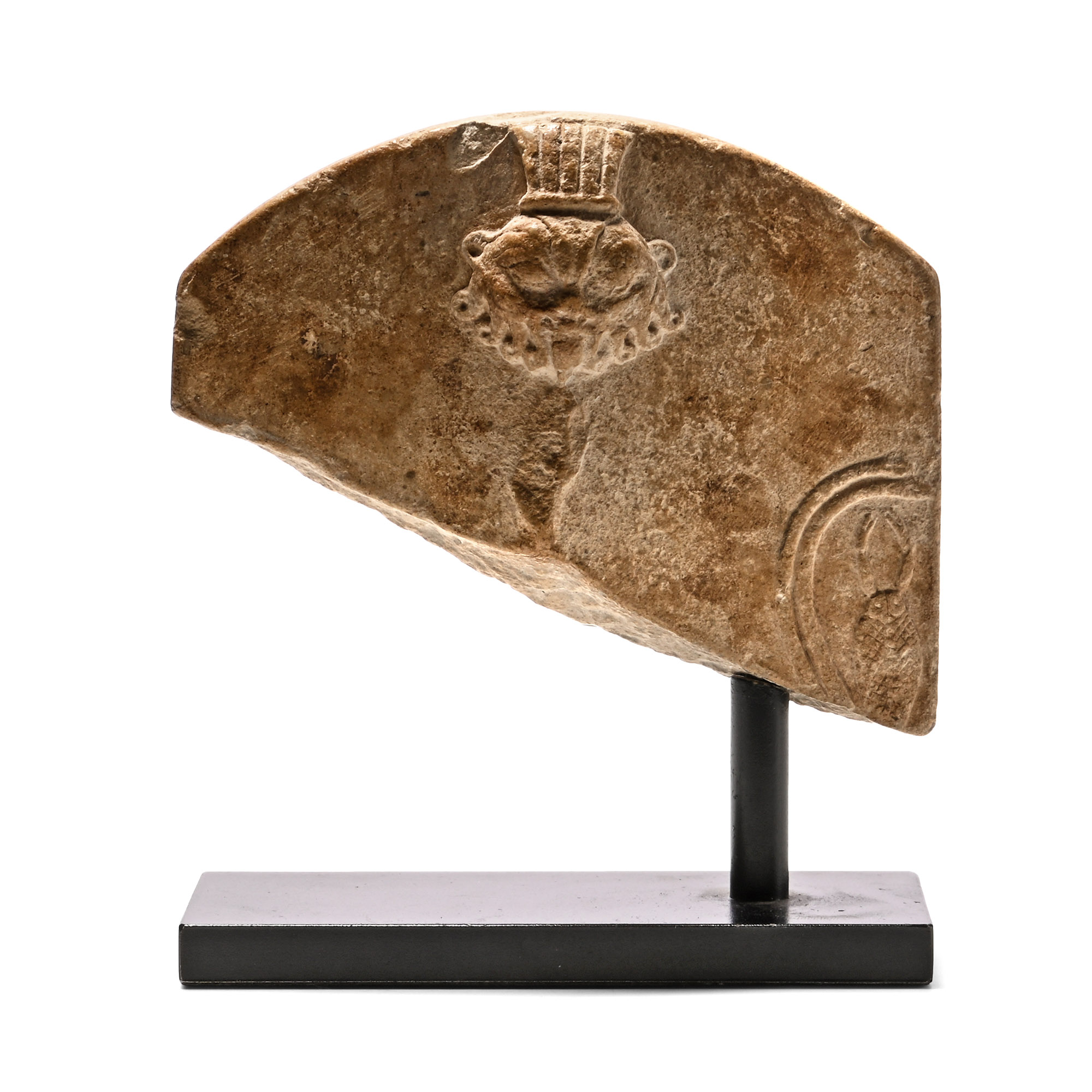
Egyptian Bifacial Magical Stela with Bes
PTOLEMAIC PERIOD, CIRCA 280-180 B.C
4 1/2 in. (450 grams total, 11.6 cm high including stand).
Upper portion of an arch-top limestone stele fragment with two dressed faces; the obverse lunette features a winged sun disc flanked by uraei and two partial rows of incised pseudo-hieroglyphs below; the reverse displays the head of the god Bes in high relief, with traces of the head of the young Horus immediately below, who would have been depicted grasping the two partially preserved snakes and a scorpion carved in raised relief to the right; mounted on a custom-made display stand.
ProvenanceFrossart Collection, France, by the 19th century.
Private collection, London, UK.
Cf. Sternberg-El Hotabi, H., Untersuchungen zur Überlieferungsgeschichte der Horusstelen (2 parts), Ägyptologische Abhandlungen 62, Wiesbaden, 1999, part 2, pp. 25, 139, pl. XVIII, for a similarly arranged cippus, now in Edinburgh (inv. no. A.1955.179).
FootnotesAlthough fragmentary, this stela is easily recognisable as a Horus cippus or magical stela. They were used to heal ailments caused by snake or scorpion venom. Ancient Egyptians believed that water poured over these cippi would turn into a healing liquid that the afflicted could drink or apply to their bodies.
CONDITIONTimeLine Auctions follows a vetting process to ensure the authenticity and legality of all items, reinforcing our commitment to integrity and responsible trading. Each antiquity, antique, and coin lot undergoes thorough examination by a vetting committee of at least ten external specialists, professional trade association members, scientists, and archaeologists: Our Vetting Process
AUCTIONS:
TimeLine is a leading auction house specialising in antiquities, ancient art, collectables, natural history, coins, medals, and books. Our auctions offer museums, collectors, historians, and enthusiasts the opportunity to acquire unique and historically significant pieces.
-
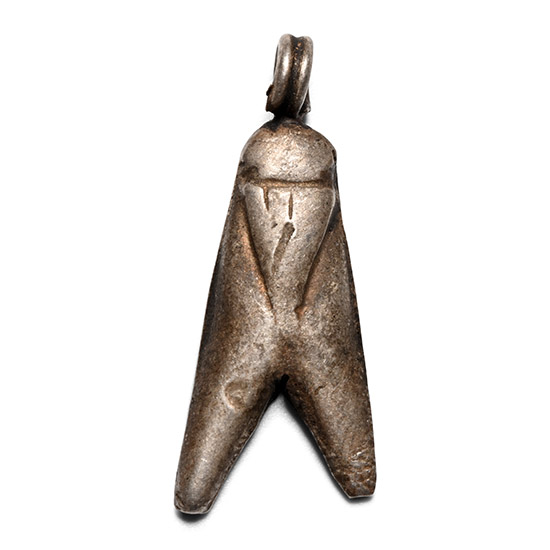
Egyptian Silver Fly Amulet
Late Period, 664-332 B.C.Sold for (Inc. bp): £143
With detailing to the body and head, ribbed suspension loop above the head. 0.94 grams, 19 mm
Ex London, UK, gentleman, 1990s.
Fly amulets were believed to protect against insect bites and to ward off troublesome flying creatures through apotropaic magic. Some believe they may have even symbolised the fly’s fecundity. Additionally, pharaohs would bestow gold fly-shaped pendants as military awards to honour the bravery and persistence of soldiers in battle. -
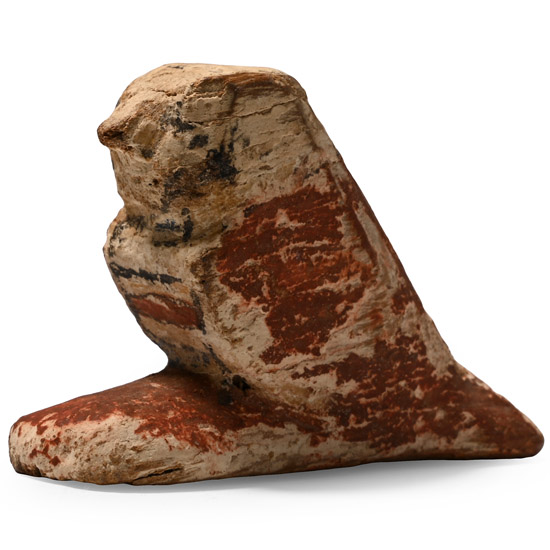
Egyptian Polychrome Wooden Sokar Falcon
Late Period, 664-332 B.C.Sold for (Inc. bp): £312
Statuette depicting the couchant falcon god Sokar with wings folded along the sides of the body; chest, wings, and legs with painted details; inked legend on the underside reading 'Ex George Wathen / 1893 / 12'. 16 grams, 71 mm
Ex George Henry Wathen collection from 1843, who wrote and illustrated the important work 'The Arts, Antiquity and Chronology of Ancient Egypt'. From the collection of David Donlan (1947–2025), a dedicated and lifelong collector with a passion for the ancient world and the natural sciences, forming his collection from 1960s onwards, using many reputable dealers across the United Kingdom, including the well-regarded Coincraft and The Parthenon Gallery.
Wooden images of the raptor-form god Sokar typically decorated the tops of rectangular wooden coffins and canopic chests, which held jars containing the deceased’s mummified organs. Sokar was a protective god of the Memphite necropolis and was often merged with the funerary god Osiris and Ptah, the creator deity of Memphis. George Henry Wathen, FGS (21 November 1816 – 10 November 1879) was a geologist, author, magazine publisher, and South African politician of the Victorian era known primarily for his books on the antiquities of Egypt and the gold fields of Victoria, Australia. -
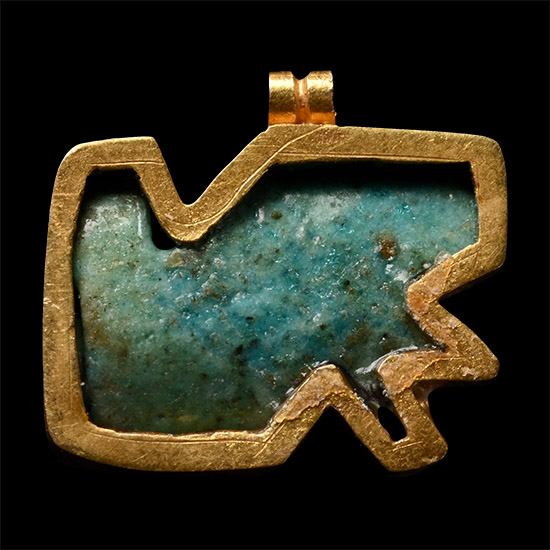
Egyptian Faience Eye of Horus in Gold Pendant
Late Period, 664-332 B.C. and laterSold for (Inc. bp): £124
Comprising a turquoise-glazed wedjat amulet set in a 14-carat gold pendant mount. 1.09 grams, 14 mm
Ex important German collection, 1960-1990.
The wedjat-eye amulet (also called the Eye of Horus) became one of the most recognisable symbols in ancient Egyptian culture. It signifies protection, healing, and restoration. In myth, Horus lost his eye during his battle with Seth, and it was later magically restored, symbolising healing and the return to wholeness. The Eye of Horus came to embody divine power and protection, and was often used in amulets to safeguard and promote well-being.
