
Loading, please wait...
LOT 0026
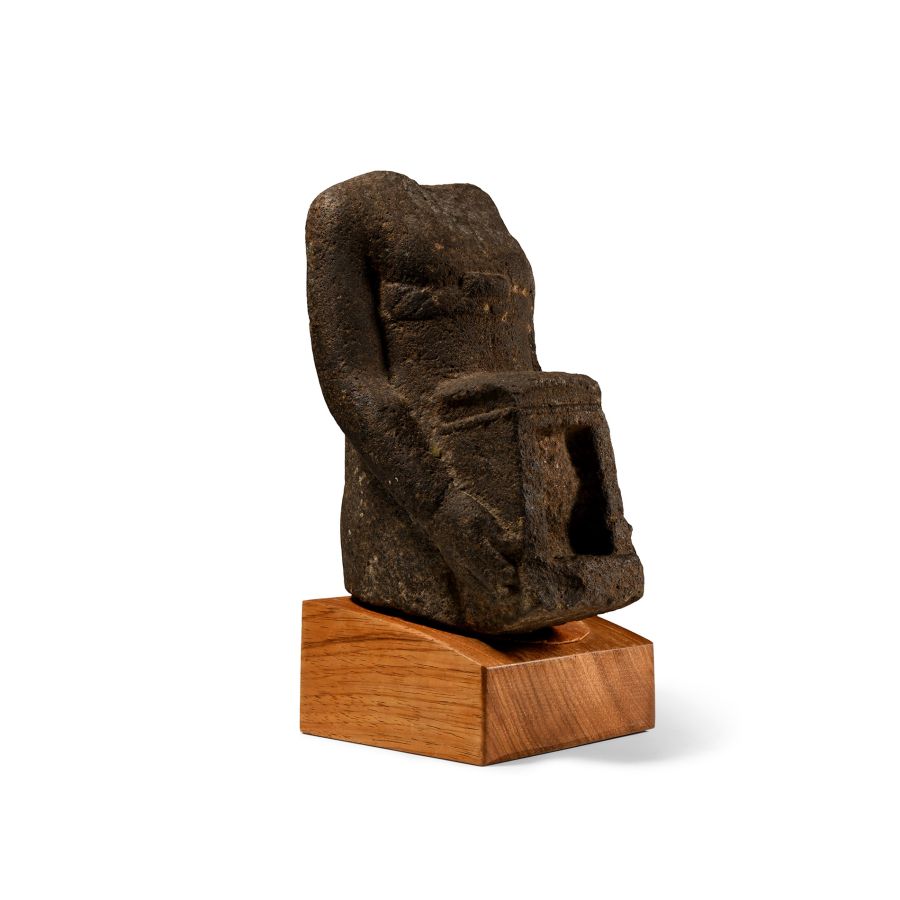
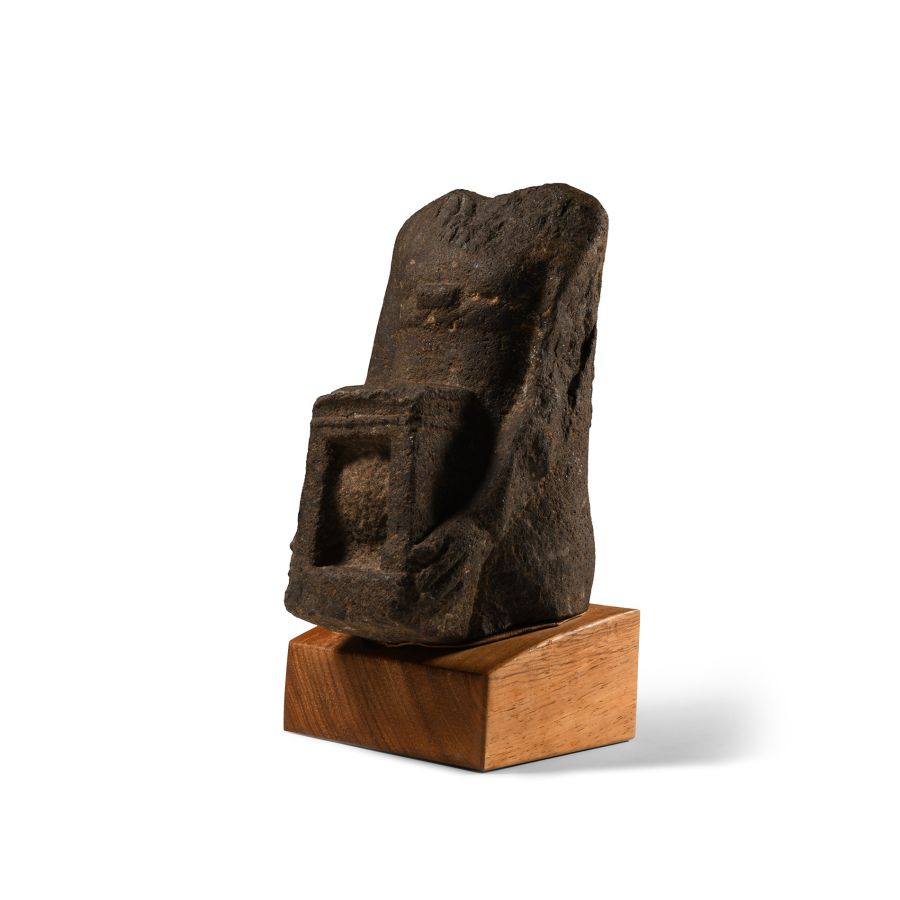
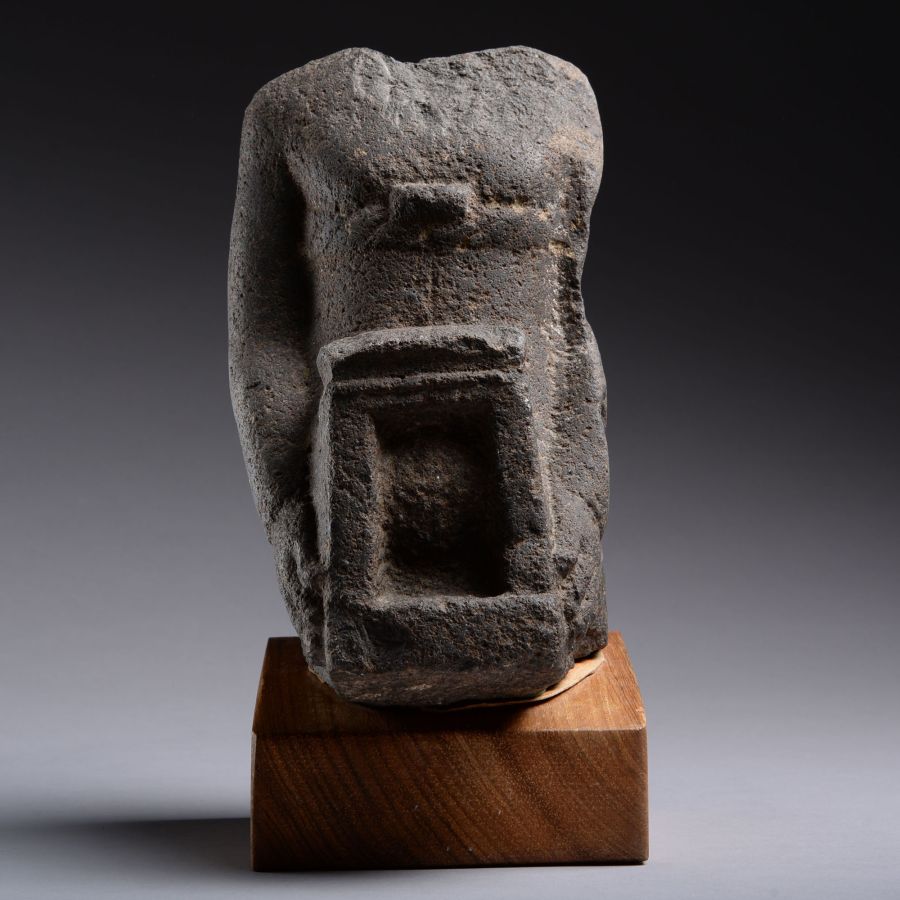
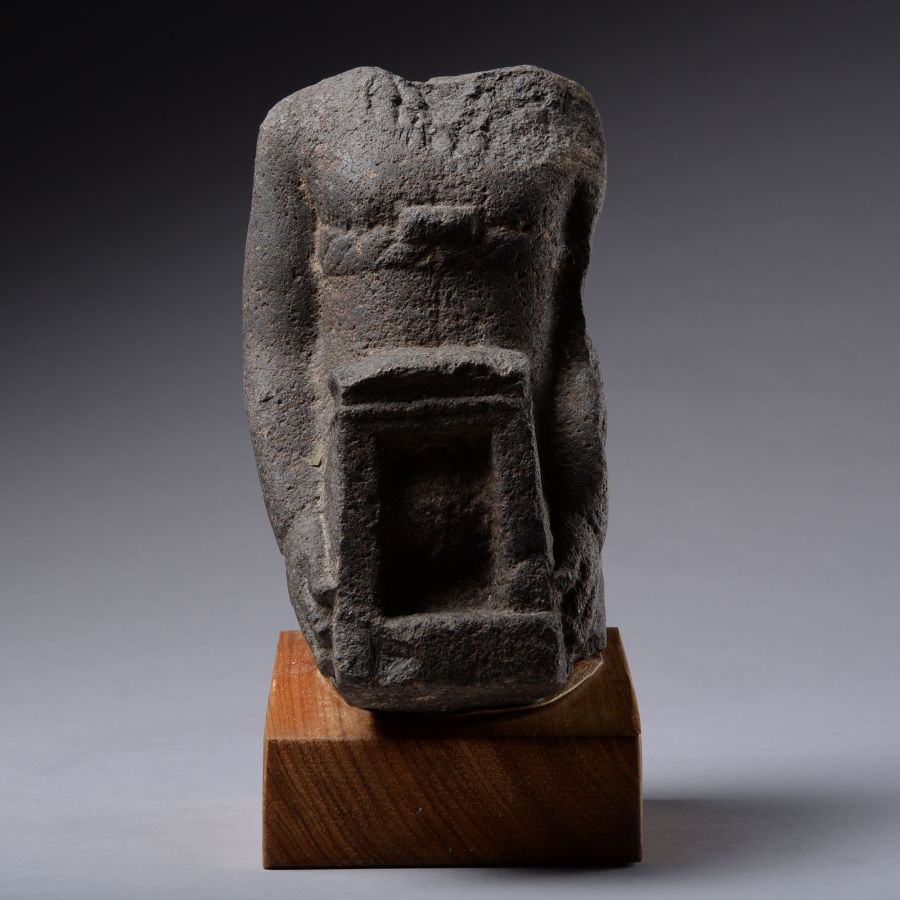
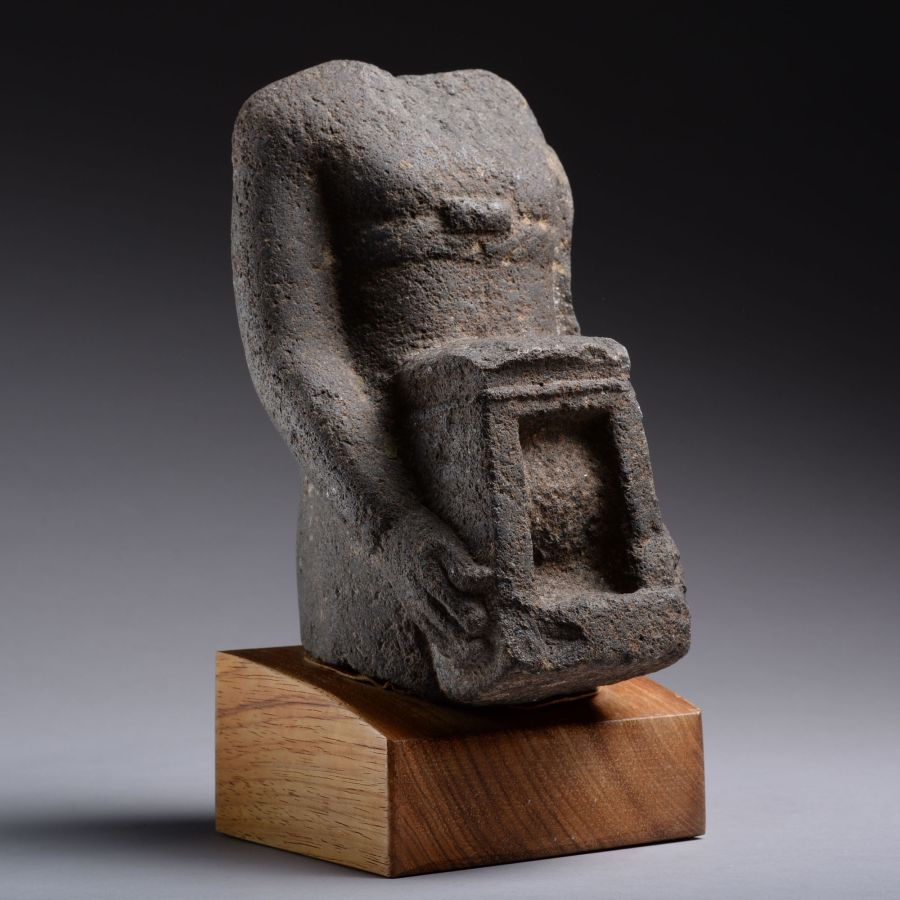
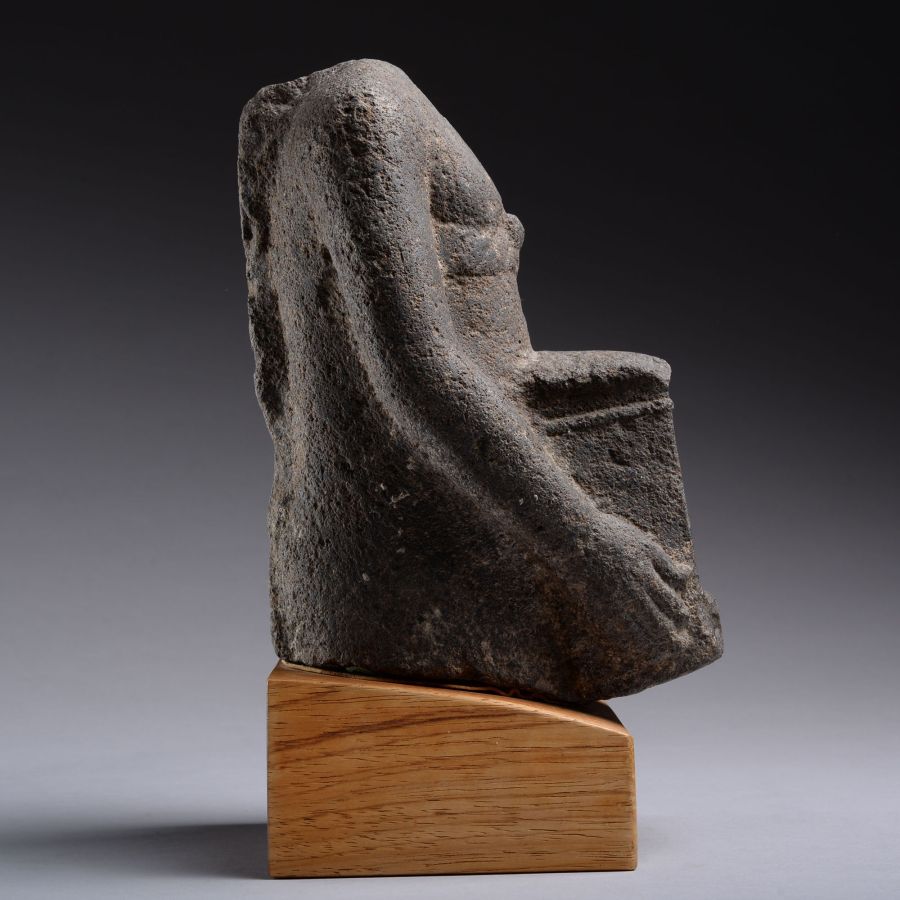
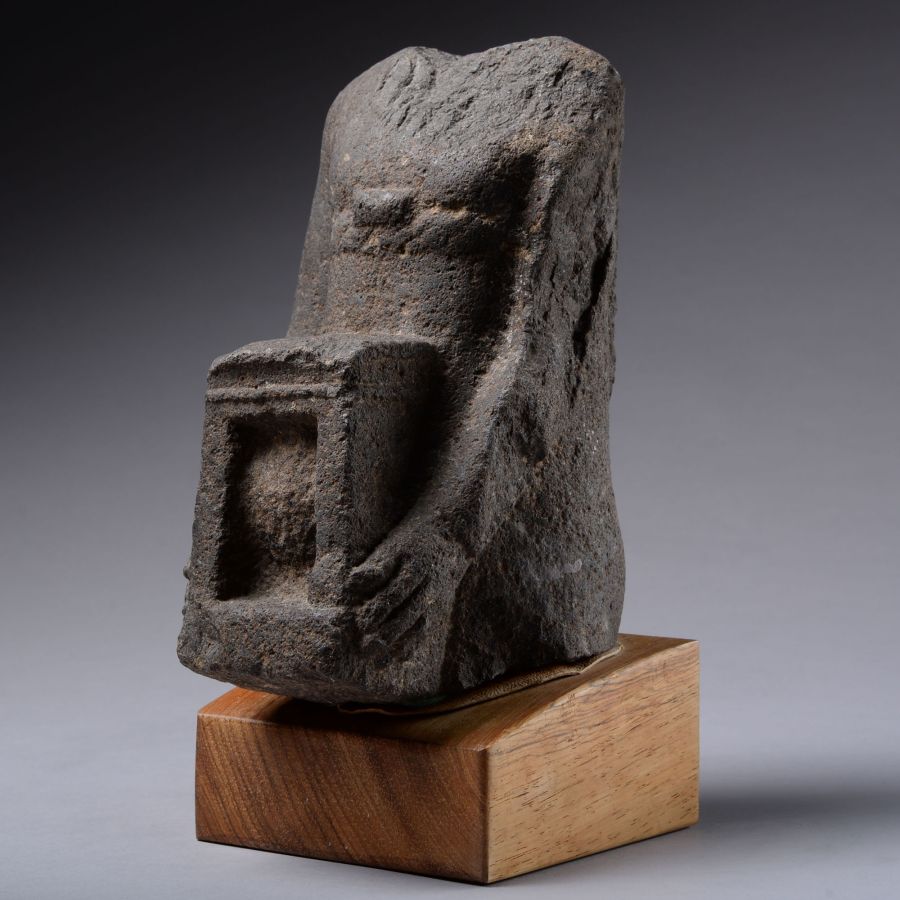
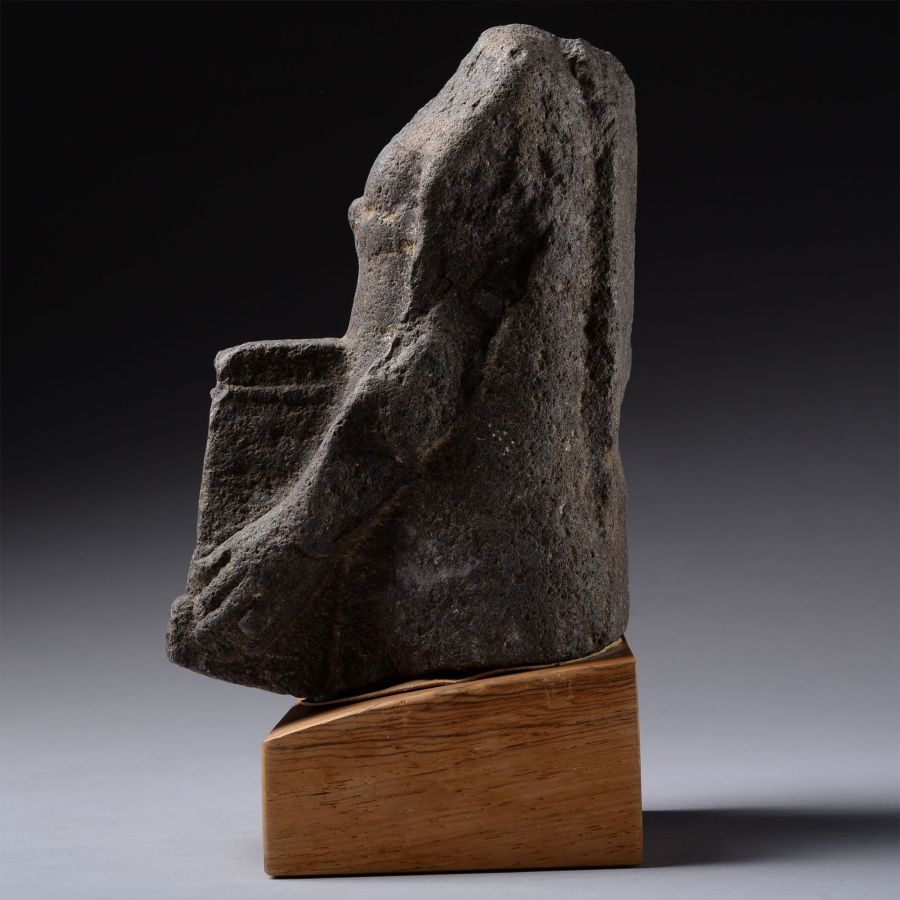
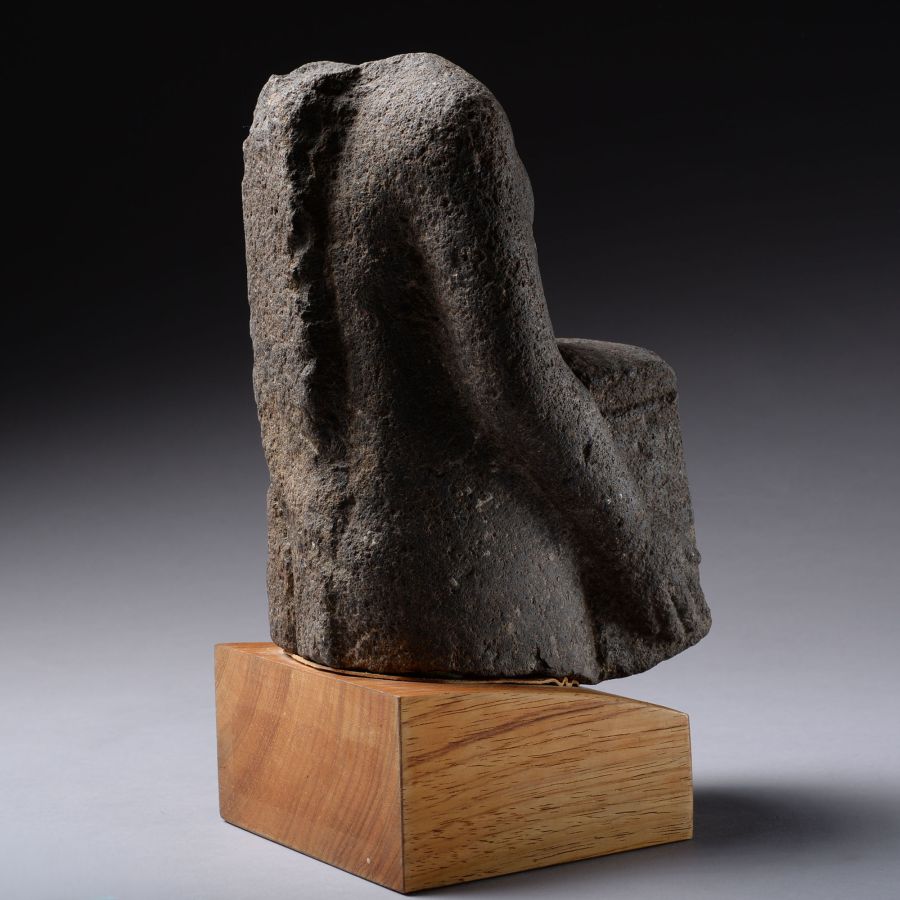
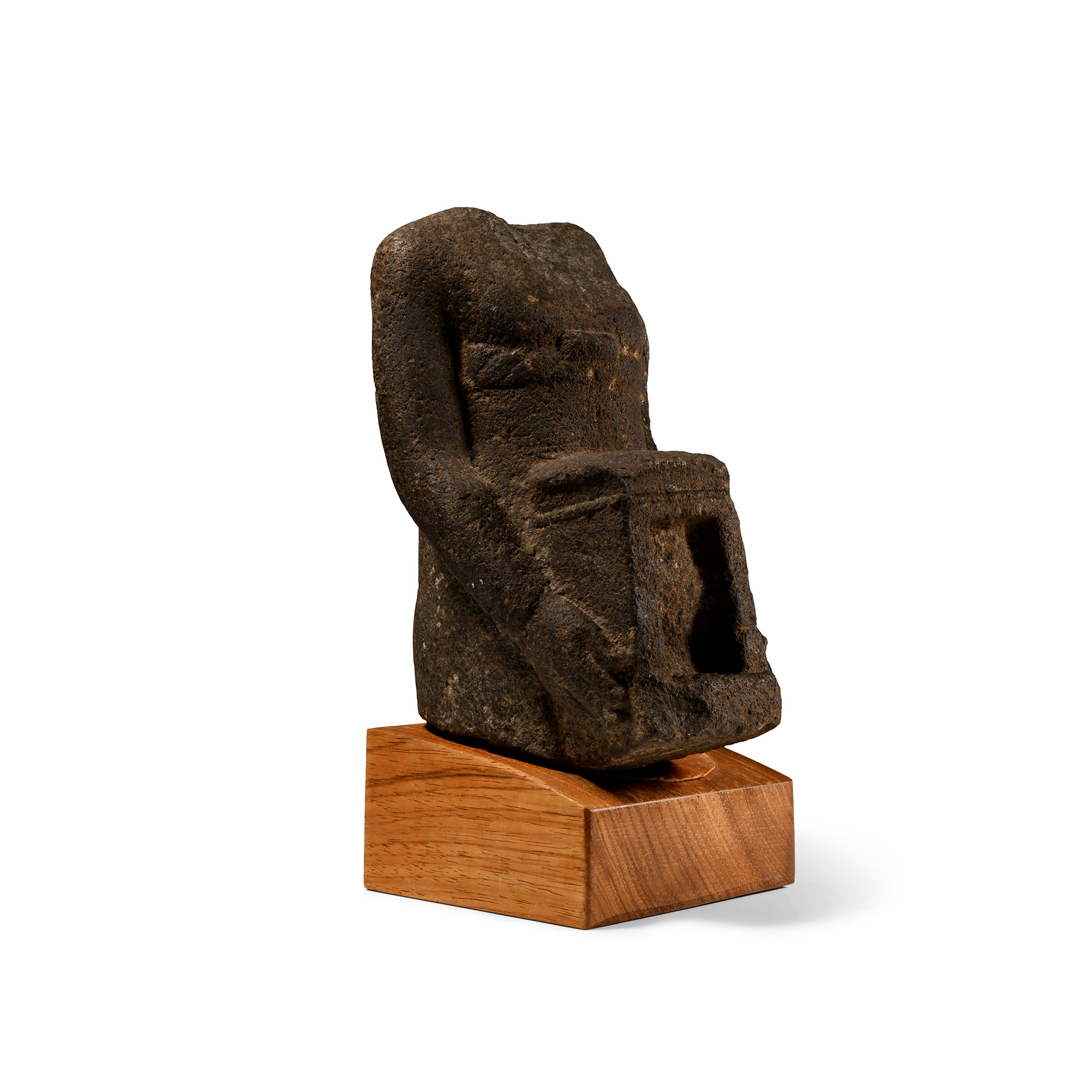
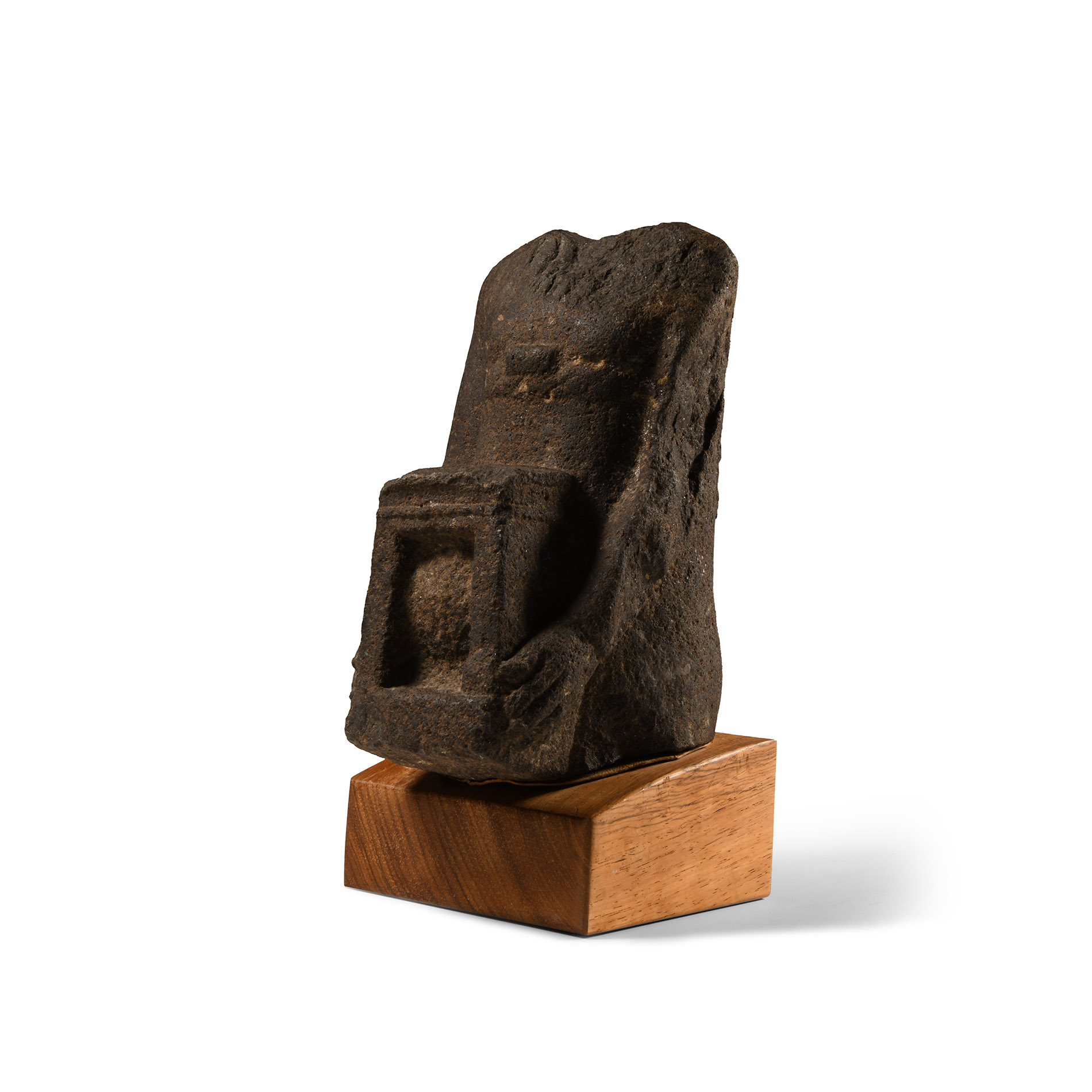
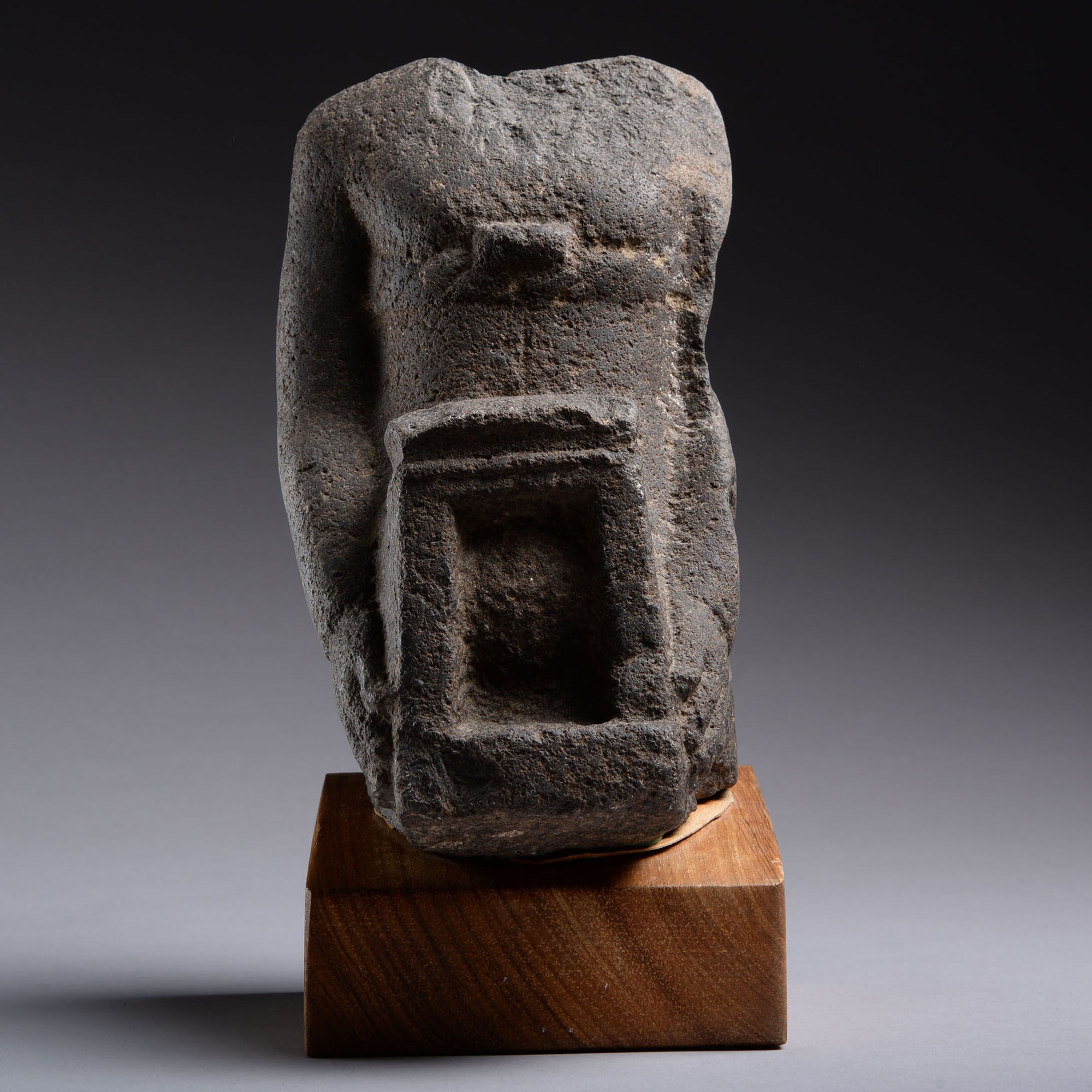
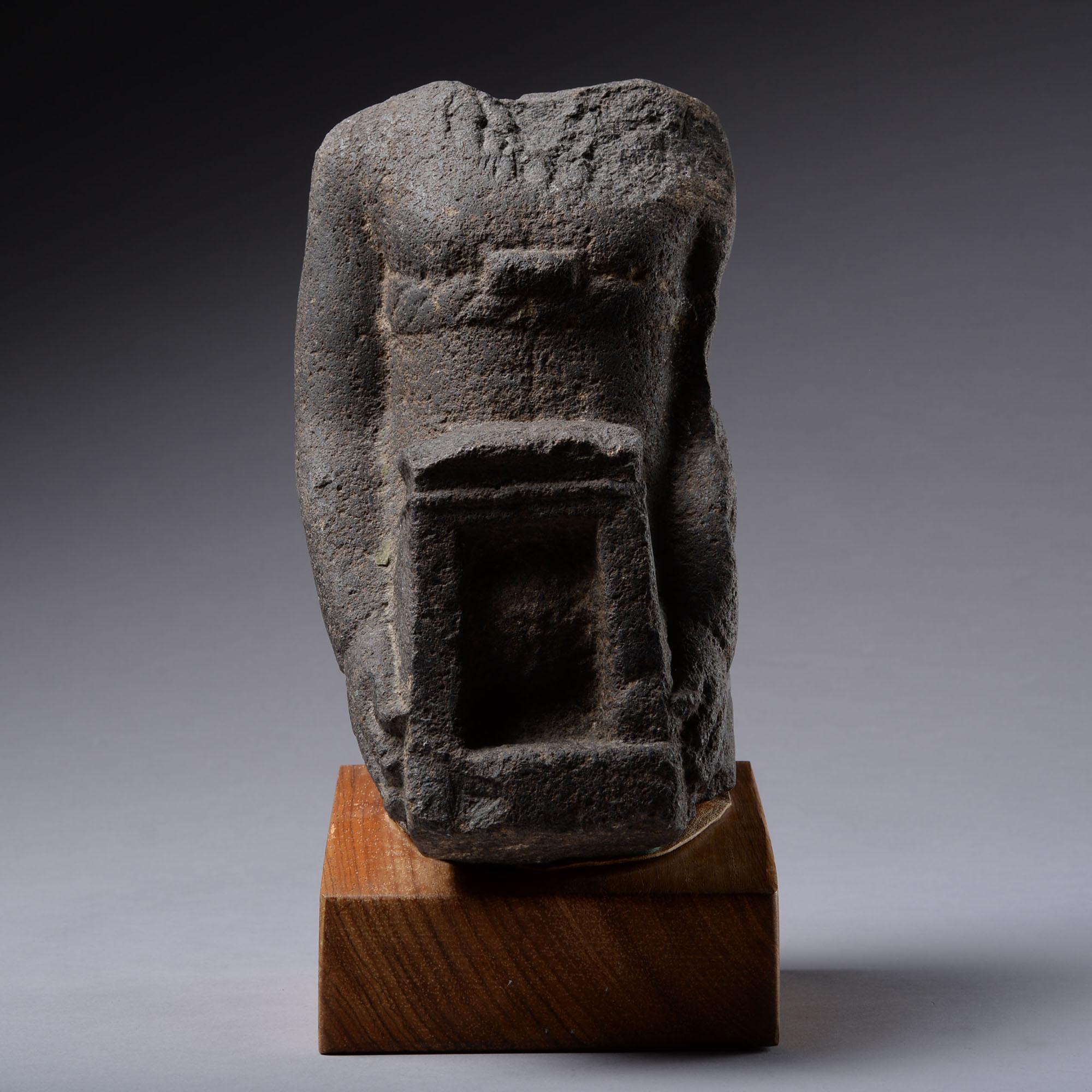
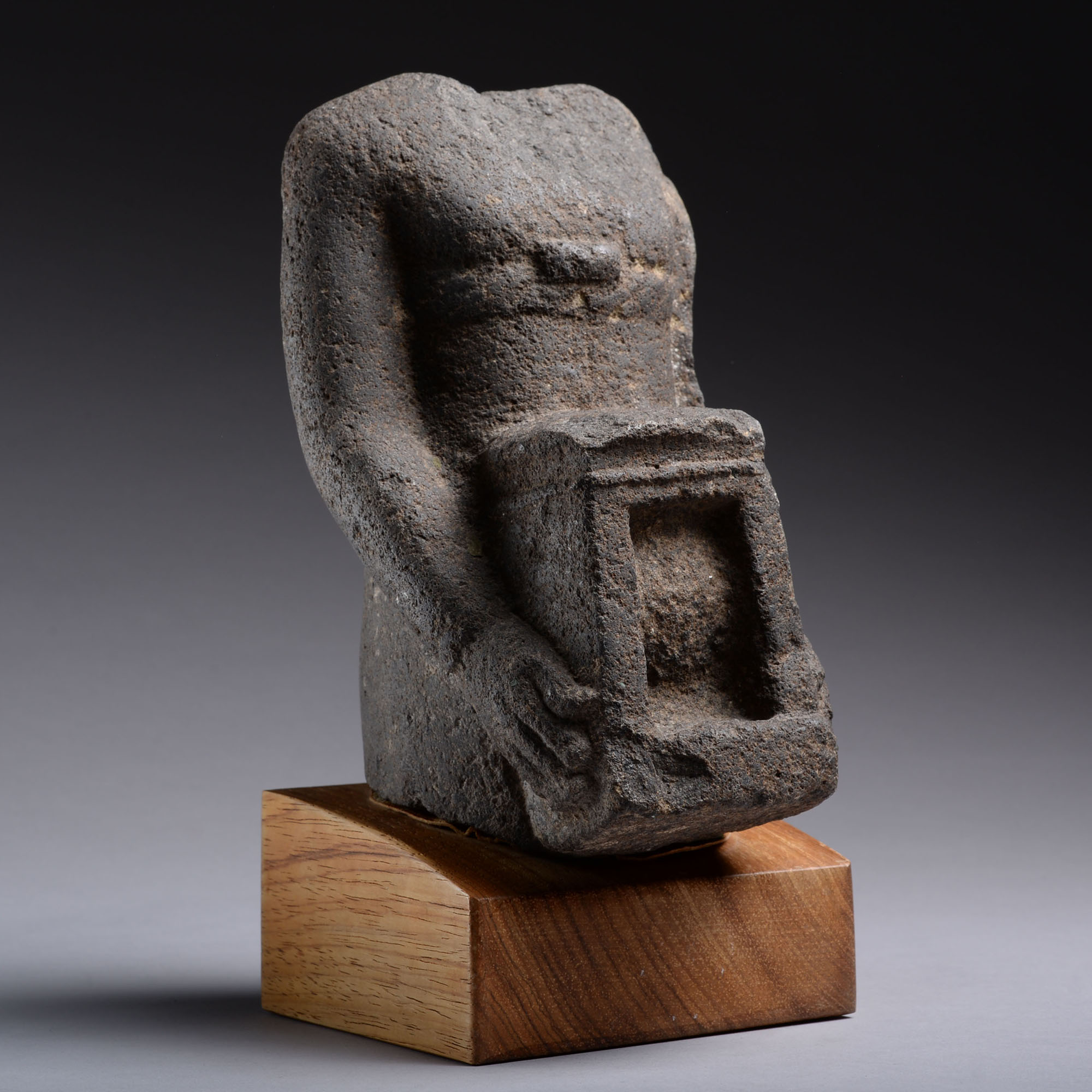
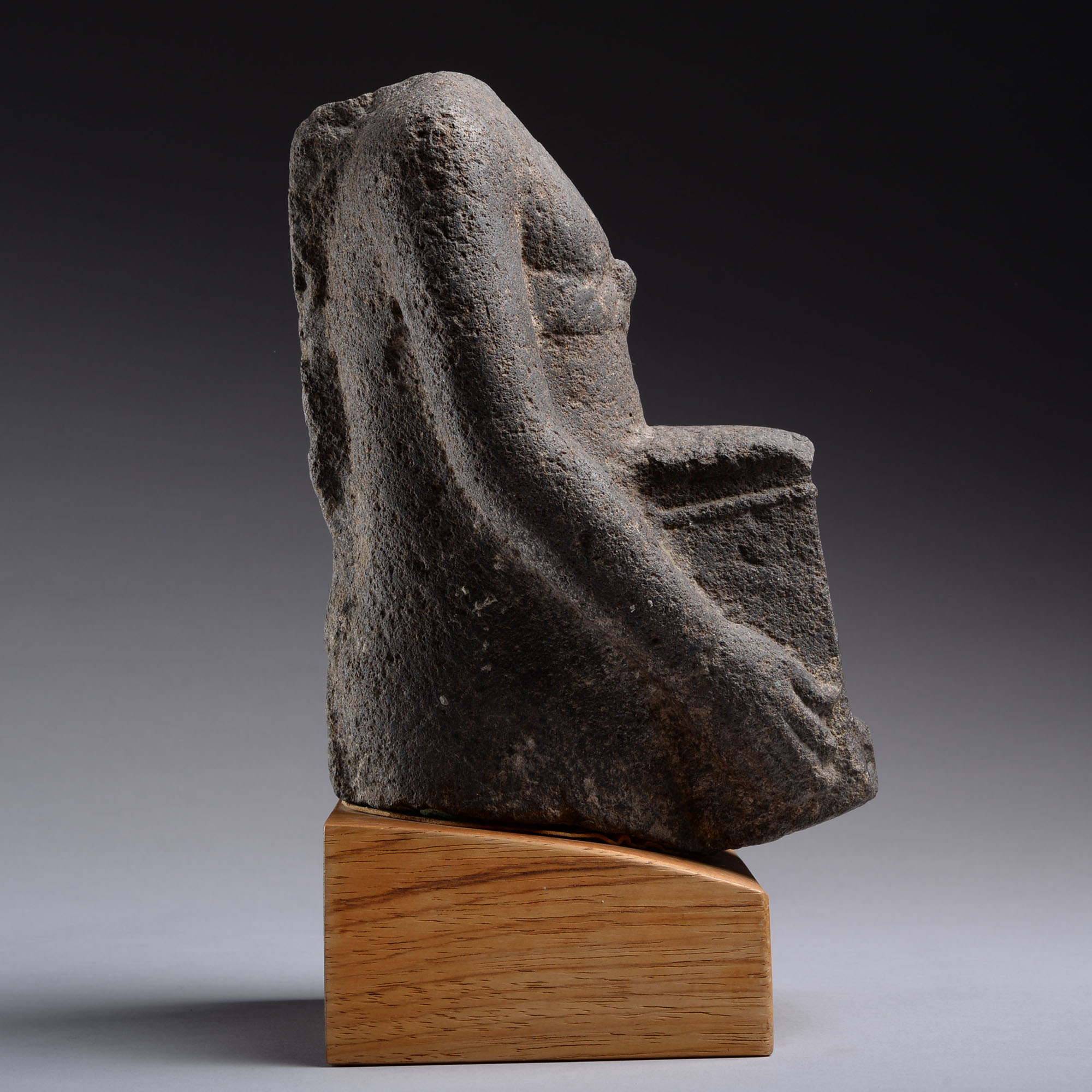
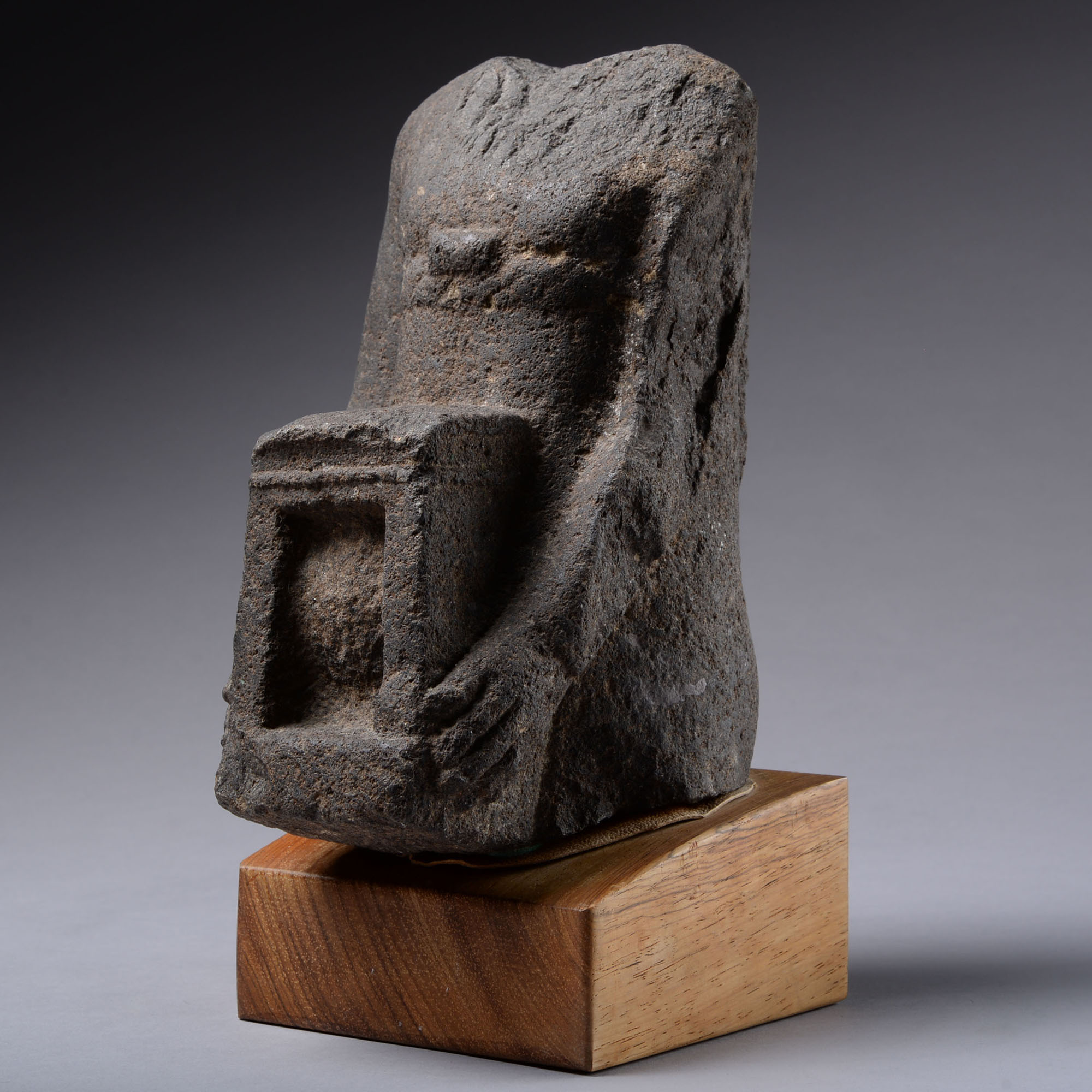
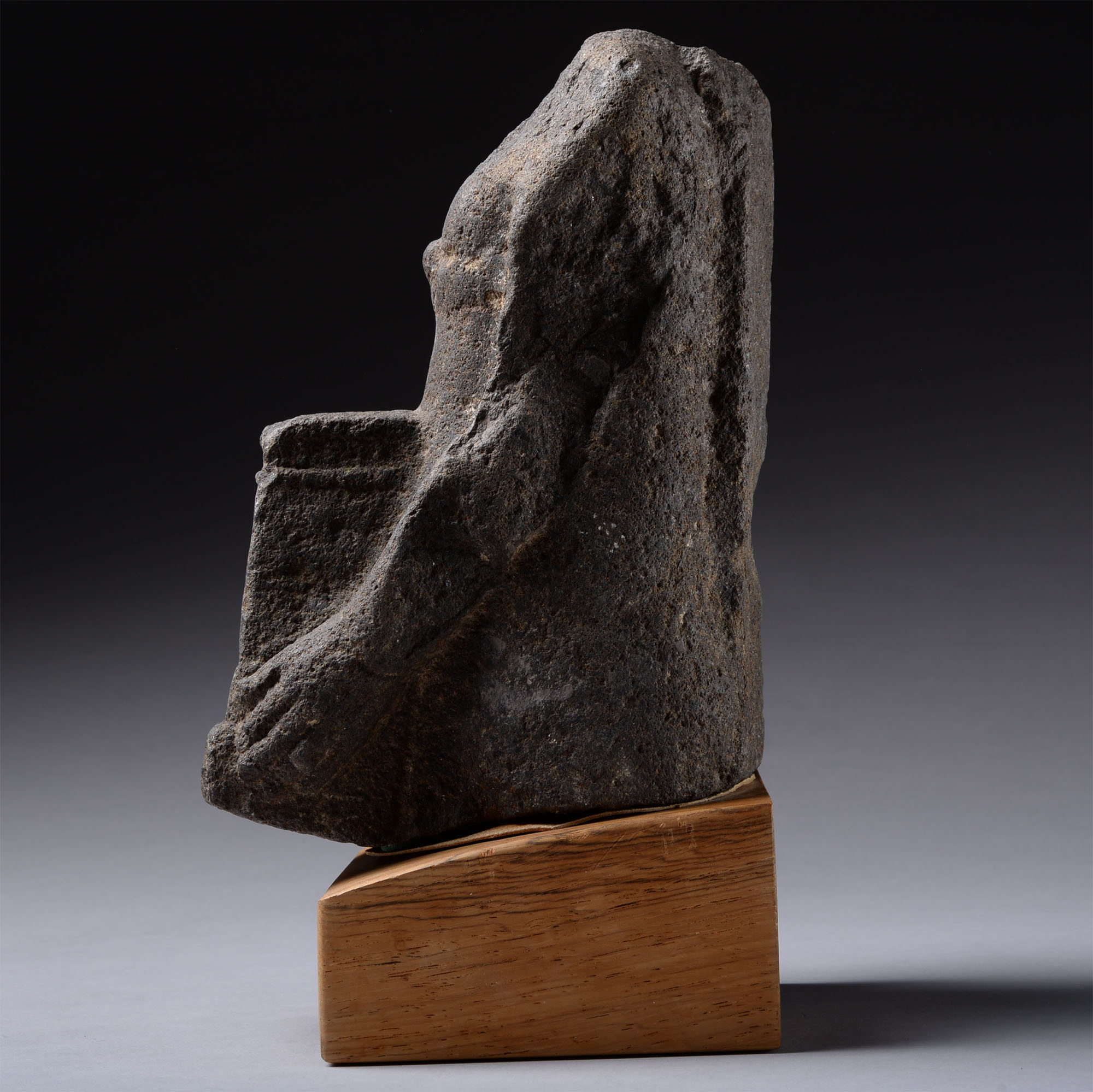
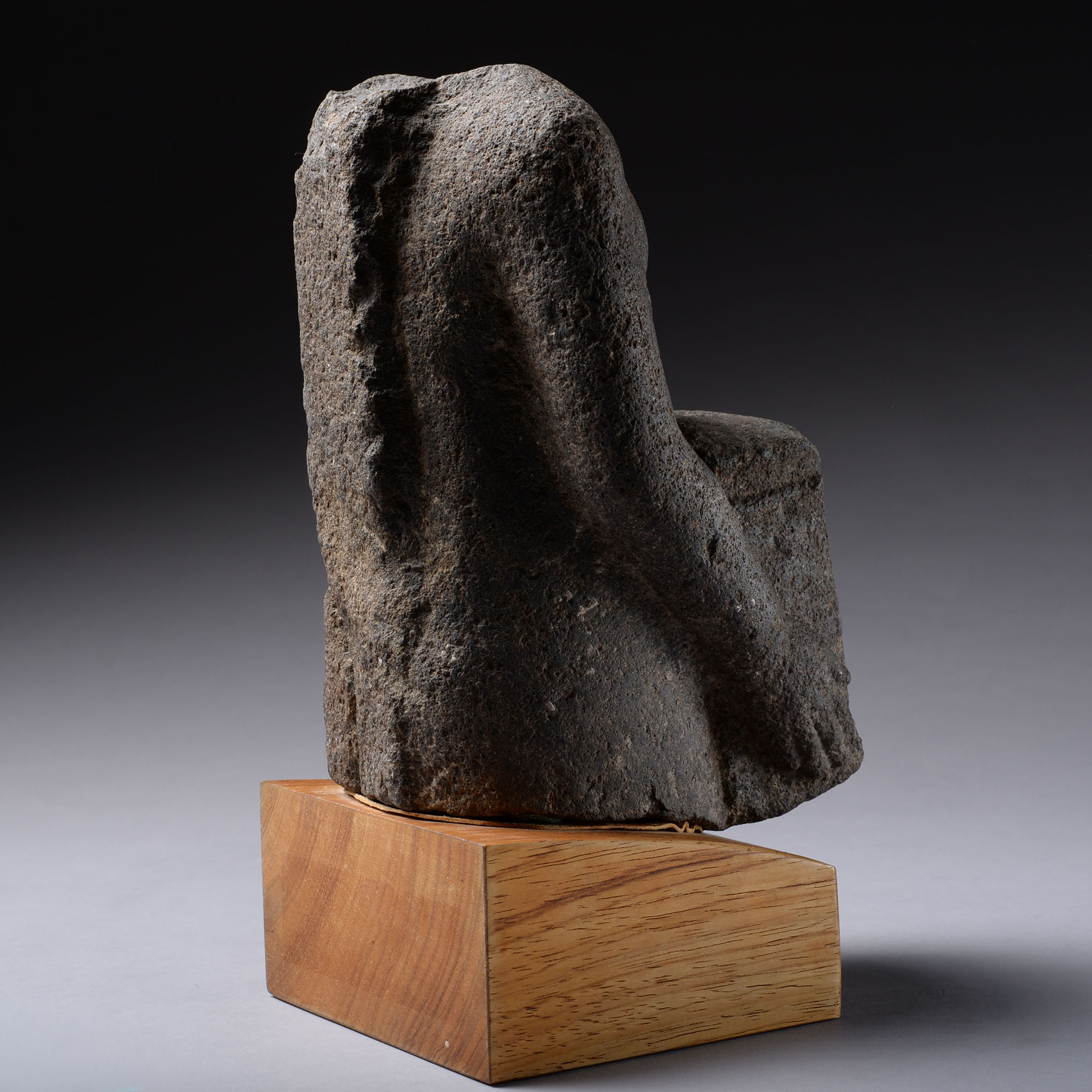
Egyptian Basalt Torso of Naophorous
LATE PERIOD, 664-332 B.C.
9 7/8 in. (5.2 kg total, 25 cm high including stand).
Carved in the round depicting a male carrying a rectangular shrine intended to hold a figure of a goddess; arms and upper chest bare, strap to the chest to support an apron, dorsal pillar to the reverse; accompanied by a custom-made stand.
ProvenanceFrom the collection of Danish furniture designer Ole Wanscher (1903-1985).
Ole Wanscher was a leading figure of the Scandinavian Design movement.
Wanscher was inspired by ancient designs, and one of his most famous creations, the 'Egyptian Stool', was based on folding chairs from Egypt's New Kingdom.
This piece is visible in the background of a photo of Wanscher in his office, circa 1960.
Accompanied by an academic report by Egyptologist Paul Whelan.
Accompanied by a copy of the photo of Wanscher in his office, circa 1960.
This lot has been checked against the Interpol Database of stolen works of art and is accompanied by search certificate number no.11843-207728.
Cf. similar complete figure in the collection of the British Museum under accession no.EA41517.
FootnotesNaophorous statues first appear in the New Kingdom, though standing figures with shrines were most popular during the Late and Ptolemaic Periods. Such statues were set up in temples as revealed by the discoveries made between 1895 and 1917 in the Amun temple precincts at Karnak, where thousands of statues, including naopharoi, were recovered from caches.
CONDITIONTimeLine Auctions follows a vetting process to ensure the authenticity and legality of all items, reinforcing our commitment to integrity and responsible trading. Each antiquity, antique, and coin lot undergoes thorough examination by a vetting committee of at least ten external specialists, professional trade association members, scientists, and archaeologists: Our Vetting Process
AUCTIONS:
TimeLine is a leading auction house specialising in antiquities, ancient art, collectables, natural history, coins, medals, and books. Our auctions offer museums, collectors, historians, and enthusiasts the opportunity to acquire unique and historically significant pieces.
LOT 0026
Egyptian Basalt Torso of Naophorous
Estimate £8,000 - 10,000€9,280 - 11,600 (for guidance only)$10,800 - 13,500 (for guidance only)
-

Egyptian Gold Cat Amulet of the God Bastet
Late New Kingdom, 1070-900 B.C.Sold for (Inc. bp): £546
Modelled seated on an arch-shaped base, with simple facial detailing and suspension loop to the reverse. 0.50 grams, 8 mm
From an early 20th century French collection.
The goddess Bastet was considered to be the daughter of the sun god and was originally shown with the features of a lion up until about 1000 B.C. when she is portrayed as a cat or human with a cat head. As the daughter of Ra she is associated with the rage inherent in the sun god's eye which was considered to be his instrument of vengeance. Her development into a cat goddess occurred some time around the New Kingdom but did not fully develop until the Late Period. She is still associated with the destructive power of the sun and is shown on the prow of the solar boat decapitating the evil serpent Apophis in the Book of the Dead. The maternal, protective and hunting characteristics of the cat are the most obvious in Bastet and she is seen as a protector of pregnant women and young children. In the Pyramid Texts she is invoked by the deceased king to act as his protector and to help him reach the sky to join the sun god, and the king proclaims that Bastet is his mother and nurse. Like her counterpart, Sekhmet, Bastet has an aggressive side and in a text from Karnak the Pharaoh Amenhotep II describes how his enemies are slaughtered like the victims of Bastet. The goddess had a shrine at Karnak where she is known as the "Lady of Asheru" which places her closely with the goddess Mut, the consort of Amun-Ra. Her most famous shrine was in the north-east Delta region at Bubastis and was known as Per-Bastet or "the House of Bastet." Herodotus describes the festival of Bastet as one of the most elaborate in all of Egypt and identifies her with the Greek Artemis. Cemeteries of cats have been excavated at not only Bubastis but also Saqqara and Memphis. -
Egyptian Mounted Coptic Textile
Circa 7th-8th century A.D.Sold for (Inc. bp): £78
The fragment of a vertical band (clavus) from a tunic (probably an ecclesiastic garment), woven in linen and wool, the central segment embroidered with polygonal patterns and arabesques, with four crosses inscribed in rhomboids, alternating with floral motifs, edged with two plain bands in dark green and medium brown, probably part of the original garment to which the band was applied. 185 grams, 58 x 27 cm
Acquired 1970s-1996. Property of a North American collector. London collection, 2016.
Yellow wool and linen. In this period, when Egypt passed from Roman to Arabian rule, the garments were still conspicuously decorated with stylised foliage, arabesques and meanders, geometric figures, often made in yellow or white wool over a linen background. -
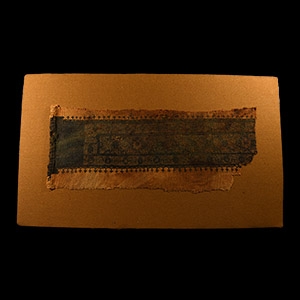
Egyptian Mounted Coptic Textile with Crenellated Blossoms
Circa 5th-7th century A.D.Sold for (Inc. bp): £78
Part of a tunic, the rectangular segment in yellow and green linen and wool, the central part decorated with interlaced geometric motifs, surrounded by an edge of similar motifs and border edged of crenellated blossoms. 264 grams, 64 x 37 cm
Acquired 1970s-1996. Property of a North American collector. London collection, 2016.
Among the many fragments from wool tunics are several long strips that match to form nearly full-length central pectoral clavi. They are patterned with a profusion of small figures or interlaced abstract designs, birds, plants and animals with a contrasting border filled with geometric motifs.
