
Loading, please wait...
LOT 0004
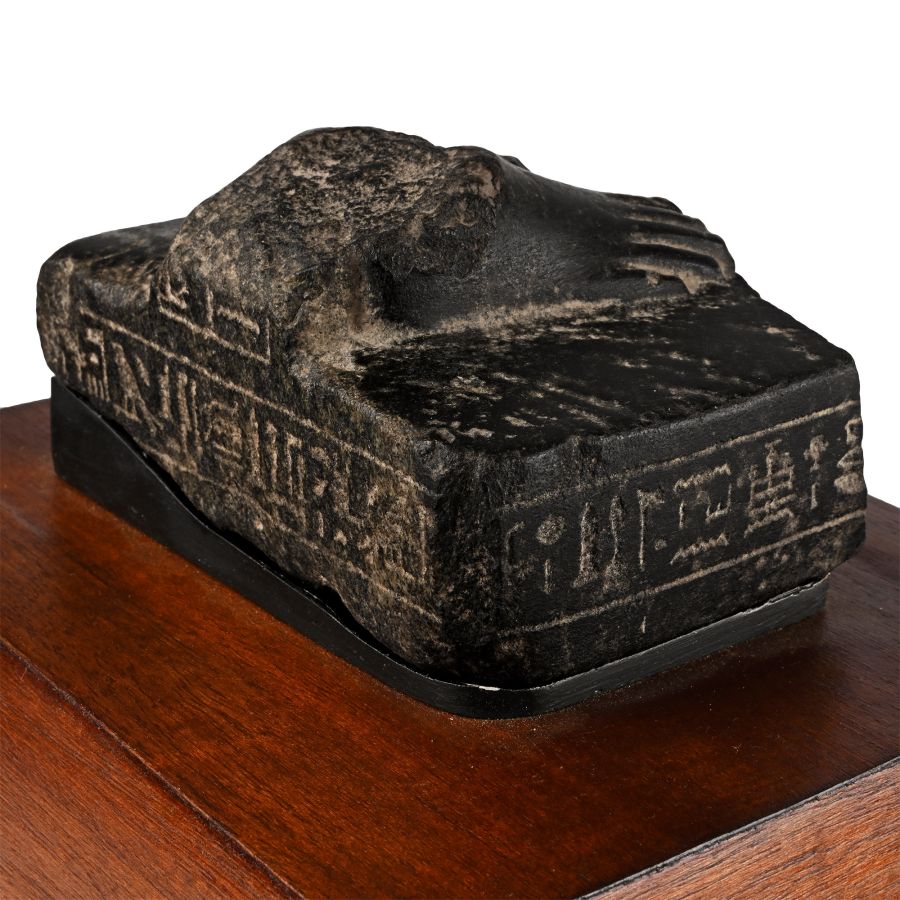
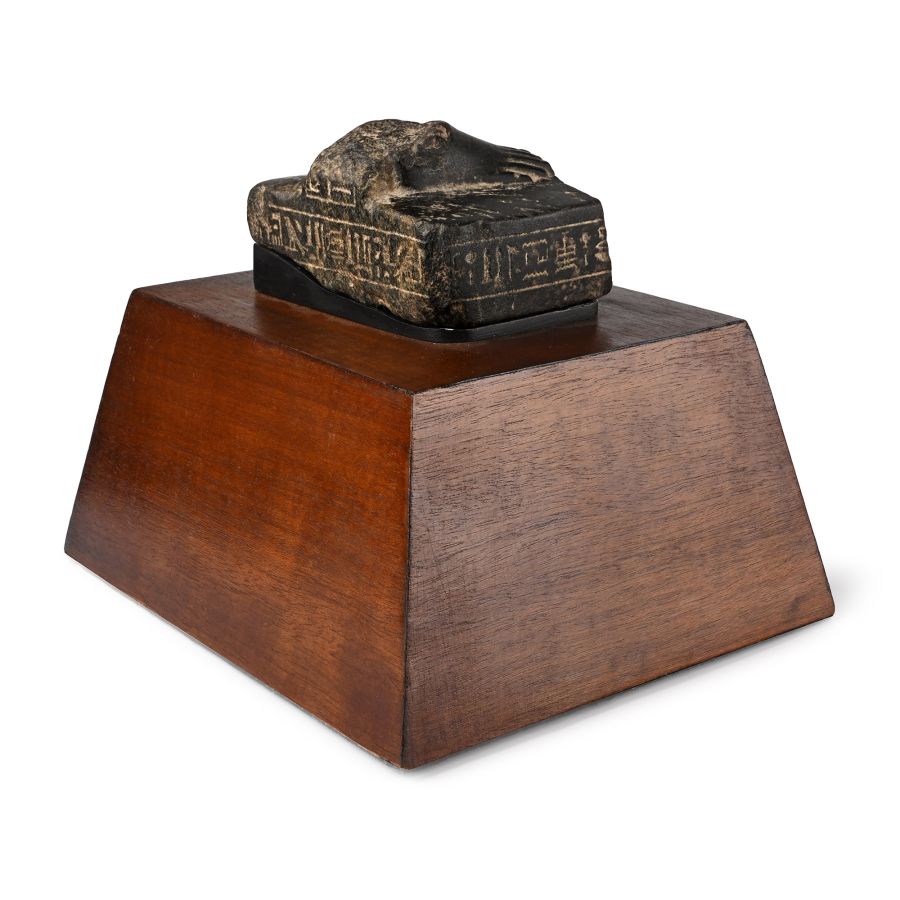
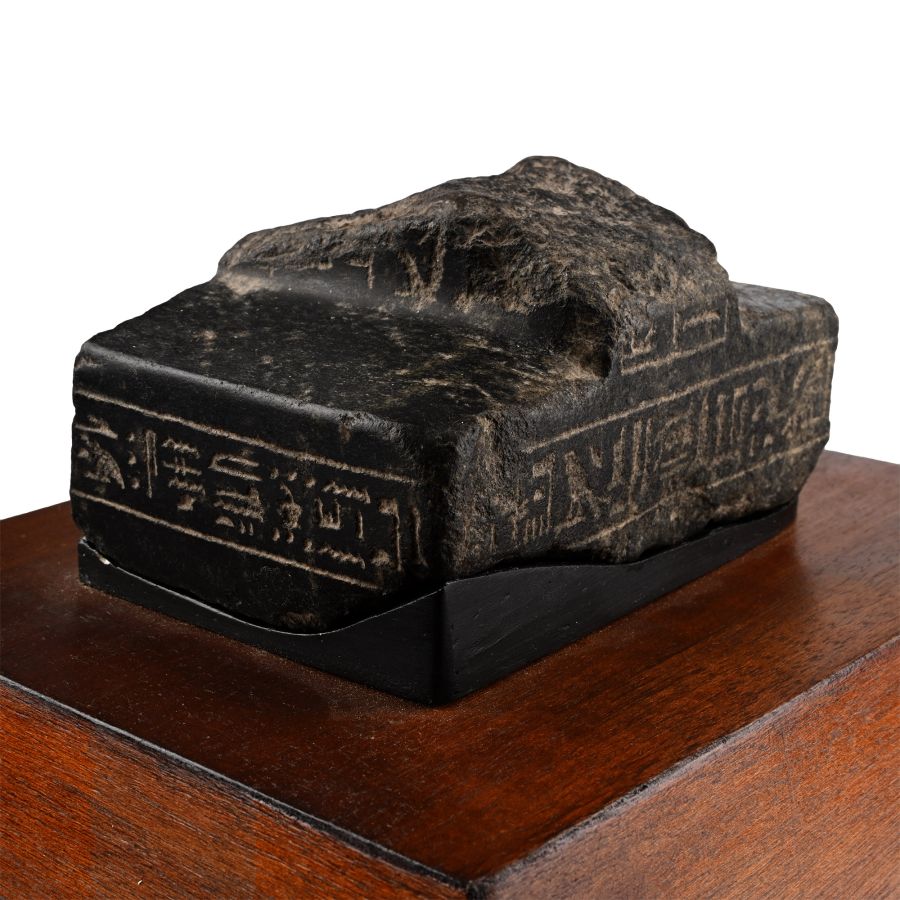
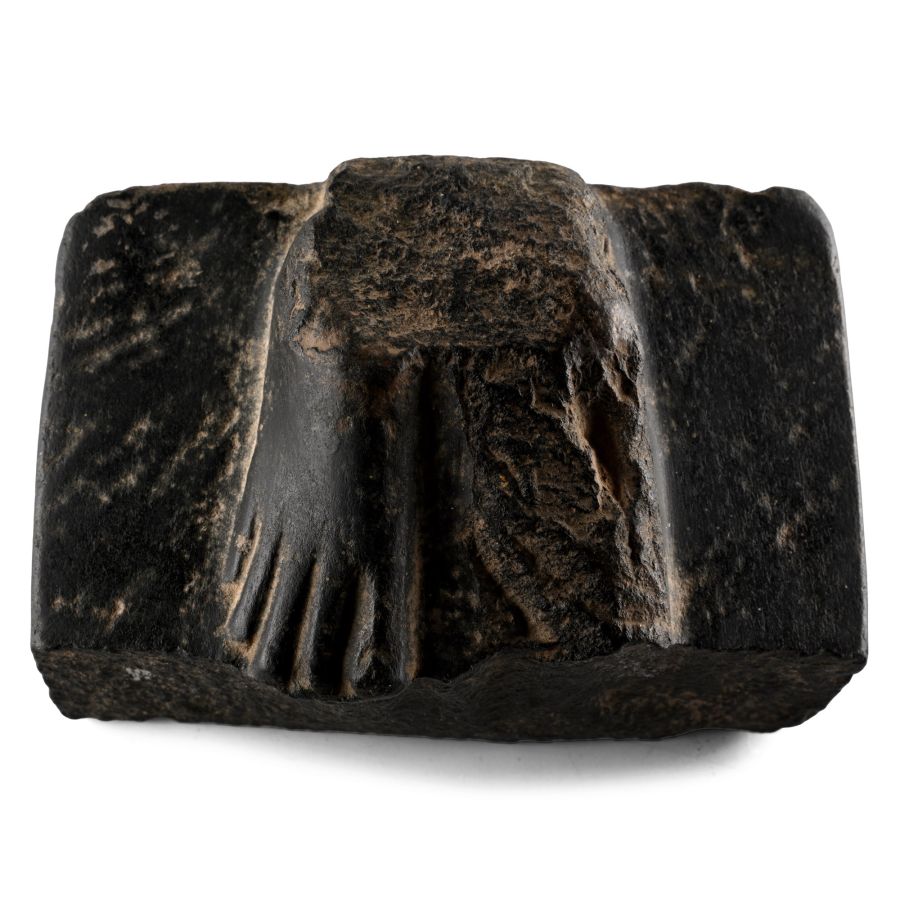
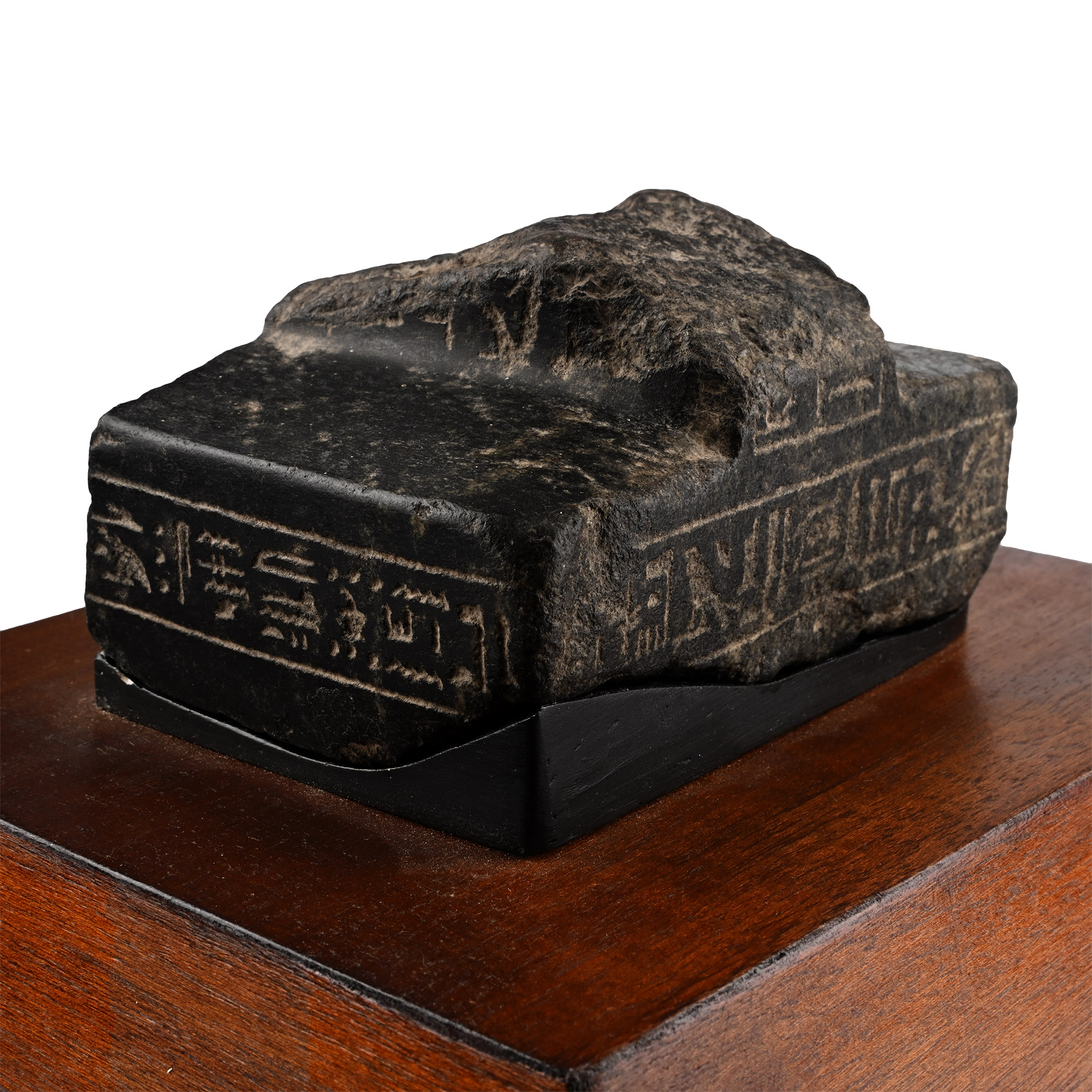
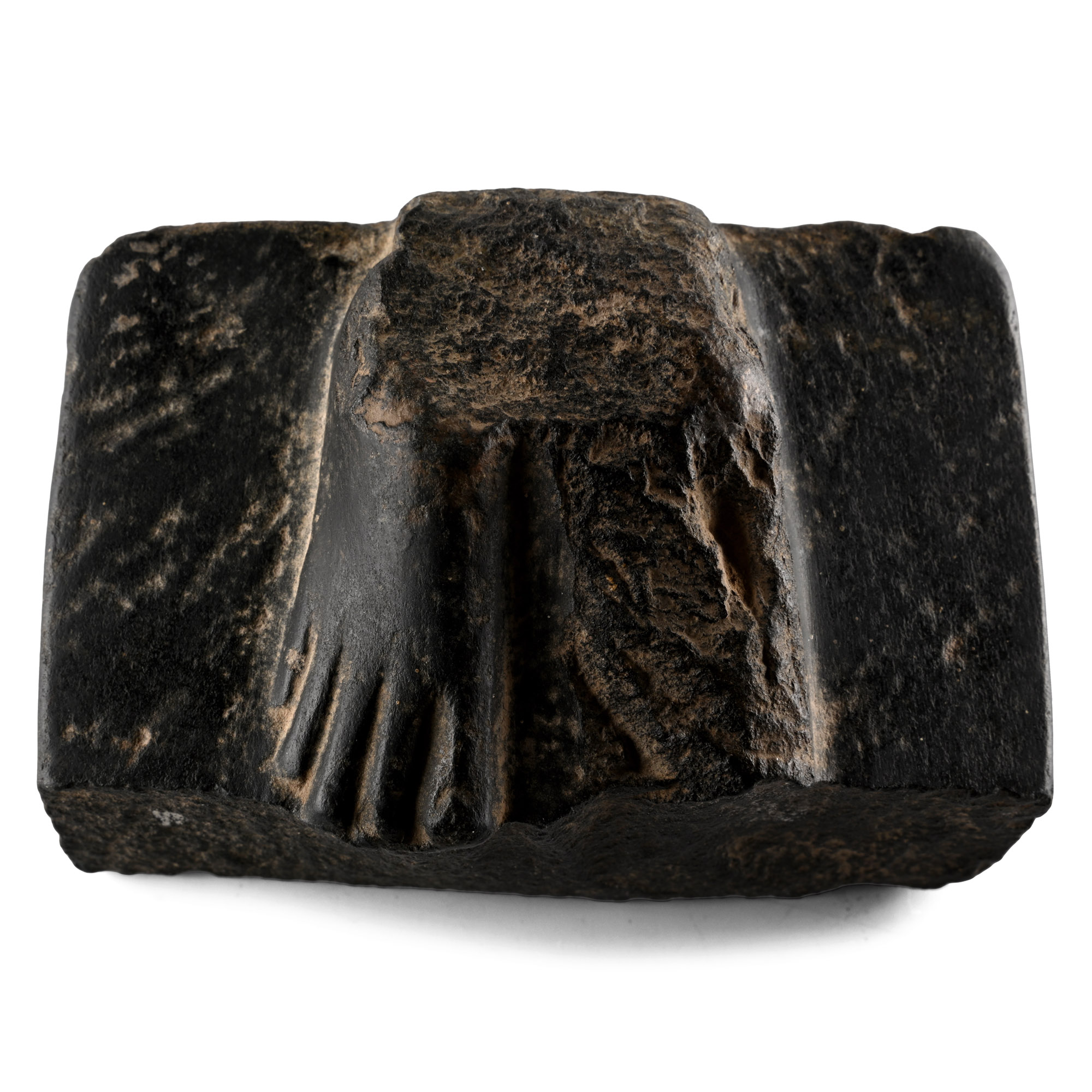
Egyptian Basalt Statue Base For The Priest Hor-sa-aseti
LATE PERIOD, 664-332 B.C.
5 in. (9 7/8 in.) (1.37 kg, 12.9 cm (4.08 kg total, 25 cm including stand)).
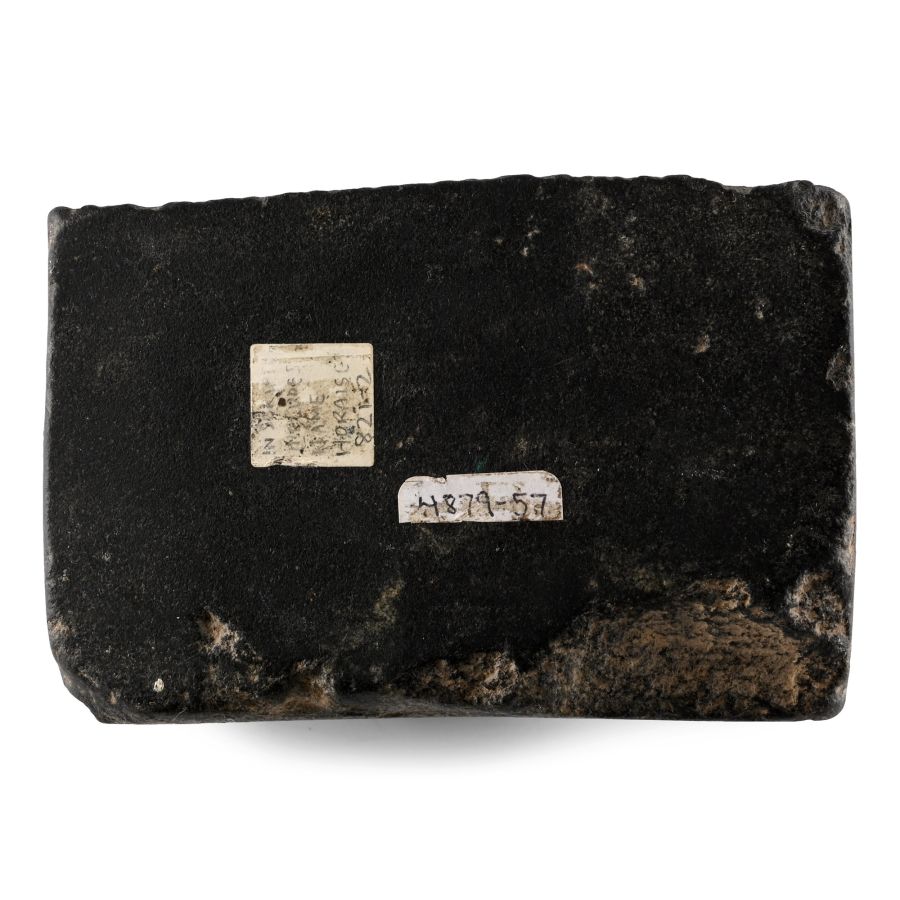
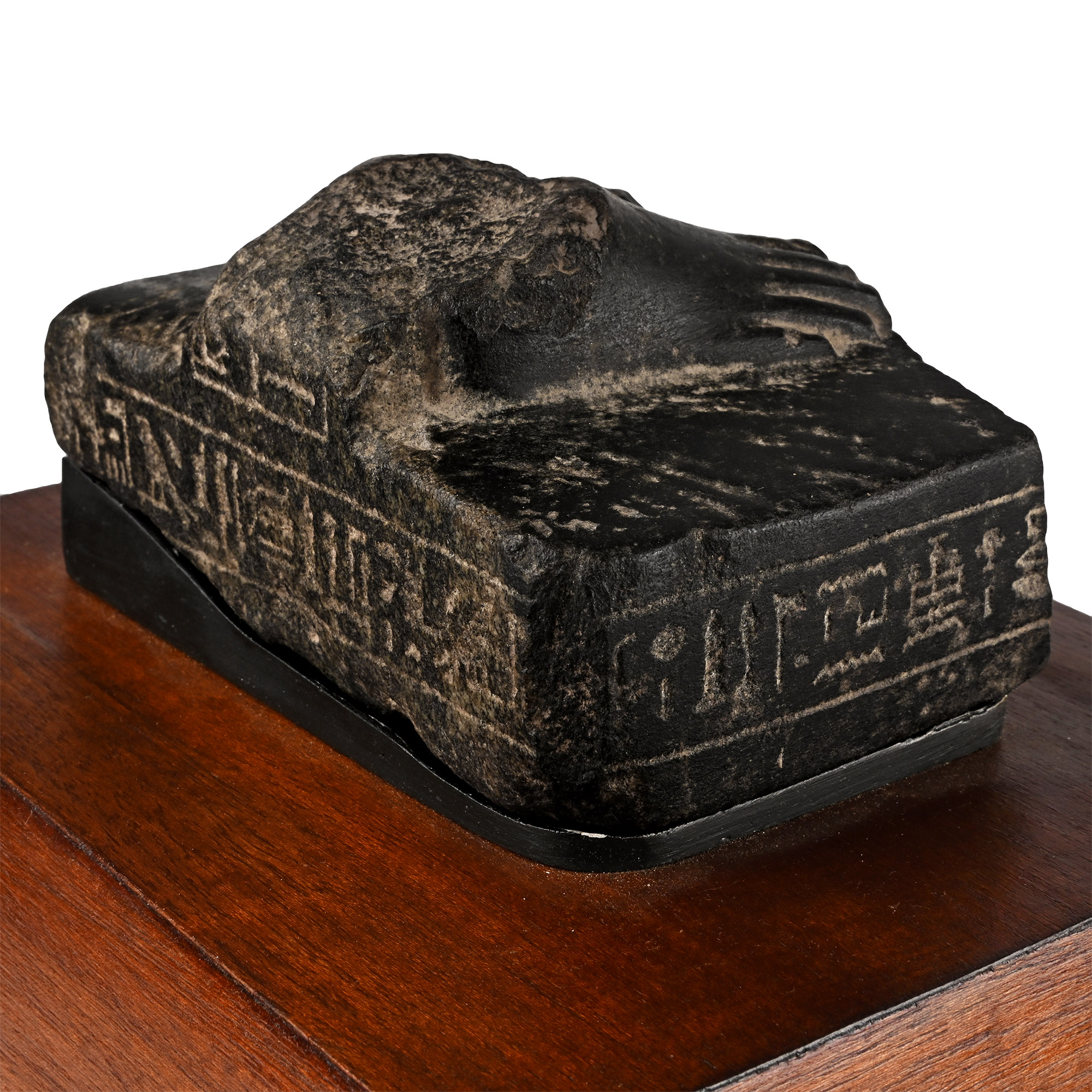
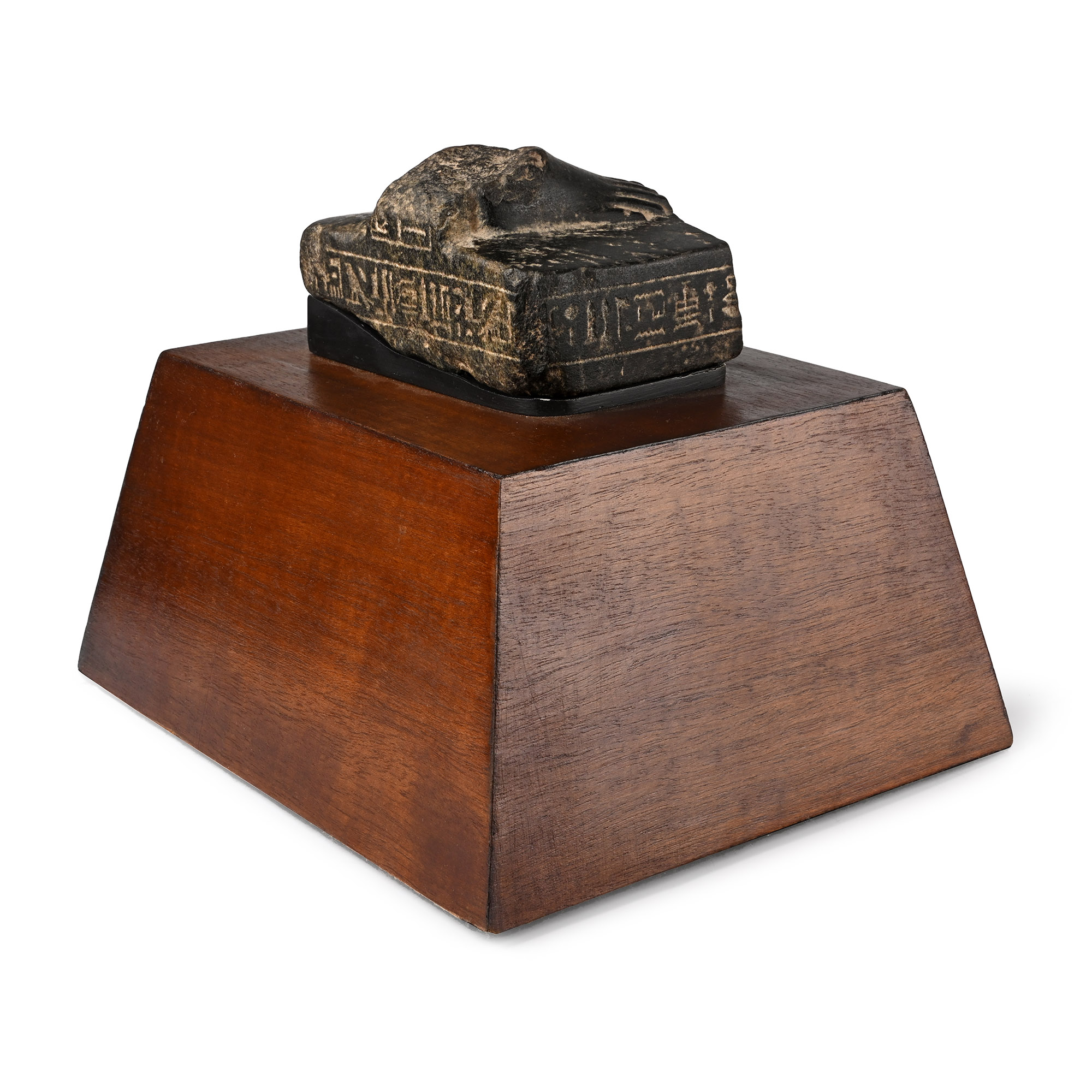
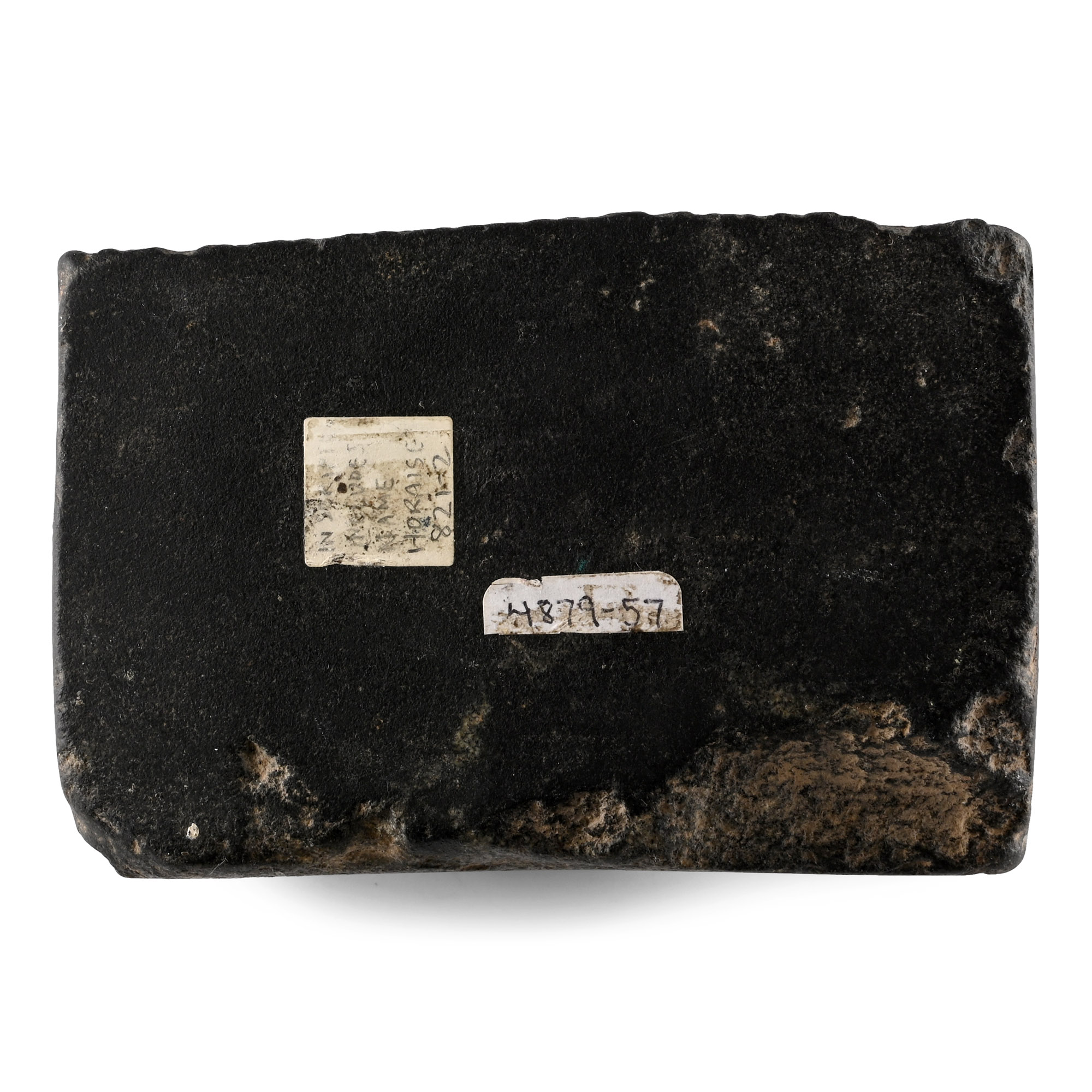
Fragment of the rectangular base of a statue, preserving an integral pair of feet on the upper surface; lower end of dorsal column inscription at the rear with two hieroglyphs; below, a horizontal band of hieroglyphic text extending onto both short sides including part of an offering formula for the ḥm-nṯr ı͗wnw-smꜤ ḥr-sꜢ-Ꜣstı͗ (the priest [of the] Southern Heliopolis [i.e., Thebes], Hor-sa-aseti); old collectors' labels on the underside; supplied with a custom-made wooden display stand.
ProvenancePrivate New York, USA, collection, 1970.
Ex Adrian Burns, Columus, Ohio, USA, from an old estate collection.
Ex Art for Eternity gallery, New York, USA.
Ex Art Primativo, Auction 16, 2001, no.430.
Ex private New York, USA, collection.
Private collection, London, UK.
Accompanied by an academic report by Egyptologist Paul Whelan.
This lot has been checked against the Interpol Database of stolen works of art and is accompanied by a search certificate number no.12832-240779.
This lot has been cleared against the Art Loss Register database, and is accompanied by an illustrated lot declaration signed by the Head of the Antiquities Department, Dr Raffaele D'Amato.
Cf. The Petrie Museum of Egytpian Archaeology, inv. no.U.C.16576, for a similar basalt base.
CONDITIONTimeLine Auctions follows a vetting process to ensure the authenticity and legality of all items, reinforcing our commitment to integrity and responsible trading. Each antiquity, antique, and coin lot undergoes thorough examination by a vetting committee of at least ten external specialists, professional trade association members, scientists, and archaeologists: Our Vetting Process
AUCTIONS:
TimeLine is a leading auction house specialising in antiquities, ancient art, collectables, natural history, coins, medals, and books. Our auctions offer museums, collectors, historians, and enthusiasts the opportunity to acquire unique and historically significant pieces.
LOT 0004
Egyptian Basalt Statue Base For The Priest Hor-sa-aseti
Estimate £4,000 - 6,000€4,640 - 6,960 (for guidance only)$5,400 - 8,100 (for guidance only)
-
.jpg)
Egyptian Body of Anubis Glass Inlay
Late Period-Ptolemaic Period, 664-30 B.C.Sold for (Inc. bp): £208
With gently curved obverse and flat reverse, section of an inlay depicting Anubis, with thick neck and beginning of extended foreleg. 110 grams, 96 mm
Acquired on the French art market, 1980s. with Bonhams, London, 13 April 2011, lot 21. Accompanied by copies of the relevant Bonhams catalogue pages. This lot is accompanied by an illustrated lot declaration signed by the Head of the Antiquities Department, Dr Raffaele D'Amato.
This coloured glass inlay depicts Anubis, the jackal-headed god of mummification and protector of the dead. Likely part of a coffin or shrine, it demonstrates the use of glass to imitate precious materials in elite funerary art. The figure’s profile and predominantly black colour evoke Anubis’s role in preservation and the afterlife. -
Egyptian Hardstone Amulet of Lotus Flower
New Kingdom, 1550-1070 B.C.Sold for (Inc. bp): £104
Bifacial with ribbed suspension loop and carved petals. 2.23 grams, 22 mm
From an early 20th century collection. This lot is accompanied by an illustrated lot declaration signed by the Head of the Antiquities Department, Dr Raffaele D'Amato. -
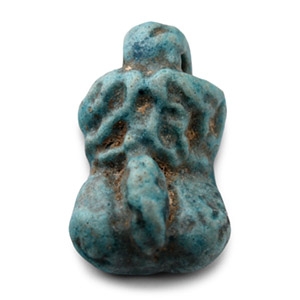
Egyptian Faience Phallic Amulet
Ptolemaic-Roman Period, 323 B.C.-323 A.D.Sold for (Inc. bp): £46
Pendant plaque of male genitals with loop above. 1.08 grams, 17 mm
From an early 20th century collection. This lot is accompanied by an illustrated lot declaration signed by the Head of the Antiquities Department, Dr Raffaele D'Amato.
