
Loading, please wait...
_900x900.jpg "Egyptian Basalt Bassinophore Fragments for the Customs Official Wahibre, son of Paeftchawy")
_200x200.jpg "Egyptian Basalt Bassinophore Fragments for the Customs Official Wahibre, son of Paeftchawy")
_900x900.jpg "Egyptian Basalt Bassinophore Fragments for the Customs Official Wahibre, son of Paeftchawy")
_200x200.jpg "Egyptian Basalt Bassinophore Fragments for the Customs Official Wahibre, son of Paeftchawy")
.jpg "Egyptian Basalt Bassinophore Fragments for the Customs Official Wahibre, son of Paeftchawy")
.jpg "Egyptian Basalt Bassinophore Fragments for the Customs Official Wahibre, son of Paeftchawy")
LOT 0061
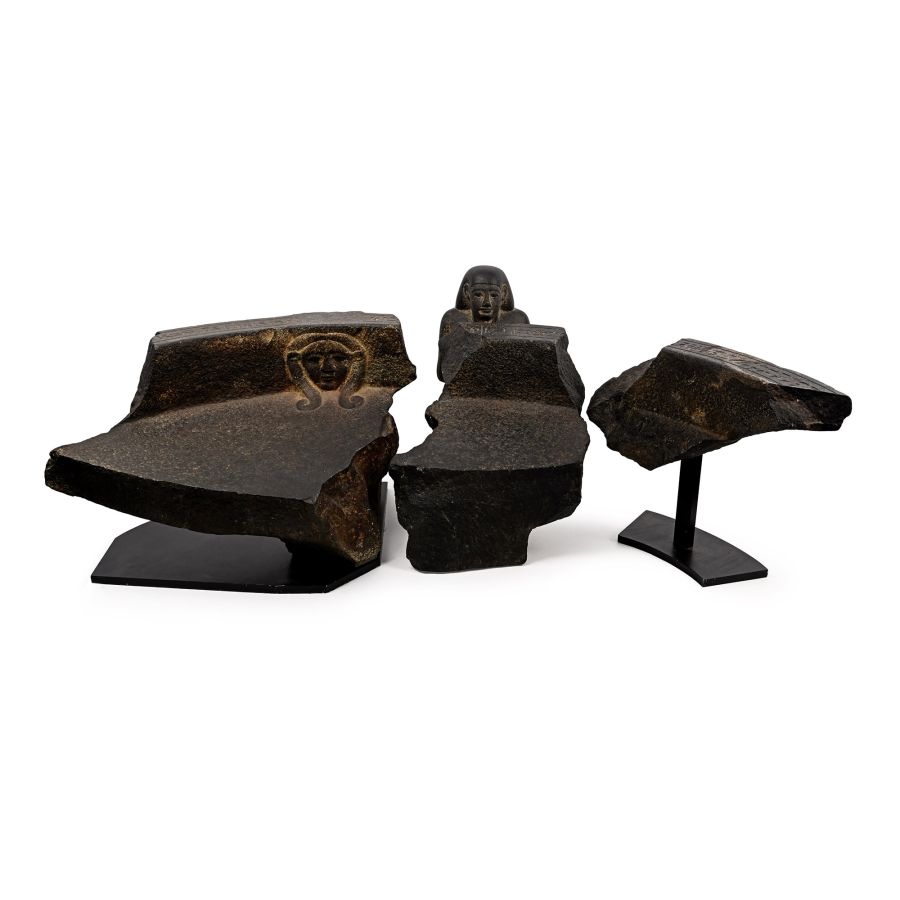
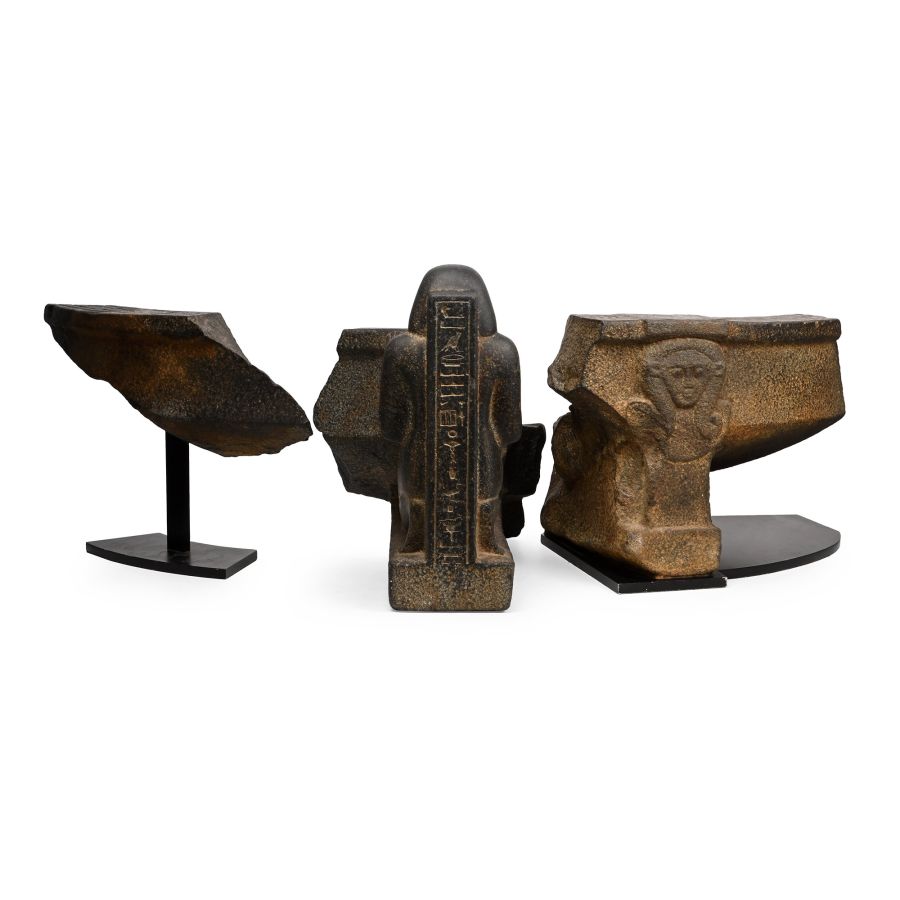
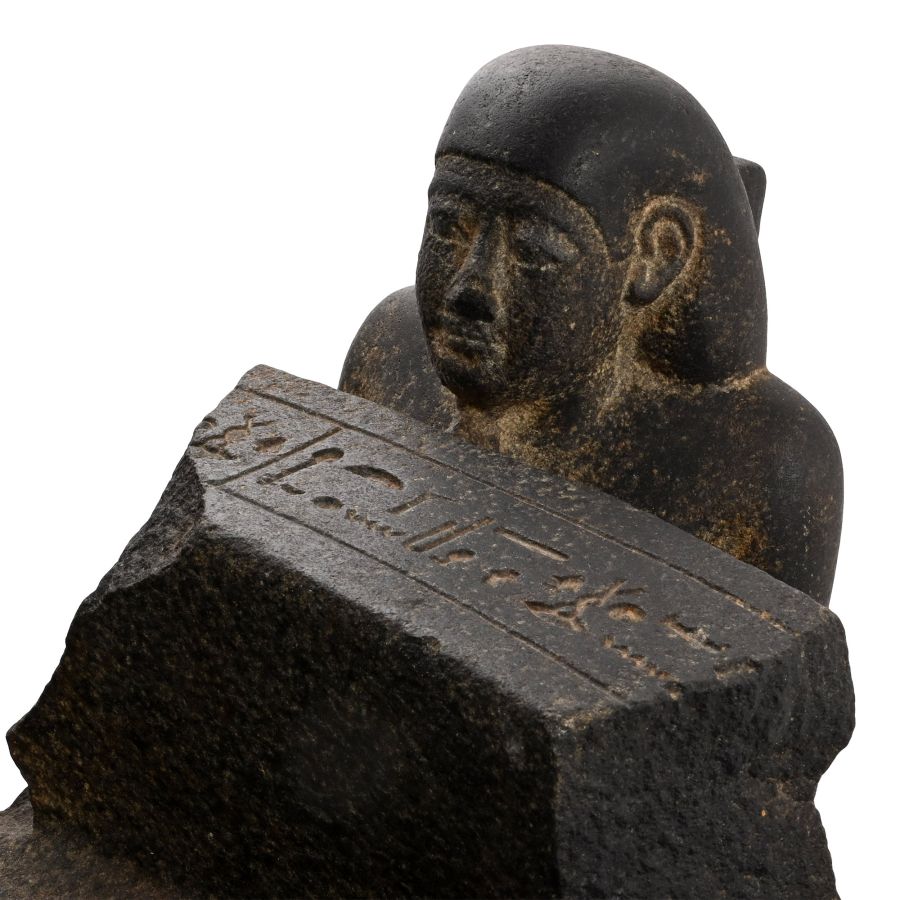
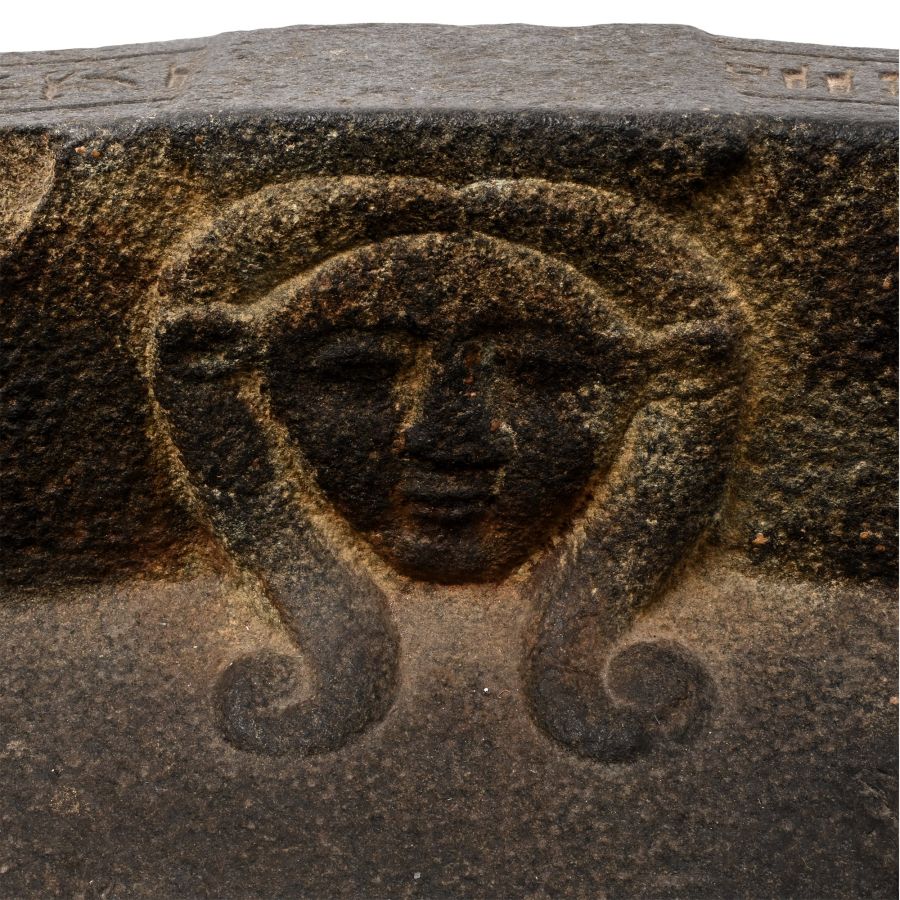
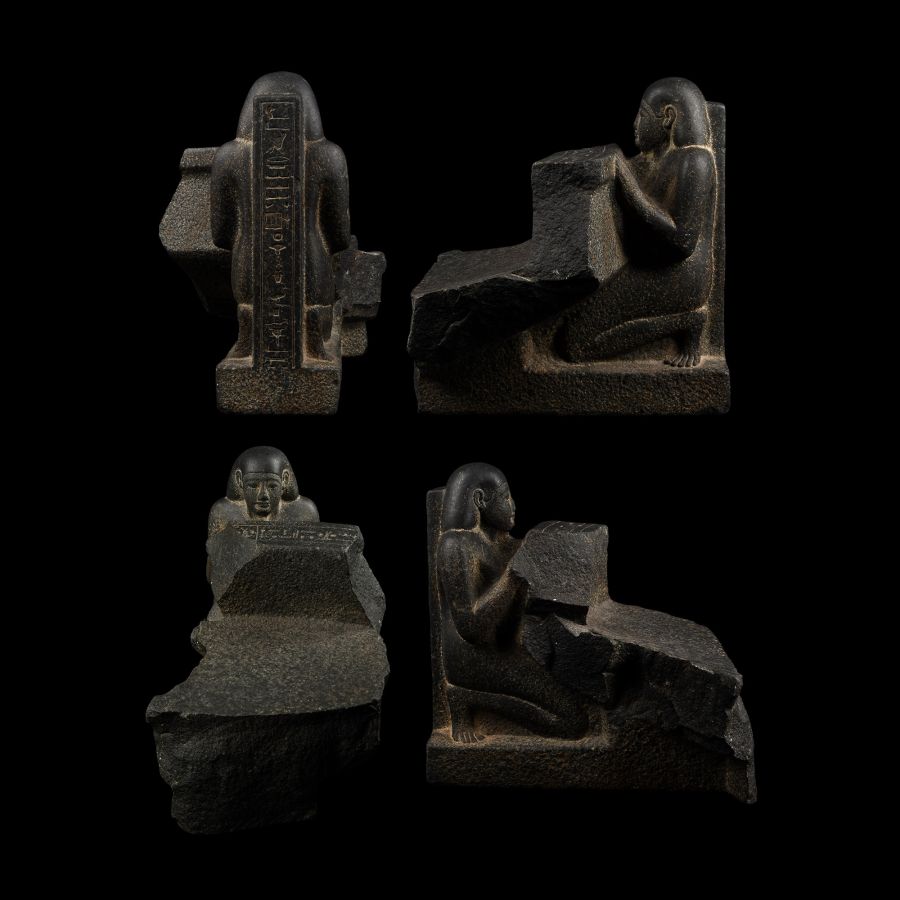
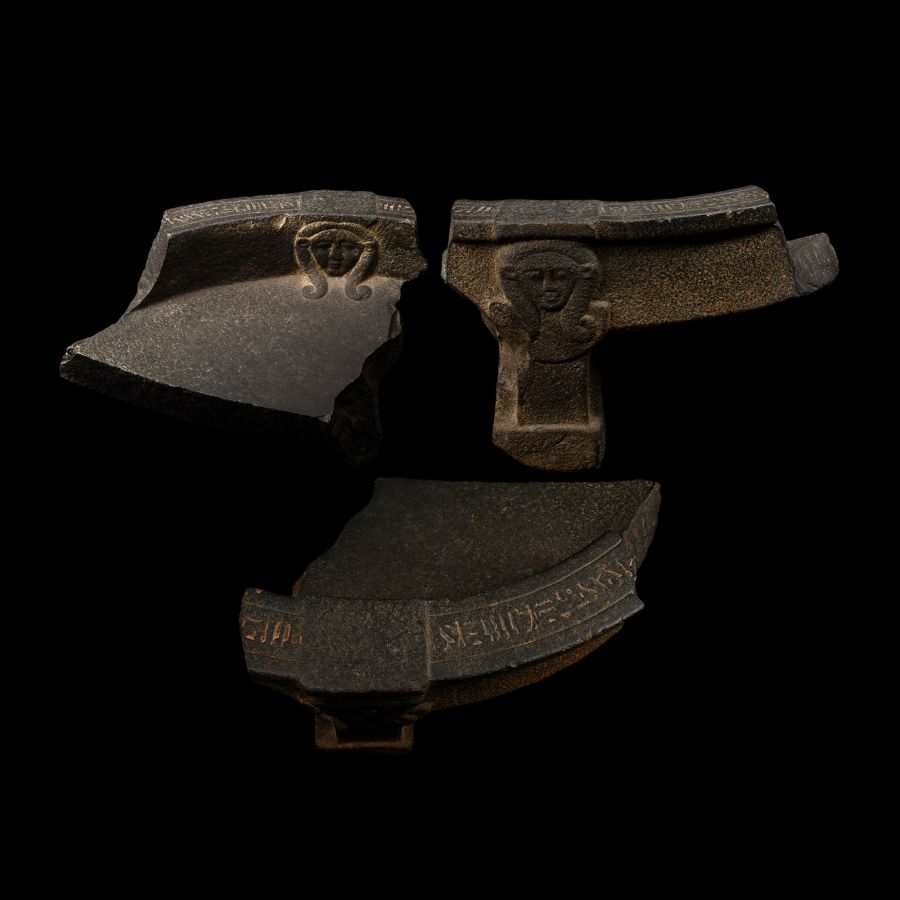
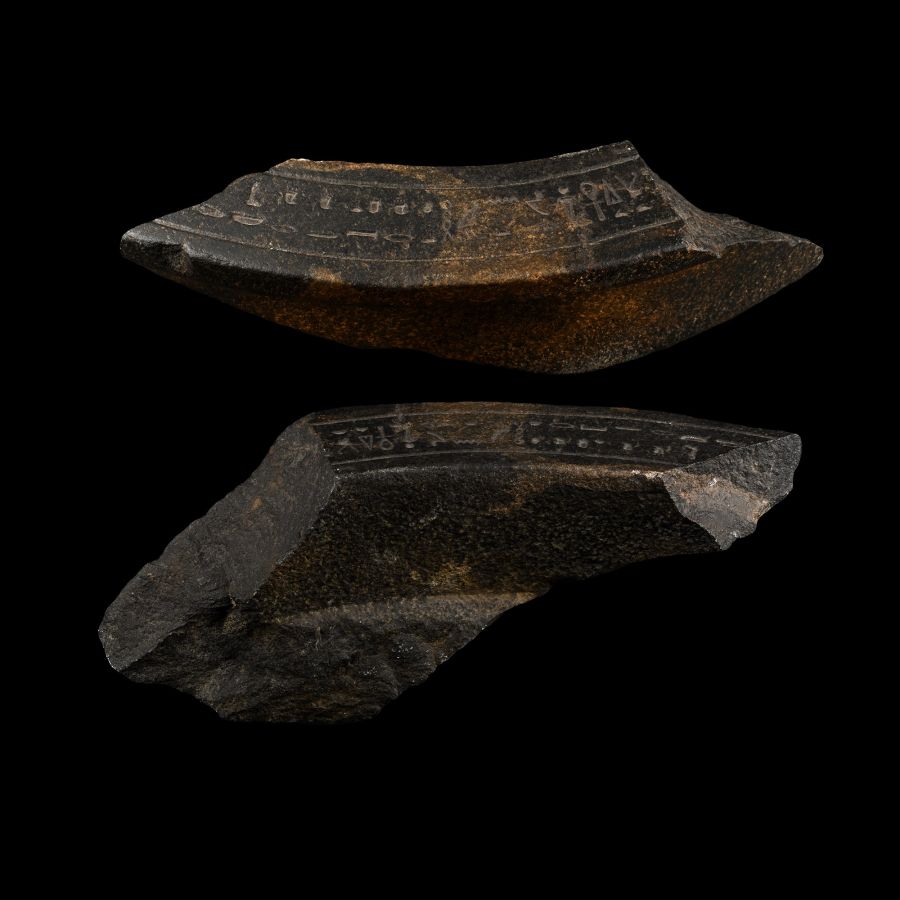
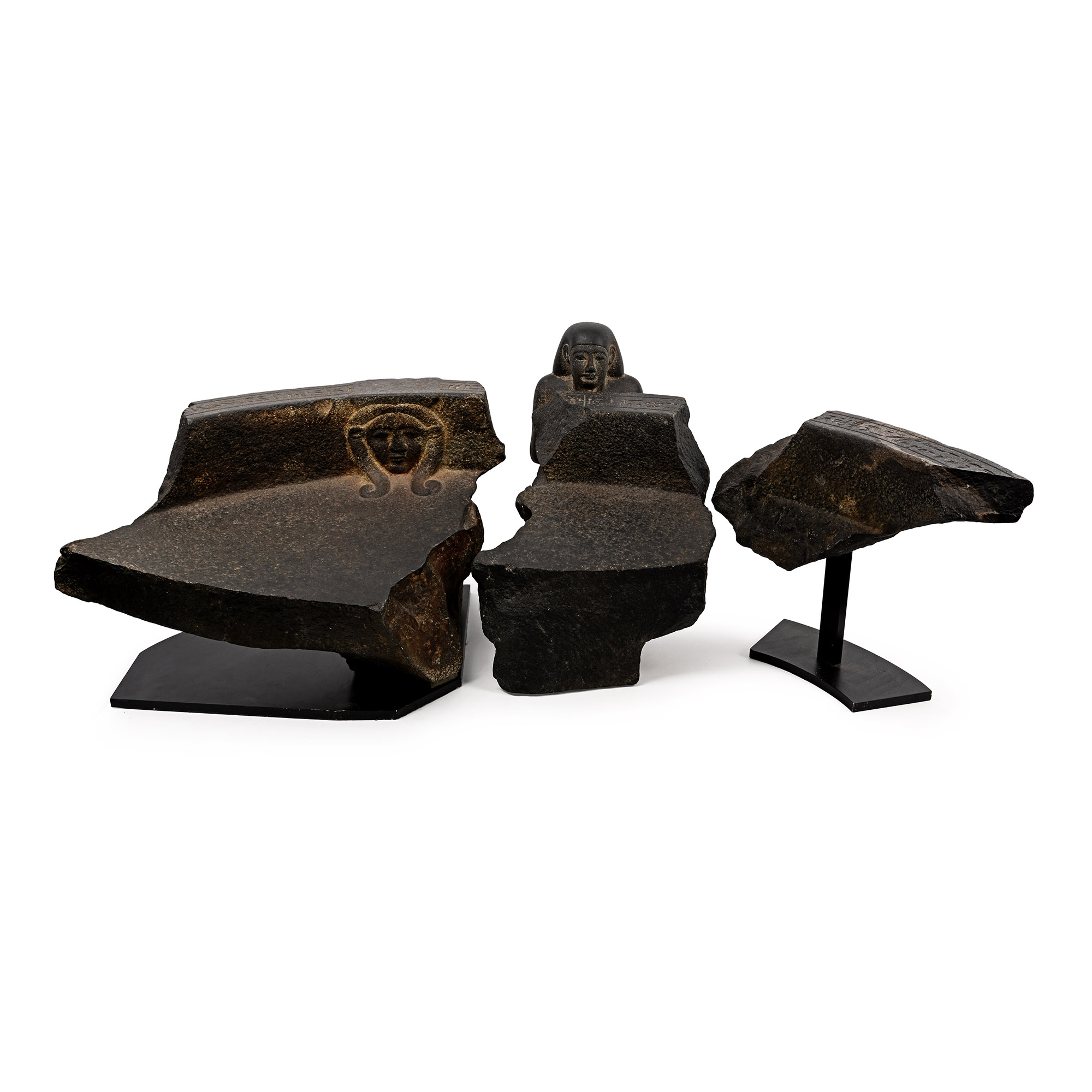
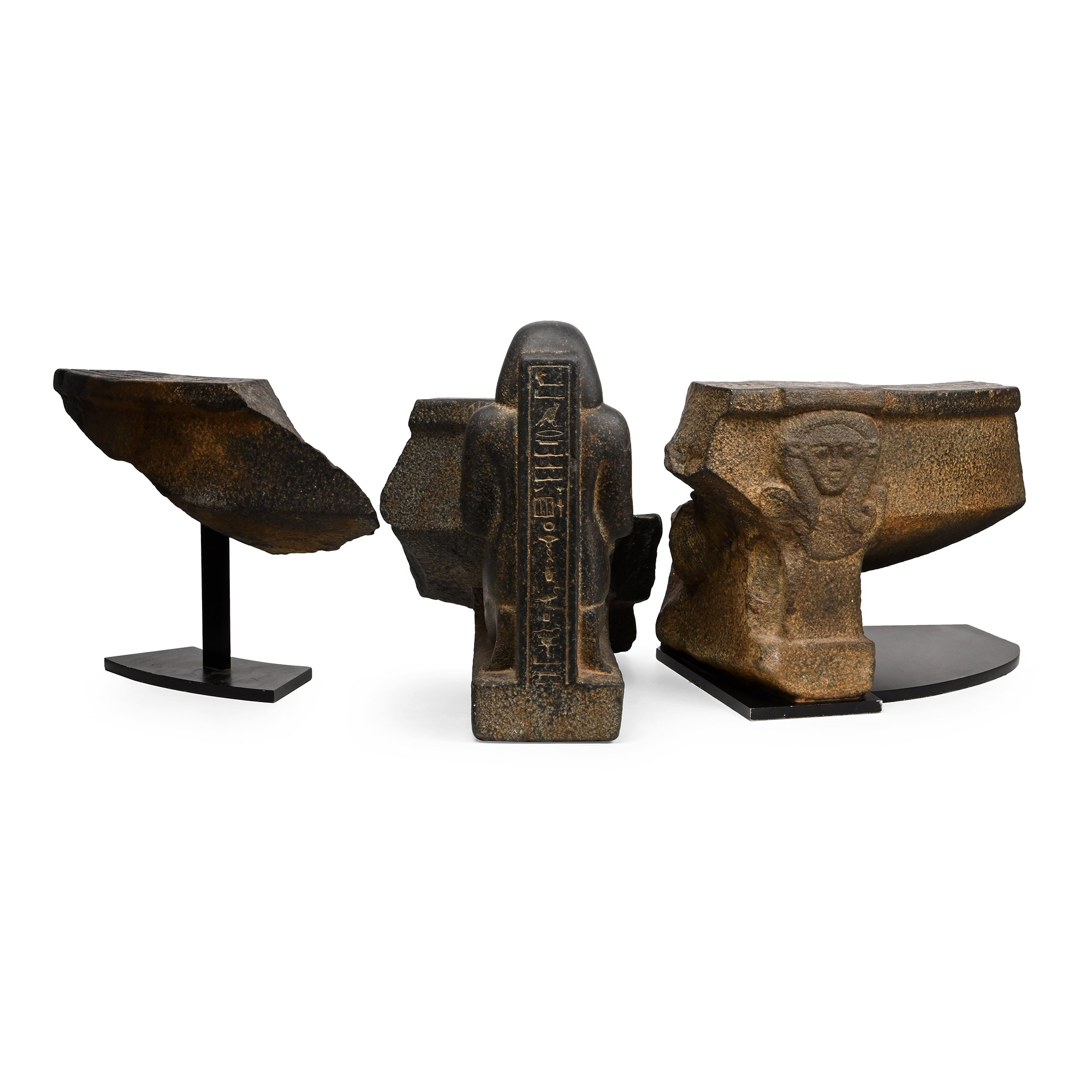
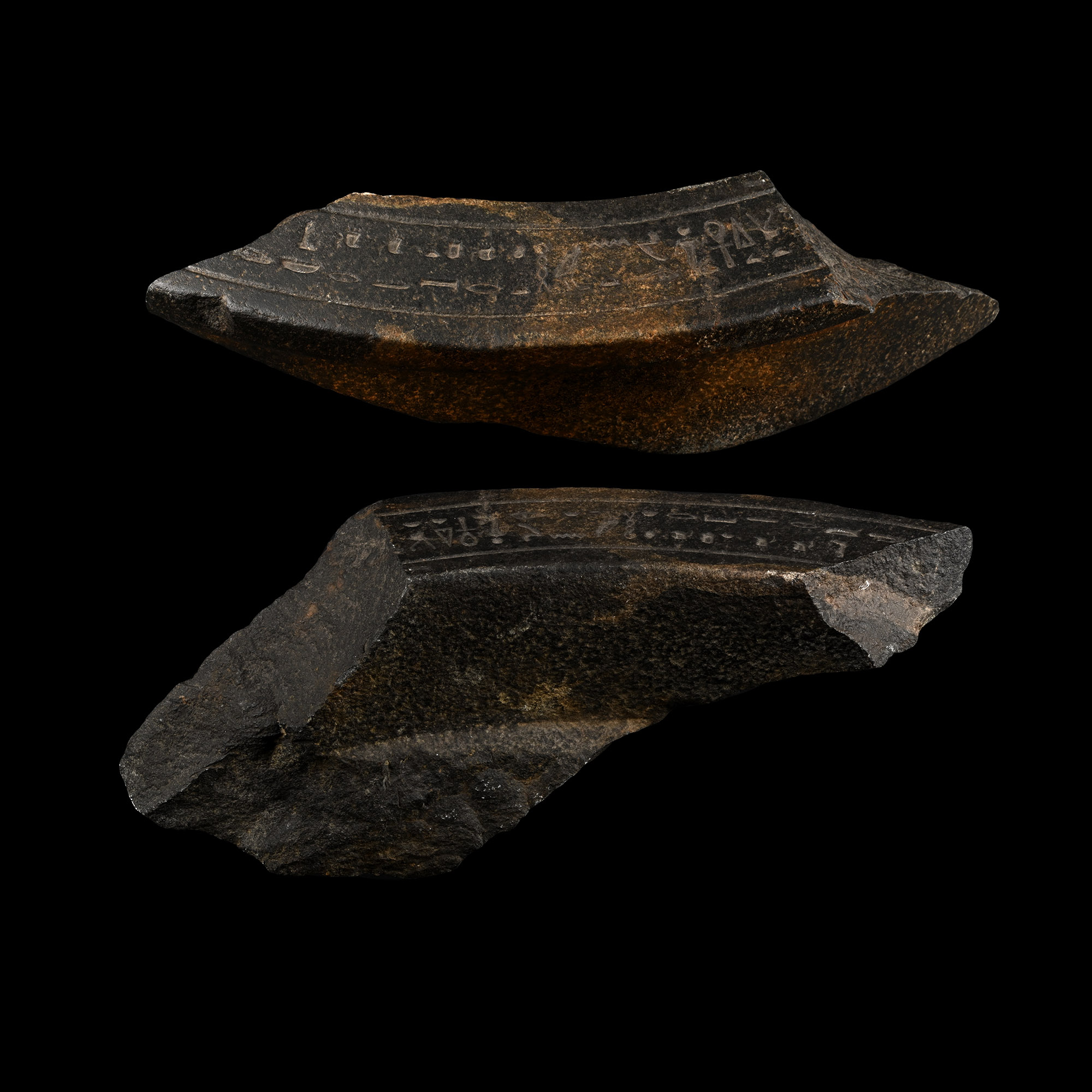
Egyptian Basalt Bassinophore Fragments for the Customs Official Wahibre, son of Paeftchawy
LATE PERIOD, 26TH DYNASTY, REIGN OF AMASIS, CIRCA 570-525 B.C.
15 3/4, 18 1/2 - 22 7/8 in. (107.7 kg total, figure: 40 cm high, fragments: 47-58 cm wide including stand).
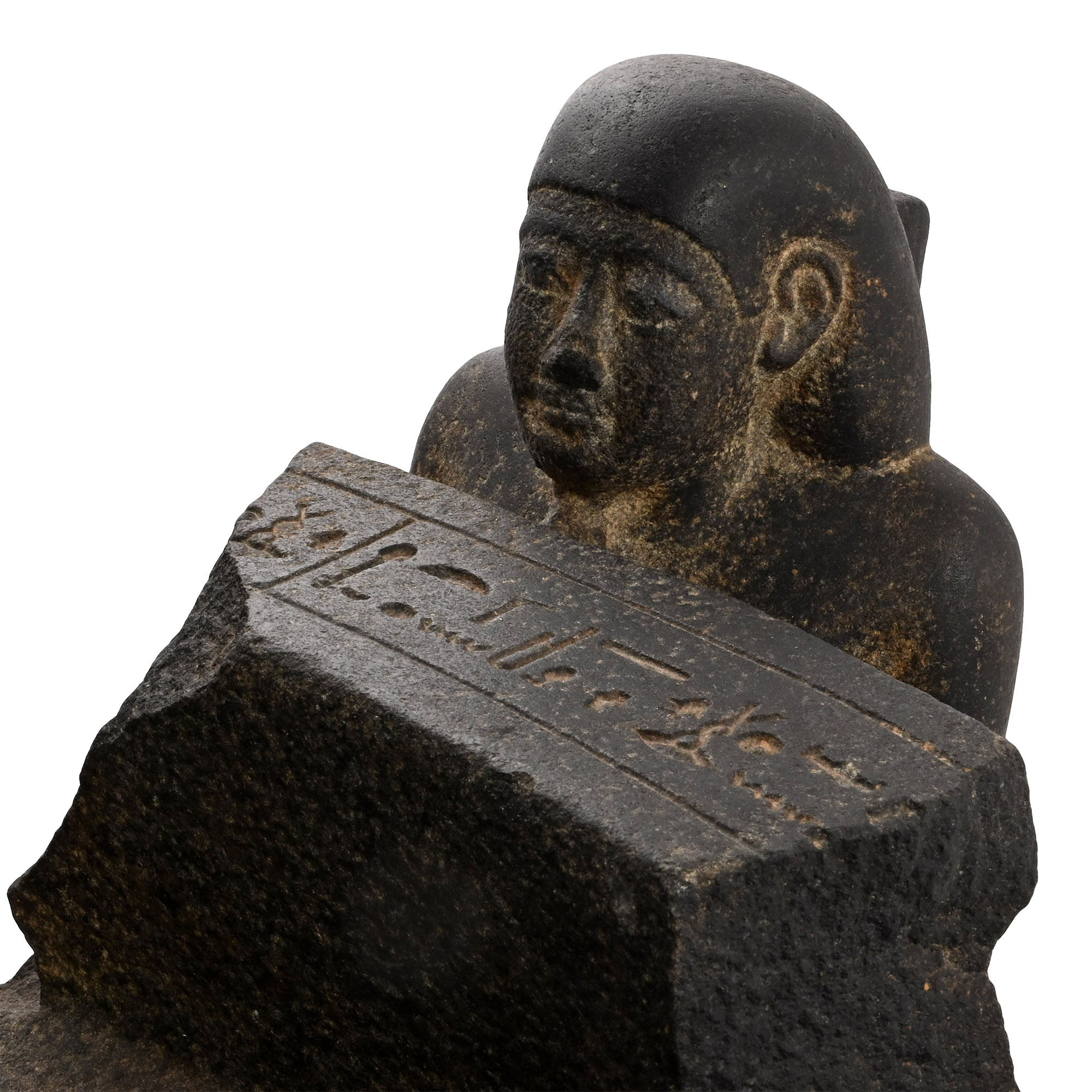
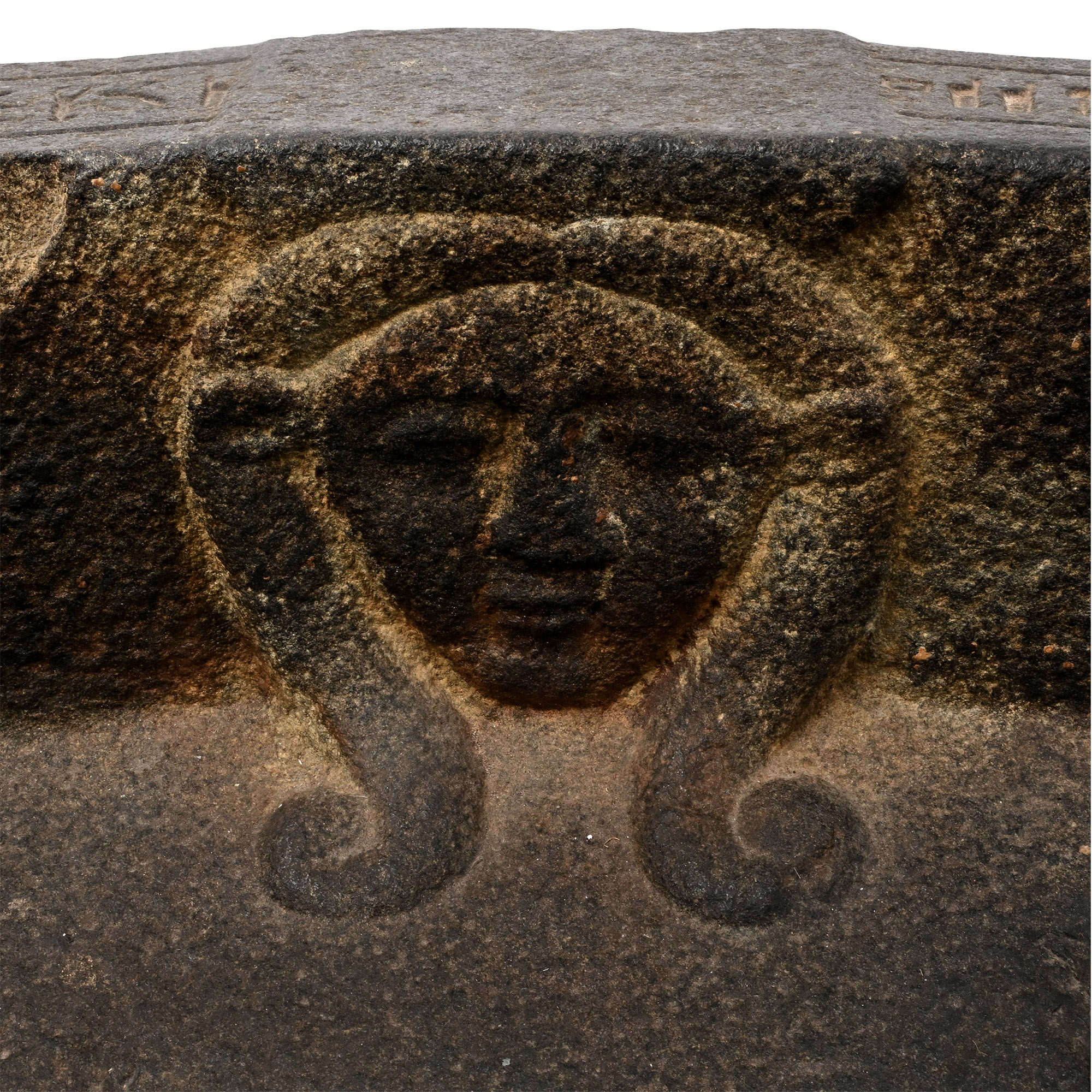
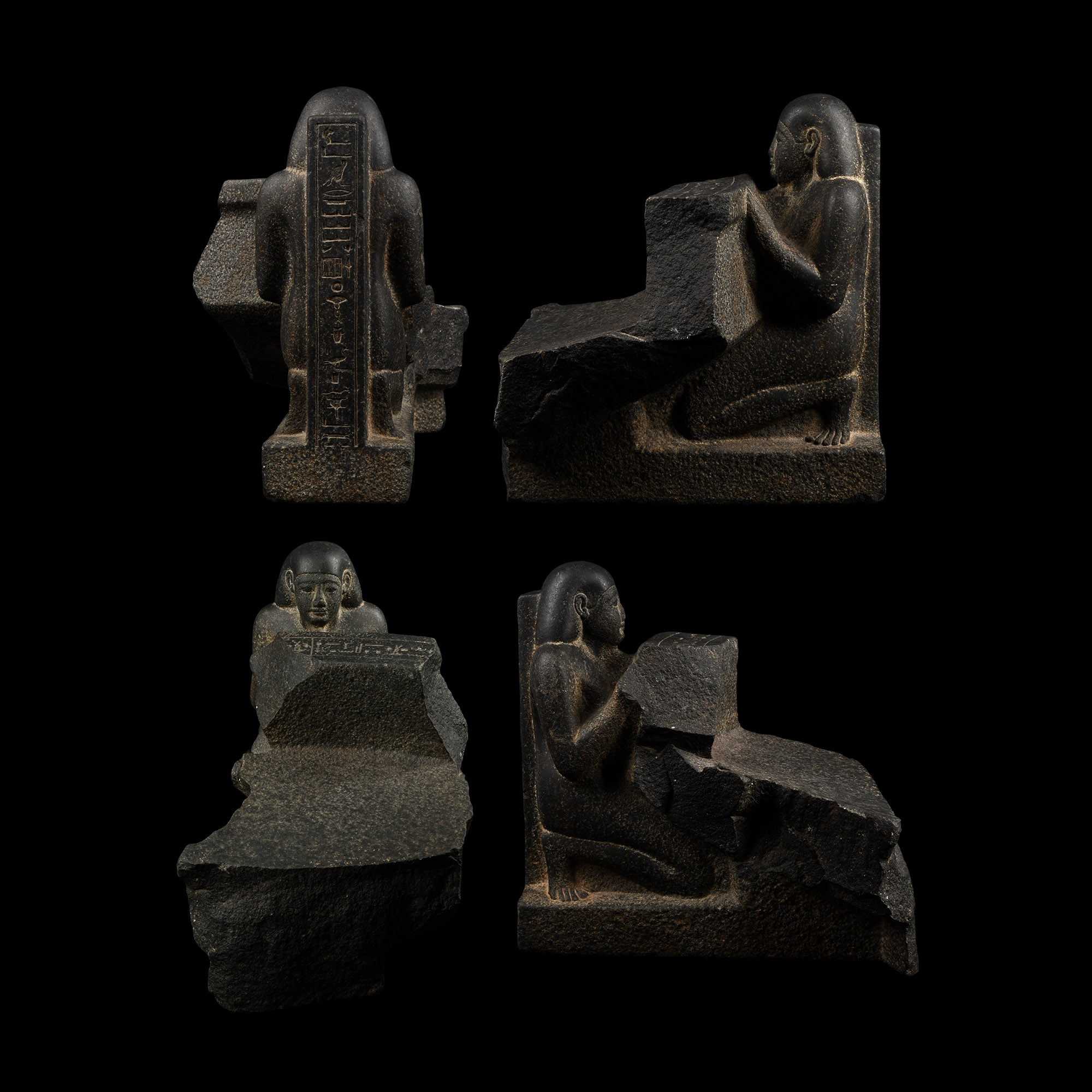
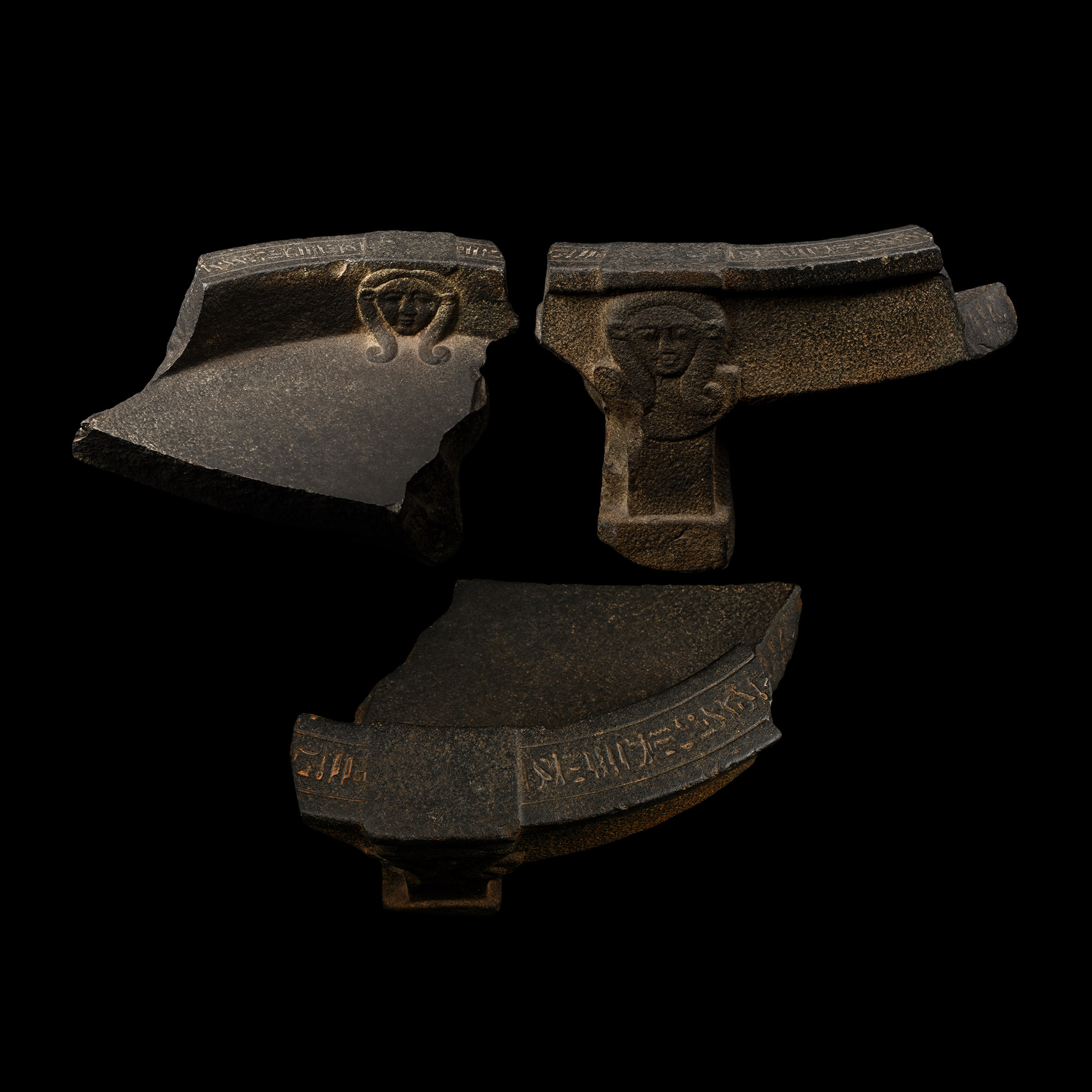
Modelled in the round kneeling on an integral base and wearing a broad rounded wig, holding a fragmentary offering basin before him; dorsal pillar engraved with a single vertical column of hieroglyphs, translating: 'The Count, Overseer of the Entrance to the Hill Countries, Chief Supervisor of the Shrines [of Neith], Wahibre, son of Paeftchawy'; upper rim of the basin further inscribed with a ritual formula intended to be recited during the presentation of its contents. [3]
ProvenanceFor the two basalt sections: UK private collection, formed 1970s-1990s.
Princely collection, until 2014; thence to a private foundation.
Acquired by the current owner from Rupert Wace, London, UK.
For the kneeling basalt figure: European private collection, since the mid-19th century.
Sold at Christie’s, New York, 8 June 2001, no.114.
Sold at Drouot-Richelieu, Paris (Boisgirard), 14 February 2005, no.313.
European private collection, acquired at the above sale; thence by descent to the previous owners.
This lot has been checked against the Interpol Database of stolen works of art and is accompanied by search certificate number no.13193-250115.
Comparable examples include a block statue in the Louvre (see Louvre A 91) and a kneeling naophorous figure in the British Museum (see British Museum EA 111); for a related, earlier libation basin combining a kneeling figure on one side and a Hathor head on the other, see the New Kingdom example at the Glencairn Museum in the Glencairn's Bird Room.
FootnotesThe figure on this vessel represents the customs official Wahibre, son of Paeftchawy, a well-attested individual known from at least fourteen other sculptures. Additional evidence for Wahibre’s identity is provided by a fragment of his mummiform sarcophagus, found at el-Hagar, within the territory of his native city of Sais. The titles inscribed on his surviving monuments reflect a career that combined priestly responsibilities with significant administrative and military authority. In southern Egypt, Wahibre served as chief customs officer and commanded a contingent of foreign troops tasked with protecting the frontier, probably Greek mercenaries from Caria.
CONDITIONTimeLine Auctions follows a vetting process to ensure the authenticity and legality of all items, reinforcing our commitment to integrity and responsible trading. Each antiquity, antique, and coin lot undergoes thorough examination by a vetting committee of at least ten external specialists, professional trade association members, scientists, and archaeologists: Our Vetting Process
AUCTIONS:
TimeLine is a leading auction house specialising in antiquities, ancient art, collectables, natural history, coins, medals, and books. Our auctions offer museums, collectors, historians, and enthusiasts the opportunity to acquire unique and historically significant pieces.
LOT 0061
Egyptian Basalt Bassinophore Fragments for the Customs Official Wahibre, son of Paeftchawy
Estimate £80,000 - 100,000€92,800 - 116,000 (for guidance only)$108,000 - 135,000 (for guidance only)
-
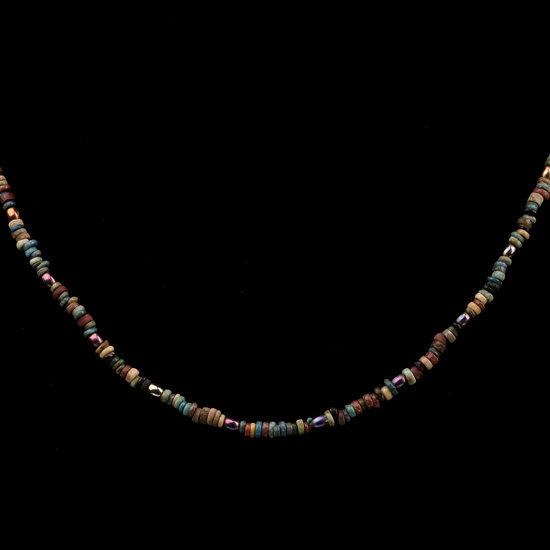
Egyptian Mummy Bead Necklace
Late Period, 664-332 B.C.Sold for (Inc. bp): £124
Composed of polychrome annular beads with modern metallic beads and a clasp, restrung. 8.48 grams, 46 cm long
Acquired Town Hall Antiques, Market Place, Woburn, Bedfordshire, UK, on 2nd March 2001. Property of a West Northamptonshire, UK, gentleman. Accompanied by the original Town Hall Antiques invoice. -
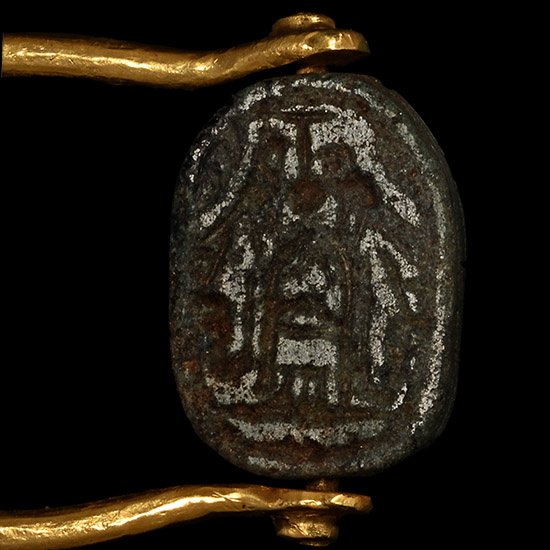
Phoenician Lapis Lazuli Scarab in Gold Swivel Ring
6th-4th century B.C. and laterEstimate: £1,000 - 1,400 (‡+bp*)
Opening Bid: £500
With lightly incised anatomical detailing to the scarab; the underside with a central cartouche flanked by two rearing crowned uraei, a pair of falcons standing above the cartouche facing a smꜣ hieroglyph symbolising union (of the two lands, Upper and Lower Egypt); set into a later gold swivel ring. 4.34 grams, 26.44 mm overall, 15.68 mm internal diameter (approximate size British J 1/2, USA 5, Europe 9.32, Japan 9)
with Bonhams, London, UK, 21 October 1999, no.36. Private collection, Europe. This lot has been checked against the Interpol Database of stolen works of art and is accompanied by a search certificate number no.12370-226696. -
.jpg)
Egyptian Brown Quartzite Figure of the Baboon God Thoth
New Kingdom, circa 1550-1070 B.C.Estimate: £4,000 - 6,000 (‡+bp*)
Opening Bid: £2,222
Carved in a typical pose, sitting on its haunches with its tail curving around the right side, its front paws resting on its knees and protruding beneath its thick furry pelt, with incised detailing, its feet either side of the phallus, the head with bulbous, striated hair on either side, chipped, snout restored; seated on a high shrine-shaped plinth with squared front and rounded back, featuring a cavetto cornice and roll detailing on the upper part. 1.15 kg, 15 cm
From a deceased American estate, 1970-1989. with Bonhams, London, 28 October 2009, no.35. Accompanied by copies of the relevant Bonhams catalogue pages. This lot has been checked against the Interpol Database of stolen works of art and is accompanied by a search certificate number no.12368-226706.
The baboon was an animal manifestation of the god Thoth, the patron deity of Hermopolis Magna, who was revered for his association with knowledge, writing, and healing.
