
Loading, please wait...
LOT 0534
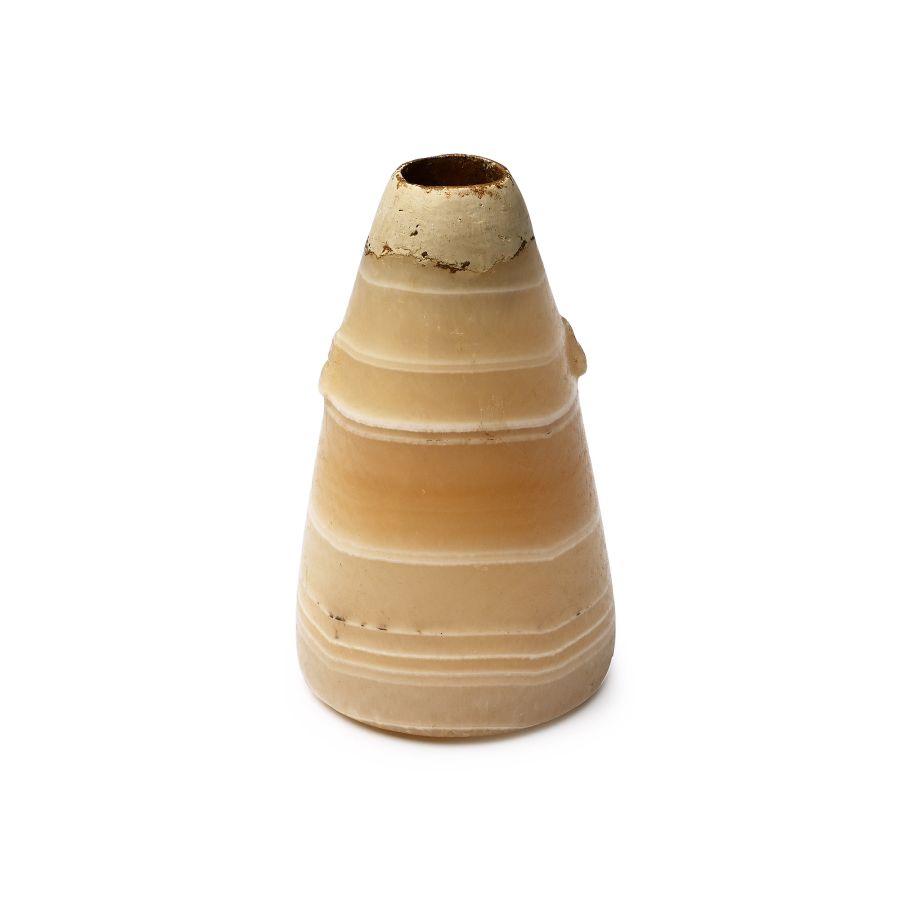
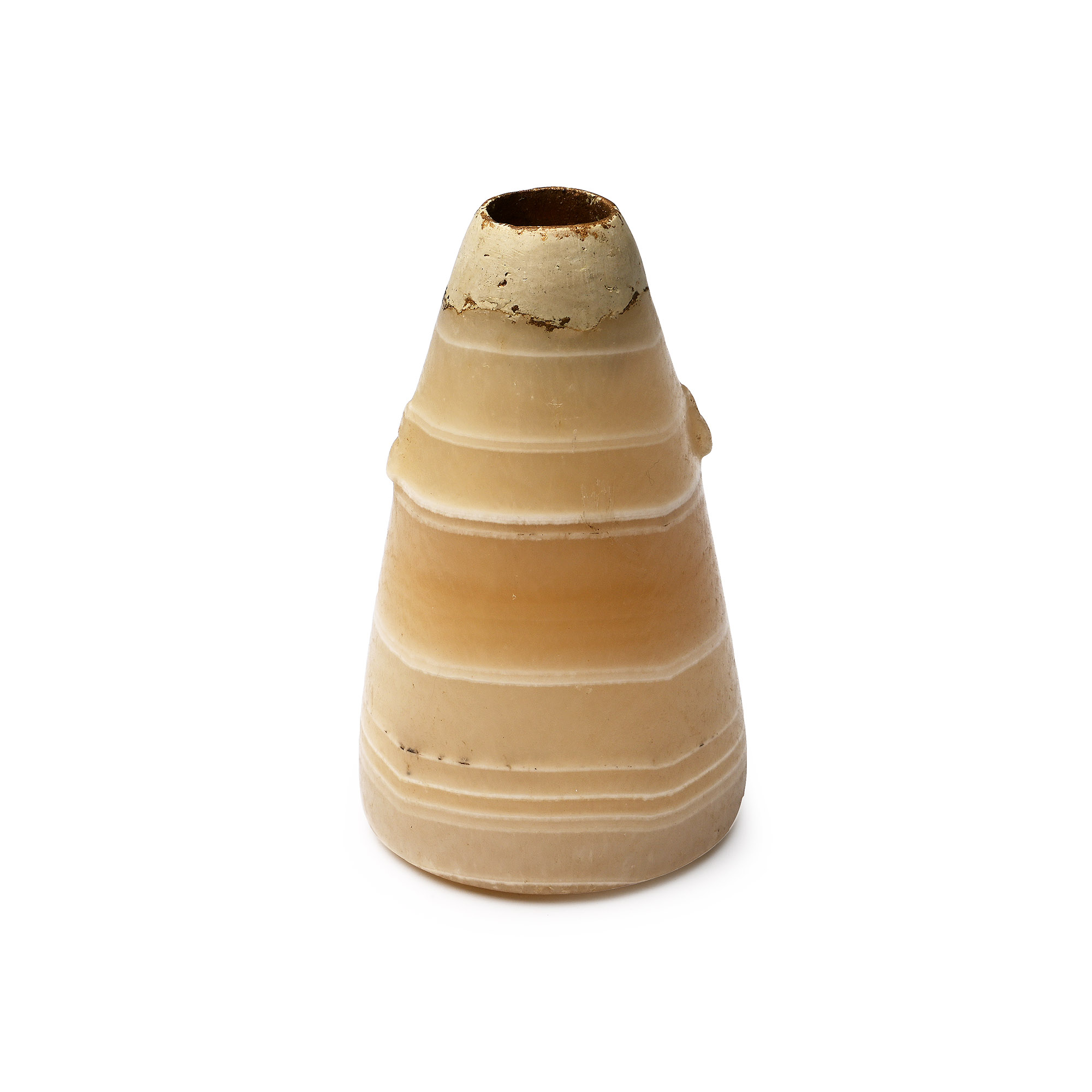
Egyptian Banded Agate Kohl Pot
LATE PERIOD, 664-332 B.C.
3 in. (94 grams, 75 mm).
Cone-shaped body with traces of lug handles on the upper third; narrow opening at the top with a thin, flattened rim. [No Reserve]
ProvenanceUK private collection before 2000.
Acquired on the UK art market.
Private collection, London, UK.
This lot is accompanied by an illustrated lot declaration signed by the Head of the Antiquities Department, Dr Raffaele D'Amato.
This vessel's unusual triangular shape is thought to be limited to the Late Period; other comparable examples are known (e.g., Barbotin, C., Collection égyptienne: Musée Granet - Aix-en-Provence, Aix-en-Provence, 1995, p. 166, no. 97).
CONDITIONTimeLine Auctions follows a vetting process to ensure the authenticity and legality of all items, reinforcing our commitment to integrity and responsible trading. Each antiquity, antique, and coin lot undergoes thorough examination by a vetting committee of at least ten external specialists, professional trade association members, scientists, and archaeologists: Our Vetting Process
AUCTIONS:
TimeLine is a leading auction house specialising in antiquities, ancient art, collectables, natural history, coins, medals, and books. Our auctions offer museums, collectors, historians, and enthusiasts the opportunity to acquire unique and historically significant pieces.
-
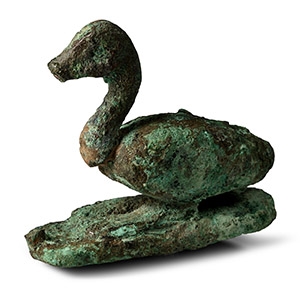
Egyptian Bronze Ibis Attachment
Late Period, 664-332 B.C. or laterEstimate: £150 - 200 (+bp*)
Opening Bid: £75
Modelled in the round squatting on an ellipsoid base, lug to the underside, repaired. 114 grams, 60 mm
From the collection of a gentleman, acquired on the London art market in the 1990s. This lot is accompanied by an illustrated lot declaration signed by the Head of the Antiquities Department, Dr Raffaele D'Amato.
The ibis, particularly the sacred species known as the Egyptian ibis (Threskiornis aethiopicus), held a prominent place in ancient Egyptian religion and culture as a manifestation of the god Thoth. Revered as the deity of wisdom, writing, and knowledge, Thoth was often depicted in human form with the head of an ibis. During the Late Period onwards, the practice of mummifying ibises became widespread, leading to the creation of vast necropolises dedicated to these sacred birds. In places like Saqqara and Hermopolis, thousands of ibis mummies have been discovered in specially constructed catacombs. The mummification of these birds was not merely a ritual act; it was seen as a sacred offering to Thoth, meant to honour the god and seek his favour. Egyptians believed that by preserving the ibis through mummification, they could ensure its safe passage to the afterlife, establishing a direct connection between the earthly realm and the divine. These mummies were often accompanied by votive offerings, like this bronze figurine, further emphasising the relationship between the ibises and Thoth. -
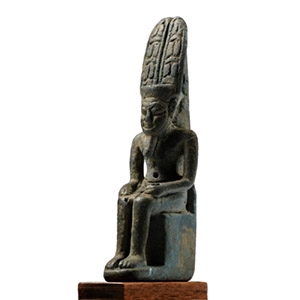
Egyptian Blue Amulet of Amun
Late Period, 26th Dynasty, circa 664-525 B.C.Sold for (Inc. bp): £1,690
The god modelled seated on a throne with a dorsal pillar, hands resting on his knees, wearing a short kilt and a two-plume feather crown; mounted on a wooden stand. 15.75 grams total, 71 mm including stand
with Charles Ede Ltd, London, UK. Private collection, London, UK, acquired from the above on 12 July 1994. Accompanied by a copy of the Charles Ede invoice. This lot has been checked against the Interpol Database of stolen works of art and is accompanied by a search certificate number no.12632-235078. This lot has been cleared against the Art Loss Register database, and is accompanied by an illustrated lot declaration signed by the Head of the Antiquities Department, Dr Raffaele D'Amato.
The amulet of the god Amun served both religious and protective purposes in ancient Egypt. Amun was a major deity associated with creation, kingship, and hidden power. Wearing an amulet bearing his image or name was believed to invoke his divine protection, grant strength, and confer favour or legitimacy. Such amulets were also placed among burial goods to ensure the deceased was protected and guided in the afterlife. -
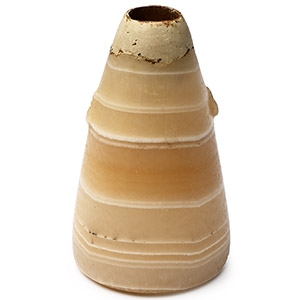
Egyptian Banded Agate Kohl Pot
Late Period, 664-332 B.C.Sold for (Inc. bp): £124
Cone-shaped body with traces of lug handles on the upper third; narrow opening at the top with a thin, flattened rim. 94 grams, 75 mm
UK private collection before 2000. Acquired on the UK art market. Private collection, London, UK. This lot is accompanied by an illustrated lot declaration signed by the Head of the Antiquities Department, Dr Raffaele D'Amato.
This vessel's unusual triangular shape is thought to be limited to the Late Period; other comparable examples are known (e.g., Barbotin, C., Collection égyptienne: Musée Granet - Aix-en-Provence, Aix-en-Provence, 1995, p. 166, no. 97).
