
Loading, please wait...
LOT 0655
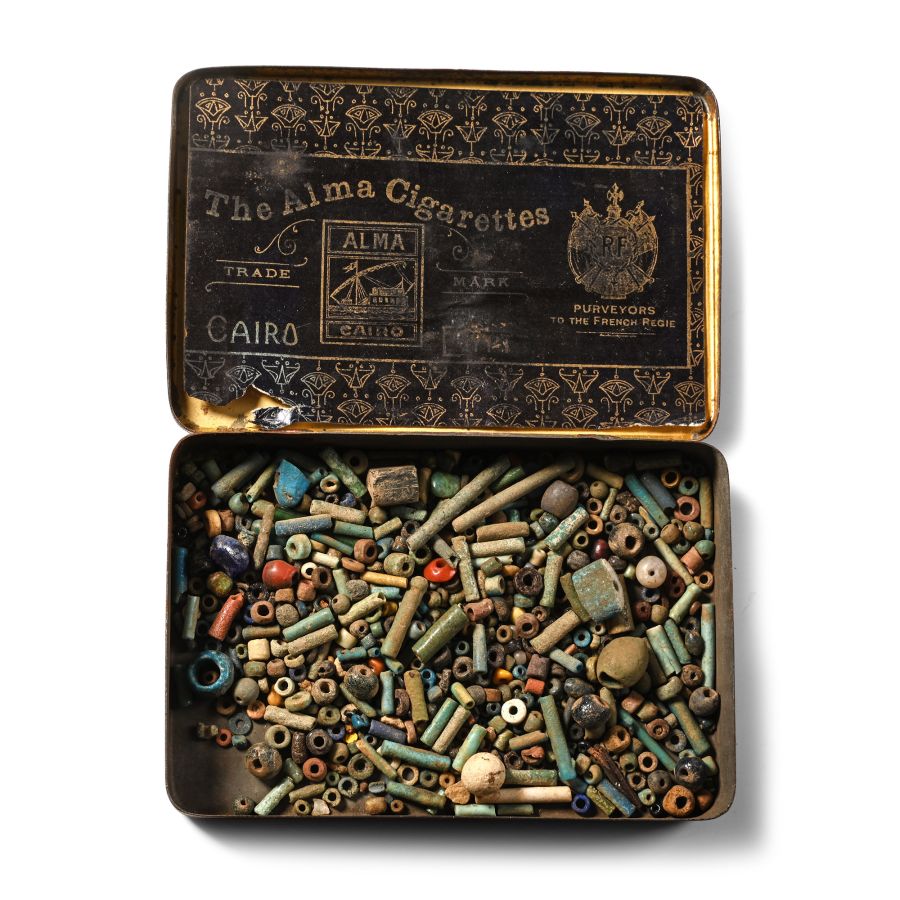
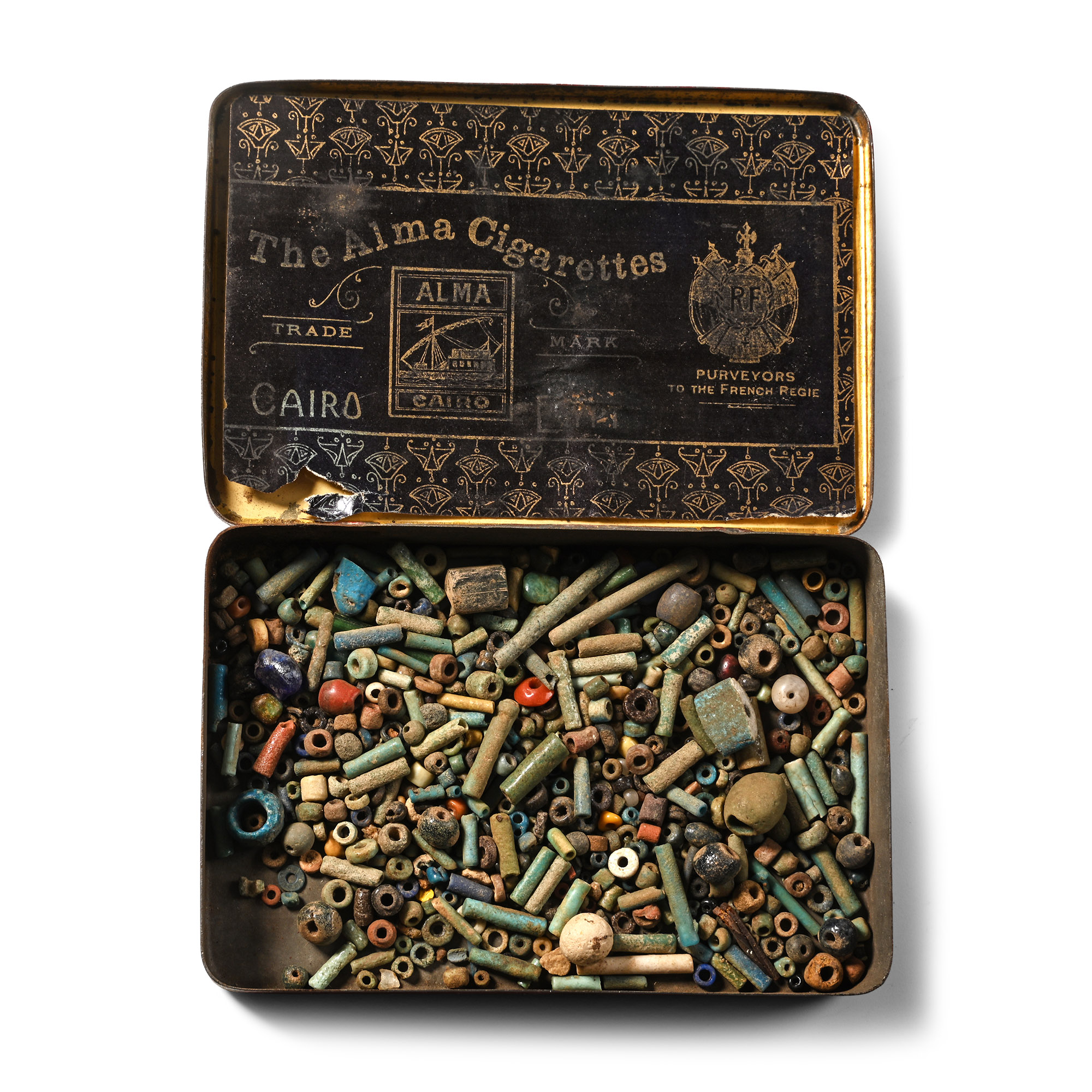
Egyptian Assorted Faience and Other Beads in Early 20th Century Tin Box
LATE PERIOD-PTOLEMAIC PERIOD, CIRCA 664-30 B.C.
1/8 - 3/4 in. (87 grams total including tin, 1-18 mm).
Comprising mostly glazed tubular, globular, barrel and other beads, in a vintage red cigarette box with an old label 'The Alma Cigarettes Company, Ltd., Boulak Square Cairo'. [No Reserve]
ProvenanceExcavated from Egypt in 1914.
From the private collection of Mr David Sams and his wife Elizabeth Kate Sams, gentry and amateur archaeologists who travelled to Egypt in 1914 with their daughter Ethel. Mr Sams and his wife led digging expeditions from which these items come from the family estate of Mr and Mrs Sams, by direct descent to their granddaughter.
TimeLine Auctions follows a vetting process to ensure the authenticity and legality of all items, reinforcing our commitment to integrity and responsible trading. Each antiquity, antique, and coin lot undergoes thorough examination by a vetting committee of at least ten external specialists, professional trade association members, scientists, and archaeologists: Our Vetting Process
AUCTIONS:
TimeLine is a leading auction house specialising in antiquities, ancient art, collectables, natural history, coins, medals, and books. Our auctions offer museums, collectors, historians, and enthusiasts the opportunity to acquire unique and historically significant pieces.
LOT 0655
Egyptian Assorted Faience and Other Beads in Early 20th Century Tin Box
Estimate £60 - 80€70 - 93 (for guidance only)$81 - 108 (for guidance only)
Opening Bid
£5 (EUR 6; USD 7) +BP*
-
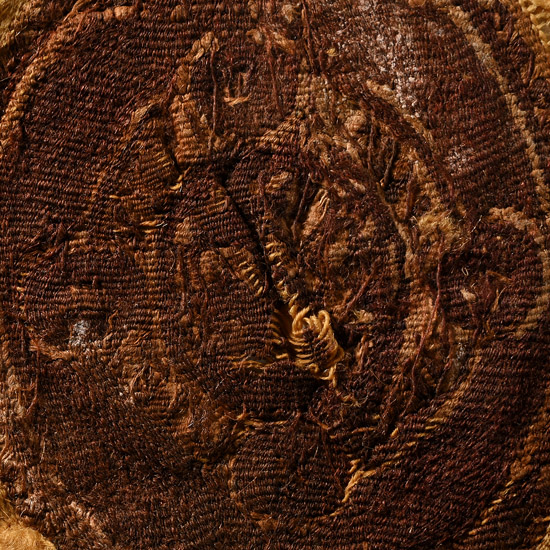
Egyptian Coptic Textile Fragment of an Orbiculus from a Tunic
Circa 4th century A.D.Estimate: £30 - 40 (+bp*)
Opening Bid: £5
In purple wool and coarse linen, on a brown linen background, S-torsion, embroidered with vegetal ornaments, and the borders decorated with meanders. 6.38 grams, 10 x 9.8 cm
Acquired 1970s-1996. Property of a North American collector. London collection, 2016.
In the Late Roman Period, round orbiculi decorated the shoulders and the lower part of tunics and kamisia (inner tunics). These fabrics were of great decorative finesse, displaying an unusual and extremely well-preserved colour palette. When the tunic was removed from use, these embroideries could be recycled and patched onto another garment. -
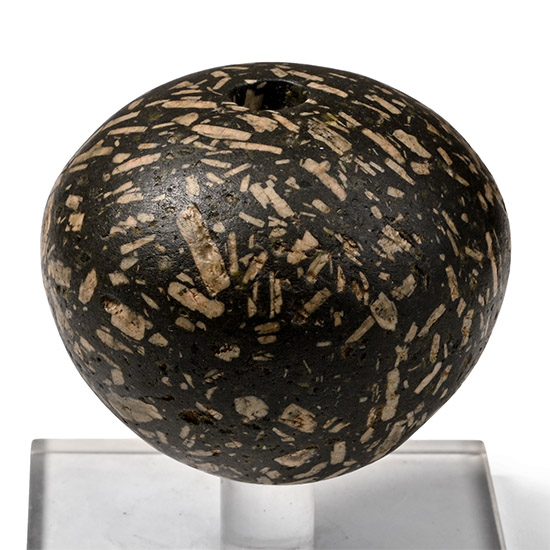
Egyptian Speckled Black and White Breccia Polished Macehead
Early Dynastic, circa 3000 B.C.Estimate: £300 - 400 (+bp*)
Opening Bid: £5
Biconvex in profile with central vertical socket; mounted on a custom-made stand. 305 grams total, macehead: 61 mm wide, 74 mm including stand
Acquired in April 1963, for £36 shillings. A present from John Kearne. From the private collection of Peter Clayton, FCILIP, Dip, Arch, FSA, FRNS, Hemel Hempstead, Hertfordshire, UK; formed since the late 1950s. Accompanied by an old handwritten information card by Peter Clayton, collection no.105. -
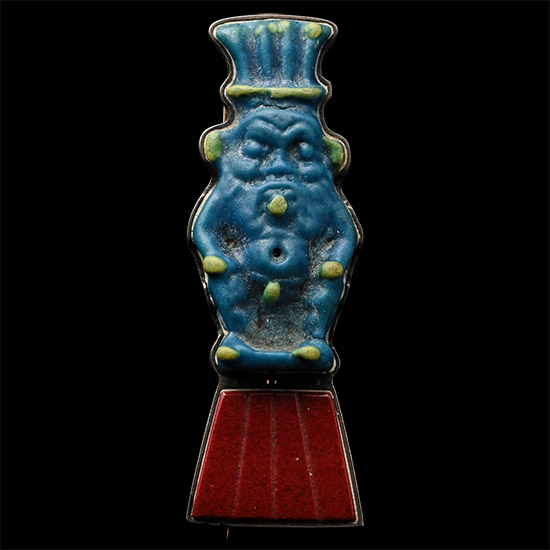
Egyptian Polychrome Faience Amulet of the God Bes Fashioned as a Dress Pin
Late-Ptolemaic Period, circa 664-30 B.C.Estimate: £300 - 400 (+bp*)
Opening Bid: £167
The dwarf god depicted in a characteristic bandy-legged stance, with his hands on his hips and a fearsome expression, wearing a plumed headdress; the deep blue glaze highlighted in yellow; set in a metal casing with hinged pins on the reverse and a red jasper insert depicting four plumes beneath his feet. 13.7 grams, 52 mm
Early 20th century UK collection. Ex A.H. collection, London, UK. Accompanied by a previous catalogue information page with provenance.
From the New Kingdom onwards, Bes became one of ancient Egypt's most popular apotropaic deities. Despite his somewhat fearsome appearance, Bes served as the patron and protector of pregnant women and children and was believed to shield them from snakes. The role of Bes as a guardian of women persisted at least until the third or fourth century A.D.
