
Loading, please wait...


LOT 0001
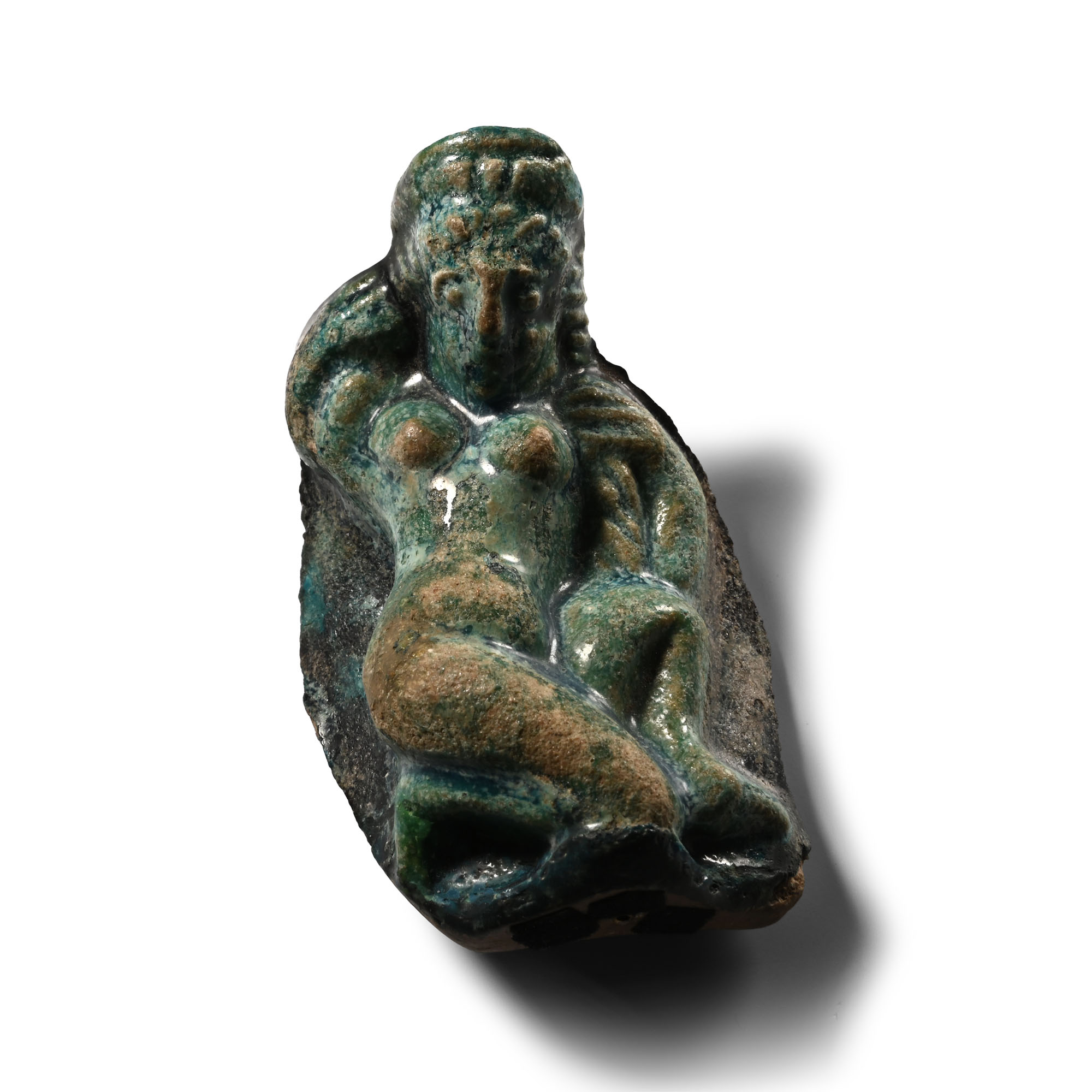
Egyptian Applique with Aphrodite
PTOLEMAIC PERIOD, 332-30 B.C.
3 3/8 in. (85 grams, 86 mm).
Fragment from a representation of the nude Aphrodite in high-relief, crouching with her left knee raised and her right knee touching the ground, holding her long hair with her hands and wearing a diadem on her head; an appliqué from a vessel with minor filling at the right thigh.
ProvenancePrivate collection, Somerset, England.
with M.B., Los Angeles County, acquired 2014-2015 at a sale in the UK.
with Ancient Resource, USA, Auction 70, 06 October 2018, no.7.
This lot is accompanied by an illustrated lot declaration signed by the Head of the Antiquities Department, Dr Raffaele D’Amato.
TimeLine Auctions follows a vetting process to ensure the authenticity and legality of all items, reinforcing our commitment to integrity and responsible trading. Each antiquity, antique, and coin lot undergoes thorough examination by a vetting committee of at least ten external specialists, professional trade association members, scientists, and archaeologists: Our Vetting Process
AUCTIONS:
TimeLine is a leading auction house specialising in antiquities, ancient art, collectables, natural history, coins, medals, and books. Our auctions offer museums, collectors, historians, and enthusiasts the opportunity to acquire unique and historically significant pieces.
LOT 0001
Egyptian Applique with Aphrodite
Estimate £700 - 900€810 - 1,040 (for guidance only)$950 - 1,220 (for guidance only)
-
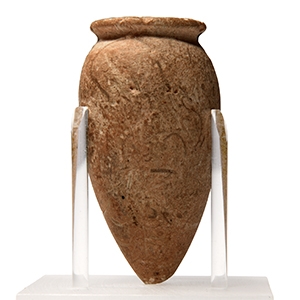
Egyptian Miniature Stone Alabastron
Late Old Kingdom, circa 2300 B.C.Sold for (Inc. bp): £260
The body with rounded shoulders, convex outer face and pointed base, everted rim; accompanied by a custom-made display base. 34.2 grams, 48 mm high (48.9 grams, 55 mm including stand)
Acquired in Europe before 1994. European collection. This lot is accompanied by an illustrated lot declaration signed by the Head of the Antiquities Department, Dr Raffaele D’Amato. -
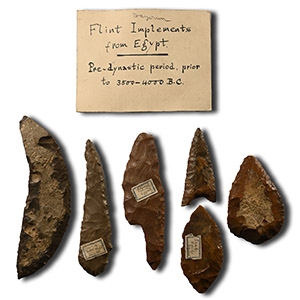
Egyptian Flint Tool Collection
Pre-Dynastic Period, circa 4th millennium B.C. or laterSold for (Inc. bp): £1,170
Including piriform scraper tool, single-edged knife with old label 'Gull's wing blade, Egypt', curved blade with old label 'Comma-shaped knife, Egypt', sickle blade and other items with accompanying collector's record card on reverse of a printed invitation to a garden party at Carisbrooke 4th July 1940. 165 grams total, 6.2-13.5 mm
From the private collection of Sydney Horne, 1920s-1940s. This lot is accompanied by an illustrated lot declaration signed by the Head of the Antiquities Department, Dr Raffaele D’Amato. -
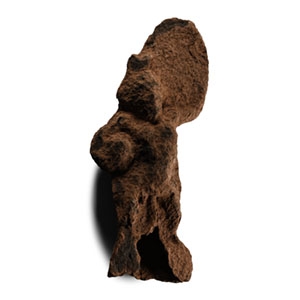
Romano-Egyptian Terracotta Figurine
1st century B.C.-2nd century A.D.Sold for (Inc. bp): £65
Hollow-formed figure modelled in the half-round with left arm raised and right arm bent carrying a vessel; piled hairstyle with lunar motif above; hole to the reverse. 220 grams, 19.5 cm
The Erotica Collection Christian von Faber-Castell, Küsnacgt ZH, Switzerland, since the late 1970s. This lot is accompanied by an illustrated lot declaration signed by the Head of the Antiquities Department, Dr Raffaele D’Amato.
Christian von Faber-Castell (born 1950) is a renowned German entrepreneur and art collector, best known as a member of the prominent Faber-Castell family, famed for their iconic writing instruments. A passionate advocate for art and culture, Christian von Faber-Castell curated an extensive and diverse private collection of erotica, spanning centuries and cultures. His collection reflects a deep appreciation for the interplay of beauty, sensuality, and artistic expression, bringing together rare and unique works that explore themes of intimacy and human connection. Pieces from this collection have been featured in notable exhibitions and are celebrated for their artistic and historical significance. This offering represents a rare opportunity to acquire works from one of the most fascinating and eclectic private collections of its kind.
