
Loading, please wait...
LOT 0030
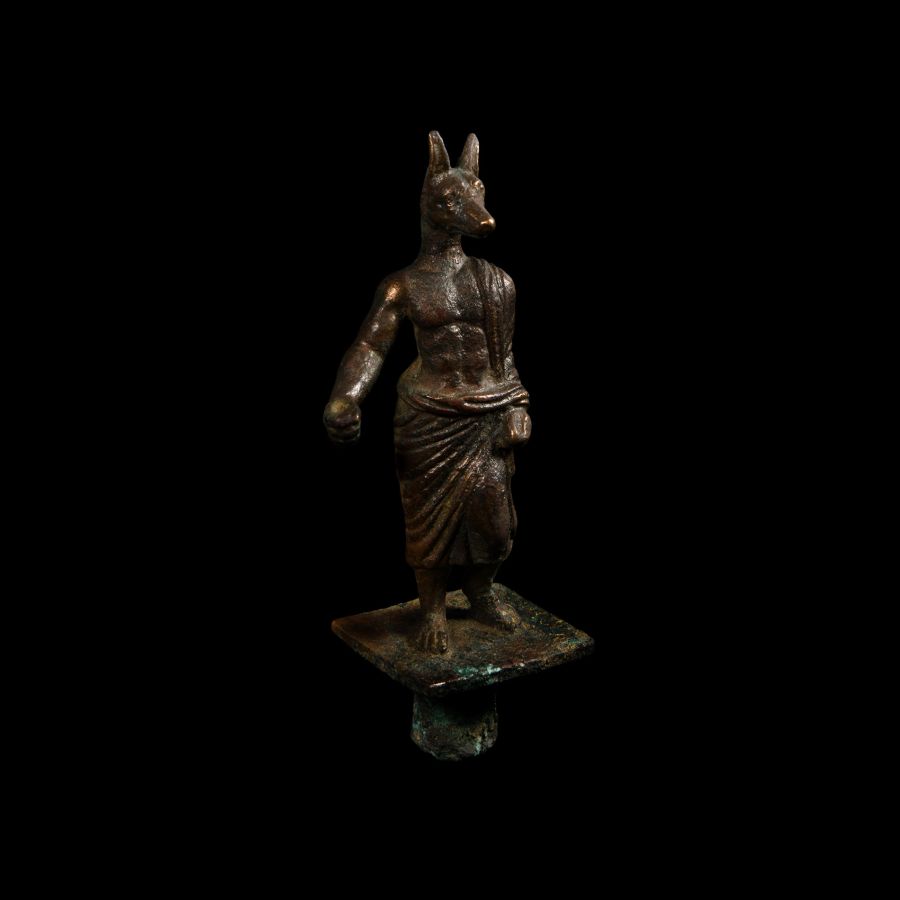
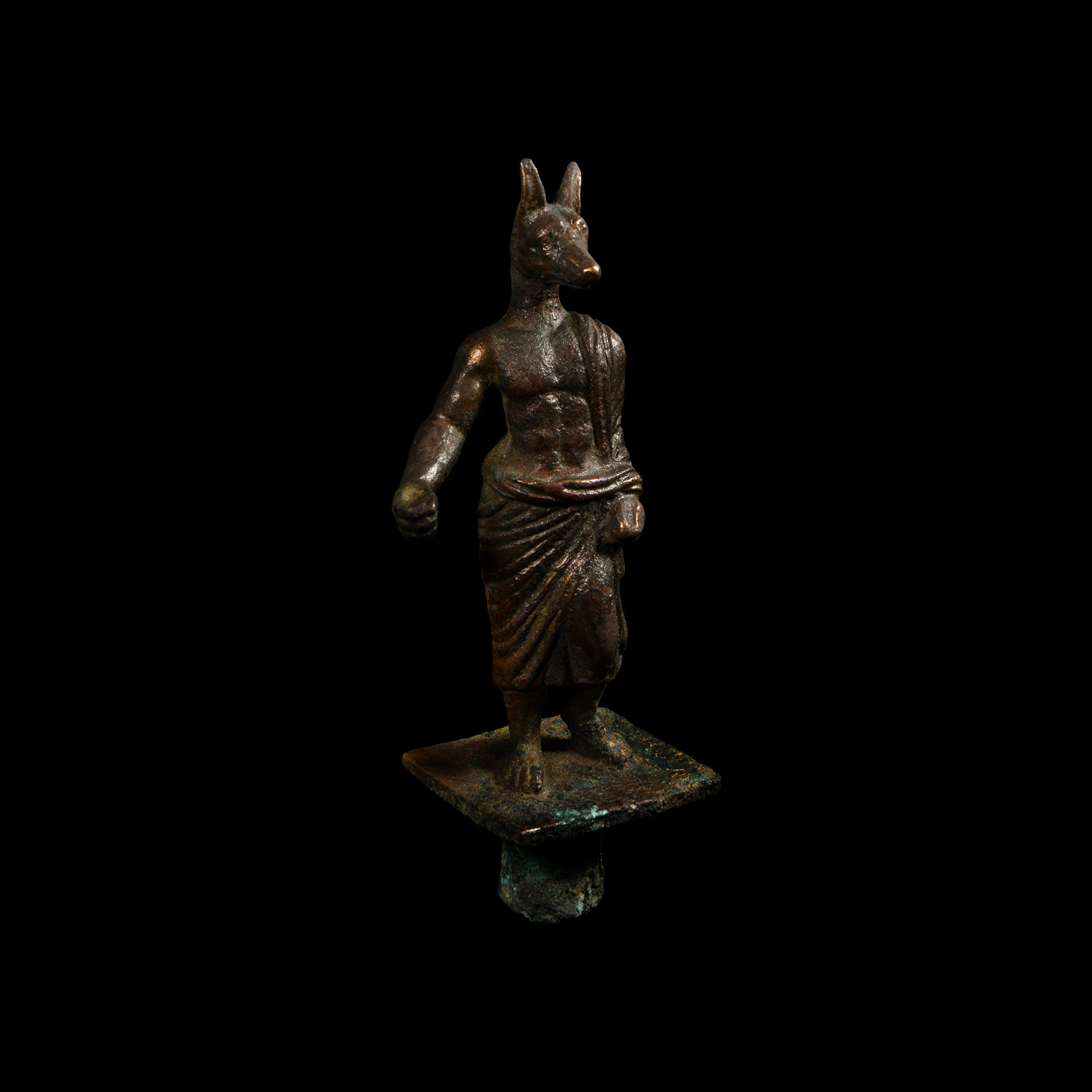
Egyptian Anubis Staff Terminal
1ST CENTURY B.C.- 2ND CENTURY A.D.
5 in. (223 grams, 12.7 cm high).
A bronze staff or sceptre terminal formed as a priest of Anubis with jackal's head and human body, standing and wearing a tightly-draped toga with right hand extended in a fist; square base and socket to the underside.
ProvenancePrivate collection, since 1989.
This lot has been checked against the Interpol Database of stolen works of art and is accompanied by search certificate no.11604-199678.
Cf. The British Museum, museum number EA36064 'Solid-cast copper alloy figure of Anubis wearing a short robe and holding a palm branch', for a comparable figure of this broad period; see Andrews, C., Amulets of Ancient Egypt, London, 1994, p.46-7, for discussion; see also, Tiradritti, F., The Cairo Museum Masterpieces of Egyptian Art, London, 1999, p. 401, for a slightly more elaborate bronze staff terminal of Anubis as a Roman legionnaire (Cairo Museum inv. no. CG27694).
FootnotesAnubis was the ancient Egyptian god of the dead - represented in jackal form or in the form of a jackal-headed man - and one of ancient Egypt's most iconic deities. Originally god of the underworld, he was eventually associated more specifically with the embalming process and funerary rites. His fur was generally depicted as black owing to the association of that colour with fertility and beliefs regarding rebirth in the afterlife.
CONDITIONTimeLine Auctions follows a vetting process to ensure the authenticity and legality of all items, reinforcing our commitment to integrity and responsible trading. Each antiquity, antique, and coin lot undergoes thorough examination by a vetting committee of at least ten external specialists, professional trade association members, scientists, and archaeologists: Our Vetting Process
AUCTIONS:
TimeLine is a leading auction house specialising in antiquities, ancient art, collectables, natural history, coins, medals, and books. Our auctions offer museums, collectors, historians, and enthusiasts the opportunity to acquire unique and historically significant pieces.
-
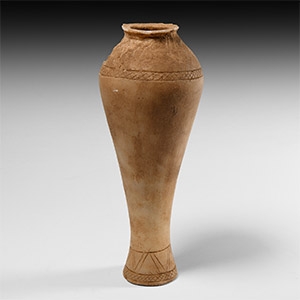
Egyptian Alabaster Hes-vase
Third Intermediate Period, 1069-702 B.C.Estimate: £300 - 400 (+bp*)
Opening Bid: £150
A carved alabaster hes-vase, with hatched bands to the shoulder and base. 350 grams, 20 cm
Fine condition, rim chipped.
Acquired before 1990. With a central London gallery. Private collection of a North West London lady. -
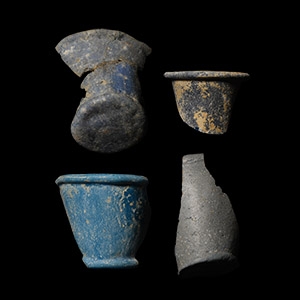
Egyptian Offering Cup Fragment Group
New Kingdom, 1550-1070 B.C.Sold for (Inc. bp): £72
A group of four blue glass fragments from offering cups. 35 grams total, 36-48 mm
From a UK private collection, 1975-1978. -
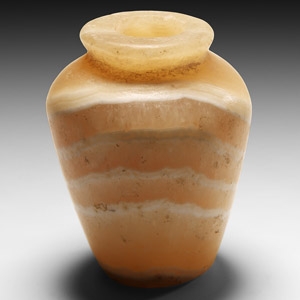
Egyptian Alabaster Vessel
Late Period, 664-332 B.C.Sold for (Inc. bp): £338
A piriform veined alabaster vessel with everted neck and broad rim. 342 grams, 78 mm high
French collection, 1960s-early 2000s. From an important Paris gallery, France.
