
Loading, please wait...
LOT 0474
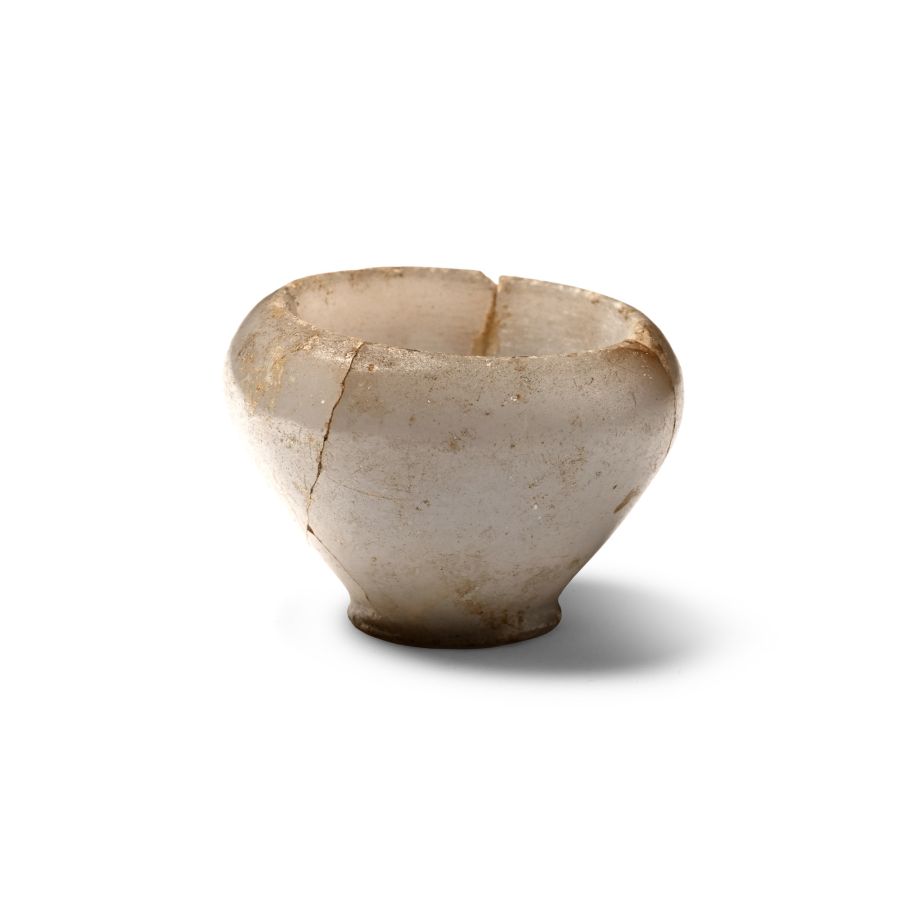
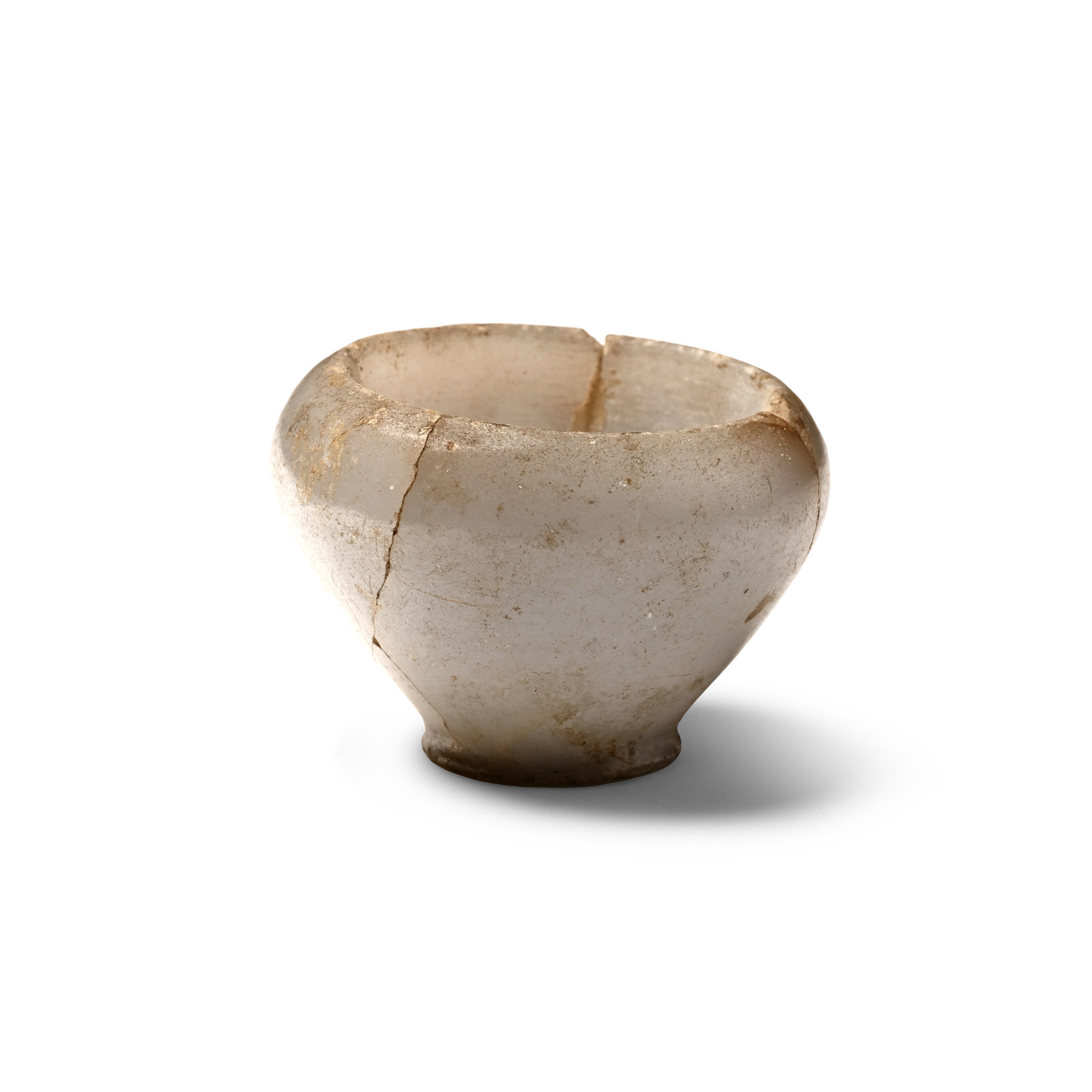
Egyptian Anhydrite Cosmetic Bowl
MIDDLE KINGDOM, CIRCA 2040-1780 B.C.
1 1/2 in. (33.68 grams, 39 mm).
Conical in profile with rounded rim, narrow disc base; repaired; a rare stone.
ProvenanceEx William Ohly, 1883-1955.
Ex Abbey Museum, Barnet, by descent.
Cf. Aston, B.G., Ancient Egyptian Stone Vessels: Materials and Forms, SAGA 5, Heidelberg, 1994, pp.145-146, no. 157, for the type.
FootnotesAnhydrite, incorrectly called "blue marble" by early excavators, was a stone favoured by the ancient Egyptians from the Middle Kingdom to the Second Intermediate Period. This particular example follows a Middle Kingdom-style cosmetic kohl jar that could be modelled with or without an integral rim.
CONDITIONTimeLine Auctions follows a vetting process to ensure the authenticity and legality of all items, reinforcing our commitment to integrity and responsible trading. Each antiquity, antique, and coin lot undergoes thorough examination by a vetting committee of at least ten external specialists, professional trade association members, scientists, and archaeologists: Our Vetting Process
AUCTIONS:
TimeLine is a leading auction house specialising in antiquities, ancient art, collectables, natural history, coins, medals, and books. Our auctions offer museums, collectors, historians, and enthusiasts the opportunity to acquire unique and historically significant pieces.
-
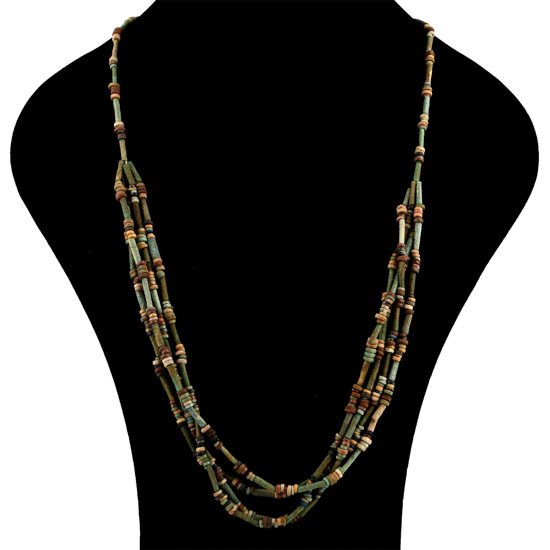
Egyptian Multi-Stranded Mummy Bead Necklace
Late Period, 664-332 B.C.Sold for (Inc. bp): £234
Four-stranded designer necklace composed of polychrome beads of mainly disc and cylindrical types. 27 grams, 81 cm long
Acquired before 1979. From the private collection of Mr F.A., South Kensington, London, UK; thence by descent 2014.
For thousands of years, artisans in Egypt created vibrant ceramics to echo the beauty of rare jewels. These ornaments were created with almost every material, colour, and texture imaginable, and they come from across Egypt and beyond: vibrant blue lapis lazuli from Afghanistan, glossy black obsidian from Turkey, and aqua-green turquoise from the Sinai. They were worn in life and, after death, they served as precious ornamentation for mummies. -
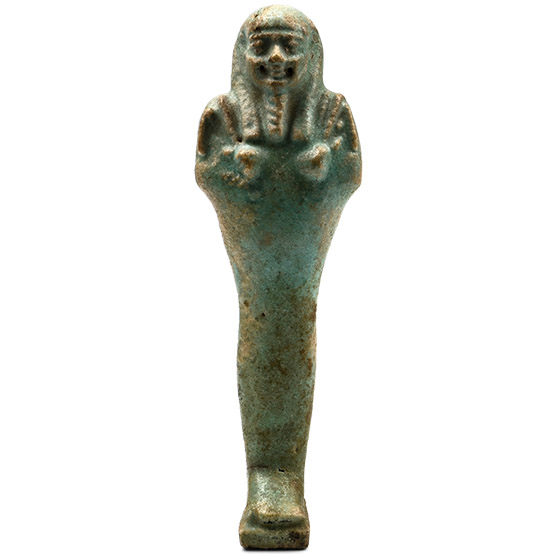
Egyptian Blue Glazed Faience Shabti
Ptolemaic Period, circa 305-30 B.C.Sold for (Inc. bp): £715
Characteristic mummiform figure wearing a tripartite wig and a false beard, with a seed-bag suspended over the shoulder, a plain dorsal column, and with arms crossed and hands holding agricultural tools. 72 grams, 12.5 cm
From the collection of a late Tavistock, Devon, UK, gentleman, formed from the 1990s. Accompanied by an old handwritten date note on British Museum, Department of Egyptian Antiquities headed paper, where the second part relates to this item. -
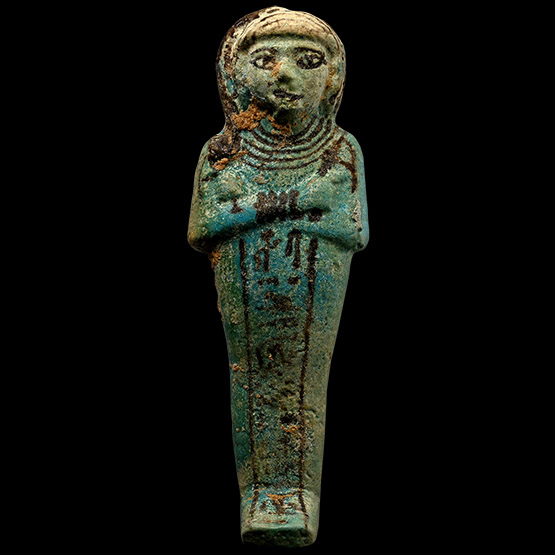
Egyptian Faience Ushabti
2nd millennium B.C.Sold for (Inc. bp): £2,106
Mummiform figure with black-pigment facial detailing, sidelock, tripartite wig, dorsal seed-net, tiered collar, and vertical panel of hieroglyphic text. 134 grams, 15 cm
Acquired in the mid 1980s. Private collection, Switzerland, thence by descent. Private collection, since the late 1990s. This lot has been checked against the Interpol Database of stolen works of art and is accompanied by a search certificate number no.12848-241648.
A shabti (also known as ushabti or shawabti) is a small funerary figurine found in ancient Egyptian tombs, from around 2000 BCE to 30 BCE. Its main purpose was to act as a servant for the deceased in the afterlife, carrying out manual tasks like farming or irrigation as directed by the gods. Shabtis were frequently inscribed with a magical formula from the Book of the Dead to ensure they would animate when summoned.
