
Loading, please wait...
LOT 0528
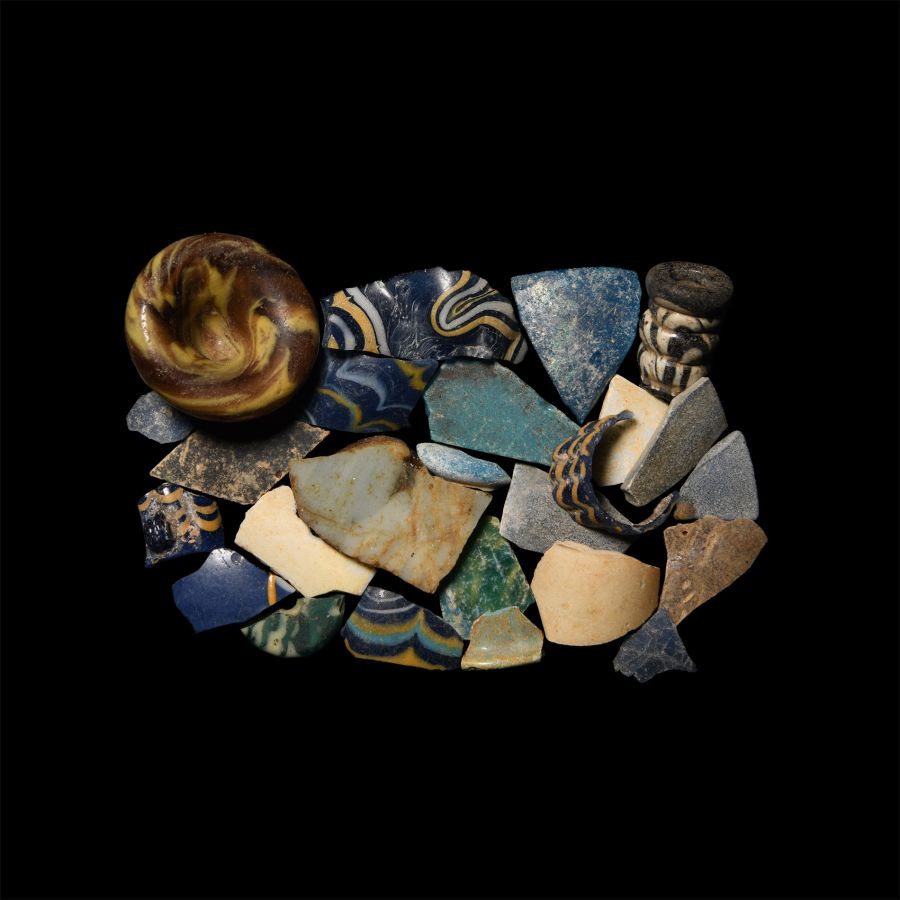
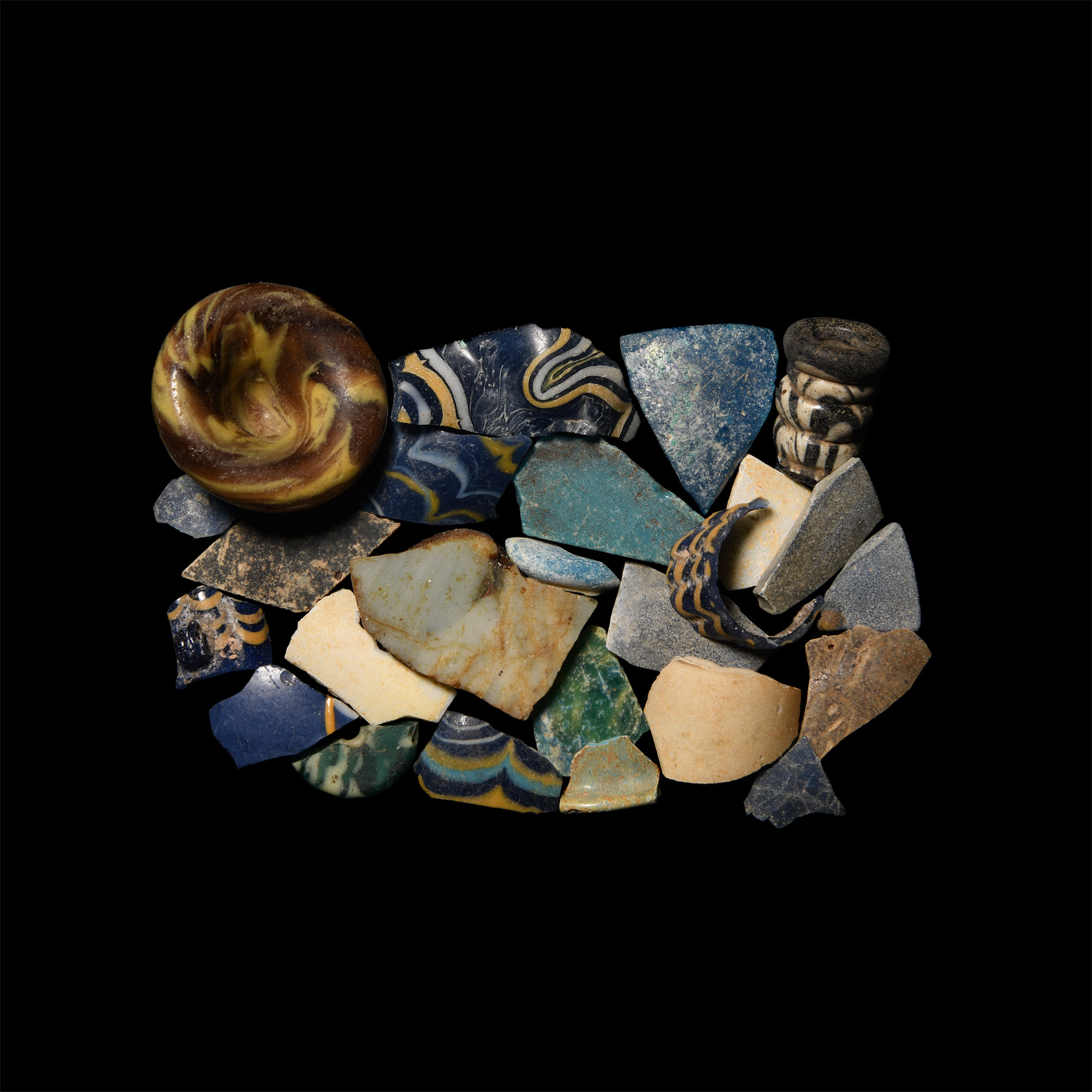
Egyptian and Other Glass Collection
3RD CENTURY B.C.-4TH CENTURY A.D.
1/2 - 1 1/2 in. (66 grams total, 13-38 mm).
A mixed group of glass fragments. [25, No Reserve]
ProvenanceFrom a UK private collection, 1975-1978.
CONDITIONTimeLine Auctions follows a vetting process to ensure the authenticity and legality of all items, reinforcing our commitment to integrity and responsible trading. Each antiquity, antique, and coin lot undergoes thorough examination by a vetting committee of at least ten external specialists, professional trade association members, scientists, and archaeologists: Our Vetting Process
AUCTIONS:
TimeLine is a leading auction house specialising in antiquities, ancient art, collectables, natural history, coins, medals, and books. Our auctions offer museums, collectors, historians, and enthusiasts the opportunity to acquire unique and historically significant pieces.
-
.jpg)
Egyptian Greywacke Cosmetic Fish Spoon Section
New Kingdom, 1569-1081 B.C.Estimate: £300 - 400 (+bp*)
Opening Bid: £167
A fragment of a greywacke cosmetic spoon, shaped as a fish with finely worked features and incised eye, scales, gill, and fin detailing; the underside is recessed to create the spoon bowl; accompanied by a custom-made display stand. 27 grams, 58 mm wide (50 grams total, 85 mm high including stand)
Fine condition.
Acquired in the 1980s. From a French collection. -
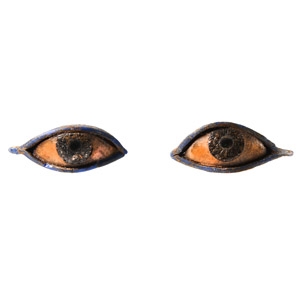
Egyptian Glass Eye Pair
Ptolemaic Period, 332-30 B.C.Estimate: £1,000 - 1,400 (+bp*)
Opening Bid: £500
A pair of glass eye inlays from a mummy case, brown glass irises, painted black pupils and lateral tear ducts; mounted on a custom-made glass stand. 1.3 kg total, 35.5 cm high including stand
French collection, 1960s-early 2000s. From an important Paris gallery, France. with Jean Marc Delvaux SVV, 15 December 2017, lot 274. -
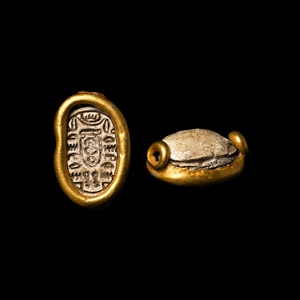
Egyptian Scarab in Gold Mount
New Kingdom, circa 1500 B.C. or earlierSold for (Inc. bp): £610
A glazed composition scarab with detailed serrated legs and with a-n-r, nub and nefer signs around a cartouche containing the incomplete name of Thutmose III to the underside; set in a later gold mount for suspension. 2.34 grams, 18 mm
Fine condition.
Acquired 1969-1999. London collection of the late Mr S.M., thence by descent.
The sign groups surrounding the cartouche are indicative of Asiatic scarab production of the Second Intermediate Period, where the craftsmen did not understand the meaning of hieroglyphs and used them for purely decorative reasons. This suggests that either the beetle and sun-disc signs in the cartouche are unintentionally similar to those of Thutmose III, or that this is a later scarab with an inaccurately rendered name of the king
