
Loading, please wait...
LOT 0467
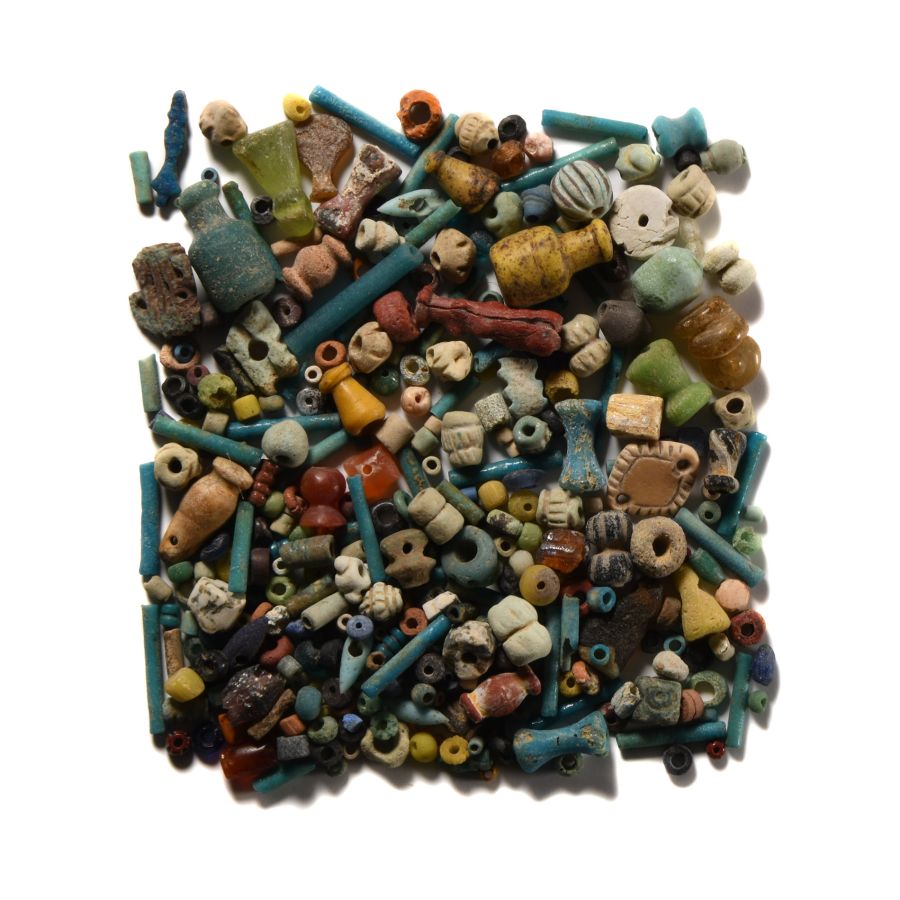
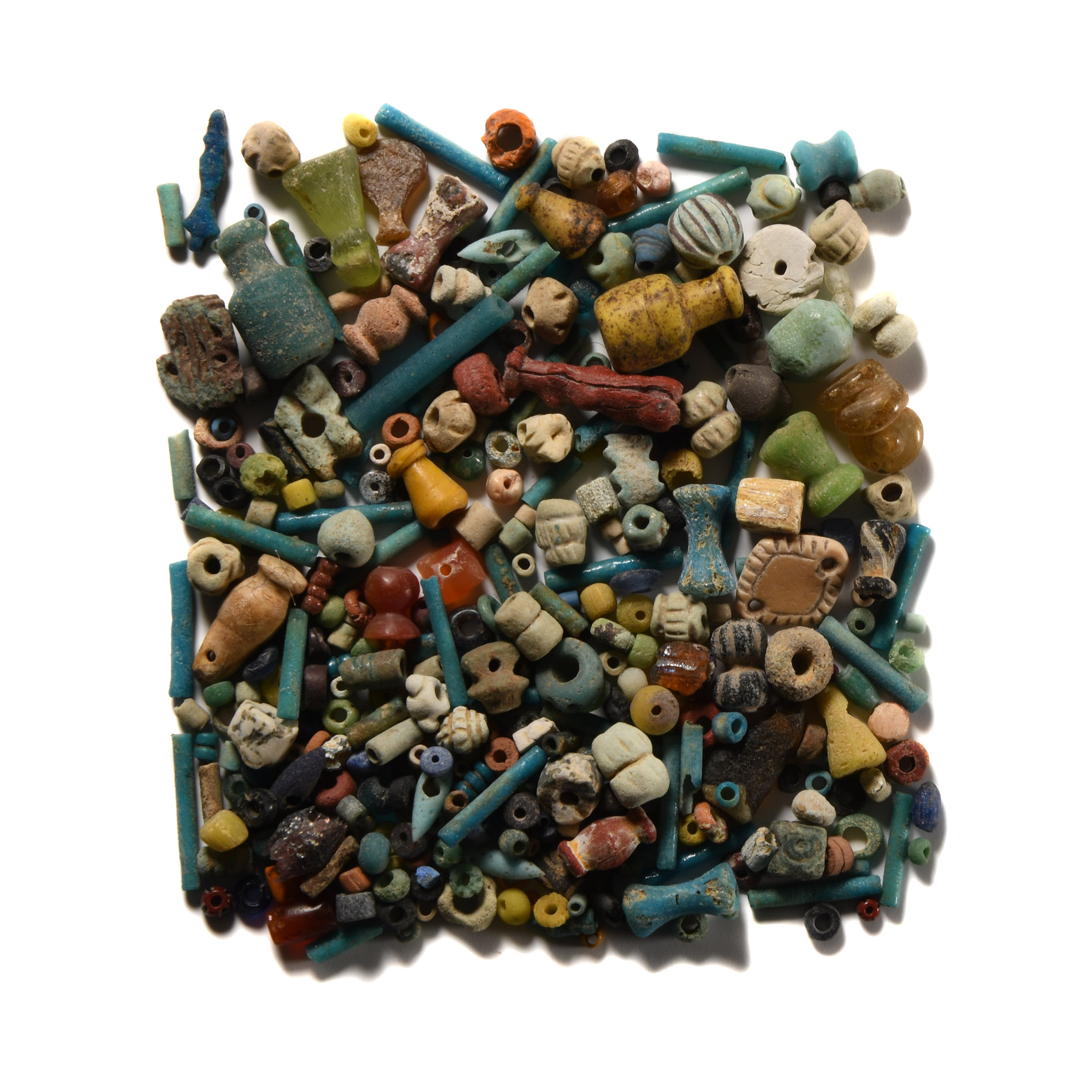
Egyptian and Other Faience Amulet and Bead Group
NEW KINGDOM, 1315-332 B.C. AND LATER
1/8 - 1 in. (39 grams total, 1-26 mm).
Comprising a group of mostly blue faience beads and amulets of mixed types and forms, with others of different types, materials and colours; each pierced for stringing.
ProvenanceUK gallery, early 2000s.
CONDITIONTimeLine Auctions follows a vetting process to ensure the authenticity and legality of all items, reinforcing our commitment to integrity and responsible trading. Each antiquity, antique, and coin lot undergoes thorough examination by a vetting committee of at least ten external specialists, professional trade association members, scientists, and archaeologists: Our Vetting Process
AUCTIONS:
TimeLine is a leading auction house specialising in antiquities, ancient art, collectables, natural history, coins, medals, and books. Our auctions offer museums, collectors, historians, and enthusiasts the opportunity to acquire unique and historically significant pieces.
-
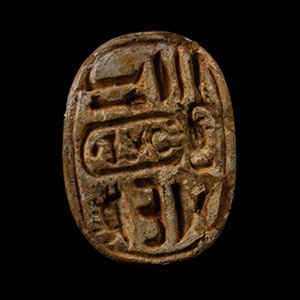
Egyptian Steatite Scarab
Late Period, 664-332 B.C.Sold for (Inc. bp): £208
Displaying semi-naturalistic detailing and hieroglyphs to the base with cartouche of Tuthmoses III; pierced for suspension. 1.54 grams, 16 mm
Collected since the 1970s. Ex Everitt collection, acquired by descent 2017. -
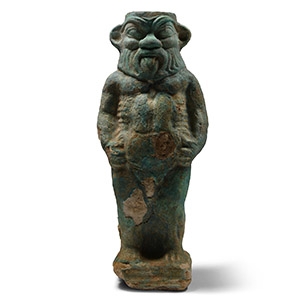
Massive Egyptian Blue Faience Bes Statue
Late Period, 664-332 B.C.Sold for (Inc. bp): £546
With integral square base and shallow socket to the top of the head; Bes shown standing nude with hands on hips, bearded and with grotesque features, protruding tongue, lattice to the rear of the head; face restored. 1.6 kg, 32.2 cm high
Acquired 1970s-1996. Property of a North American collector. London collection, 2016.
Due to its size, this is more probably an architectural and devotional item than a purely amuletic one, probably from a domestic context. It is an ambitious example of moulding in the round in faience (glazed composition). -
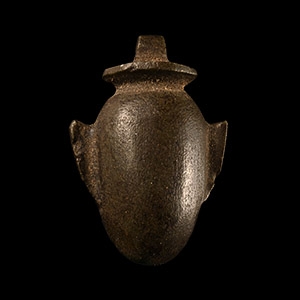
Large Egyptian Hardstone Heart Amulet
Late Period, 664-332 B.C.Sold for (Inc. bp): £208
Oval-bodied with a discoid top and integral suspension loop. 7.24 grams, 29 mm
From an early 20th century collection, Carnavon, North Wales, UK.
