
Loading, please wait...
LOT 0491
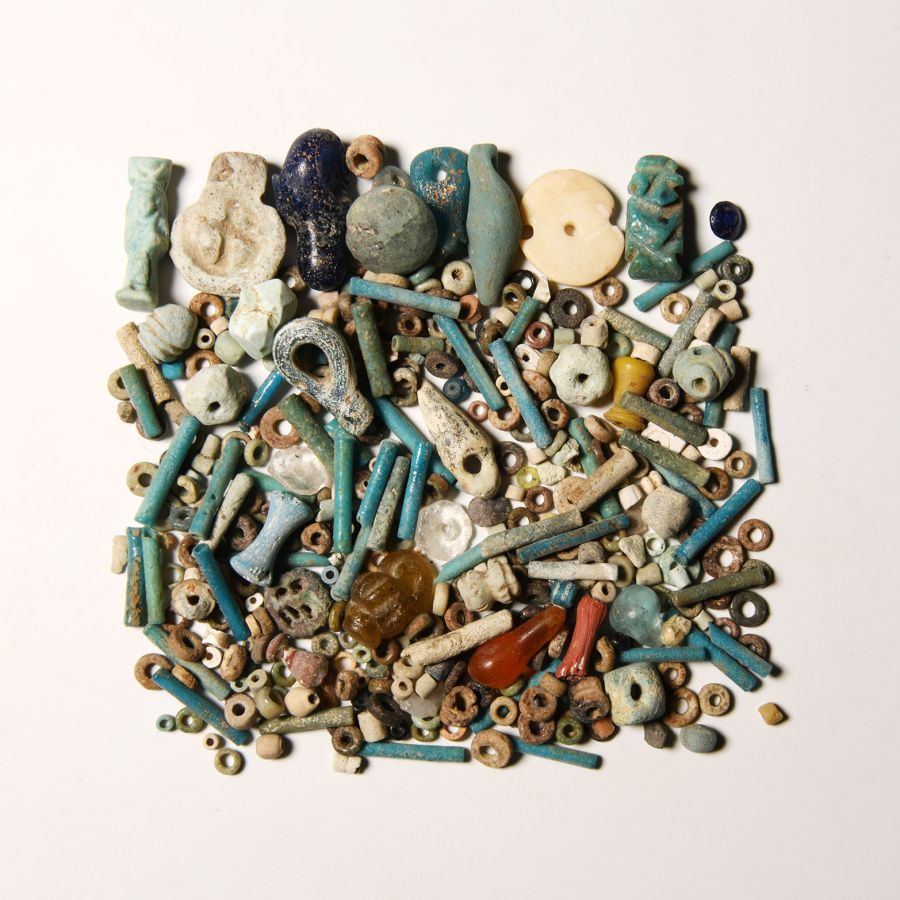
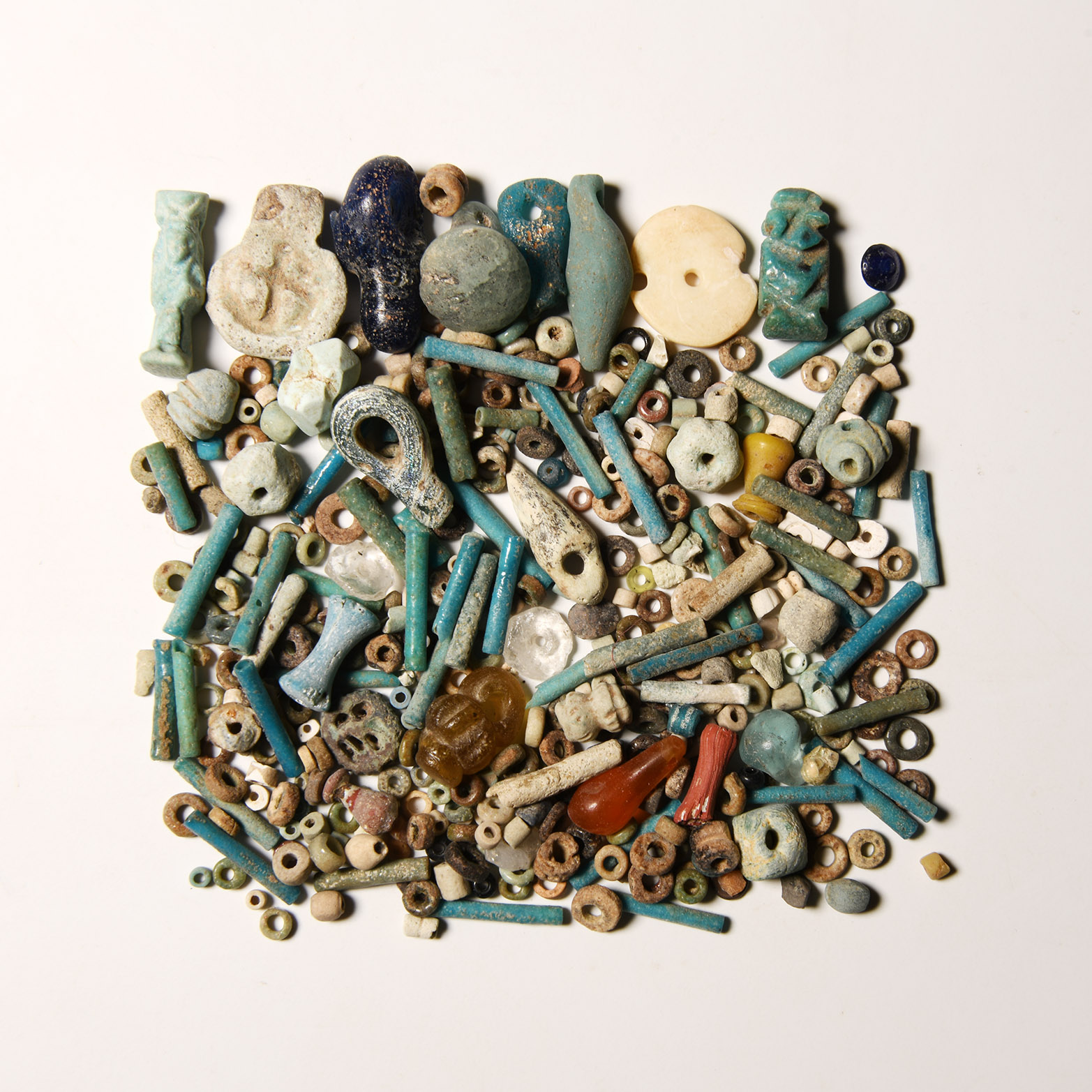
Egyptian and Other Faience Amulet and Bead Group
NEW KINGDOM, 1315-1069 B.C. AND LATER
1/8 - 3/4 in. (34 grams total, 2-20 mm).
Most covered in a coloured glaze; amulets including fruits and deities; beads of a range of types.
ProvenanceUK gallery, early 2000s.
CONDITIONTimeLine Auctions follows a vetting process to ensure the authenticity and legality of all items, reinforcing our commitment to integrity and responsible trading. Each antiquity, antique, and coin lot undergoes thorough examination by a vetting committee of at least ten external specialists, professional trade association members, scientists, and archaeologists: Our Vetting Process
AUCTIONS:
TimeLine is a leading auction house specialising in antiquities, ancient art, collectables, natural history, coins, medals, and books. Our auctions offer museums, collectors, historians, and enthusiasts the opportunity to acquire unique and historically significant pieces.
-
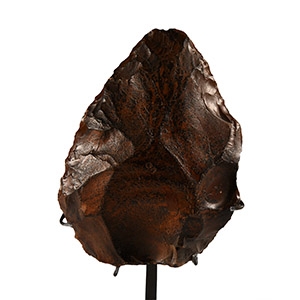
Stone Age Flint Hand Axe
Lower Palaeolithic Period, circa 400,000-200,000 B.P.Sold for (Inc. bp): £286
Finely knapped bifacial hand axe of triangular form with rounded butt; with printed and inked 'MADIJEN / EI:190M / THEBES / 1905' findspot label; with custom-made display stand. 480 grams total, 16.5 cm
Found Madijen, Thebes, 1905. Old German collection, before 1920. -
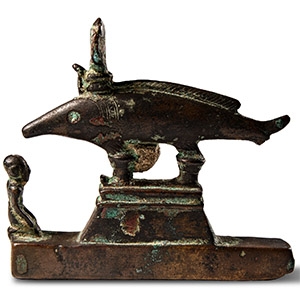
Egyptian Bronze Per-Medjed Oxyrhynchus Fish
Late Period-Ptolemaic Period, 664-30 B.C.Estimate: £3,000 - 4,000 (‡+bp*)
Opening Bid: £1,111
The fish displayed atop a shrine on a hollow rectangular base; attached by ventral and pectoral fins, remains of forked tail; dorsal ridge; tapering nose; recessed circular eyes; horned sun disc headdress with coiled cobra to base; figure of a worshipping priest kneeling beneath. 271 grams, 10.6 cm
Acquired in Europe before 1990. Private collection, Europe. This lot has been checked against the Interpol Database of stolen works of art and is accompanied by search certificate number no.11833-206796.
Per-Medjed is the ancient Egyptian name of the main cult centre of this type of fish (Mormyrus kannume). The Greeks called the cult centre Oxyrhynchus Polis (meaning 'Town of the sharp-snouted fish'). In ancient Egyptian religion, these sacred fish were believed to have consumed the penis of the god Osiris after his brother Set had dismembered and scattered his body. Statuettes such as this are associated with Isis and Hathor. -
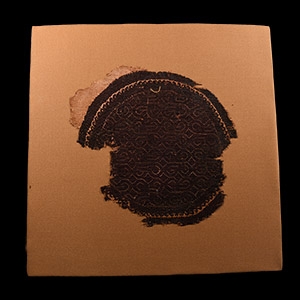
Egyptian Mounted Coptic Textile
Circa 5th-7th century A.D.Sold for (Inc. bp): £72
Composed of a medallion (orbiculus) decorated with geometric interlaced patterns on a purple background, framed by a minute recurring spiral, surrounded by an external circle. 149 grams, 36.5 x 36.5 cm
Acquired 1970s-1996. Property of a North American collector. London collection, 2016.
Tapestry technique on natural linen. It is highly probable that this tapestry was part of a tunic decoration, an orbiculus, medallion in purple applied to the shoulders and the lower part of the garment, front and back.
