
Loading, please wait...
LOT 0608
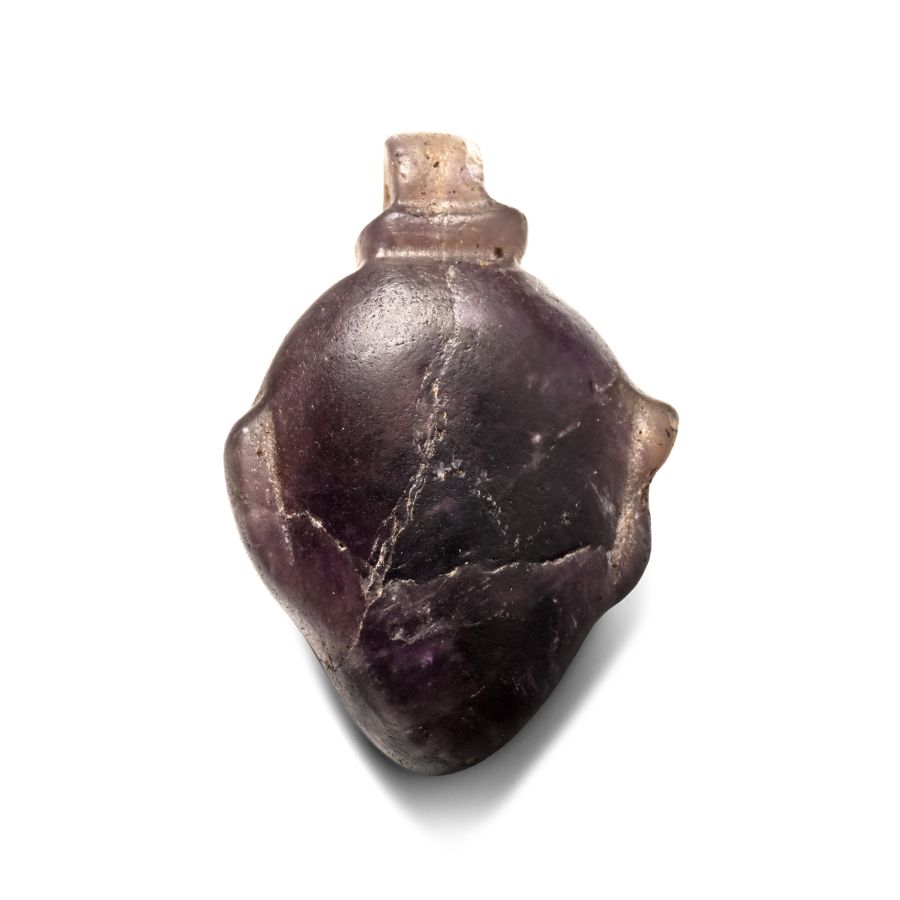
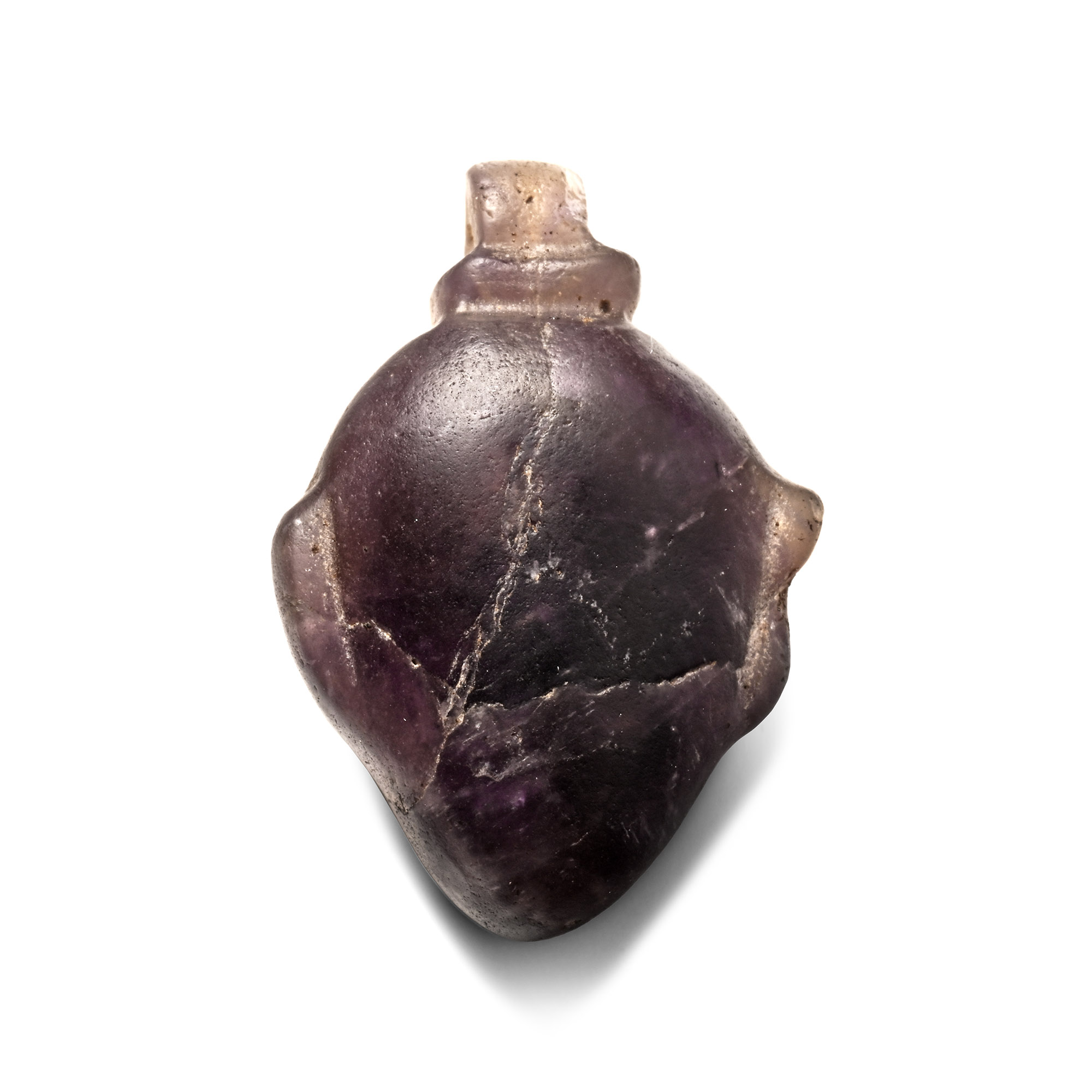
Egyptian Amythest Heart Amulet
LATE PERIOD, CIRCA 664-332 B.C.
1 in. (4.7 grams, 25 mm).
Lentoid in section with two side lugs and a suspension loop on the top.
ProvenanceLondon gentleman's collection, 1970-1990s, by descent.
LiteratureCf. Petrie, W.M.F., Amulets. Illustrated by the Egyptian Collection in University College, London, 1914, pl. I, no. 7j, for the type.
FootnotesAncient Egyptians regarded the heart (ib) as the seat of intelligence, emotions, behaviour, and memory. During the ‘Weighing of the Heart’ ceremony, the heart spoke for the deceased before Osiris and accounted for their actions. For this reason, Egyptians placed heart amulets on mummies to protect the organ and secure a favourable judgement.
CONDITIONTimeLine Auctions follows a vetting process to ensure the authenticity and legality of all items, reinforcing our commitment to integrity and responsible trading. Each antiquity, antique, and coin lot undergoes thorough examination by a vetting committee of at least ten external specialists, professional trade association members, scientists, and archaeologists: Our Vetting Process
AUCTIONS:
TimeLine is a leading auction house specialising in antiquities, ancient art, collectables, natural history, coins, medals, and books. Our auctions offer museums, collectors, historians, and enthusiasts the opportunity to acquire unique and historically significant pieces.
LOT 0608
Egyptian Amythest Heart Amulet
Estimate £100 - 140€120 - 160 (for guidance only)$140 - 190 (for guidance only)
Opening Bid
£50 (EUR 58; USD 68) +BP*
-
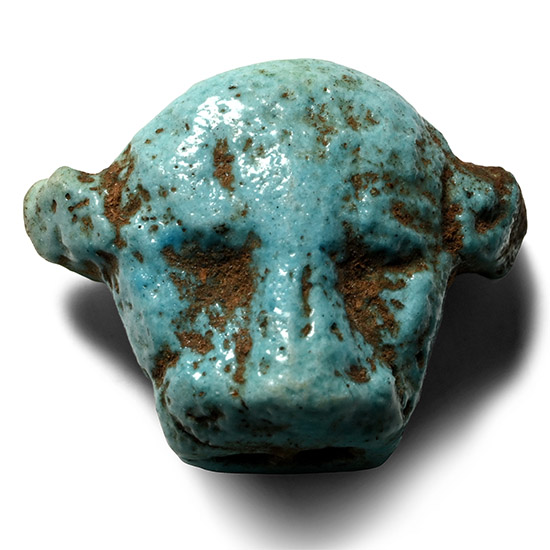
Large Egyptian Faience Lioness Head Amuletic Bead
New Kingdom, 1550-1069 B.C.Estimate: £150 - 200 (+bp*)
Opening Bid: £75
Blue-glazed faience amuletic bead modelled as a lioness's head, pierced vertically through the nostrils with two holes. 2.5 grams, 21 mm
From a mid 20th century collection. -
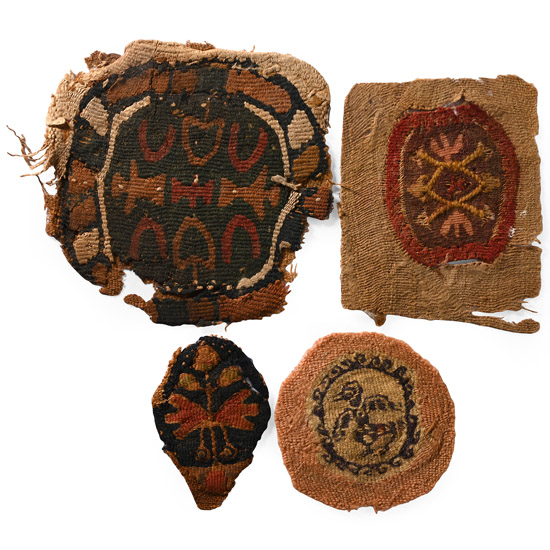
Egyptian Coptic Tunic Textile Fragments of Orbiculi with Vegetation, Animals and Geometric Ornament
Circa 6th-7th century A.D.Estimate: £80 - 100 (+bp*)
Opening Bid: £5
Featuring four medallions (orbiculi) in red, green, yellow, and dark blue wool, three decorated with floral and geometric motifs, the fourth featuring an eaglet figure with a meander border; tapestry weave, S-twist. 11.07 grams total, 6.3-10.7 cm
Acquired 1970s-1996. Property of a North American collector. London collection, 2016.
The orbiculi are realised in the tapestry technique. They were part of the decoration of a tunic, and the presence of the Imperial eagle, which is not a common pattern, could be related to a military tunic or to a tunic of an Imperial functionary. -
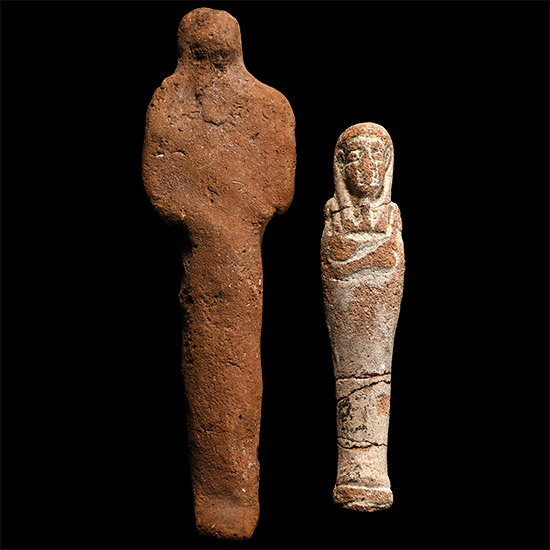
Egyptian Clay Shabti Group
New Kingdom-Late Period, circa 13th-4th century B.C.Estimate: £80 - 100 (+bp*)
Opening Bid: £5
Comprising: a crude, red clay mummiform figure with minimal shaping, and a mould-formed figure with a lappet wig and crossed arms holding agricultural implements, with white pigment on the surface. 80 grams total, 9.3-12.7 cm
with a privately curated collection, 1980s-early 2000s. From the private collection and estate of Christine Simons (1943-2025), West Midlands, UK.
