
Loading, please wait...

LOT 0514
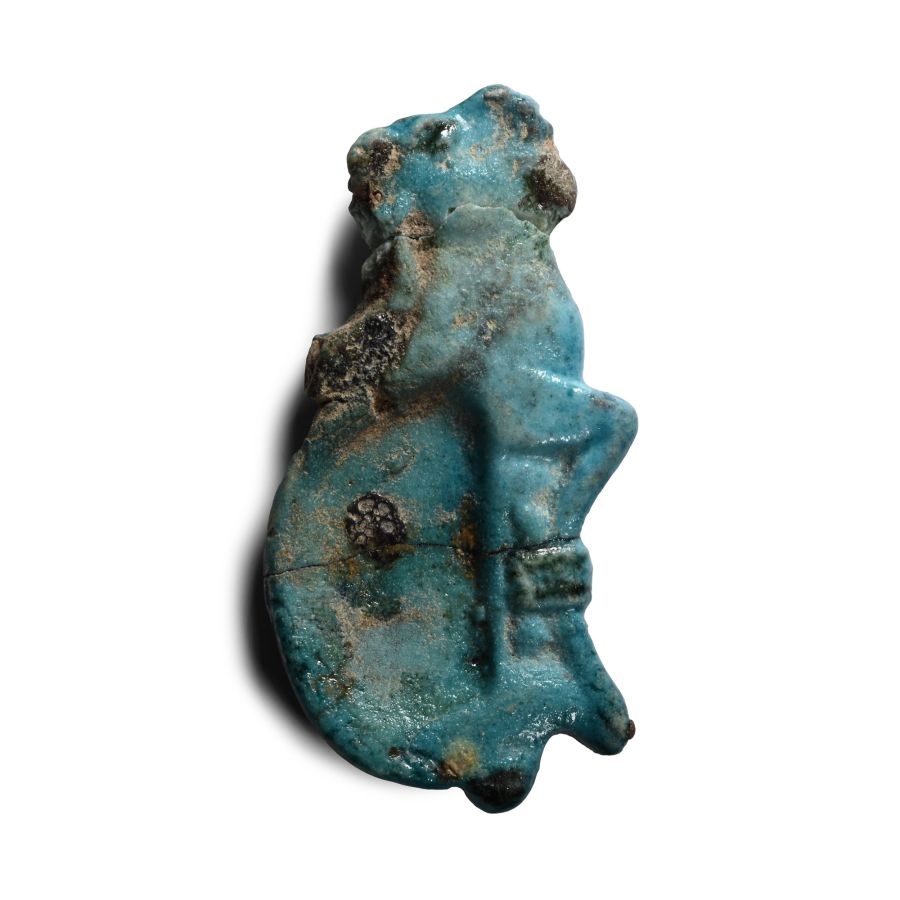
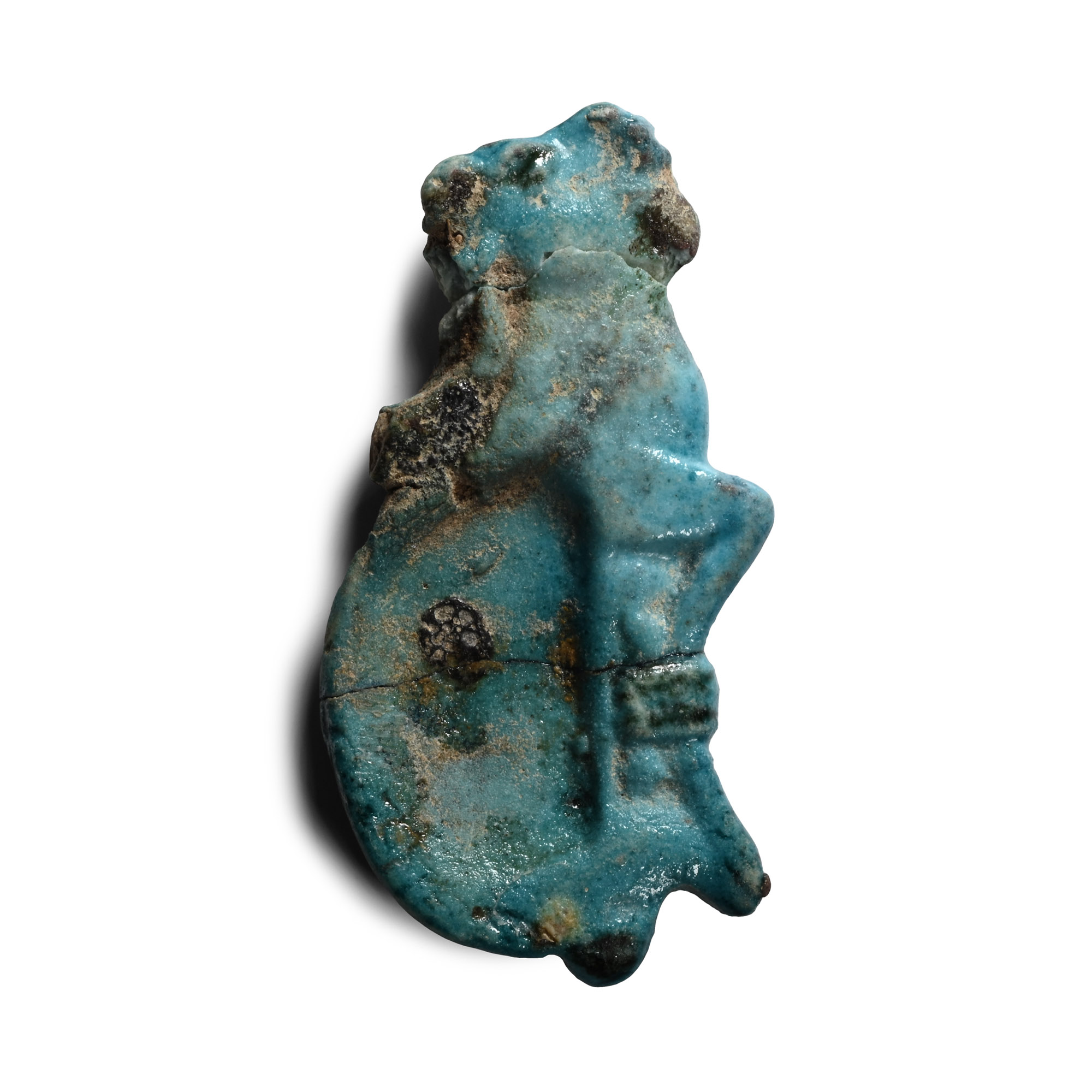
Egyptian Amulet of Trussed Ibex
LATE PERIOD, 664-332 B.C.
2 1/2 in. (11.6 grams, 63 mm).
Turquoise glazed faience figure of a trussed ibex, with the remains of its large curled horn, tail, facial details, and rope tie picked out in black; damaged and repaired.
ProvenanceFrom the private collection of the late Mrs Belinda Ellison, a long time member of the Egyptian Exploration Society, c.1940-2020.
LiteratureCf. The Drambuie Collection, Edinburgh (1850), for a comparable example from a foundation deposit; Vandier d’Abbadie, J., Les objets de toilette égyptiens au Musée du Louvre, Paris, 1972, p.31 nos. 69, 71-72, for examples of similar trussed ibex form cosmetic dishes.
FootnotesFigurines of trussed ibexes in faience were occasionally included in foundation deposits, possibly to represent animals that were sacrificed. However, the shallow depression in the body of this animal is similar to the style of cosmetic dishes, indicating that this particular example may be a funerary object symbolising a more valuable toiletry item.
CONDITIONTimeLine Auctions follows a vetting process to ensure the authenticity and legality of all items, reinforcing our commitment to integrity and responsible trading. Each antiquity, antique, and coin lot undergoes thorough examination by a vetting committee of at least ten external specialists, professional trade association members, scientists, and archaeologists: Our Vetting Process
AUCTIONS:
TimeLine is a leading auction house specialising in antiquities, ancient art, collectables, natural history, coins, medals, and books. Our auctions offer museums, collectors, historians, and enthusiasts the opportunity to acquire unique and historically significant pieces.
-
Egyptian Multi-Stranded Faience Mummy Bead Necklace
Late Period, 664-332 B.C.Sold for (Inc. bp): £234
Multi-stranded designer necklace composed of beads of mainly annular and tubular types. 23 grams, 78 cm
Acquired before 1979. From the private collection of Mr F.A., South Kensington, London, UK; thence by descent 2014.
For thousands of years, artisans in Egypt created vibrant ceramics to echo the beauty of rare jewels. These ornaments were created with almost every material, colour, and texture imaginable and they come from across Egypt and beyond: vibrant blue lapis lazuli from Afghanistan, glossy black obsidian from Turkey, and aqua-green turquoise from the Sinai. They were worn in life and, after death, they served as precious ornamentation for mummies. -
Egyptian Flaked Arrowhead
4th-2nd millennium B.C.Sold for (Inc. bp): £59
Lentoid in section and lozengiform in plan with two cutting edges. 1.48 grams, 35 mm
From the collection of Mr S.M., London, UK, formed from 1979-1999. -
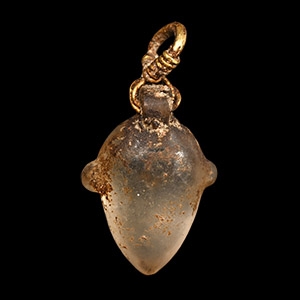
Egyptian Rock Crystal Heart Amulet
6th century B.C.Sold for (Inc. bp): £3,640
Carved with lateral triangular lugs and ribbed bale, gold wire suspension loop. 1.54 grams, 21 mm
Private collection. Acquired in 2009. Private collection, Europe.
