
Loading, please wait...
LOT 0495
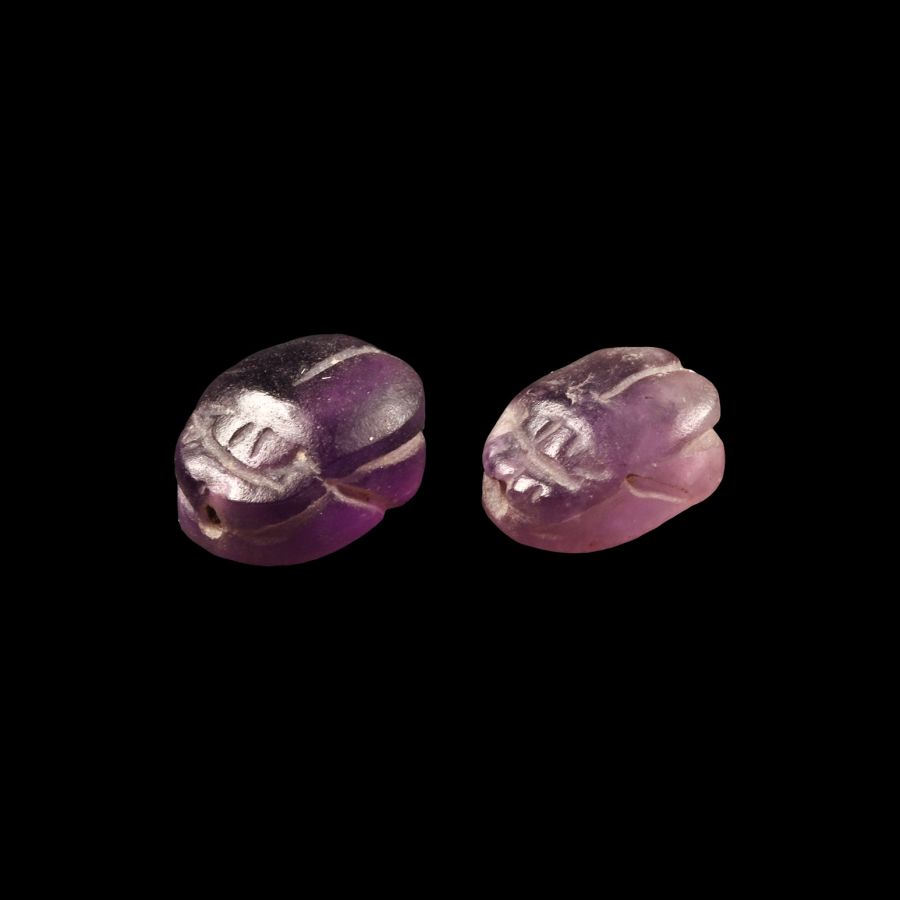
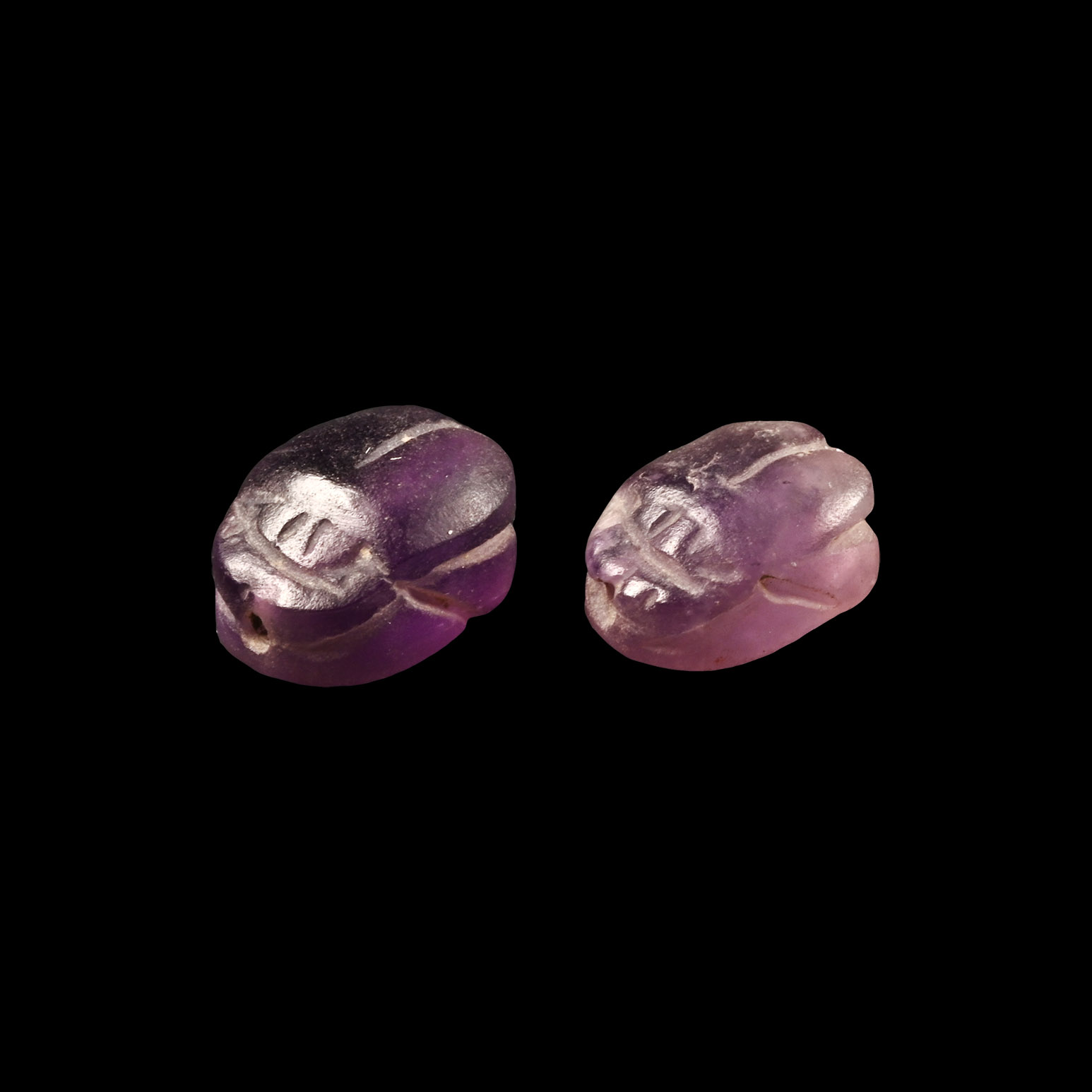
Egyptian Amethyst Scarab Group
GRAECO-ROMAN PERIOD, 332 B.C.-323 A.D.
3/8 in. (1.12 grams total, 8-9 mm).
A group of two amethyst scarabs pierced for suspension, each with simple detailing to the wings, head and legs. [2, No Reserve]
ProvenanceAcquired 1980s.
Private collection of L.H., Staffordshire, UK.
Property of a Sussex, UK, teacher.
TimeLine Auctions follows a vetting process to ensure the authenticity and legality of all items, reinforcing our commitment to integrity and responsible trading. Each antiquity, antique, and coin lot undergoes thorough examination by a vetting committee of at least ten external specialists, professional trade association members, scientists, and archaeologists: Our Vetting Process
AUCTIONS:
TimeLine is a leading auction house specialising in antiquities, ancient art, collectables, natural history, coins, medals, and books. Our auctions offer museums, collectors, historians, and enthusiasts the opportunity to acquire unique and historically significant pieces.
-
.jpg)
Egyptian Carnelian Scarab
New Kingdom-Late Period, 1550-332 B.C.Sold for (Inc. bp): £2,858
A finely carved carnelian scarab (Scarabaeus sacer) modelled naturalistically in the round with anatomical detailing to the carapace, head, legs and underside of the body; slightly domed profile; drilled laterally to the underside of the body for suspension. 3.07 grams, 19 mm
Fine condition.
From an early 20th century Home Counties collection. This lot has been checked against the Interpol Database of stolen works of art and is accompanied by search certificate no.114474-196152.
The Egyptians saw the scarab as a symbol of renewal and rebirth. The beetle was associated with the sun god because scarabs roll large balls of dung in which to lay their eggs, a behavior that the Egyptians thought resembled the progression of the sun through the sky from east to west. Scarab amulets were used for their magical rejuvenating properties by both the living and the dead. The regenerative powers of scarabs such as the one offered here could be used by either the living or the dead for healing and protection. The striking red/orange colour of the carnelian stone used to produce this amulet strengthens its solar associations. -
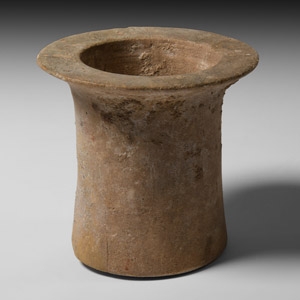
Egyptian Cylindrical Alabaster Vessel
New Kingdom, 1550-1070 B.C. or laterSold for (Inc. bp): £305
A carved alabaster jar with slightly tapering sides and everted rim. 177 grams, 81 mm wide
Fine condition.
From an early 20th century collection. Accompanied by an old illustrated catalogue card. -
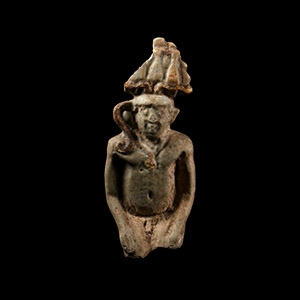
Egyptian Harpocrates Amulet
Late Period, 664-332 B.C.Estimate: £300 - 400 (+bp*)
Opening Bid: £150
A composition amulet fragment of the god Harpocrates, modelled nude, with stylised facial features and the Sidelock of Youth; light blue-green glaze with darker glaze to his hair and the lower part of the hem-hemet crown; pierced lug to reverse of crown for suspension. 6.72 grams, 51 mm high
Acquired 1980s-1990s. H.N. collection, Milton Keynes, Bedfordshire, UK.
