
Loading, please wait...
LOT 0033
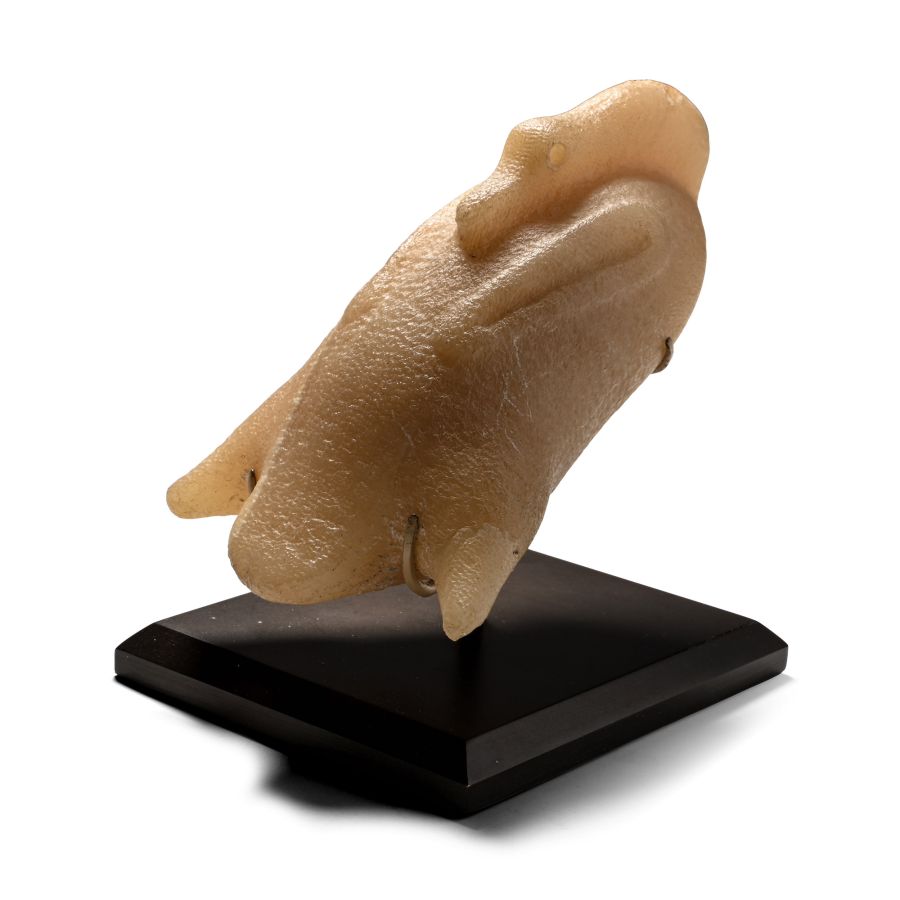
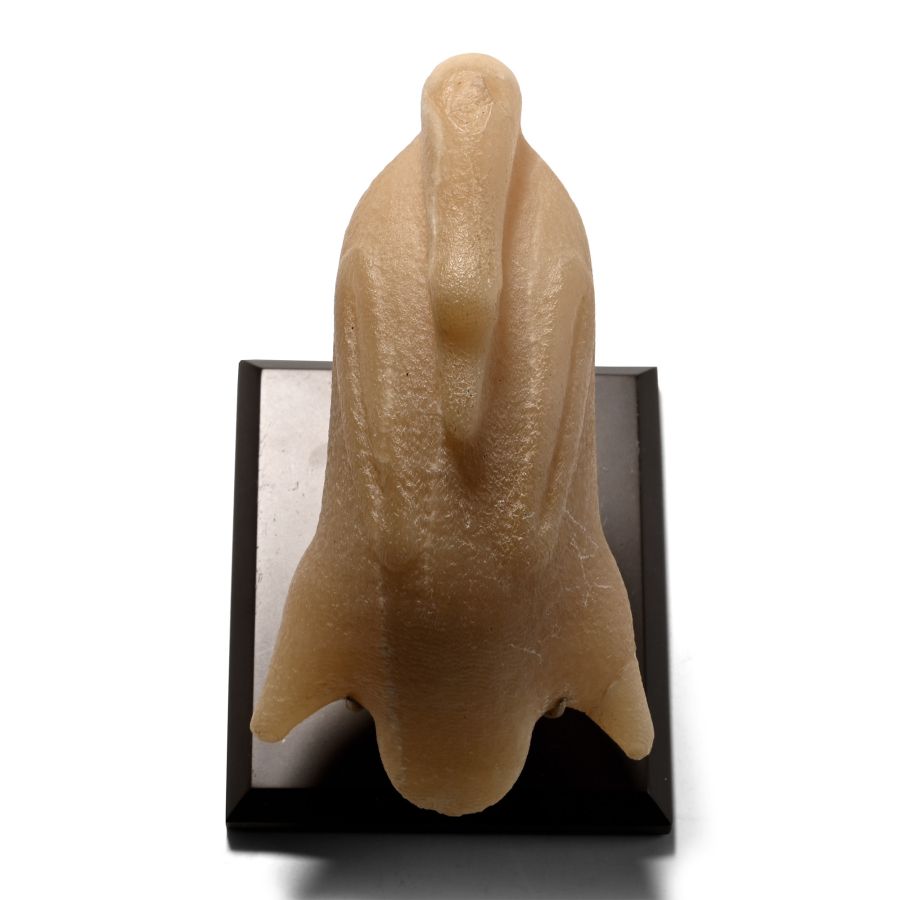
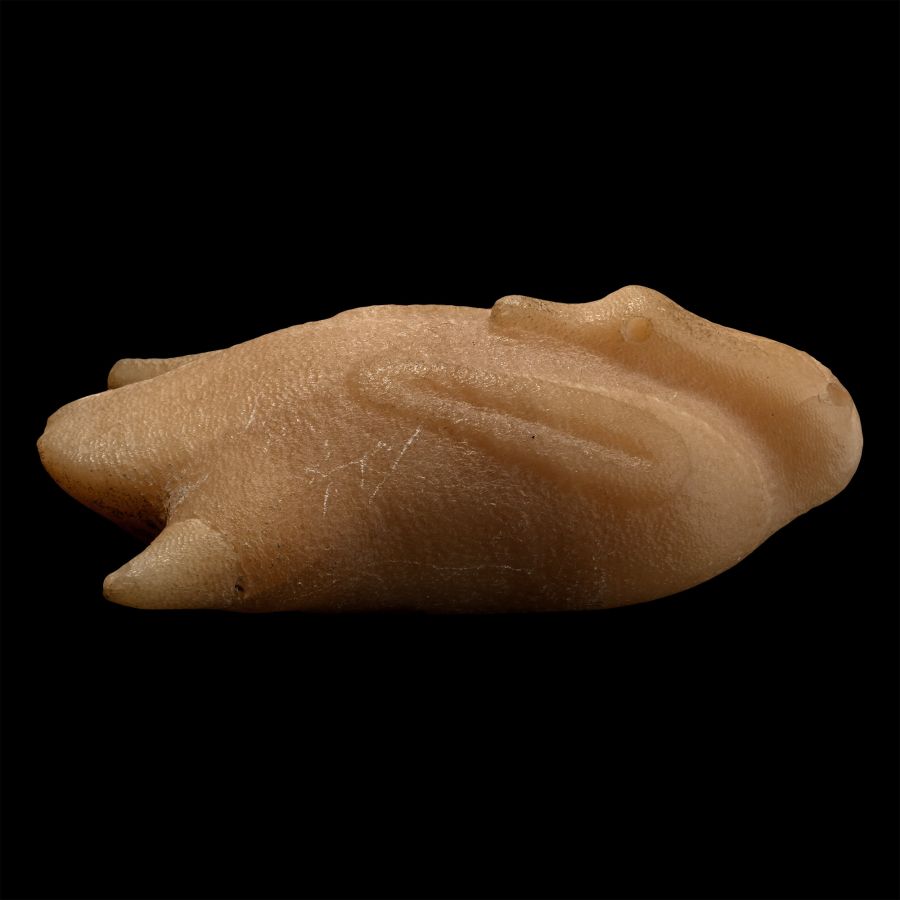
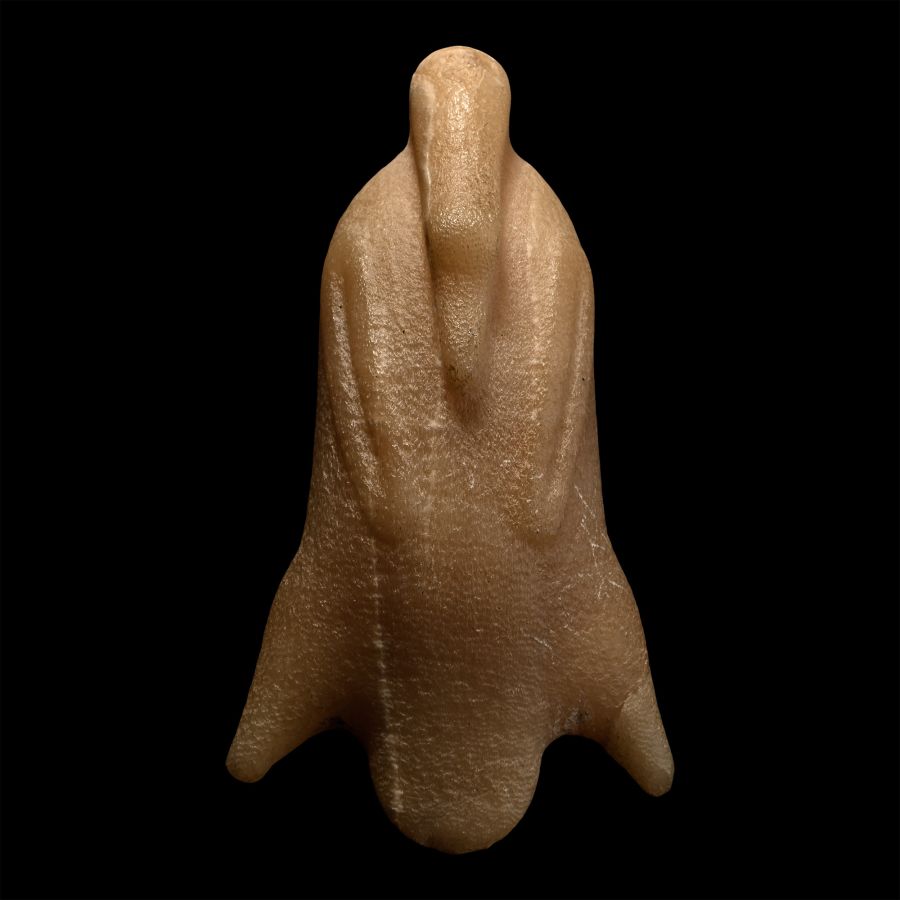
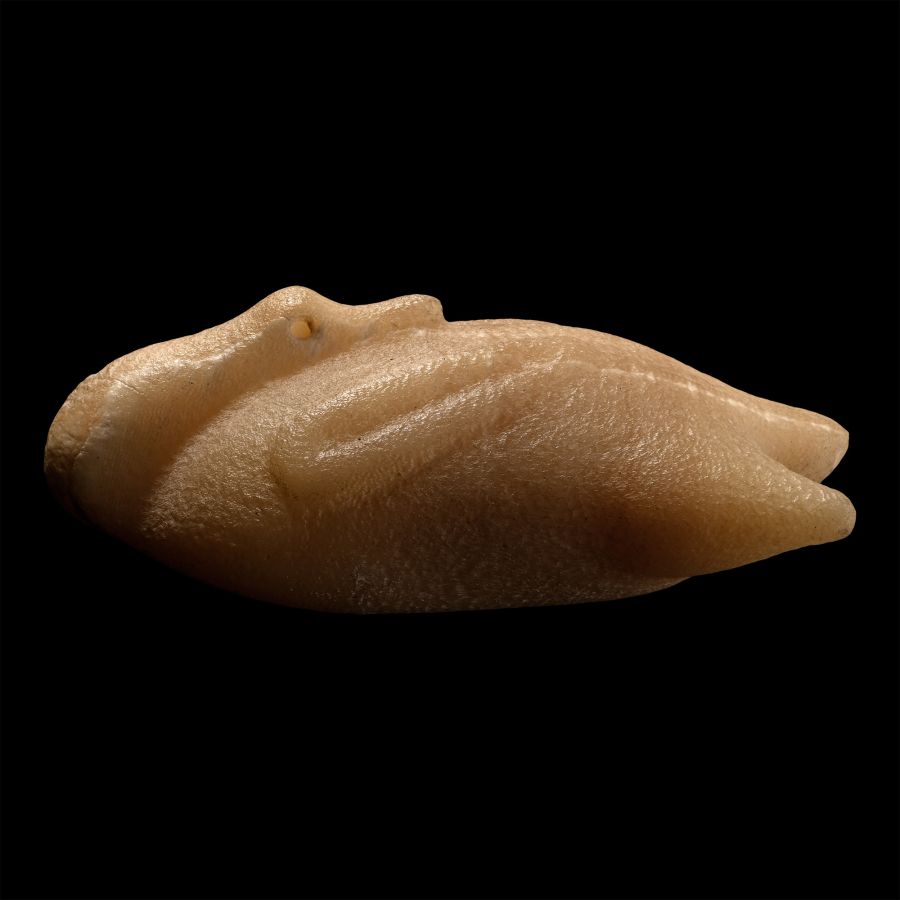
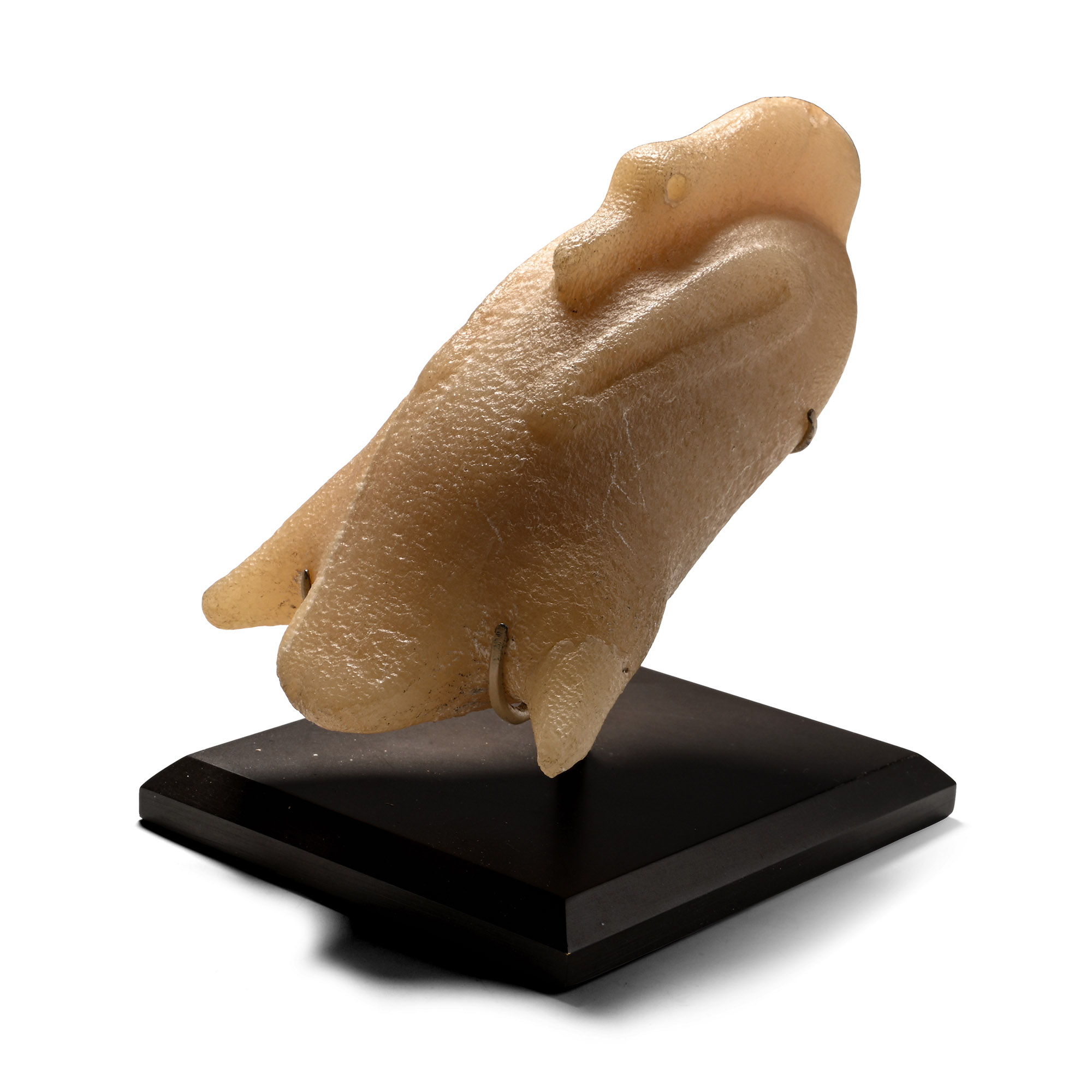
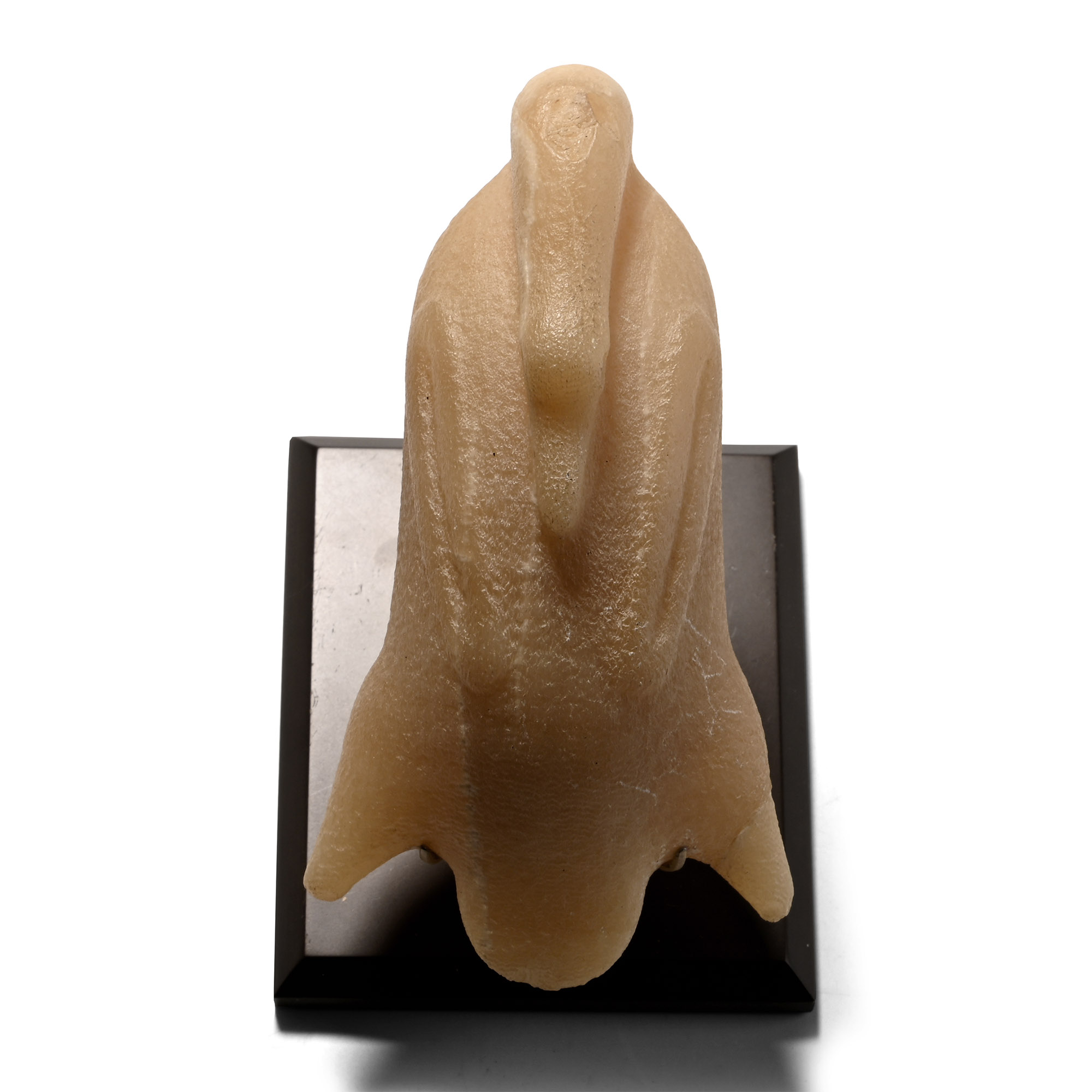
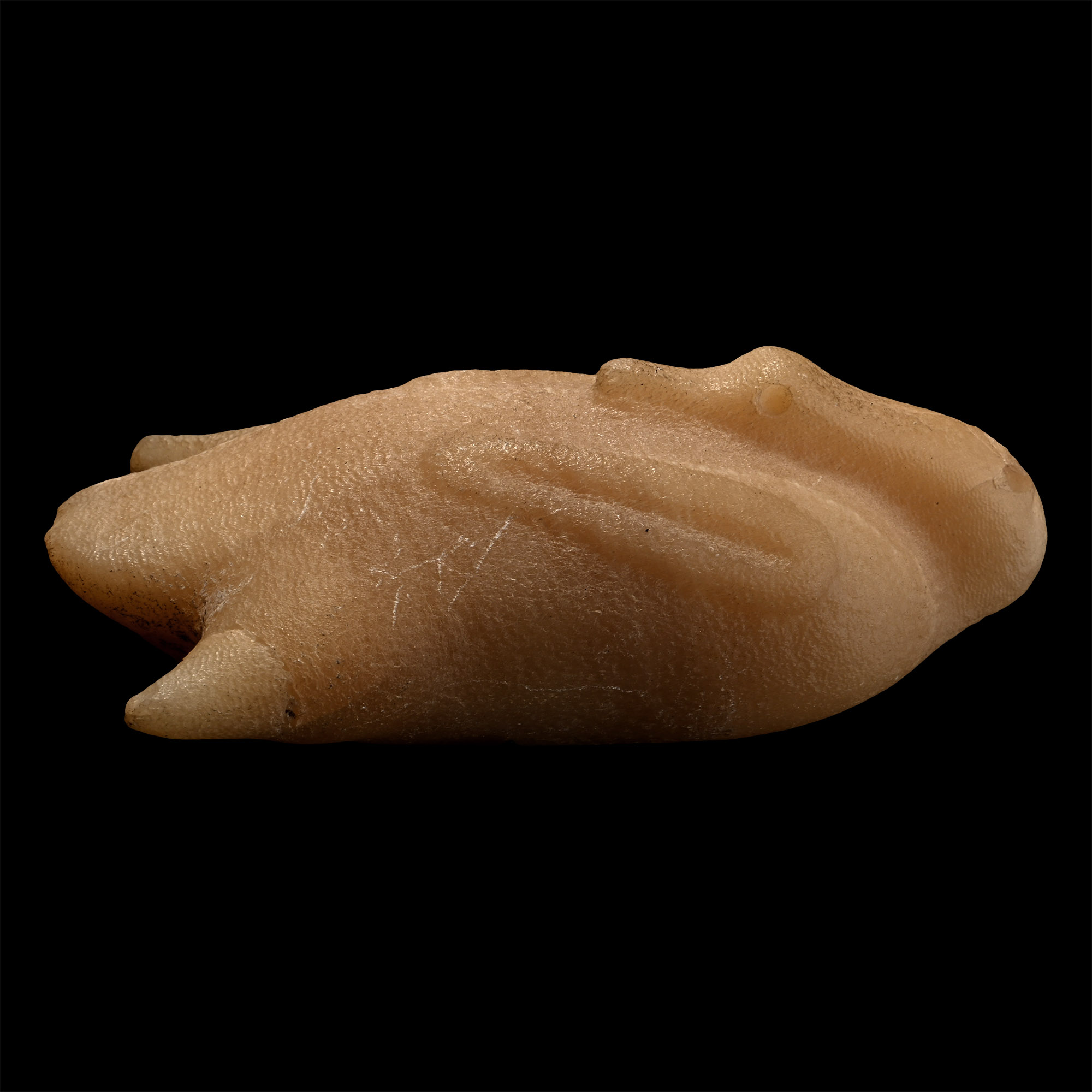
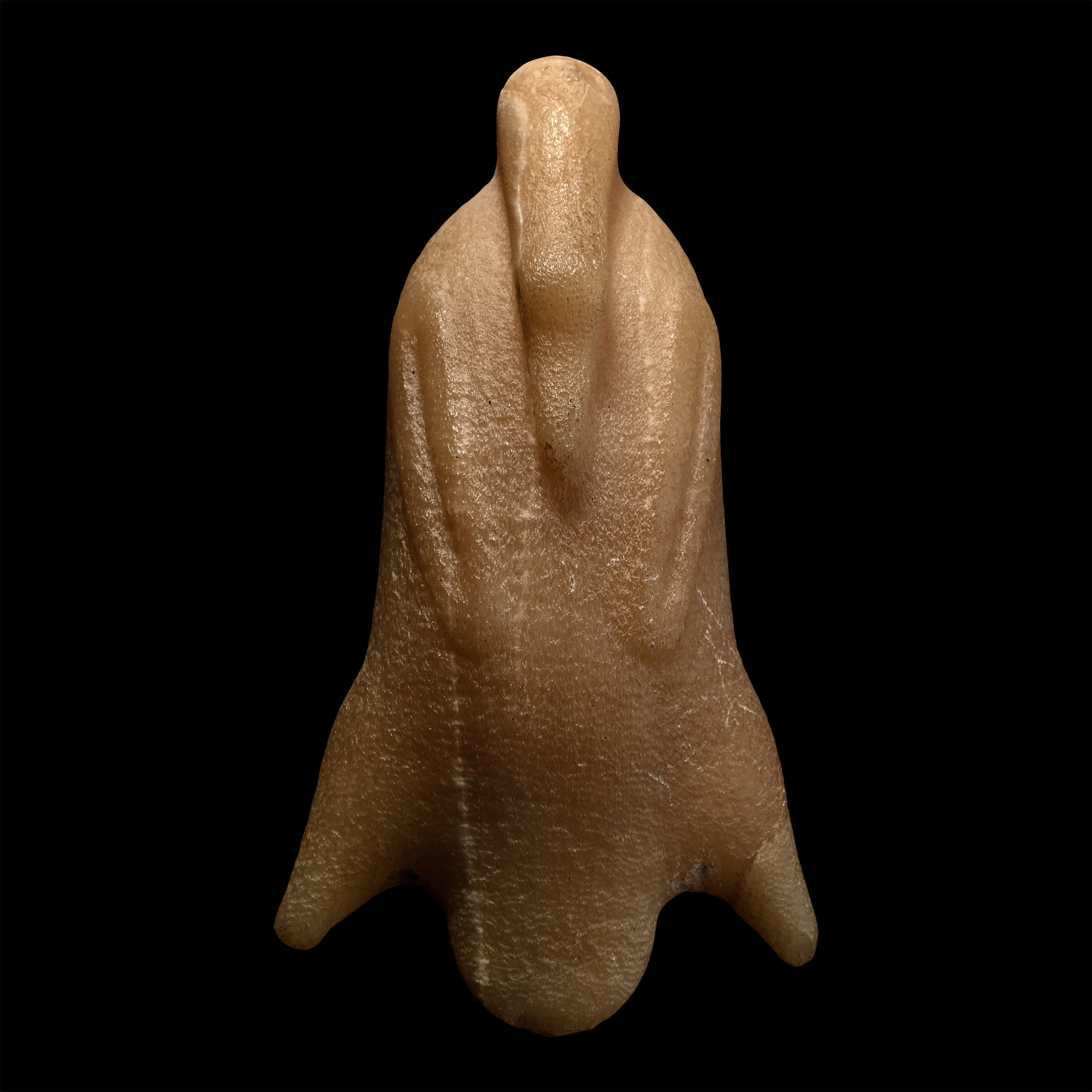
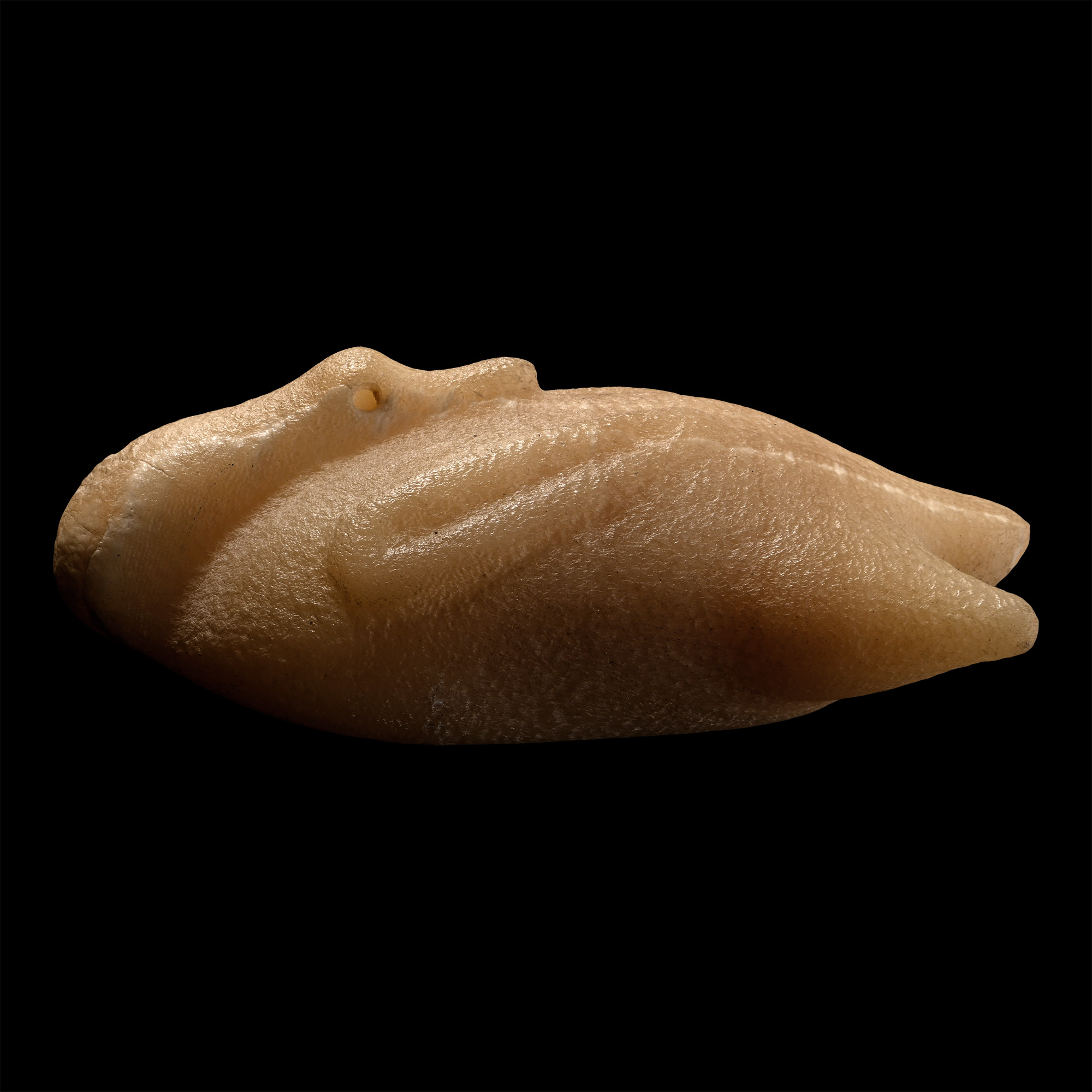
Egyptian Alabaster Trussed Duck
OLD KINGDOM, 6TH DYNASTY, CIRCA 2345-2181 B.C.
4 3/4 in. (891 grams total, duck: 12.2 cm long).
Delicately carved in the round with the head and neck laid backwards along the spine, the eyes recessed for inlays (absent); mounted on a custom-made stand.
ProvenancePrivate French collection acquired before 1970.
Bonhams Antiquities, 29 April 2009, no.58 (sold for £5,400.00).
Bonhams Antiquities, 23 October 2013, no.8 (sold for £7,500.00).
Prince collection, UK, 2013-2017.
Accompanied by a French passport no.099505.
This lot has been checked against the Interpol Database of stolen works of art and is accompanied by search certificate number no.12942-245247.
Cf. Seipel, W., Ägypten. Götter, Gräber und die Kunst – 4000 Jahre Jenseitsglaube, Linz, 1989, p. 71, nos. 40a and 40b, for two closely comparable examples.
FootnotesSmall statuettes of ducks, prepared for cooking, were created to provide imperishable offerings for the tomb. These birds appeared in almost every offering list and were depicted being brought to the tomb by offering bearers in wall scenes.
CONDITIONTimeLine Auctions follows a vetting process to ensure the authenticity and legality of all items, reinforcing our commitment to integrity and responsible trading. Each antiquity, antique, and coin lot undergoes thorough examination by a vetting committee of at least ten external specialists, professional trade association members, scientists, and archaeologists: Our Vetting Process
AUCTIONS:
TimeLine is a leading auction house specialising in antiquities, ancient art, collectables, natural history, coins, medals, and books. Our auctions offer museums, collectors, historians, and enthusiasts the opportunity to acquire unique and historically significant pieces.
LOT 0033
Egyptian Alabaster Trussed Duck
Estimate £4,000 - 6,000€4,640 - 6,960 (for guidance only)$5,400 - 8,100 (for guidance only)
-
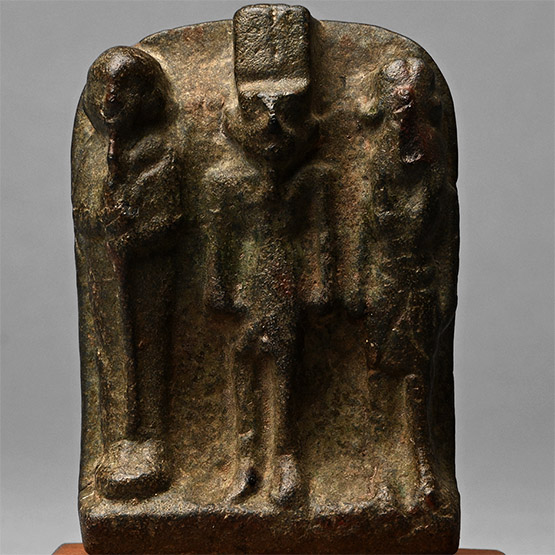
Egyptian Faience Ptah, Amun-Ra and Ra-Horakhty Triad Amulet
Ptolemaic Period, 332-30 B.C.Estimate: £2,500 - 3,500 (‡+bp*)
Opening Bid: £1,444
Rectangular plaque with a ledge along the lower edge, featuring the half-round figures of Ptah, Amun-Ra, and Ra-Horakhty; each invoked in offering formulae written in three vertical columns on the back; a fragmentary suspension loop at the rear; mounted on a wooden display stand. 88.8 grams total, 85 mm including stand
From a deceased American estate, 1970-1989. with Bonhams, London, 28 October 2009, no.81. Private collection, Europe. Accompanied by a copy of an Art Loss Register certificate, no.S00066707. This lot has been checked against the Interpol Database of stolen works of art and is accompanied by search certificate number no.13190-249206.
Amun, Ra-Horakhty, and Ptah. Amun evolved from a primordial god to a nationally worshipped deity, merging with Ra to become Amun-Ra, while Ra-Horakhty symbolises the sun and is depicted with a falcon's head. Ptah is recognised as the creator god and patron of craftsmen, originally worshipped in Memphis and later throughout Egypt. -
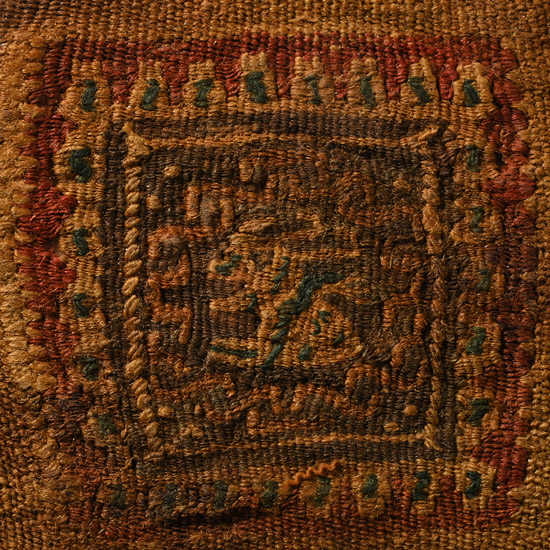
Egyptian Coptic Textile Fragment of a Tunic Tablion with Hare
Circa 6th-7th century A.D.Estimate: £40 - 60 (+bp*)
Bids: 1 | Current Bid: £5
Comprising a tablion in coarse wool of red, green, yellow, violet and blue over white linen, scalloped borders, tapestry work (S-twist), featuring an animal (hare?) inside a square, surrounded by vegetal ornaments. 5.59 grams, 10.5 cm
Acquired 1970s-1996. Property of a North American collector. London collection, 2016.
The tabula, or tablion, was a square embroidery used to decorate tunics or mantles. The theme of rabbits or hares, in association with other characters and animals of the Dionysian Thiasos, has notable parallels. Such representations are linked to narratives of the Dionysian cycle. -
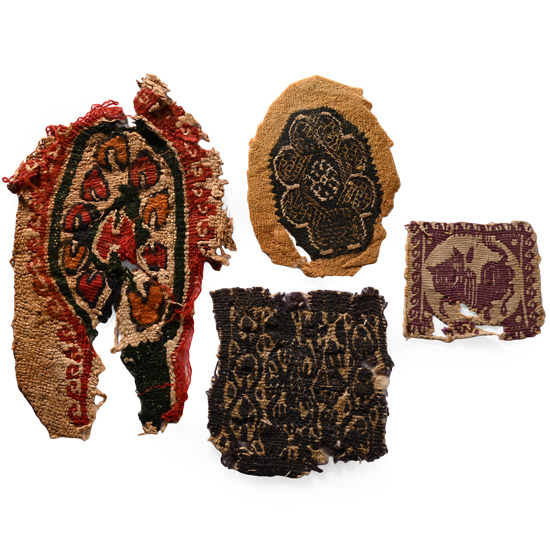
Egyptian Coptic Tunic Textile Fragments of Orbiculi, Tablia and Segmenta with Vegetation, Animals and Geometric Ornament
Circa 6th-7th century A.D.Estimate: £80 - 100 (+bp*)
Bids: 1 | Current Bid: £5
Comprising a tablion in purple and blue wool over white linen, with floral ornaments featuring ivy leaves; another smaller tablion in purple wool over white linen, the borders meander decorated, featuring a bull inside a medallion; an orbiculus with lozenge decoration, featuring a vegetal ornament inscribed in a polilobated flower; and a very large foliate ornament in red, green, yellow, orange and red wool on white linen, with vegetal decoration, the borders meander decorated, tapestry work (S-twist). 10.56 grams total, 5.8-15.5 cm
Acquired 1970s-1996. Property of a North American collector. London collection, 2016.
The fragments are decorative parts of tunics. These are fabrics of great decorative finesse, with some elements displaying an unusual and extremely well-preserved colour palette.
