
Loading, please wait...
LOT 0018
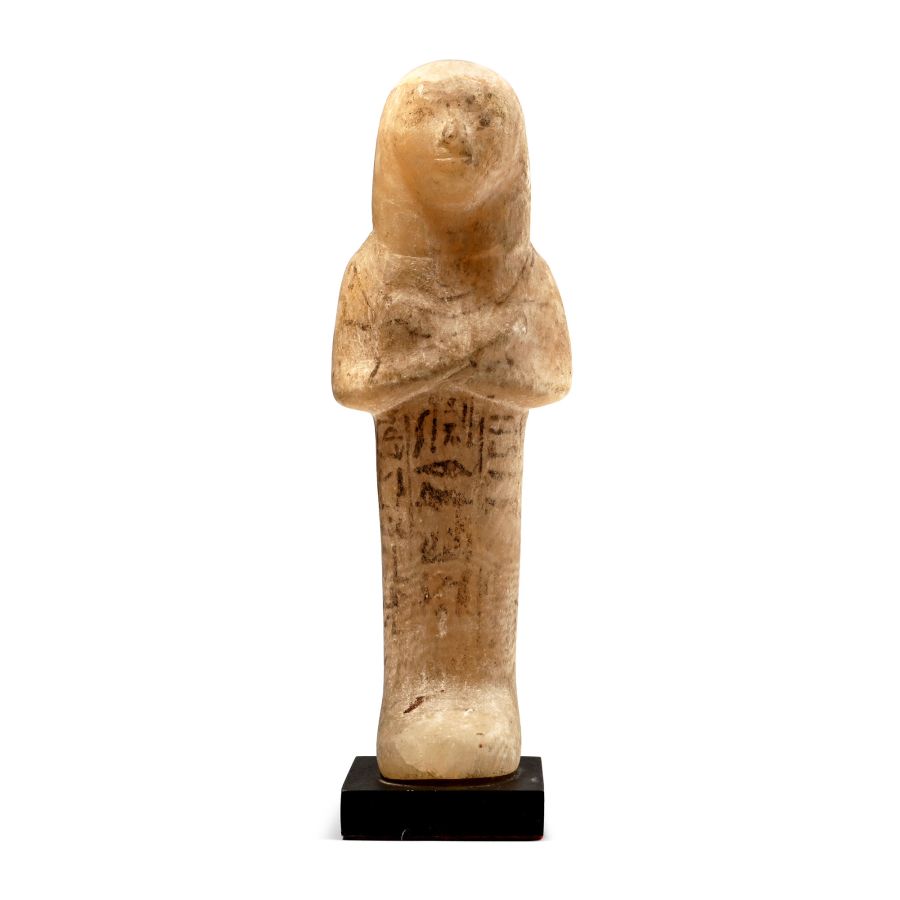
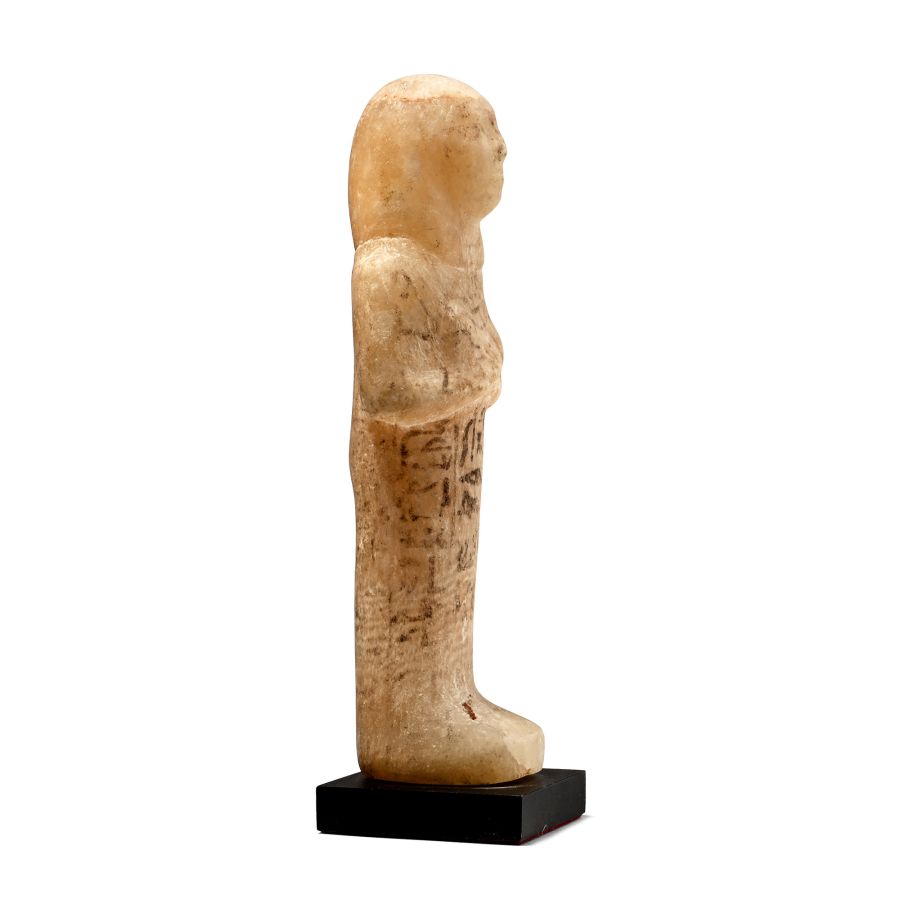
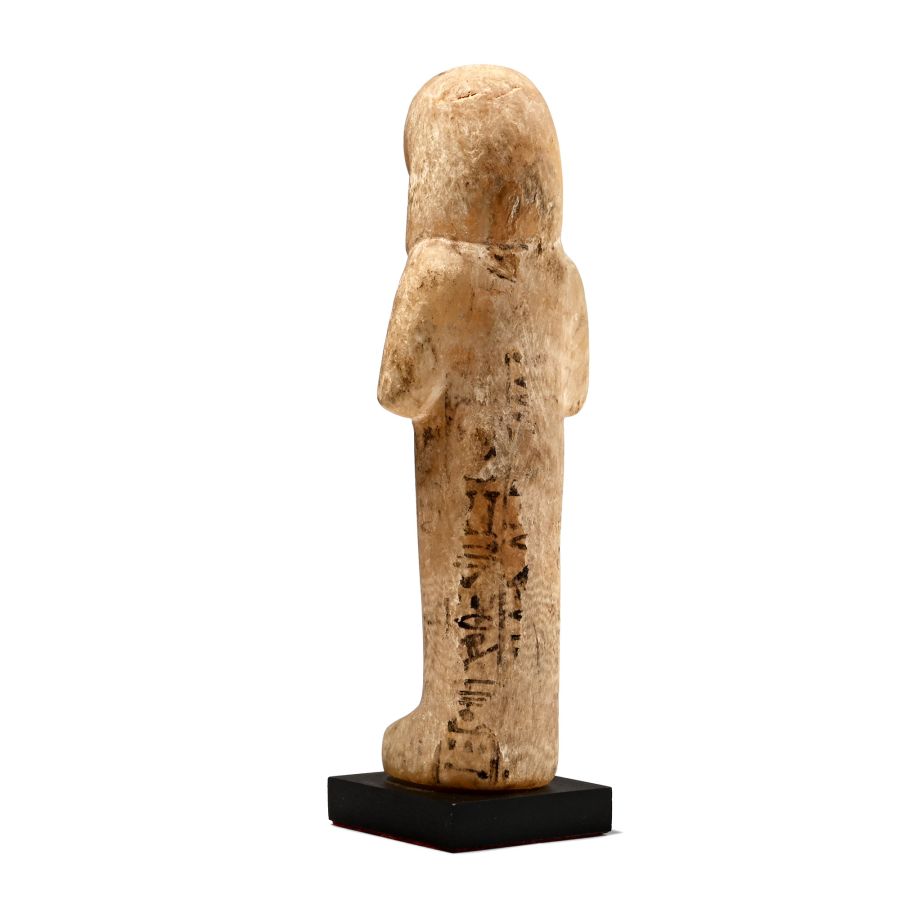
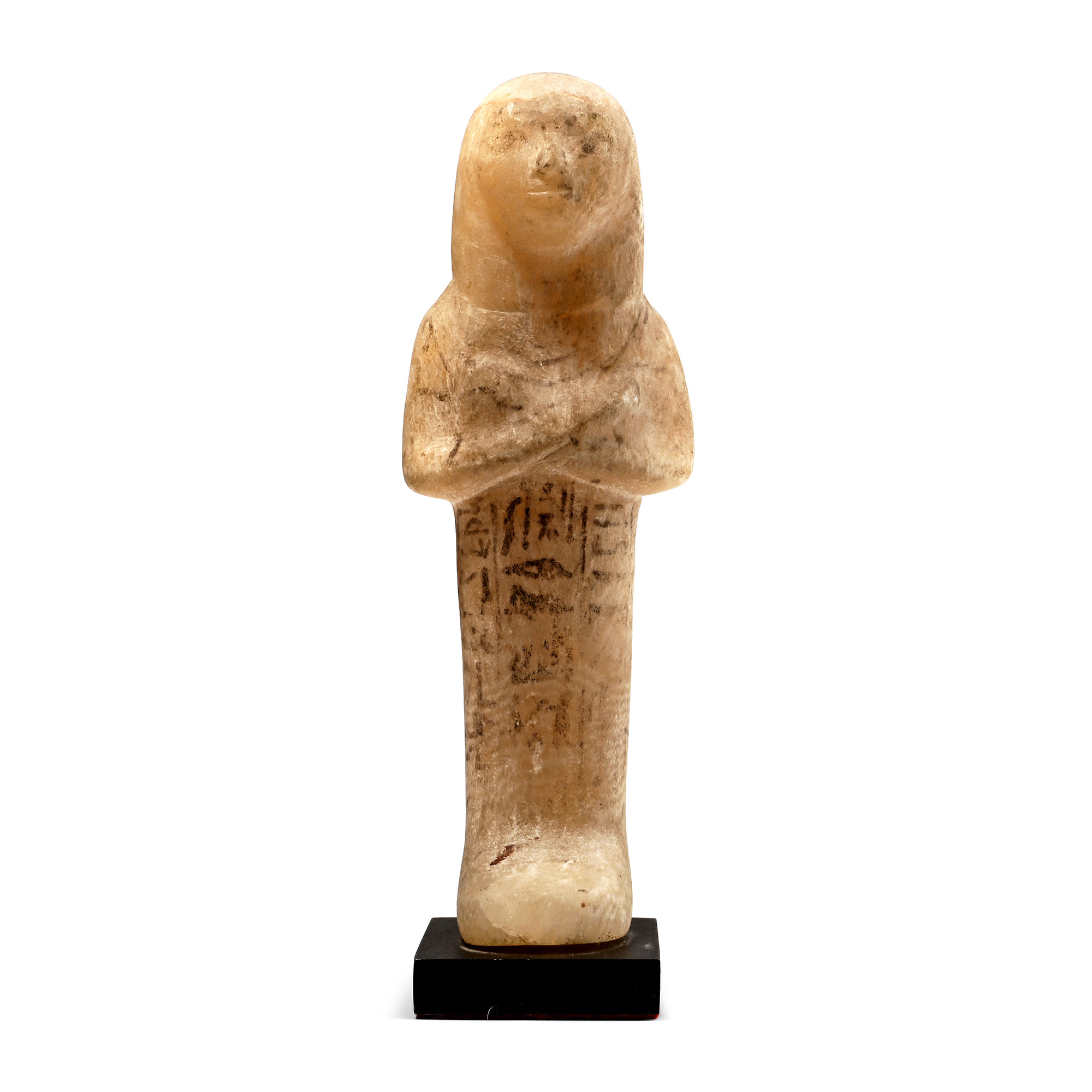
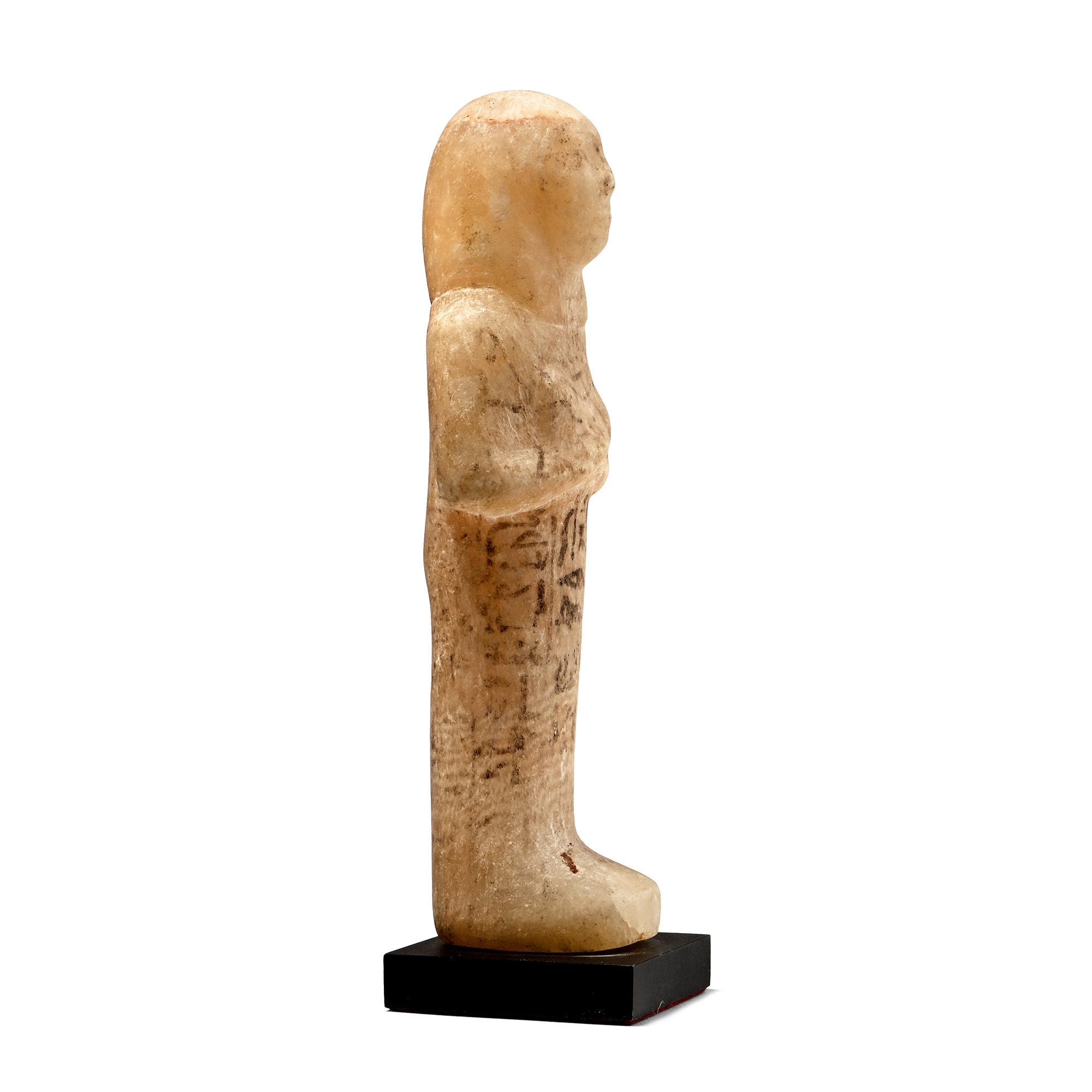
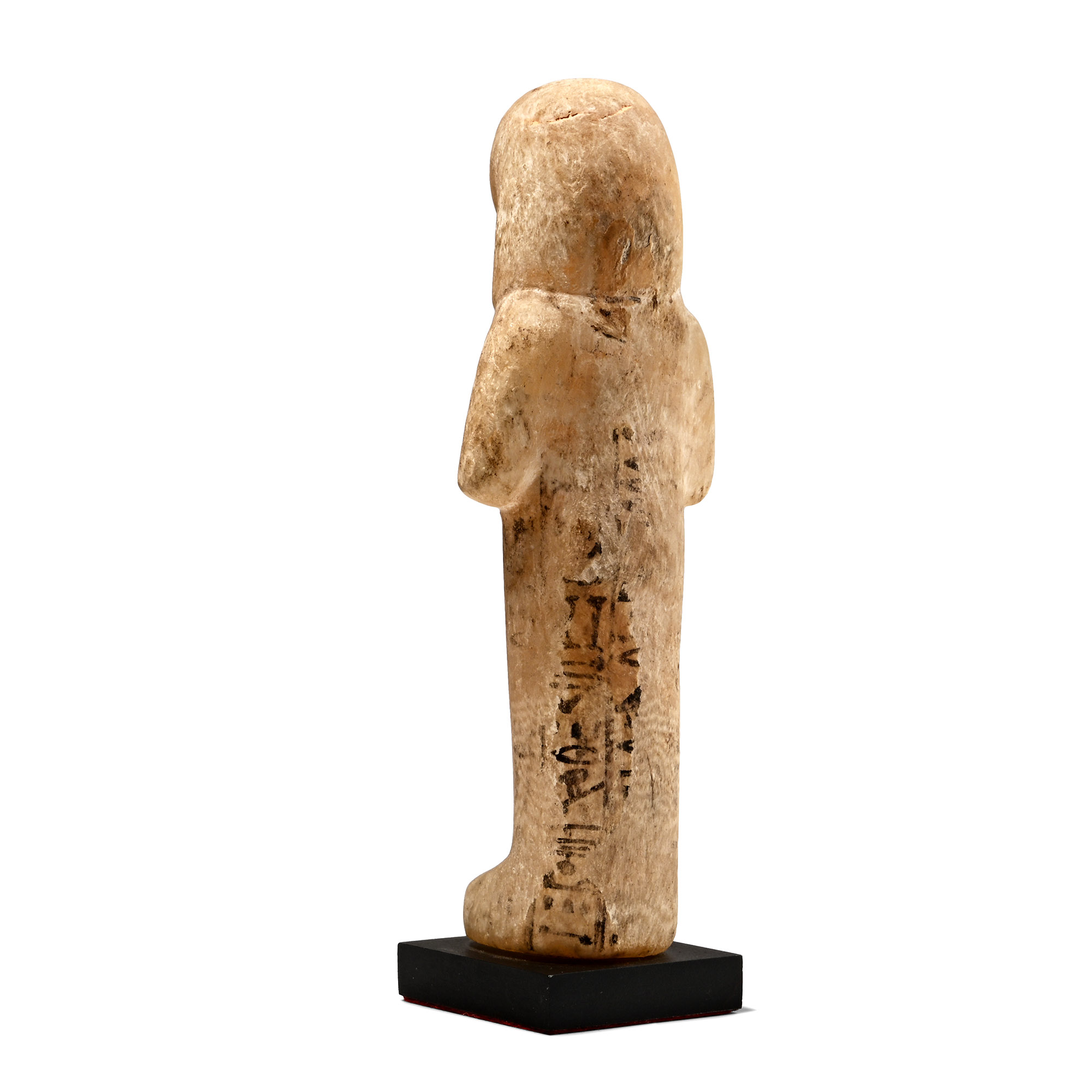
Egyptian Alabaster Shabti Figure of the Osiris, Kay
NEW KINGDOM, 19TH-20TH DYNASTY, CIRCA 1292-1077 B.C.
6 1/8 in. (297 grams total, 15.5 cm including stand).
Mummiform figure wearing a short lappet wig, with a black-painted broad collar, arms crossed over the chest, holding black-painted agricultural implements; eight columns of black hieroglyphic text surround the figure's lower half, the front central column reading: 'The illuminated one, the Osiris, Kay...'. [No Reserve]
ProvenanceAcquired privately at Cumberland Coin Fair, Marble Arch, circa 1980, for £75.00.
From the private collection of Peter Clayton, FCILIP, Dip, Arch, FSA, FRNS, Hemel Hempstead, Hertfordshire, UK; formed since the late 1950s.
This lot has been checked against the Interpol Database of stolen works of art and is accompanied by search certificate no.13492-262899.
TimeLine Auctions follows a vetting process to ensure the authenticity and legality of all items, reinforcing our commitment to integrity and responsible trading. Each antiquity, antique, and coin lot undergoes thorough examination by a vetting committee of at least ten external specialists, professional trade association members, scientists, and archaeologists: Our Vetting Process
AUCTIONS:
TimeLine is a leading auction house specialising in antiquities, ancient art, collectables, natural history, coins, medals, and books. Our auctions offer museums, collectors, historians, and enthusiasts the opportunity to acquire unique and historically significant pieces.
LOT 0018
Egyptian Alabaster Shabti Figure of the Osiris, Kay
Estimate £2,000 - 3,000€2,320 - 3,480 (for guidance only)$2,700 - 4,050 (for guidance only)
-
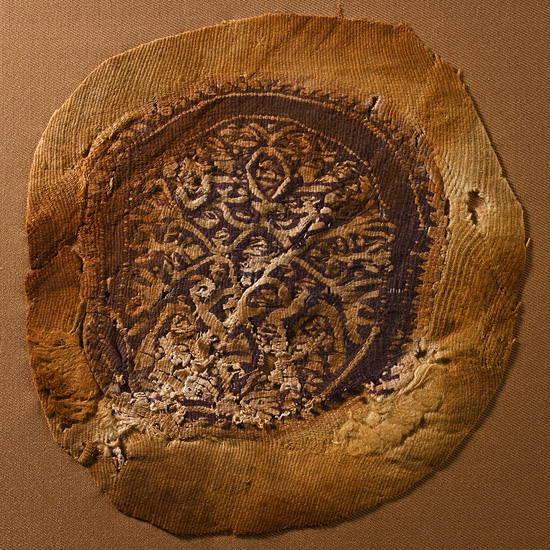
Egyptian Mounted Coptic Orbiculus Textile Fragment
Circa 6th century A.D.Estimate: £40 - 60 (+bp*)
Bids: 1 | Current Bid: £5
Comprising a large circular fragment of an orbiculus in linen and wool, S torsion, scalloped borders, embroidered with vegetal and geometric ornaments, dark purple on linen. 117 grams total, 18.5 cm
Acquired 1970s-1996. Property of a North American collector. London collection, 2016.
Water plant elements are scattered on the orbiculus, which is decorated with vegetal interlaces and possibly fish figures. These abstract decorations show a strong stylisation that gives the marine animals a plant-like appearance. -
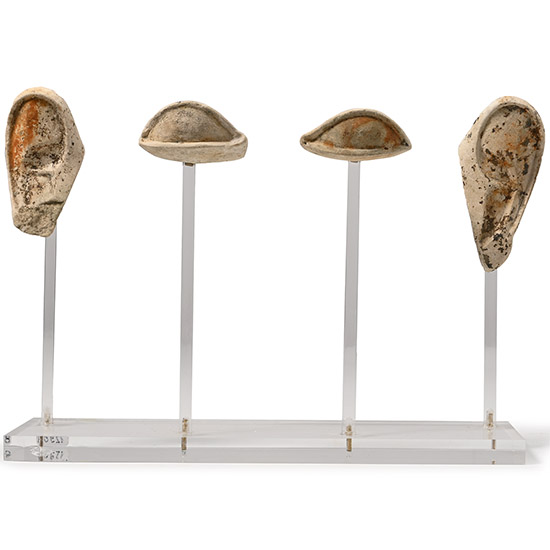
Egyptian Limestone Pair of Eyes and Ears
Late Period, 664-332 B.C.Estimate: £500 - 700 (‡+bp*)
Opening Bid: £250
A pair of narrow, almond-shaped eyes with elegantly curved, slightly set-off lids; the eyeballs are slightly convex; the reverse is smoothed; the tip and part of the surface of one earlobe are missing; traces of black paint and a reddish-yellow colour (paint or iron oxide deposits); originally served as inlays for a coffin mask. 234 grams total, 21.5 cm wide including stand
Israeli art market, 2015, from Mr I.H., a licensed art dealer from Jerusalem. -
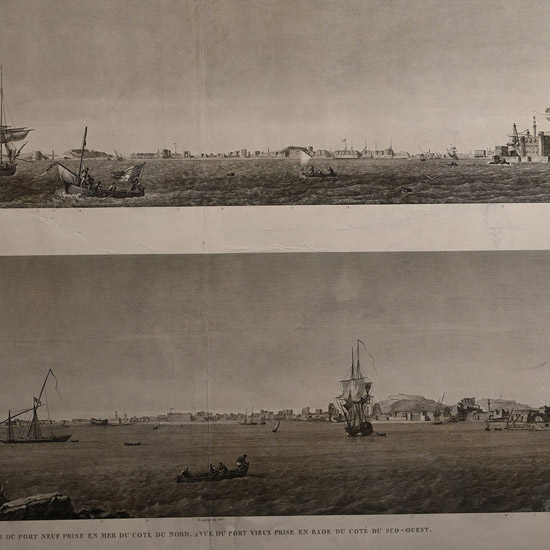
Very Large Egyptian Expedition Lithograph of Views of Alexandria
Early 19th century A.D.Estimate: £80 - 100 (+bp*)
Opening Bid: £40
Proof etching on laid paper of plate 88 from Description de l'Égypte : ou, Recueil des observations et des recherches qui ont été faites en Égypte pendant l'expédition de l'armée française. entitled 1. Vue du port neuf en mer du cote du nord. 2. Vue du port vieux prise en rade du cote du sud-ouest. 259 grams, 104.5 x 69 cm
From the collection of a North American priest. Acquired between 1981-1996. Property of a North American collector.
Produced between February 1802 and 1830 on the orders of Napoleon Bonaparte; published between 1809 and 1828. Just 1,000 copies were distributed to various institutions, printed on laid paper with an 'Égypte ancienne et moderne' watermark. The book is subtitled Recueil des observations et des recherches qui ont été faites en Égypte pendant l’expédition de l’Armée française, publié par les ordres de Sa Majesté l’Empereur Napoléon le Grand (Gathering of observations and discoveries which were made in Egypt during the expedition of the French army, published on the orders of His Majesty the Emperor Napoleon the Great). It was the world's first encyclopedia devoted exclusively to the remains of ancient Egypt. The plates of this book are the first to present the archaeological sites of Thebes (Luxor).
