
Loading, please wait...
LOT 0540
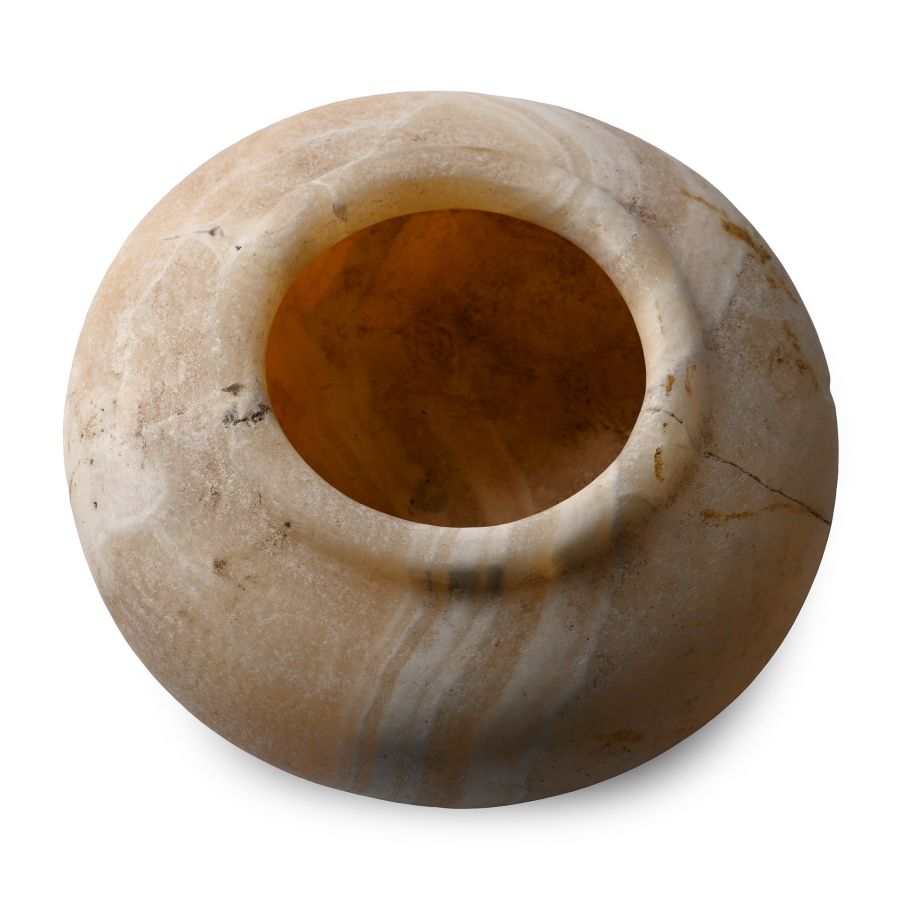
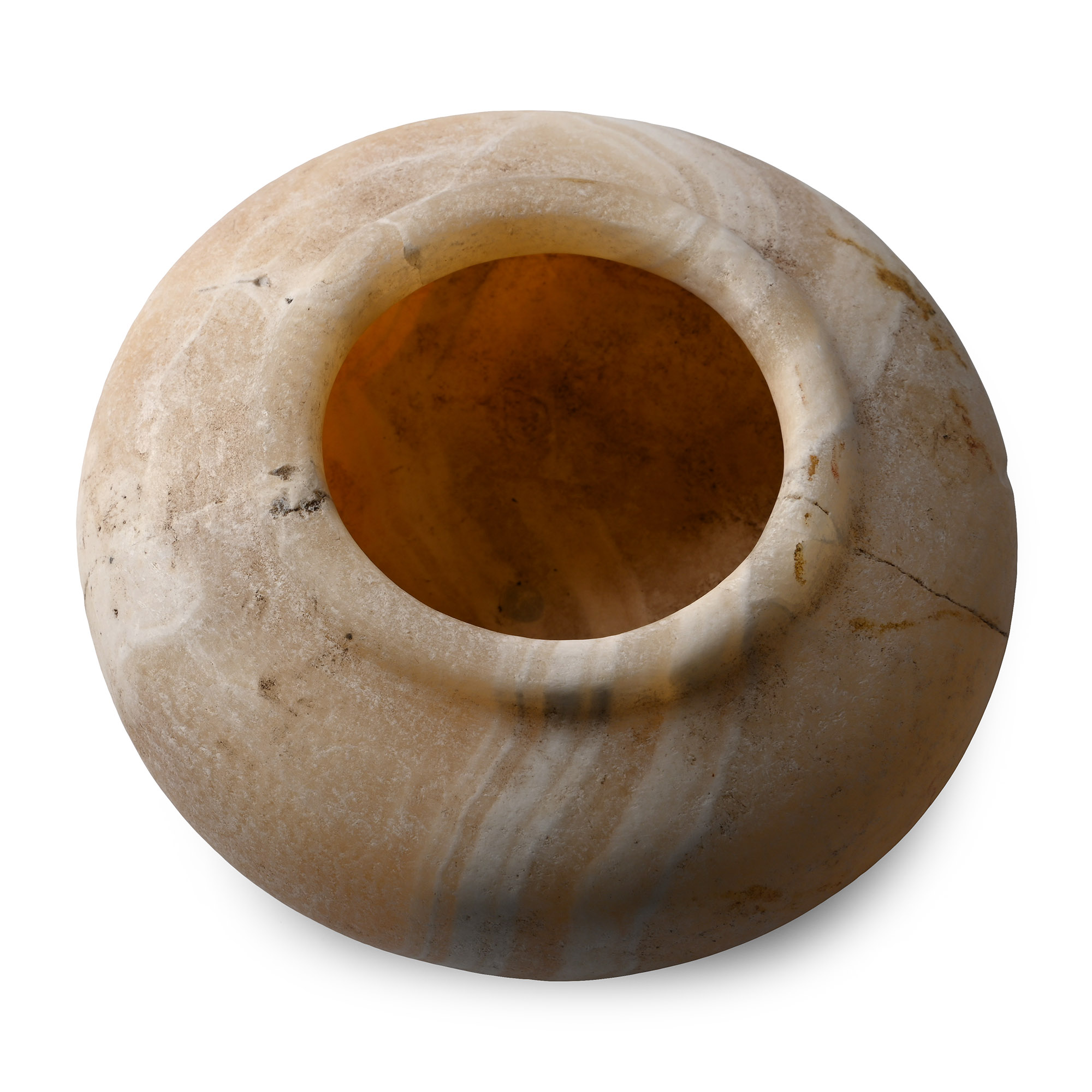
Egyptian Alabaster Jar
2ND-1ST MILLENNIUM B.C.
4 1/2 in. (574 grams, 11.5 cm wide).
Of squat profile with flattened base, flat shoulder and rounded rim.
ProvenanceFrom a West Country, UK, collection, 1980-2020s.
CONDITIONTimeLine Auctions follows a vetting process to ensure the authenticity and legality of all items, reinforcing our commitment to integrity and responsible trading. Each antiquity, antique, and coin lot undergoes thorough examination by a vetting committee of at least ten external specialists, professional trade association members, scientists, and archaeologists: Our Vetting Process
AUCTIONS:
TimeLine is a leading auction house specialising in antiquities, ancient art, collectables, natural history, coins, medals, and books. Our auctions offer museums, collectors, historians, and enthusiasts the opportunity to acquire unique and historically significant pieces.
-
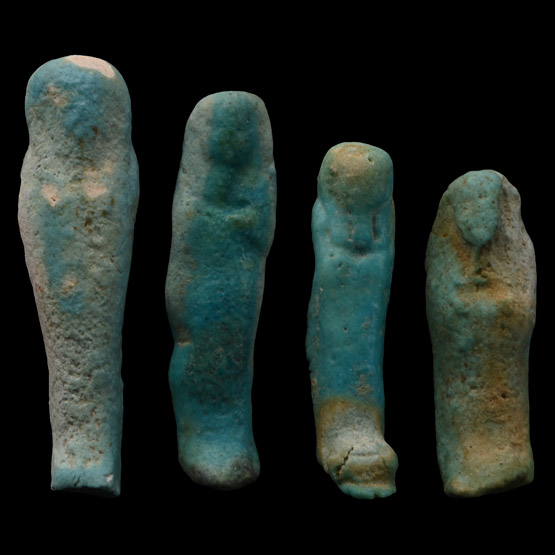
Egyptian Faience Shabti Collection
Ptolemaic Period, 332-30 B.C.Sold for (Inc. bp): £143
Comprising four mummiform figures with tripartite wigs and divine beards. 22.7 grams total, 44-60 mm
Ex H Norri collection, Milton Keynes, Bedfordshire, UK, 1980s-1990s. -
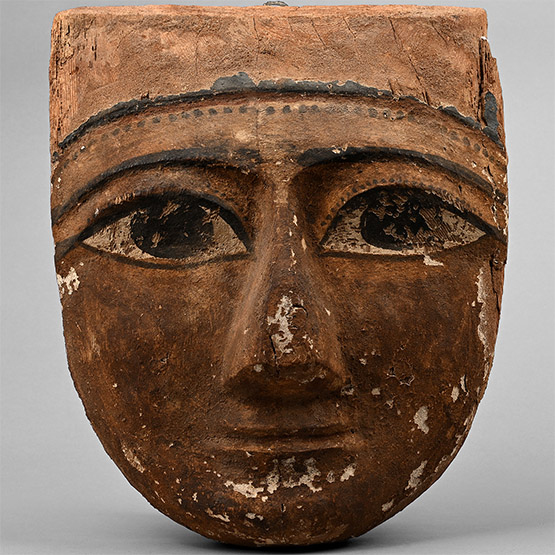
Egyptian Painted Wooden Mummy Mask
Ptolemaic Period, circa 3rd century B.C.Sold for (Inc. bp): £3,900
D-shaped in plan with carved facial detailing, thick nose and full lips; painted bands to the brow, pierced in three places for attachment. 1.04 kg, 30 cm
Swiss private collection, Zurich, assembled in the 1950s. Private collection. Acquired on the Zurich art market in 2013. This lot has been checked against the Interpol Database of stolen works of art and is accompanied by a search certificate number no.12847-241680.
The cartonnage mask from the Ptolemaic Period (305-30 BC) was a funerary covering made of wood or layers of papyrus/linen and plaster, modelled and painted, which covered the face of the mummy, often gilded, decorated with coloured glass and stones, and depicted the deceased with an idealized face and golden skin to protect him and guarantee him rebirth as a deity in the afterlife, combining Egyptian tradition with Graeco-Roman influences. -
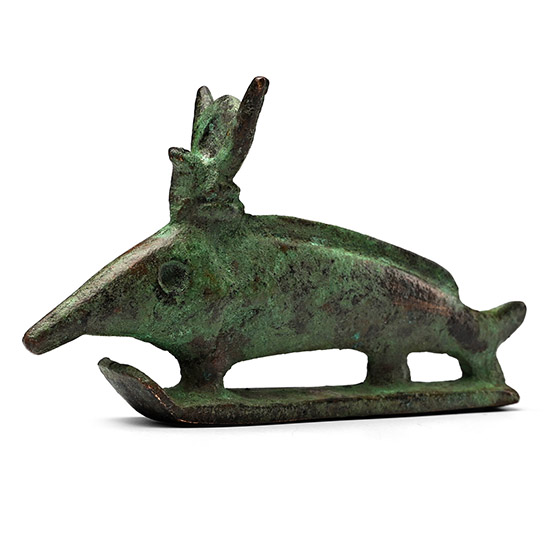
Egyptian Bronze Oxyrhynchus Fish
Late Period, 664-332 B.C. or laterSold for (Inc. bp): £1,235
Modelled in the round on a sledge attached by ventral and pectoral fins; with forked tail, a dorsal ridge, and a tapering nose, featuring recessed circular eyes to accept an insert, a horned sun disc headdress fronted by a uraeus, and a suspension loop behind. 203 grams, 11.5 cm
From the collection of a gentleman, acquired on the London art market in the 1990s.
