
Loading, please wait...
LOT 0014
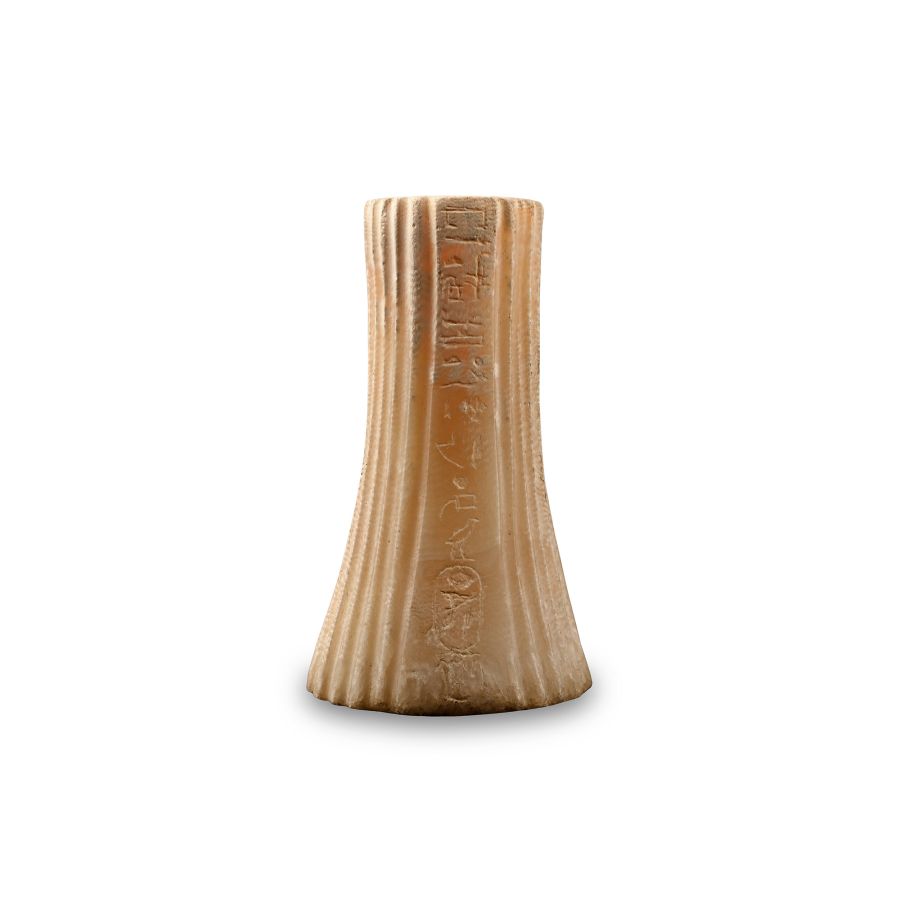
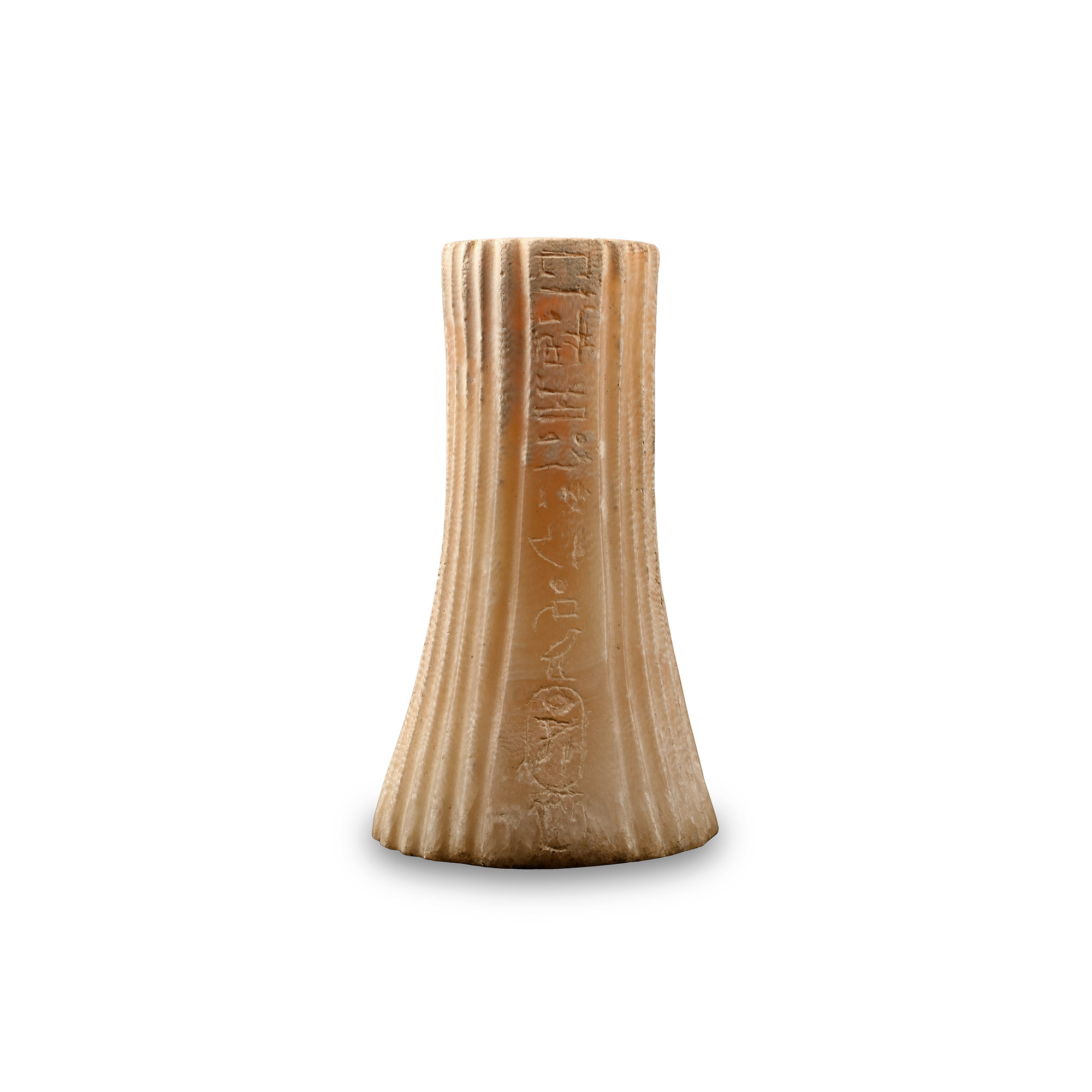
Egyptian Alabaster Headrest Pillar with Hieroglyphic Inscription
OLD KINGDOM, 5TH-6TH DYNASTY, 2494-2181 B.C.
4 3/4 in. (628 grams, 12 cm).
Formed as a carved cone with fluting to the vertical face; plain panel with incised hieroglyphic text and cartouche; one part of a head-rest assembly.
ProvenancePrivate collection of Mr A., Montreal, acquired in the early 1980s.
Private collection, Switzerland, acquired from the above in 1993.
Thence by descent, family collection, from the late 1990s.
This lot has been checked against the Interpol Database of stolen works of art and is accompanied by a search certificate number no.12849-241633.
This lot has been cleared against the Art Loss Register database, and is accompanied by an illustrated lot declaration signed by the Head of the Antiquities Department, Dr Raffaele D'Amato.
Cf. head-rest assembly in the British Museum, accession no.EA30413.
CONDITIONTimeLine Auctions follows a vetting process to ensure the authenticity and legality of all items, reinforcing our commitment to integrity and responsible trading. Each antiquity, antique, and coin lot undergoes thorough examination by a vetting committee of at least ten external specialists, professional trade association members, scientists, and archaeologists: Our Vetting Process
AUCTIONS:
TimeLine is a leading auction house specialising in antiquities, ancient art, collectables, natural history, coins, medals, and books. Our auctions offer museums, collectors, historians, and enthusiasts the opportunity to acquire unique and historically significant pieces.
LOT 0014
Egyptian Alabaster Headrest Pillar with Hieroglyphic Inscription
Sold for (Inc. bp): £1,950
-
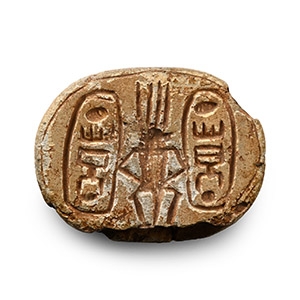
Large Egyptian Steatite Scarab with Bes and Cartouches of Thutmose III
Late Period, 664-332 B.C.Sold for (Inc. bp): £390
With segmented carapace, detailed legs and mouth, incuse image of Bes with plumed headdress to underside flanked by two cartouches, each bearing the throne name of Thutmose III (Men-kheper-Re); chipped. 26.3 grams, 39 mm
Ex London, UK, gentleman's collection, 1990s. This lot is accompanied by an illustrated lot declaration signed by the Head of the Antiquities Department, Dr Raffaele D'Amato.
The royal name is incorrectly written, containing two sun discs rather than one, suggesting it may be of Levantine manufacture. Thutmose III, a dynamic New Kingdom pharaoh celebrated centuries after his death, frequently appears on scarabs during the Late Period. From the New Kingdom onwards, Bes became one of ancient Egypt's most popular apotropaic deities. Despite his fearsome appearance, Bes served as the patron and protector of pregnant women and children, and was also believed to shield them from snakes. The combination of Thutmose III and Bes harnessed both royal and divine protection. -
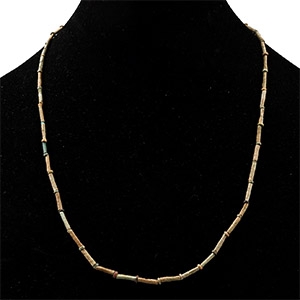
Egyptian Faience Mummy Bead Necklace String
Late Period, 664-332 B.C.Sold for (Inc. bp): £98
Restrung group of tubular beads with cylindrical and small disc-shaped bead spacers. 4.97 grams, 62 cm
From the private collection of a Canadian gentleman living in Essex, UK, formed since the 1920s-circa 1990. Property of an Essex lady until the late 1990s; thence by descent. From the private collection of an Essex gentleman since the late 1990s. This lot is accompanied by an illustrated lot declaration signed by the Head of the Antiquities Department, Dr Raffaele D'Amato. -
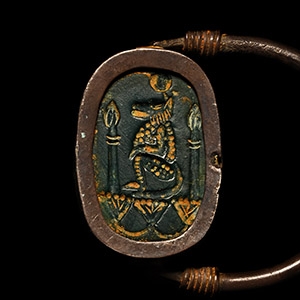
Egyptian Green Stone Scarab in Silver Swivel Ring
Late-Ptolemaic Period, 664-30 B.C.Sold for (Inc. bp): £1,690
With round-section hoop, green stone scarab in swivel mount, the underside with incused image of a seated baboon flanked by torches(?), with sun disc above, and lotus flowers beneath. 7.59 grams, 29.99 mm overall, 23.51 x 18.24 mm internal diameter (approximate size British S, USA 9, Europe 20, Japan 19)
From the late S M collection, London, UK, 1969-1999. This lot has been cleared against the Art Loss Register database, and is accompanied by an illustrated lot declaration signed by the Head of the Antiquities Department, Dr Raffaele D'Amato.
