
Loading, please wait...
LOT 0028
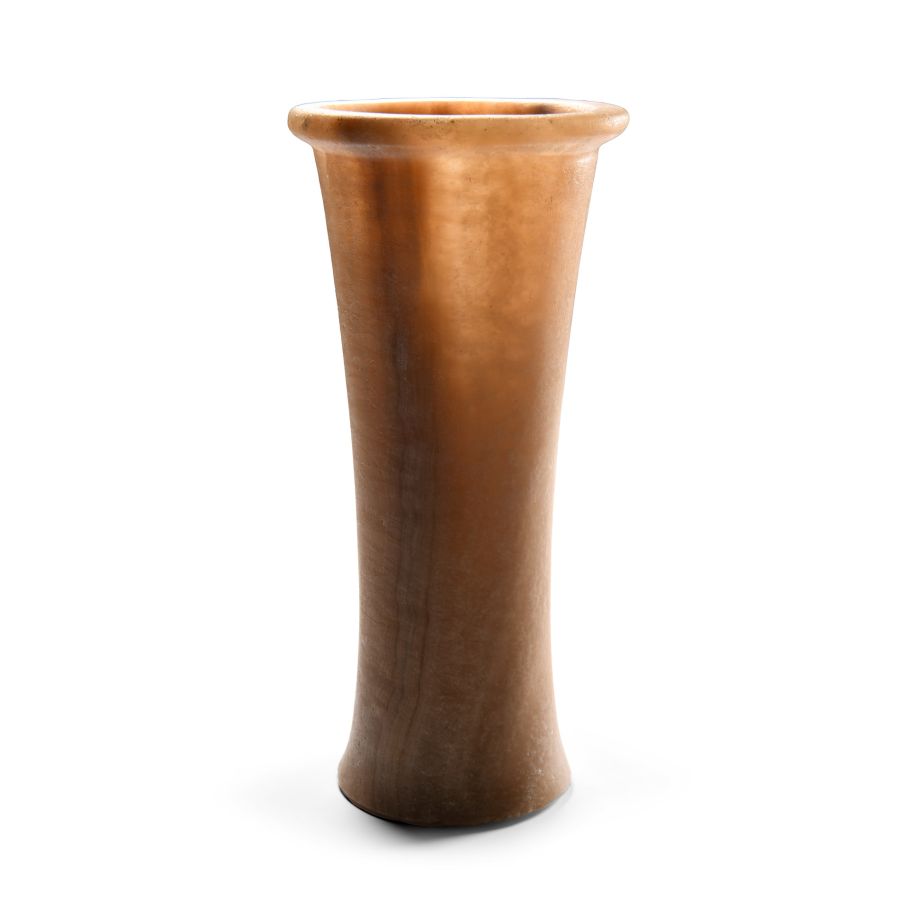
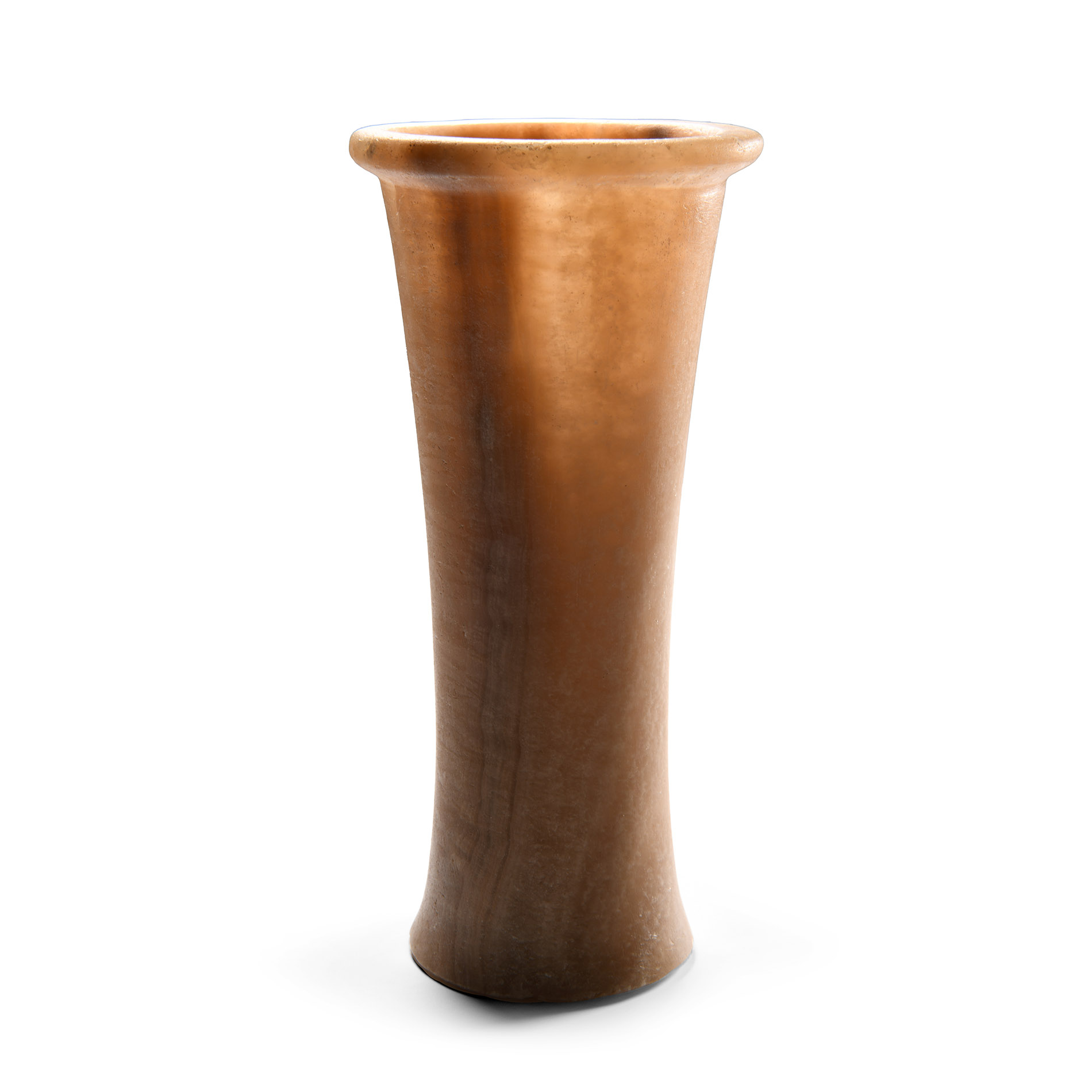
Egyptian Alabaster Cylindrical Vase
LATE PERIOD, 664-332 B.C.
8 1/4 in. (7.69 kg, 21 cm high).
Carved from cream-coloured Egyptian alabaster containing fine veining throughout; relatively thick walls flaring to form a wide mouth with flat-topped lip, then tapering towards the gently spreading, flat- bottomed base.
ProvenanceAcquired whilst living and working in Egypt 1920s.
Private collection of a surveyor for the Air Ministry, UK, thence by descent for three generations.
Private collection, UK, acquired 2011 from the UK art market.
This lot has been checked against the Interpol Database of stolen works of art and is accompanied by search certificate no.11947-209448.
Cf. El-Khouli, Egyptian Stone Vessels - Predynastic Period to Dynasty III, London, 1977, nos.469-472, no.723.
CONDITIONTimeLine Auctions follows a vetting process to ensure the authenticity and legality of all items, reinforcing our commitment to integrity and responsible trading. Each antiquity, antique, and coin lot undergoes thorough examination by a vetting committee of at least ten external specialists, professional trade association members, scientists, and archaeologists: Our Vetting Process
AUCTIONS:
TimeLine is a leading auction house specialising in antiquities, ancient art, collectables, natural history, coins, medals, and books. Our auctions offer museums, collectors, historians, and enthusiasts the opportunity to acquire unique and historically significant pieces.
LOT 0028
Egyptian Alabaster Cylindrical Vase
Estimate £2,000 - 3,000€2,320 - 3,480 (for guidance only)$2,700 - 4,050 (for guidance only)
-
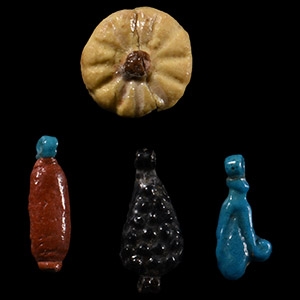
Egyptian Faience Amulet Collection
New Kingdom, 1550-1070 B.C.Sold for (Inc. bp): £182
Comprising: black bunch of grapes; red date; blue palmette frond; white daisy rosette. 1.51 grams, 12-16 mm
From the M.S. Ciappara collection, 1930s-1950s; and the flower amulet from a UK collection, 19202-1940s. Ex Den of Antiquity, Cambridgeshire, UK, and Ancient Art, London N14, UK. Private collection of Mr T.H., Norfolk, UK. Accompanied by two previous dealer's certificates of authenticity. -
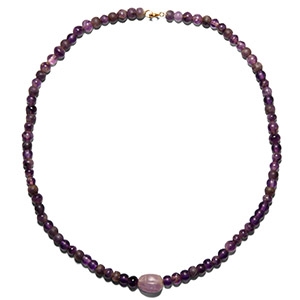
Egyptian Amethyst Bead Necklace with Scaraboid
Middle Kingdom, 2010-1961 B.C. and laterEstimate: £600 - 800 (+bp*)
Opening Bid: £325
Restrung using oblate amethyst beads, lavender-coloured scaraboid to the centre with incised anatomical detailing; modern clasp. 28.7 grams, 47 cm long
Acquired 1930-1940. From an early 20th century collection, London, UK. -
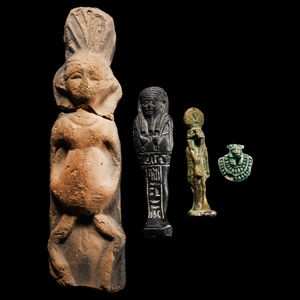
Egyptian Style Figurine Collection
20th century A.D. and earlierSold for (Inc. bp): £98
Comprising: a small composition shabti with T-shaped inscription giving the dedication: sḥḏ wsꞽr ḥm-nṯr pꜢ-di…..? ms n Ꜣst-ꞽr.s mꜢʾ ḫrw ‘The illuminated, the Osiris, God’s Servant, Pa-di.....(?), born to Isis-ires true of voice’; bronze Horus with sun disc and lappet wig; accompanied by two after the antique items: figure of Bes with feather headdress and a composition aegis plaque. 134 grams total, 1.8 - 13.1 cm
Acquired from a private UK collection in the late 1990s. Private collection of Mr T.H., Norfolk, UK.
