
Loading, please wait...

LOT 0457
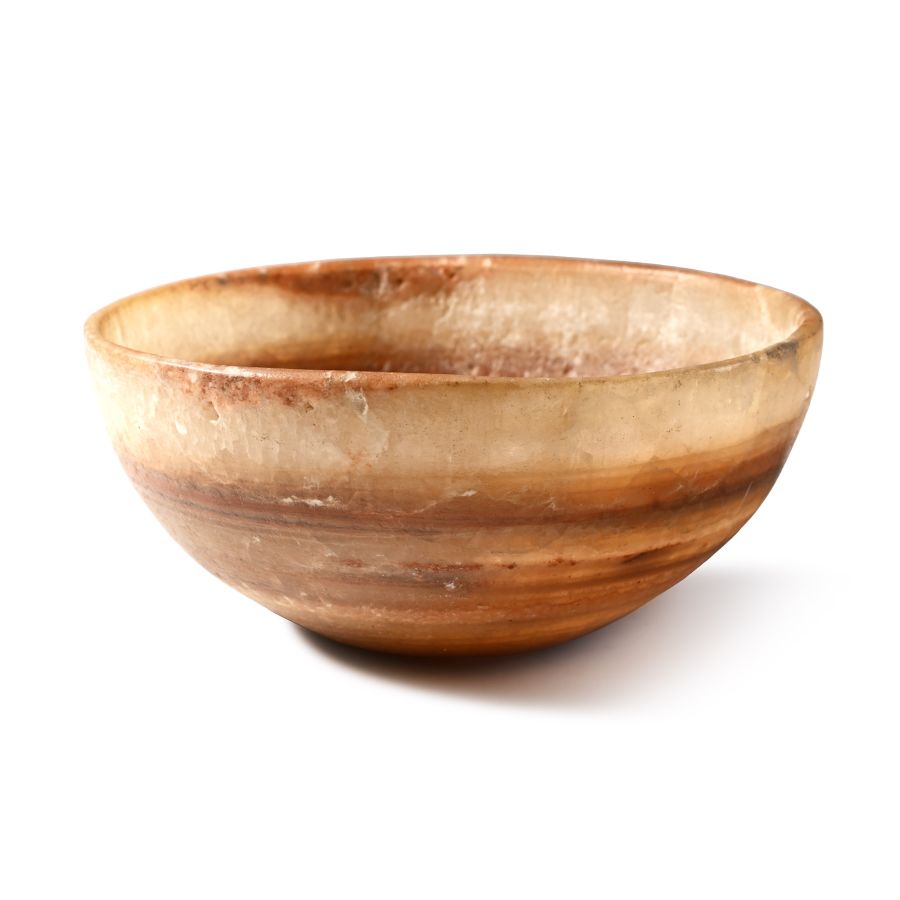
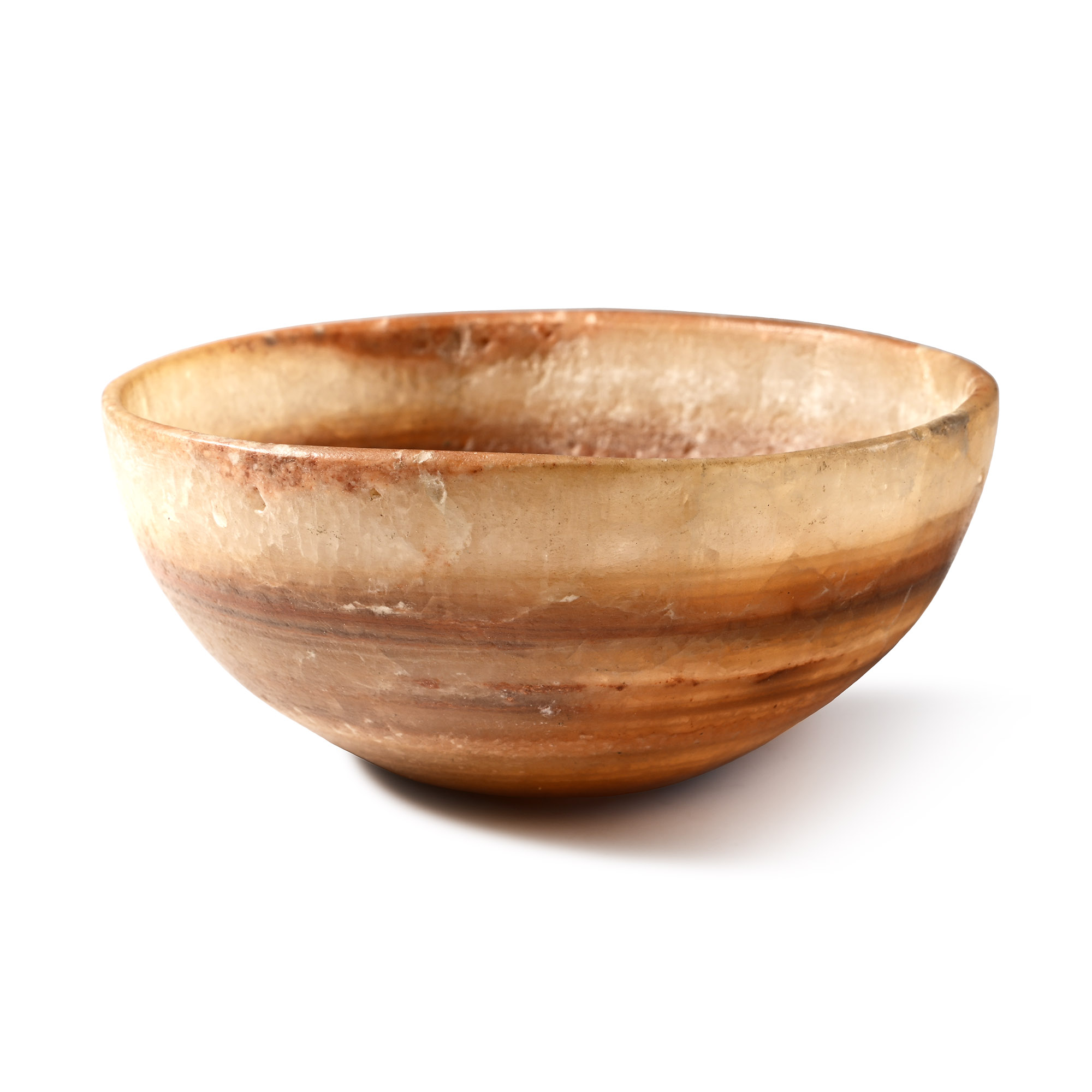
Egyptian Alabaster Bowl
1ST-6TH DYNASTY, CIRCA 3000-2181 B.C.
5 1/4 in. (275 grams, 13.2 cm wide).
Hemispherical type with rounded rim. [No Reserve]
ProvenanceFrom the private collection of Peter Clayton, FCILIP, Dip, Arch, FSA, FRNS, Hemel Hempstead, Hertfordshire, UK; formed since the late 1950s.
LiteratureCf. Aston, B.G., Ancient Egyptian Stone Vessels: Materials and Forms, SAGA 5, Heidelberg, 1994, p. 107, no. 42, for the type.
FootnotesHemispherical bowls were used for a long period and have been found in royal and non-royal contexts.
CONDITIONTimeLine Auctions follows a vetting process to ensure the authenticity and legality of all items, reinforcing our commitment to integrity and responsible trading. Each antiquity, antique, and coin lot undergoes thorough examination by a vetting committee of at least ten external specialists, professional trade association members, scientists, and archaeologists: Our Vetting Process
AUCTIONS:
TimeLine is a leading auction house specialising in antiquities, ancient art, collectables, natural history, coins, medals, and books. Our auctions offer museums, collectors, historians, and enthusiasts the opportunity to acquire unique and historically significant pieces.
LOT 0457
Egyptian Alabaster Bowl
Estimate £300 - 400€350 - 460 (for guidance only)$410 - 540 (for guidance only)
-
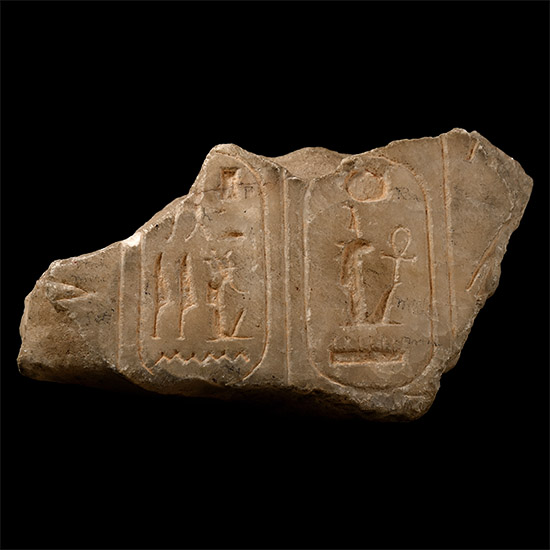
Egyptian Alabaster Fragment with Pharaoh Seti I's Cartouches
New Kingdom, 19th Dynasty, circa 1278 B.C.Estimate: £2,000 - 3,000 (+bp*)
Bids: 13 | Current Bid: £550
Thick section of alabaster with traces of four columns of hieroglyphs, including two partially preserved cartouches, one containing the birth name and epithet of Seti I, Seti mery-en-Ptah ('Seti, beloved of Ptah'), and the other his throne name, Men-Maat-Re ('Eternal is the justice of Re'). 526 grams, 13.8 cm
Received by gift from archaeologist Cyril Aldred, September 1964. From the private collection of Peter Clayton, FCILIP, Dip, Arch, FSA, FRNS, Hemel Hempstead, Hertfordshire, UK; formed since the late 1950s. Accompanied by an old handwritten information card by Peter Clayton, collection no.123. This lot has been checked against the Interpol Database of stolen works of art and is accompanied by search certificate no.13494-262900.
Peter Clayton's card suggests that the fragment may come from Seti's alabaster sarcophagus, the elaborately decorated lower half of which is in the John Soane Museum, London. The fragment may belong to the lid, which plunderers smashed in antiquity and which survives only in a relatively small number of fragments. -
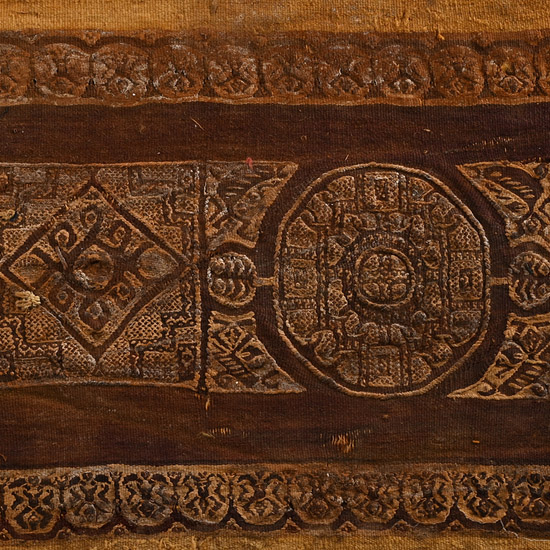
Large Egyptian Coptic Tunic Textile Fragment with Central Broad Clavus and Side Clavus
Circa 7th-8th century A.D.Estimate: £200 - 300 (+bp*)
Bids: 3 | Current Bid: £30
Comprising a large portion of tunic, with a complete section of the collar (maniakion) divided in successive decorative circular bands, ornamented with geometric patterns of floral elements, plants, interlaces; a central segmentum broadly decorated with geometric patterns, palmettes, triangles, and a round medallion with an impressive floral design; the segmentum is bordered by two purple stripes, flanked by other two bands of vegetal ornaments enclosed in medallions; the terminal part of the tunic still presents the fastening stripes of selvedges in rope forming the lowed border; S-twist yellow-orange and purple wool warp on linen; a long clavus in purple wool on linen decorated with vegetal interlaces, the borders meander decorated. 236 grams total including paper folder, 57.5 cm
Acquired 1970s-1996. Property of a North American collector. London collection, 2016.
The large fragment featuring geometric and vegetal decoration may date to the early period of the Islamic conquest, when tunic ornamentation began to take on an increasingly abstract and geometric character, often linked to the representation of plants and Nilotic flora. The rich decoration of the tunic and the use of purple suggest that it may have belonged to an aristocrat or a wealthy ecclesiastic of the Coptic-Greek population, or perhaps to a dignitary of the Umayyad Empire. -
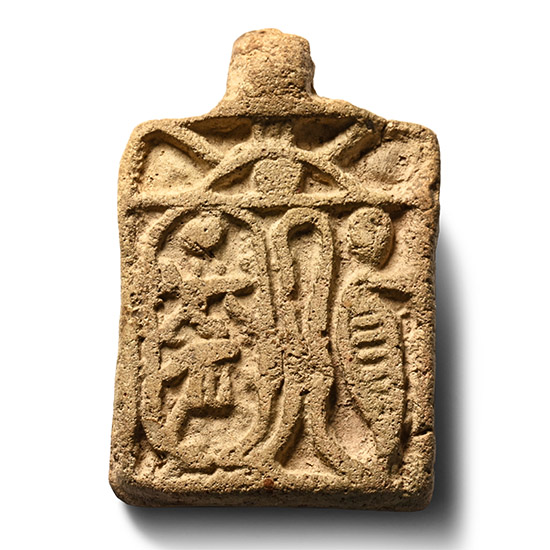
Egyptian Faience Amuletic Plaque with Cartouche of Pharaoh Thutmose III
New Kingdom, circa 1400-1292 B.C.Estimate: £200 - 300 (+bp*)
Bids: 1 | Current Bid: £5
Formed as a rectangular plaque with the cartouche of Thutmosis III and a uraeus; attachment loop to the top. 4.68 grams, 33 mm
London, UK, art market, 1980s. Private collection, London, UK.
