
Loading, please wait...
LOT 0411
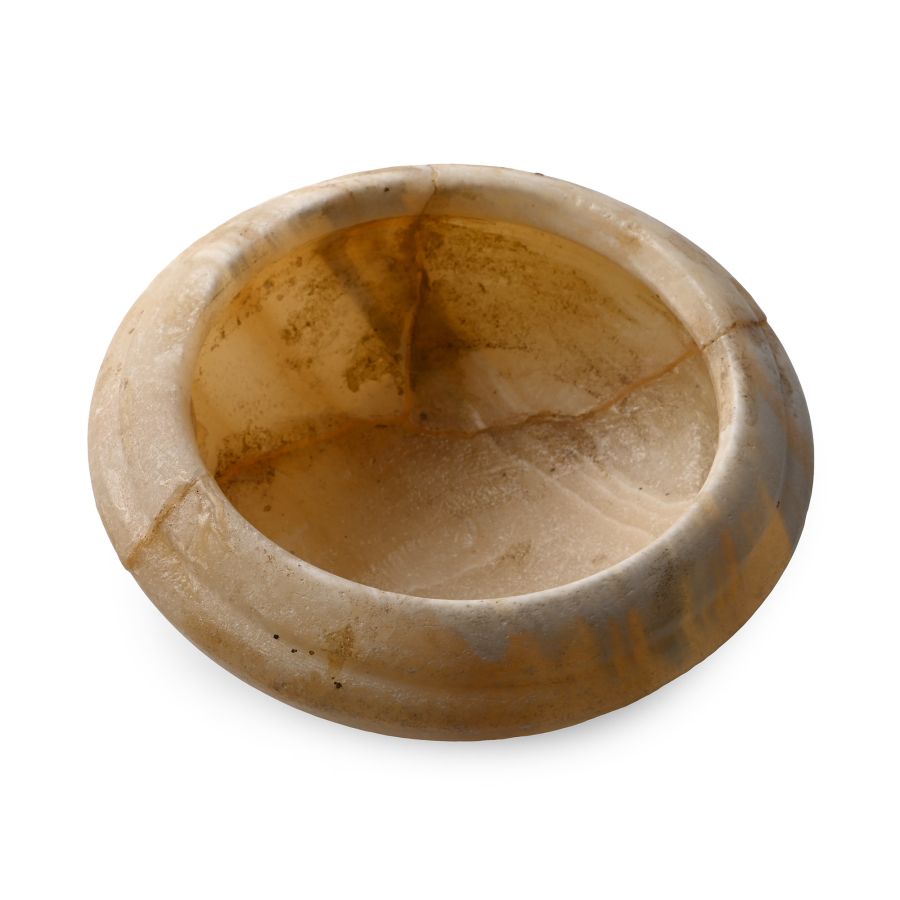
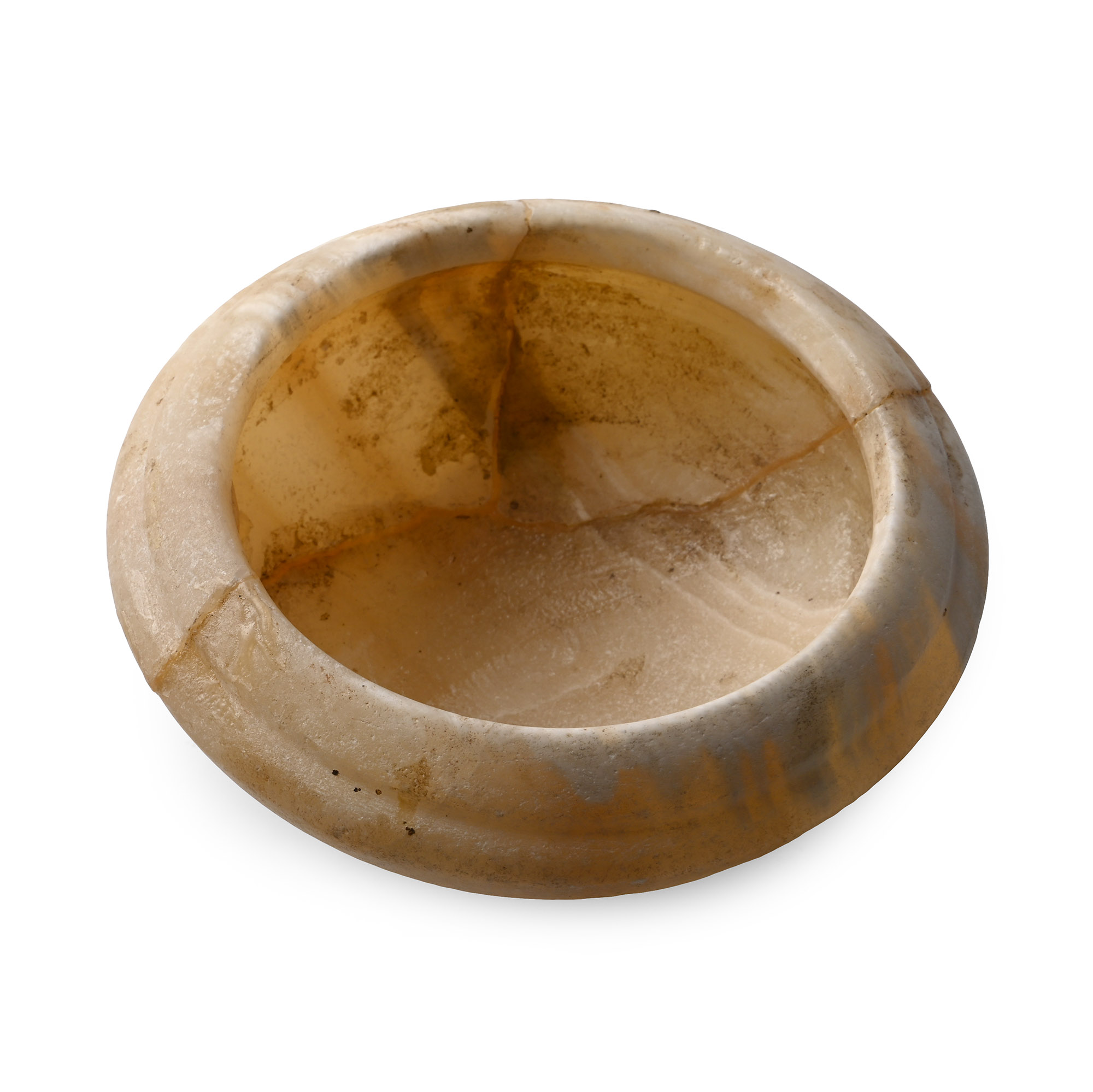
Egyptian Alabaster Bowl
2ND-1ST MILLENNIUM B.C.
4 1/2 in. (369 grams, 11 cm wide).
Of conical profile with flattened base, carinated shoulder and stepped rounded rim.
ProvenanceFrom a West Country, UK, collection, 1980-2020s.
LiteratureCf. Vandier d’Abbadie, J., Les objets de toilette égyptiens au Musée du Louvre, Paris, 1972, pp.108, 110, nos. 433-434, for two examples of this type in the Louvre; El-Khouli, A., Egyptian Stone Vessels: Predynastic Period to Dynasty III, vol.3, London, 1974, pl. 81, nos.2122-2125, for similar form.
CONDITIONTimeLine Auctions follows a vetting process to ensure the authenticity and legality of all items, reinforcing our commitment to integrity and responsible trading. Each antiquity, antique, and coin lot undergoes thorough examination by a vetting committee of at least ten external specialists, professional trade association members, scientists, and archaeologists: Our Vetting Process
AUCTIONS:
TimeLine is a leading auction house specialising in antiquities, ancient art, collectables, natural history, coins, medals, and books. Our auctions offer museums, collectors, historians, and enthusiasts the opportunity to acquire unique and historically significant pieces.
-
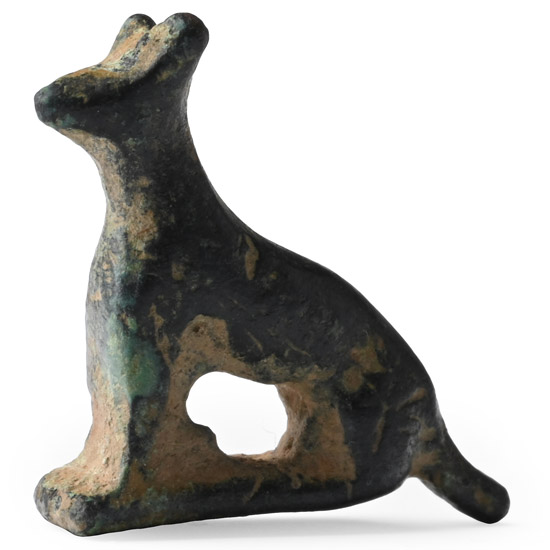
Egyptian Bronze Anubis Amulet
Ptolemaic-Roman Period, circa 332 B.C.-300 A.D.Sold for (Inc. bp): £182
Seated on a rectangular base with its tail hanging off the edge. 6.37 grams, 27.3 mm
From the private collection of a European gentleman (1942-2024), formed since the 1970s. -
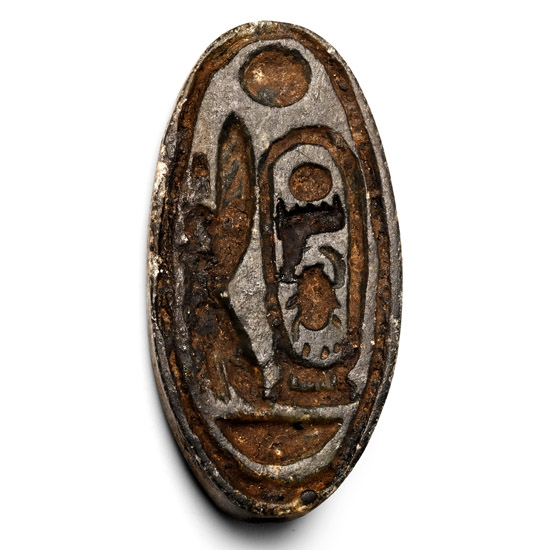
Egyptian Stone Scaraboid with Cartouche of Thutmose IV
New Kingdom, 18th Dynasty, circa 1415 B.C.Sold for (Inc. bp): £260
Keeled body pierced longitudinally, underside with cartouche for Thutmose IV (Men-kheperru-re) and other hieroglyphs. 5.79 grams, 34 mm
From the collection of a gentleman, acquired on the London art market in the 1990s. -
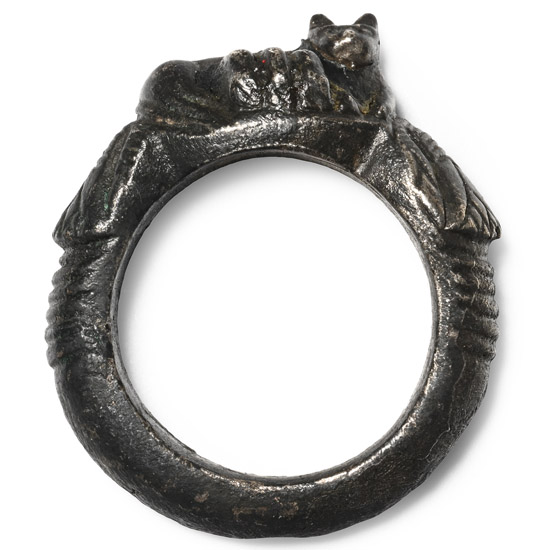
Romano-Egyptian Silver Ring with Cat and Kittens
Roman Period, 30 B.C.-323 AD.Sold for (Inc. bp): £468
D-section hoop with ribbed shoulder, papyrus-stem detailing and reclining cat with suckling kittens. 14.92 grams, 28.49 mm overall, 17.35 mm internal diameter (approximate size British M1/2, USA 6 1/4, Europe 13.09, Japan 12)
Ex Essex, UK, gentleman's collection, 1990s.
