
Loading, please wait...
LOT 0555
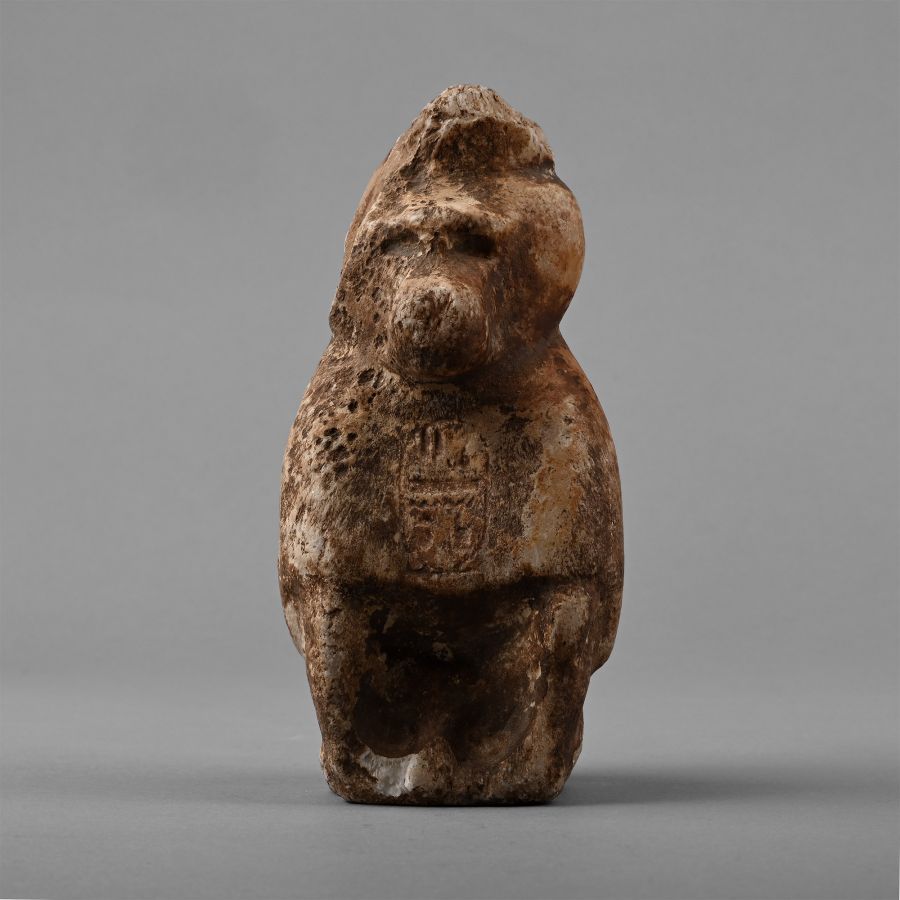
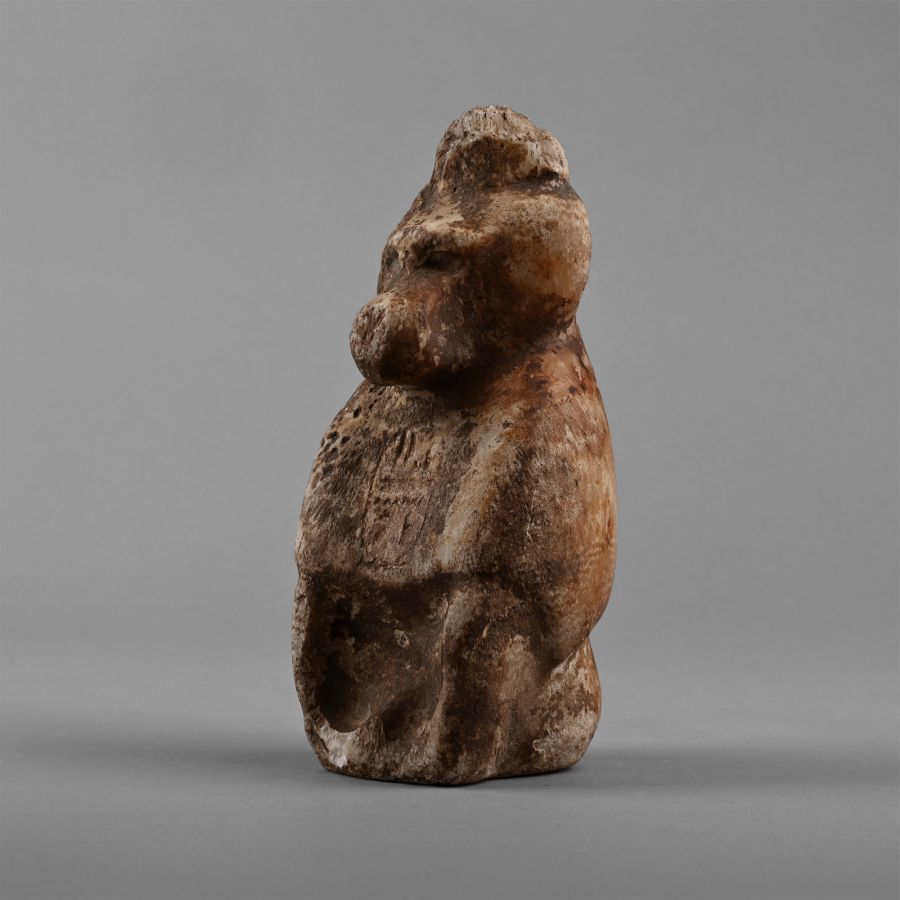
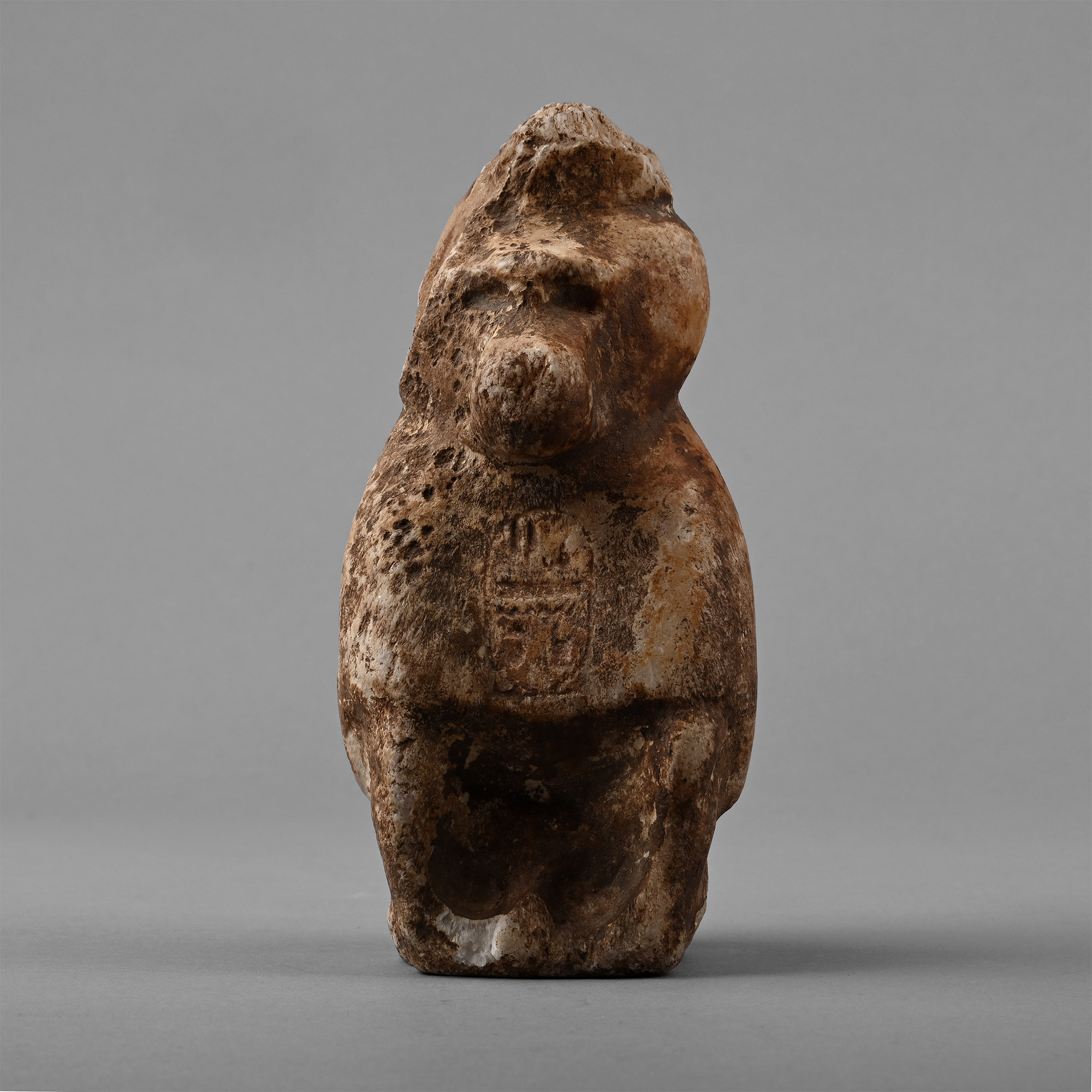
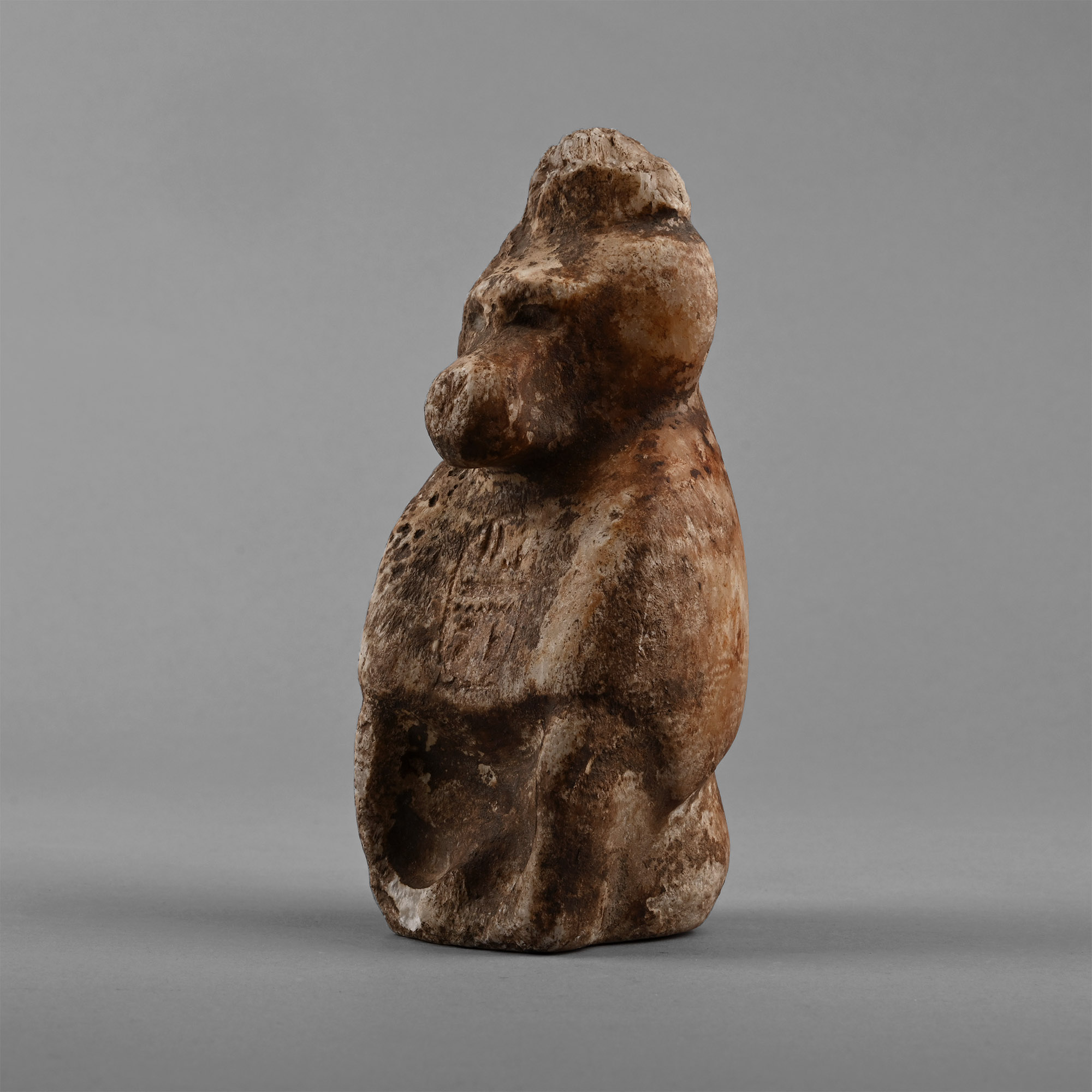
Egyptian Alabaster Baboon with Dedication to Queen Tiye
NEW KINGDOM, 1184-1152 B.C.
6 in. (1.06 kg, 15.4 cm).
Carved alabaster figure of a baboon, crouching with his forepaws resting on his knees, tail curled around from the rear; cartouche dedicated to Queen Tiye at the chest as a later addition.
ProvenanceFrom the private collection of Dr Athanasios Ghertsos, Zurich, by at least 1970.
Private collection of Hermann A. Schlögl (1932-2023), Basel.
Accompanied by a copy of an Art Loss Register certificate, no.S00261724.
This lot has been checked against the Interpol Database of stolen works of art and is accompanied by search certificate no.13073-248325.
Exhibited: Das Tier in der Antike, Archäologischen Institut der Universität Zürich, 21 September-17 November 1974, no. 31.
Published: Kaplony, P., Denkmäler der Prinzessin Nefrure und der Königin Timienese in der Sammlung A. Ghertsos, Revue d’Égyptologie, 22 (1970), p.100; Bloesch, H., Das Tier in der Antike, Archäologischen Institut der Universität Zürich, 21 September-17 November 1974, exhibition catalogue, no.31, p.10, pl.7; Schlögl, H. A. and Buxtorf, R. Kunst und Handwerk aus Ägyptens Goldener Zeit, Wiesbaden, 2018, pp.37-38.
Cf. Pio, H., The significance of the Baboon motif in the funerary art of the New Kingdom, Stellenboch, 2018.
FootnotesIn ancient Egypt, baboons were sacred, representing wisdom, the moon, and the underworld, linked to gods like Thoth and Babi, often depicted greeting the sun or guarding tombs, and were imported, mummified as offerings, and used as powerful religious symbols despite their often harsh captive conditions. The aforementioned Tiye is the wife of Sethnakht, the founder of the 20th Dynasty, and not to be confused with the wife of Amenhotep III. All monuments bearing her name originate from Abydos, where her son Ramesses III built a temple for his parents.
CONDITIONTimeLine Auctions follows a vetting process to ensure the authenticity and legality of all items, reinforcing our commitment to integrity and responsible trading. Each antiquity, antique, and coin lot undergoes thorough examination by a vetting committee of at least ten external specialists, professional trade association members, scientists, and archaeologists: Our Vetting Process
AUCTIONS:
TimeLine is a leading auction house specialising in antiquities, ancient art, collectables, natural history, coins, medals, and books. Our auctions offer museums, collectors, historians, and enthusiasts the opportunity to acquire unique and historically significant pieces.
LOT 0555
Egyptian Alabaster Baboon with Dedication to Queen Tiye
Sold for (Inc. bp): £3,120
-
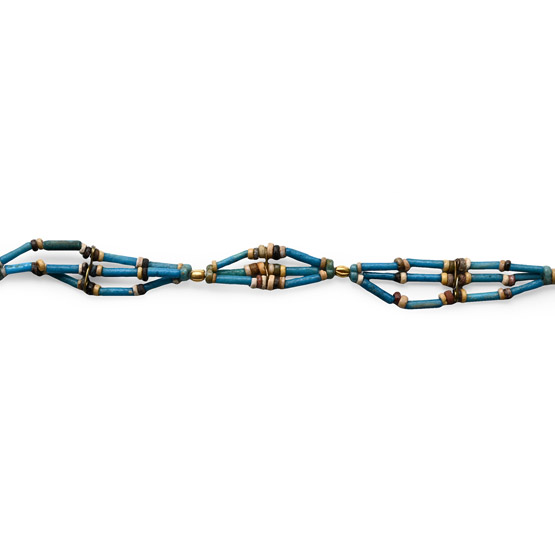
Egyptian Faience and Gold Bead Bracelet
Late Period, 664-332 B.C.Sold for (Inc. bp): £111
A designer restrung three-strand bracelet composed of gold and composition beads coloured shades of blue, cream and brown; modern silver-coloured clasp; accompanied with a note reading 'Egyptian, Faience New Kingdom Beaded Bracelet, C. 1570-30 BC- New Kingdom to Ptolemaic Period. beautiful, restrung, elegant Egyptian beaded bracelet consisting of a selection of turquoise coloured, faience tubular beads & polychromatic disc-shaped beads, in a style inspired by the earliest bracelets known (from about 3000 BC) which were found in the tomb of King Djer.' 3.89 grams, 19 cm
Property of a Cambridgeshire, UK, gentleman. Restrung from various accumulations of Egyptian beads from the last 30 years. -
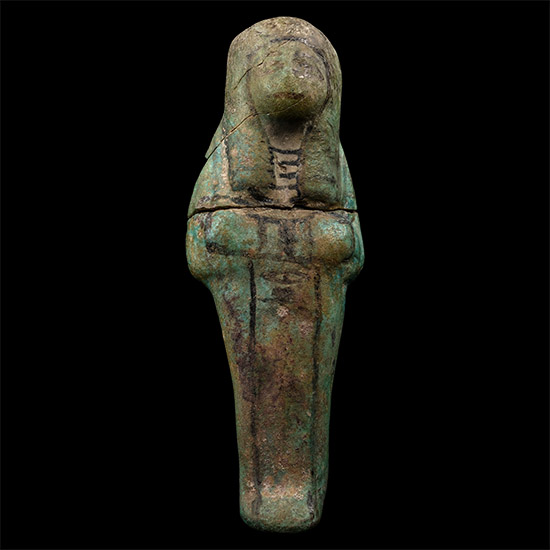
Egyptian Turquoise Blue Faience Shabti with Hieroglyphic Inscription
New Kingdom, 19th-20th Dynasty, 1292-1069 B.C.Sold for (Inc. bp): £338
Mummiform shabti wearing a tripartite wig, with arms crossed and holding a hoe in each hand, and cords for a water pot hanging from the back on each shoulder; a seed bag suspended below the wig; the outline of the eyes, eyebrows, mouth, hoes, water pots, and seed bag painted black; a central column of hieroglyphs on the front, with the opening preserved reading "The Osiris..."; repaired. 98 grams, 13.2 cm
From a UK private collection formed in the 1970s. Ex Ancient Relics. Ex D.S. collection, West Sussex, 1990s-2000s. Accompanied by an illustrated catalogue sheet and a previous catalogue information slip. -
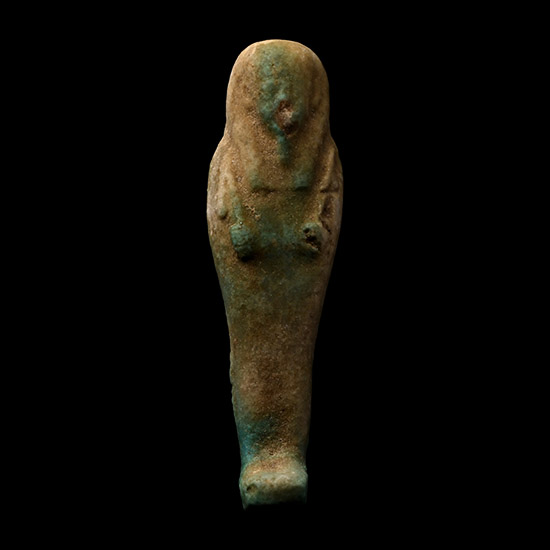
Egyptian Blue and Ochre Faience Shabti
Late Period, 4th century B.C.Sold for (Inc. bp): £72
Plano-convex in section with mould-formed facial detailing, crossed arms and agricultural tools. 12.9 grams, 67 mm
Ex private collection, London, UK, 1970s-1990s.
