
Loading, please wait...
LOT 0447
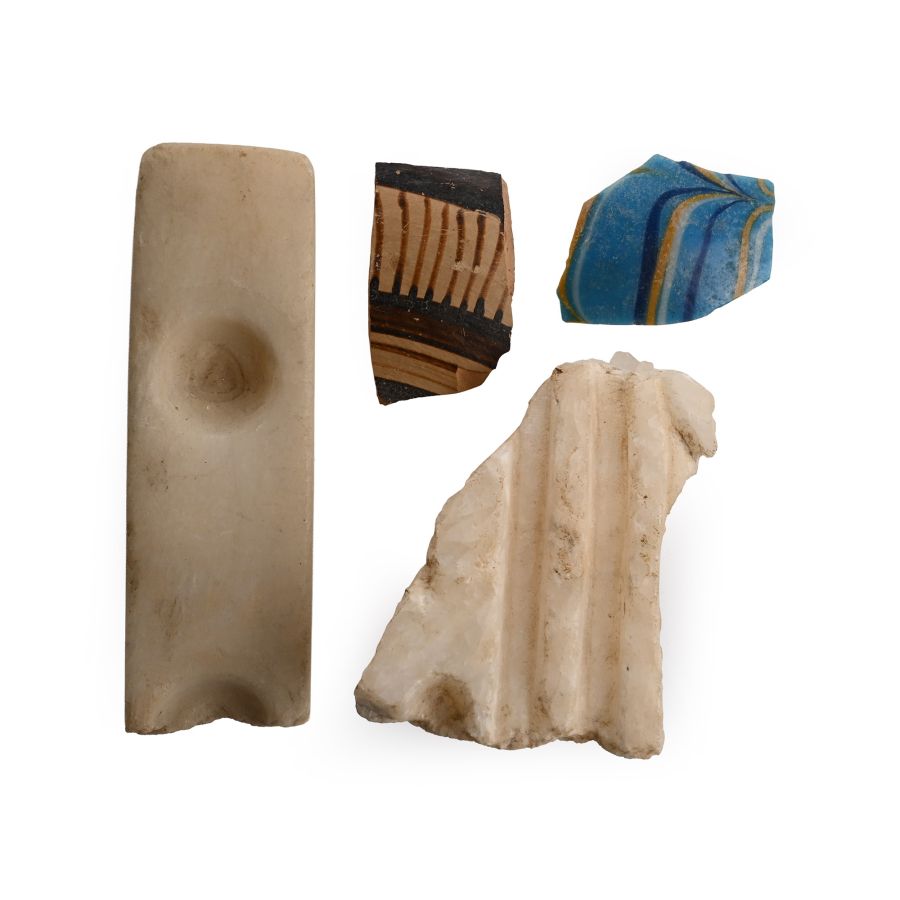
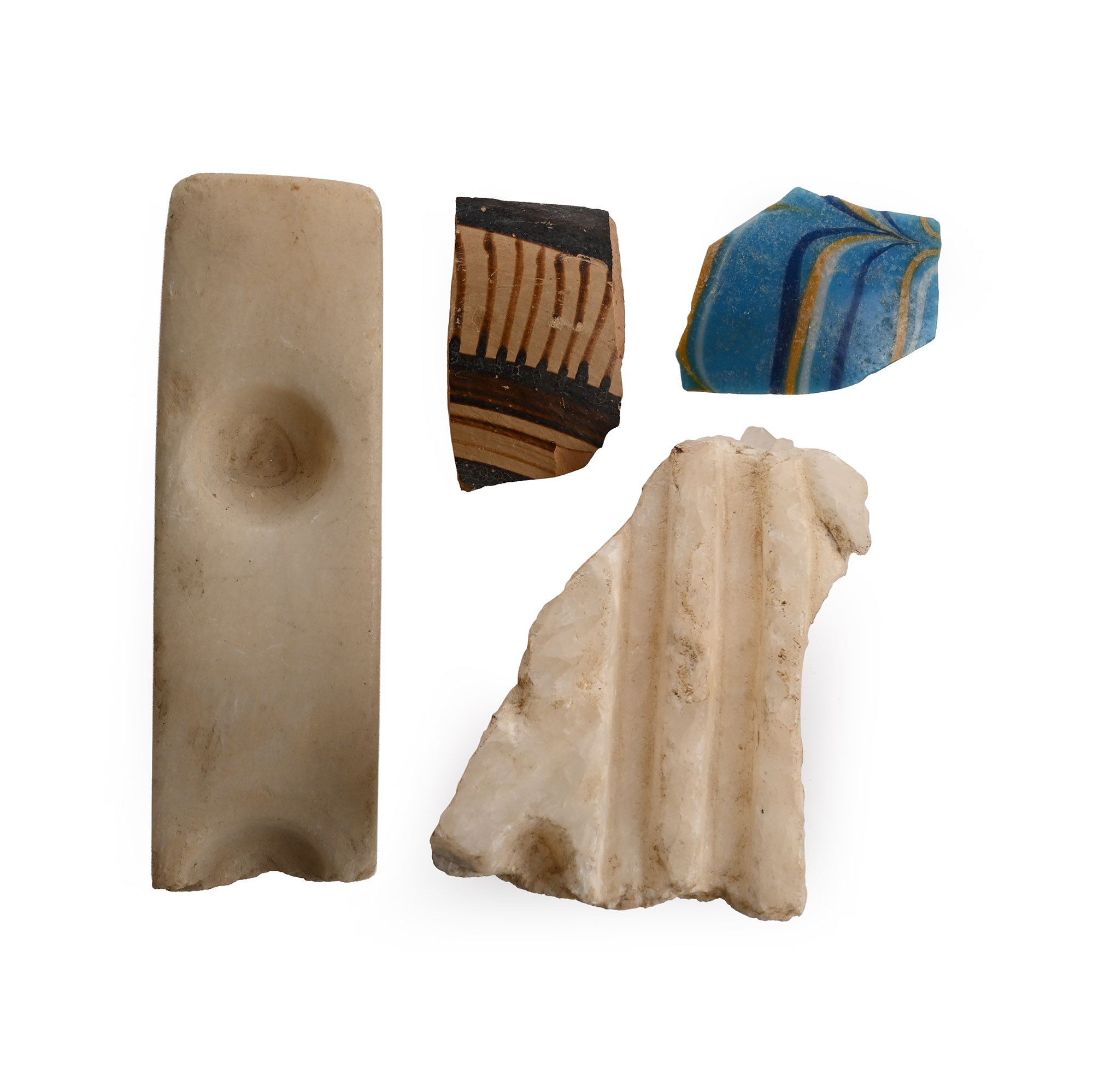
Egyptian Alabaster and Ceramic Group
NEW KINGDOM, 18TH DYNASTY, AMARNA PERIOD, 1353-1336 B.C.
1 1/8 - 3 in. (94 grams total, 29-78 mm).
Comprising: an alabaster fragment with two deeply incised lines and part of a hieroglyph; a portion of a narrow rectangular inkwell with two feet on the underside; a fragment of an opaque blue glass vessel with dark blue, yellow and white decoration; and a fragment of a decorated Mycenaean vessel. [No Reserve]
ProvenanceFrom the private collection of Peter Clayton, FCILIP, Dip, Arch, FSA, FRNS, Hemel Hempstead, Hertfordshire, UK; formed since the late 1950s.
CONDITIONTimeLine Auctions follows a vetting process to ensure the authenticity and legality of all items, reinforcing our commitment to integrity and responsible trading. Each antiquity, antique, and coin lot undergoes thorough examination by a vetting committee of at least ten external specialists, professional trade association members, scientists, and archaeologists: Our Vetting Process
AUCTIONS:
TimeLine is a leading auction house specialising in antiquities, ancient art, collectables, natural history, coins, medals, and books. Our auctions offer museums, collectors, historians, and enthusiasts the opportunity to acquire unique and historically significant pieces.
LOT 0447
Egyptian Alabaster and Ceramic Group
Estimate £60 - 80€70 - 93 (for guidance only)$81 - 108 (for guidance only)
Opening Bid
£5 (EUR 6; USD 7) +BP*
-
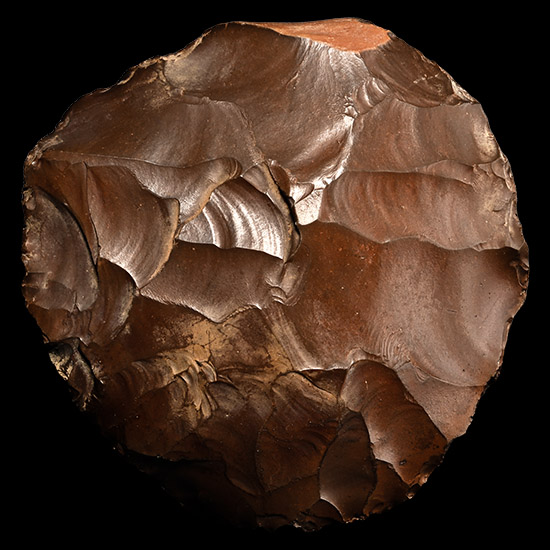
Egyptian Stone Age Knapped Ovate Hand Axe from Thebes
Lower Palaeolithic Period, circa 40,000-35,000 B.P.Estimate: £200 - 300 (+bp*)
Opening Bid: £5
Biconvex in profile with broad cutting edge; marked in ink 'W Thebes 1912' and old paper label 'A.D Passmore (ex Sotheby) P.A. Clayton Colls'. 325 grams, 95 mm
Found in the desert west of Thebes, Egypt, 1912. Ex A.D. Passmore collection. Acquired from Sotheby's, 16 June 1959 (part), £4.10. From the private collection of Peter Clayton, FCILIP, Dip, Arch, FSA, FRNS, Hemel Hempstead, Hertfordshire, UK; formed since the late 1950s. Accompanied by a copy of an old handwritten identification card written by Peter Clayton. -
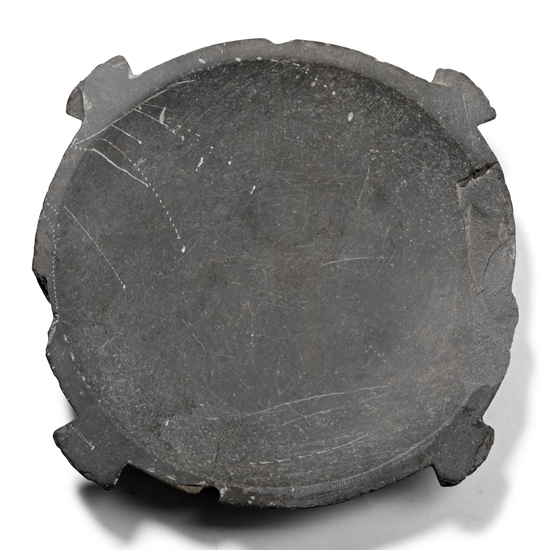
Egyptian Schist Cosmetic Mortar
Late Period, 25th-26th Dynasty, 754-525 B.C.Estimate: £600 - 800 (‡+bp*)
Opening Bid: £300
Discoid palette with rounded underside and flat base, dished central field, flat rim with four radiating trapezoidal projections. 450 grams, 16.4 cm
Acquired in the mid 1980s-1990s. Private collection, Switzerland, thence by descent. Private collection, since the late 1990s. Accompanied by a copy of an Art Loss Register certificate no.S00038135. -
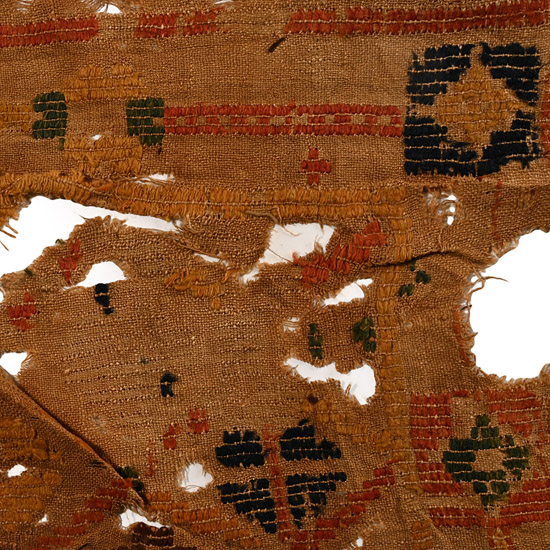
Egyptian Coptic Wall Tapestry Textile Fragment with Geometric Ornament
Circa 6th century A.D.Estimate: £60 - 80 (+bp*)
Opening Bid: £5
Fragment of tapestry or a cloak in light fabric, S-twist tapestry, embroidered with red, green, yellow, blue geometric ornaments in wool and linen. 37 grams total including paper folder, 37 cm
Acquired 1970s-1996. Property of a North American collector. London collection, 2016.
Most of the linen or wool garments found by A. Gayet in the Antinoe necropolis were woven in a specific pattern, in a single piece, on a horizontal warp. Another relatively common pattern for linen garments consisted of assembling three pieces woven on a single warp and forming the upper part of the garment, with the collar and sleeves.
