
Loading, please wait...
LOT 0672
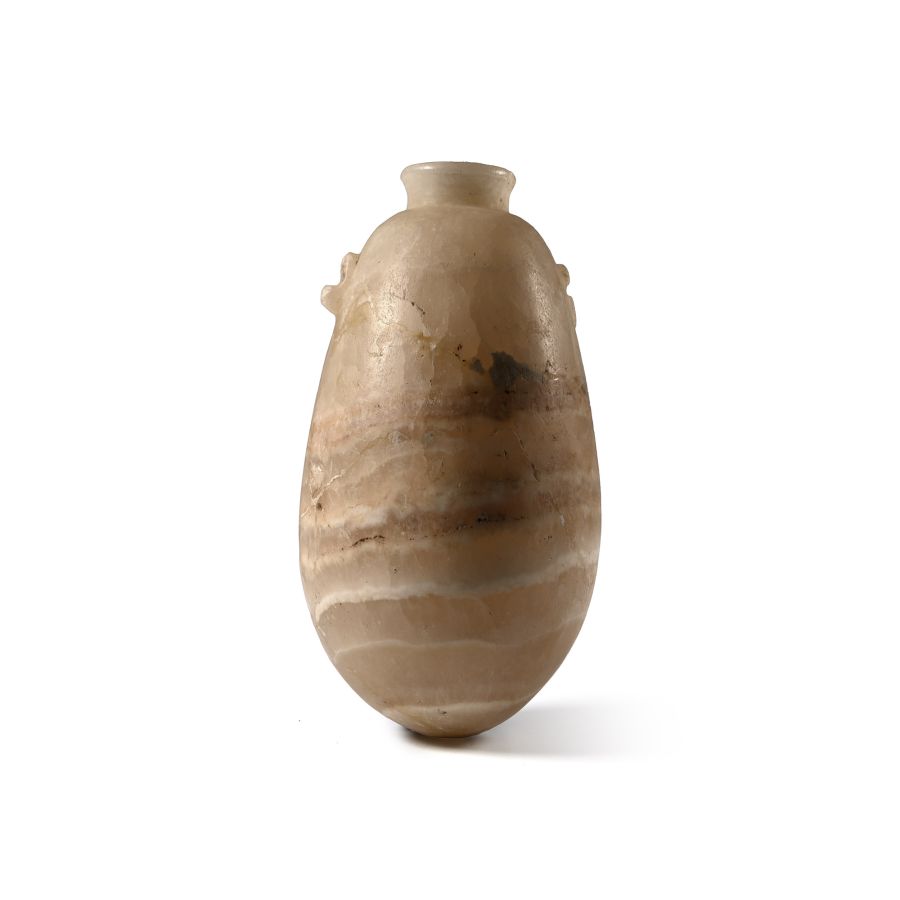
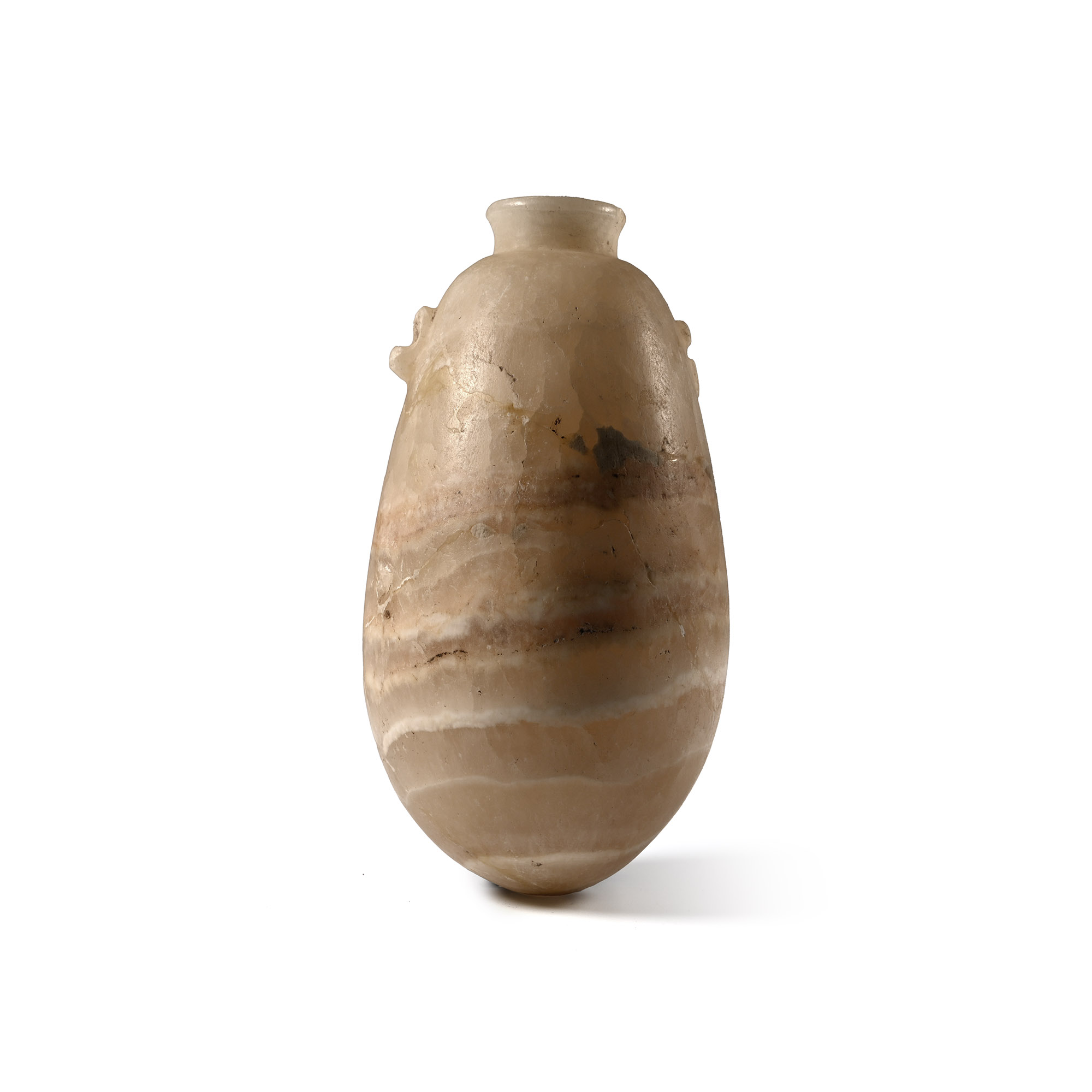
Egyptian Alabaster Alabastron
LATE PERIOD, 664-332 B.C.
5 1/2 in. (332 grams, 14 cm).
Ovoid jar with a rounded base, concave shoulders and flared neck; remains of lug handles, restored.
ProvenanceAcquired in the mid 1980s-1990s.
Private collection, Switzerland, thence by descent.
Private collection, since the late 1990s.
Cf. Aston, B.G., Ancient Egyptian Stone Vessels: Materials and Forms, SAGA 5, Heidelberg, 1994, p.89, fig.18, no.218, for a similar vessel.
CONDITIONTimeLine Auctions follows a vetting process to ensure the authenticity and legality of all items, reinforcing our commitment to integrity and responsible trading. Each antiquity, antique, and coin lot undergoes thorough examination by a vetting committee of at least ten external specialists, professional trade association members, scientists, and archaeologists: Our Vetting Process
AUCTIONS:
TimeLine is a leading auction house specialising in antiquities, ancient art, collectables, natural history, coins, medals, and books. Our auctions offer museums, collectors, historians, and enthusiasts the opportunity to acquire unique and historically significant pieces.
LOT 0672
Egyptian Alabaster Alabastron
Estimate £500 - 700€580 - 810 (for guidance only)$680 - 950 (for guidance only)
Opening Bid
£250 (EUR 290; USD 338) ‡+BP*
-
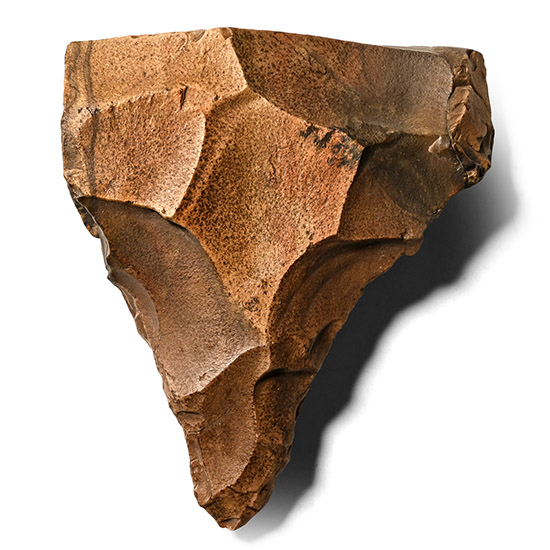
'Saqqara' Egyptian Stone Age Knapped Boring Tool
Neolithic Period, circa 6,000 B.P.Estimate: £50 - 70 (+bp*)
Opening Bid: £5
Triangular in plan with flat butt; inked 'Step Pyramid Sakkara' findspot. 90 grams, 83 mm
Found near the Step Pyramid, Saqqara, Egypt. Acquired from Sotheby's, 16 June 1959 (part), £4.10. From the private collection of Peter Clayton, FCILIP, Dip, Arch, FSA, FRNS, Hemel Hempstead, Hertfordshire, UK; formed since the late 1950s. Accompanied by a copy of an old handwritten identification card written by Peter Clayton. -
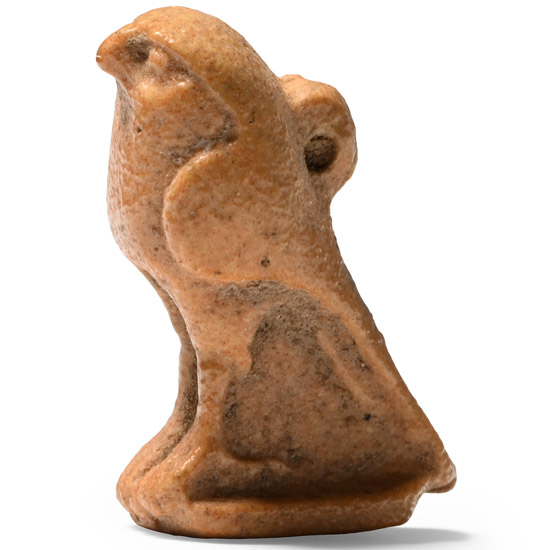
Egyptian Horus Amulet
Late Period, 664-332 B.C.Estimate: £150 - 200 (+bp*)
Opening Bid: £75
Perching Horus falcon with talons gripping the front edge of the integral plinth; detailed wings and head and a suspension loop on the back. 1.24 grams, 19 mm
Ex London gentleman's collection, by descent 1980s.
Horus is one of the most significant and widely worshipped gods in ancient Egyptian mythology. His importance spans many aspects of Egyptian religion, including serving as a symbol of the living king, offering protection, representing the sky, and symbolising the sun. -
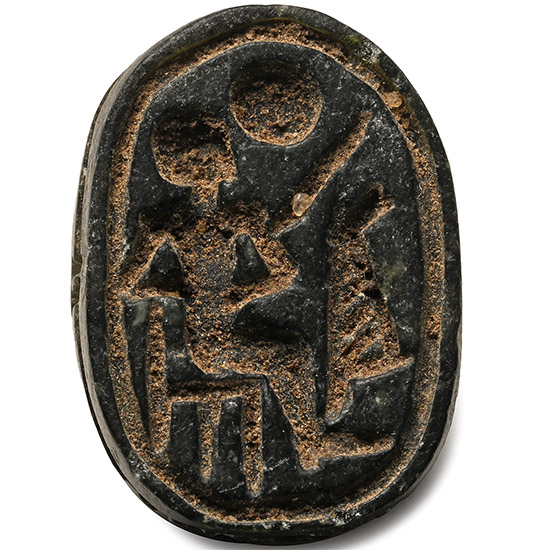
Egyptian Black Stone Scarab with Seated Figure
Late Period, 664-332 B.C.Estimate: £400 - 600 (+bp*)
Opening Bid: £200
Plano-convex in section, with the underside showing an enthroned figure holding a staff before a reed leaf, with a sun disc above. 2.8 grams, 17 mm
From a mid 20th century collection.
