
Loading, please wait...
LOT 1486
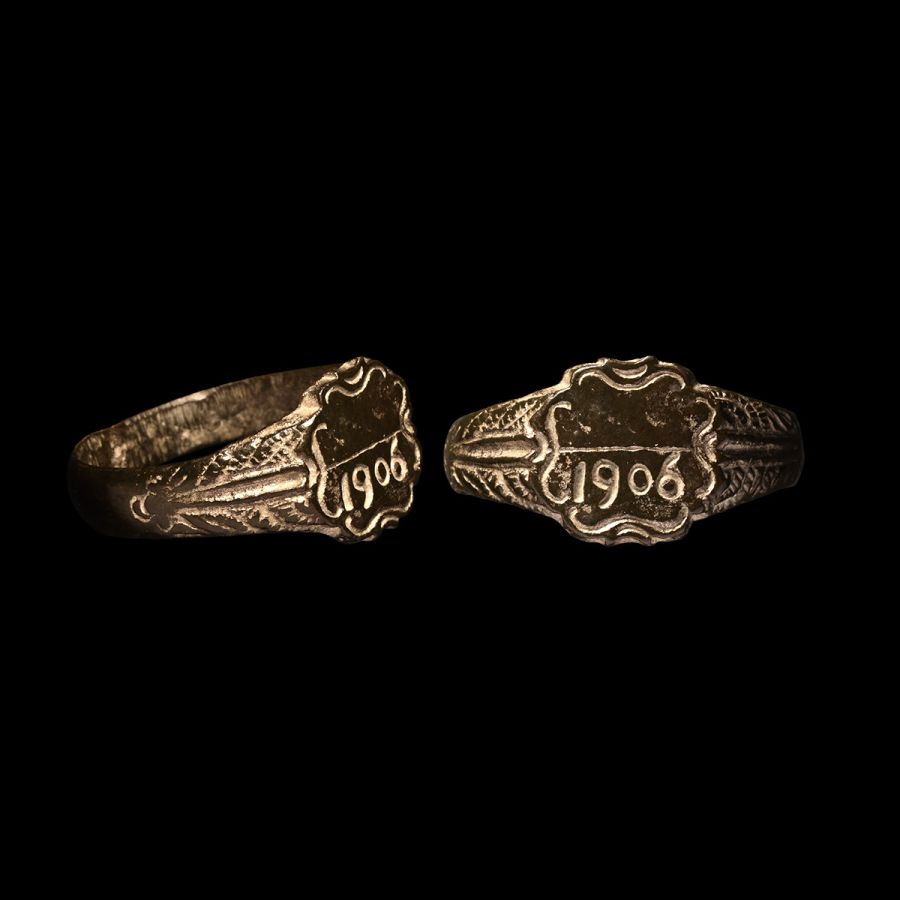
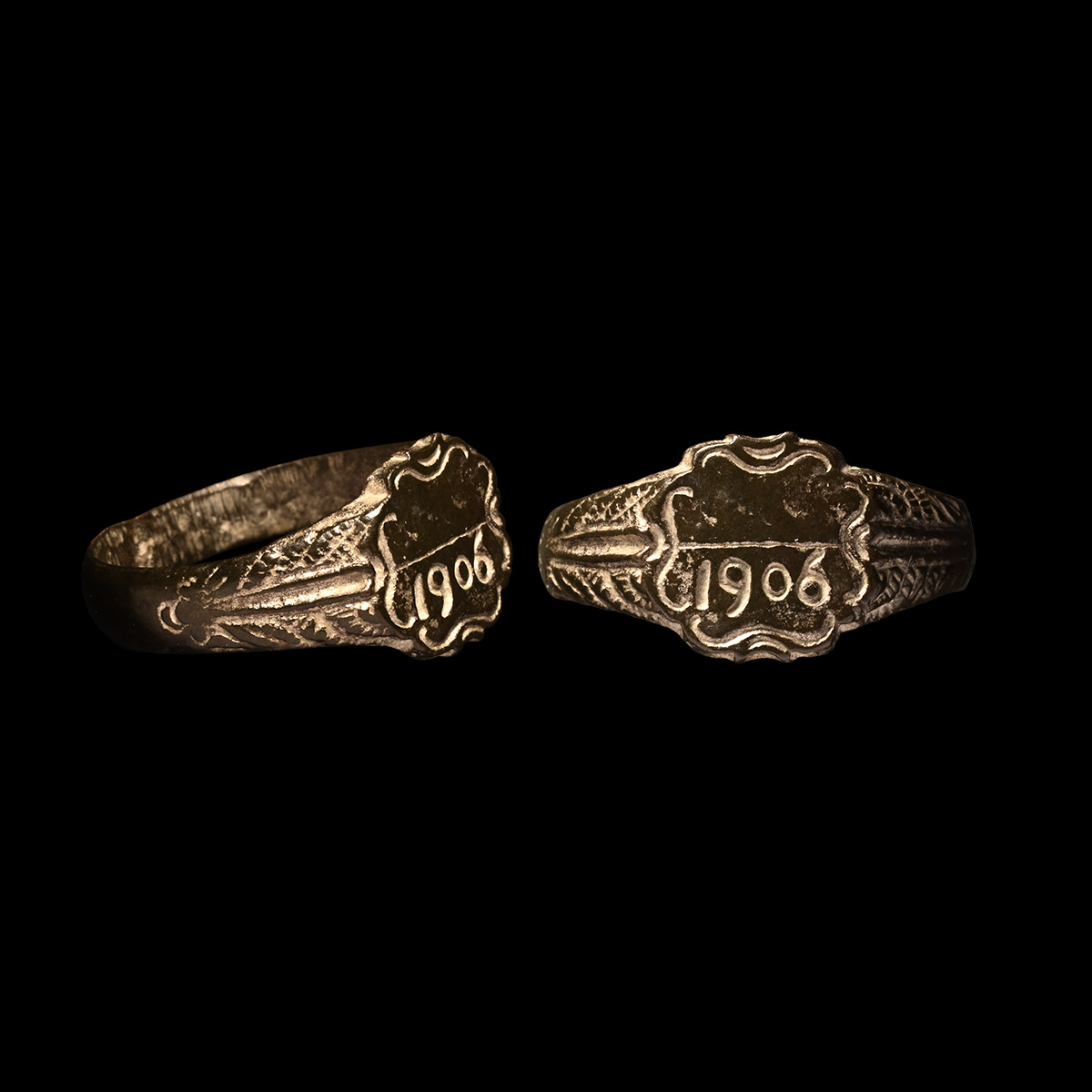
Edwardian Ring with Date
DATED 1906 A.D.
1 in. (4.81 grams, 25.08 mm overall, 21.95 mm internal diameter (approximate size British Z, USA 12 1/2, Europe 28.77, Japan 27)).
A bronze finger ring with foliate ornament to the shoulders, florid bezel with incised date '1906' below horizontal band. [No Reserve]
ProvenanceAcquired in the late 1990s-2000.
Property of an East London gentleman.
TimeLine Auctions follows a vetting process to ensure the authenticity and legality of all items, reinforcing our commitment to integrity and responsible trading. Each antiquity, antique, and coin lot undergoes thorough examination by a vetting committee of at least ten external specialists, professional trade association members, scientists, and archaeologists: Our Vetting Process
AUCTIONS:
TimeLine is a leading auction house specialising in antiquities, ancient art, collectables, natural history, coins, medals, and books. Our auctions offer museums, collectors, historians, and enthusiasts the opportunity to acquire unique and historically significant pieces.
-
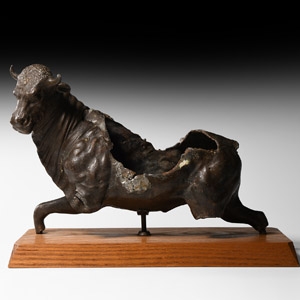
Bronze Fragmentary Bull
20th century A.D.Estimate: £700 - 900 (+bp*)
Opening Bid: £375
A dynamically poised bull, naturalistically modelled looking downwards and slightly to the left, with short curls to the top of the head; mounted on a custom-made display stand. 2.4 kg total, 30 cm wide including stand
From an important Paris gallery, France. with Adjug Auctions, Paris, France, 2 February 2020, lot 518. -
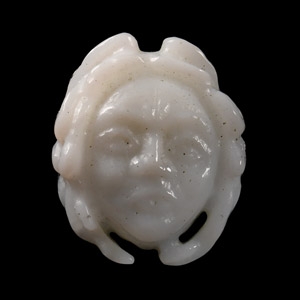
Post Medieval Glass Cameo Bust
19th century A.D.Estimate: £200 - 300 (+bp*)
Opening Bid: £100
A glass cameo with bust of Medusa; imitating agate. 3.72 grams, 18 mm
Very fine condition.
Acquired Munich, Germany, late 1990s. Property of an East London gentleman. -
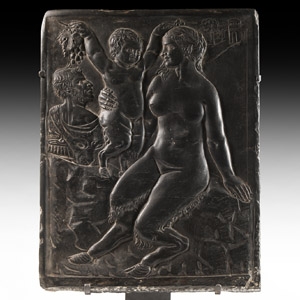
Grand Tour Relief with Satyrs
18th-19th century A.D.Estimate: £4,000 - 6,000 (+bp*)
Opening Bid: £2,000
A satyr Bacchus themed plaque featuring a nude woman and child with goat's legs and hooves, set in a formal landscape, the child holding bunches of grapes, a bearded male figure dressed in animal skins beside them; wax seal applied to the reverse; mounted on a custom-made display stand. 5.7 kg total, 37 cm high including stand
English private collection. This lot has been checked against the Interpol Database of stolen works of art and is accompanied by search certificate number no.11685-199804.
Possibly loosely based on C.M. Clodion's works.
