
Loading, please wait...
LOT 0908
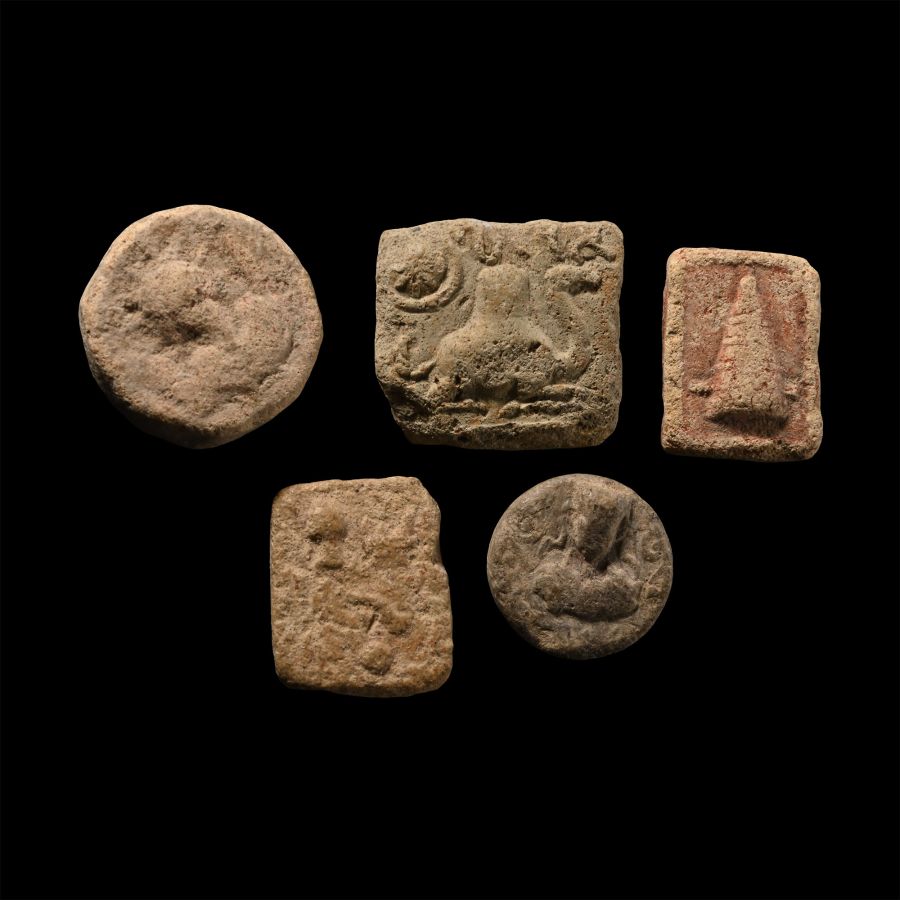
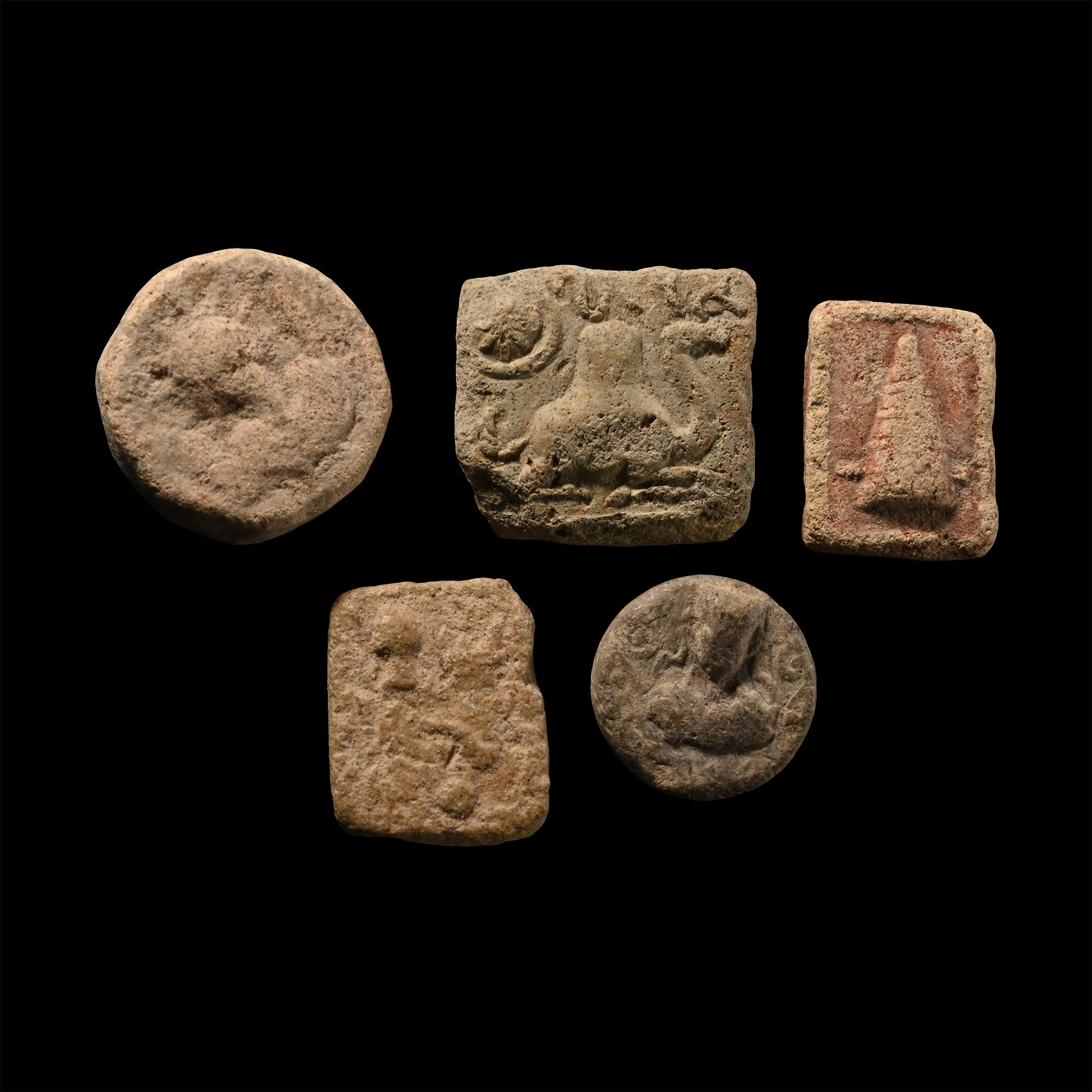
Eastern Roman Terracotta Tesserae and Tablet Collection
CIRCA 2ND-3RD CENTURY A.D.
1/2 - 3/4 in. (8.52 grams total, 13-18 mm).
Including facing bust, profile bust, kneeling camel and other types. [5, No Reserve]
ProvenanceFrom the private collection of a European gentleman (1942-2024), formed since the 1970s.
LiteratureCf. Rostovtzeff, M., ‘The Caravan-Gods of Palmyra’ in The Journal of Roman Studies, Vol. 22, Part 1: Papers Dedicated to Sir George Macdonald K.C.B., 1932, pp.107-116, Pls. XXVI-XXVIII, for similar tesserae.
CONDITIONTimeLine Auctions follows a vetting process to ensure the authenticity and legality of all items, reinforcing our commitment to integrity and responsible trading. Each antiquity, antique, and coin lot undergoes thorough examination by a vetting committee of at least ten external specialists, professional trade association members, scientists, and archaeologists: Our Vetting Process
AUCTIONS:
TimeLine is a leading auction house specialising in antiquities, ancient art, collectables, natural history, coins, medals, and books. Our auctions offer museums, collectors, historians, and enthusiasts the opportunity to acquire unique and historically significant pieces.
LOT 0908
Eastern Roman Terracotta Tesserae and Tablet Collection
Estimate £70 - 90€81 - 104 (for guidance only)$95 - 122 (for guidance only)
Opening Bid
£5 (EUR 6; USD 7) +BP*
-
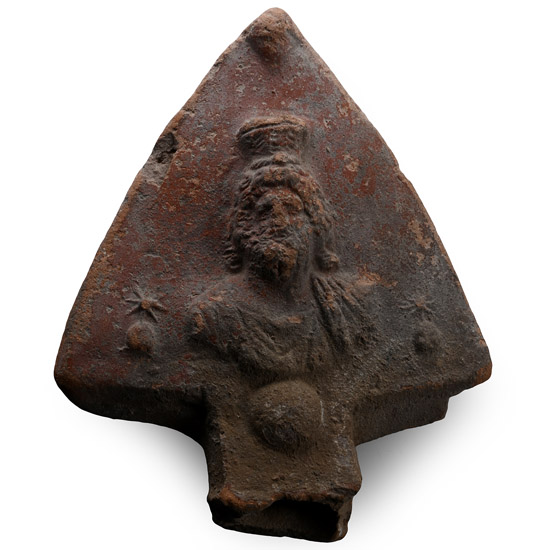
Roman Terracotta Lamp Handle with the Bust of the God Jupiter-Serapis
Circa 1st century A.D.Estimate: £40 - 60 (+bp*)
Opening Bid: £5
A large hollow-formed triangular handle from a lamp, with a low-relief bust of a bearded Jupiter-Serapis wearing a crown on a globe, a smaller globe with a star on each side. 152 grams, 11.8 cm
From the Puys-Aubert collection, March 1963, for 10 shillings. From the private collection of Peter Clayton, FCILIP, Dip, Arch, FSA, FRNS, Hemel Hempstead, Hertfordshire, UK; formed since the late 1950s. Accompanied by an old handwritten information card by Peter Clayton, collection no.100. -
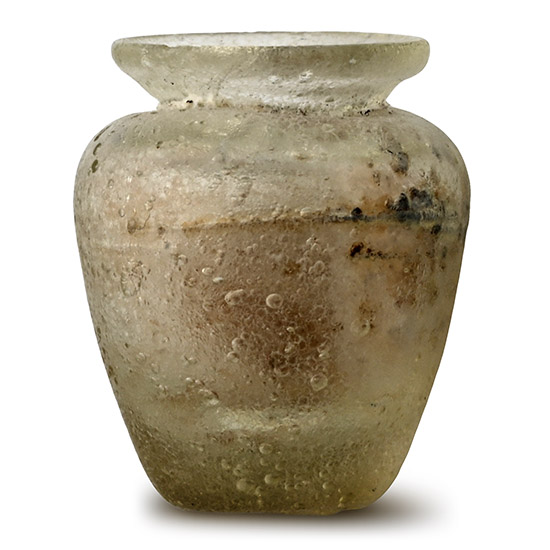
Roman Miniature Glass Cosmetic Jar
Circa 1st-2nd century A.D.Estimate: £80 - 100 (+bp*)
Opening Bid: £5
Piriform body with flattened base and expanding rim. 7.13 grams, 25 mm
London gentleman's collection, 1970-1990s, by descent. -
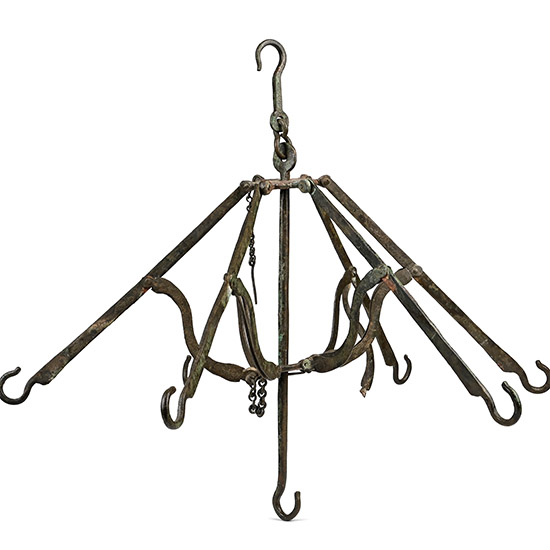
Roman Military Bronze Folding Campaign Chandelier
1st-2nd century A.D.Estimate: £4,000 - 6,000 (+bp*)
Opening Bid: £2,000
Consisting of six vertical supports with hook-shaped terminals, connected to a circular top plate via ring joints and to a circular bottom plate by paired double hooks, attached to the supports with rivets; the top circular plate linked to the bottom one by a sturdy element terminating in a hook at the lower end and a round loop at the top, where the main suspension hook for the chandelier is attached; a small chain link attached to the bottom circular plate. 1.6 kg, 54.2 cm wide
UK private collection assembled 1970s-1990s, and thence to the liquidated estate of the above. This lot has been checked against the Interpol Database of stolen works of art and is accompanied by search certificate no.13446-263437.
A chandelier like this (candelabrum, λυχνίον, λαμπτήρ, φανός) was designed for easy transport and was most probably created to be used in military activities. These field chandeliers featured platforms fitted with lamp supports, which branched out into several arms from which the lamps were hung. They were highly portable and collapsible, designed to be easily dismantled and reassembled as needed.
