
Loading, please wait...
LOT 1036
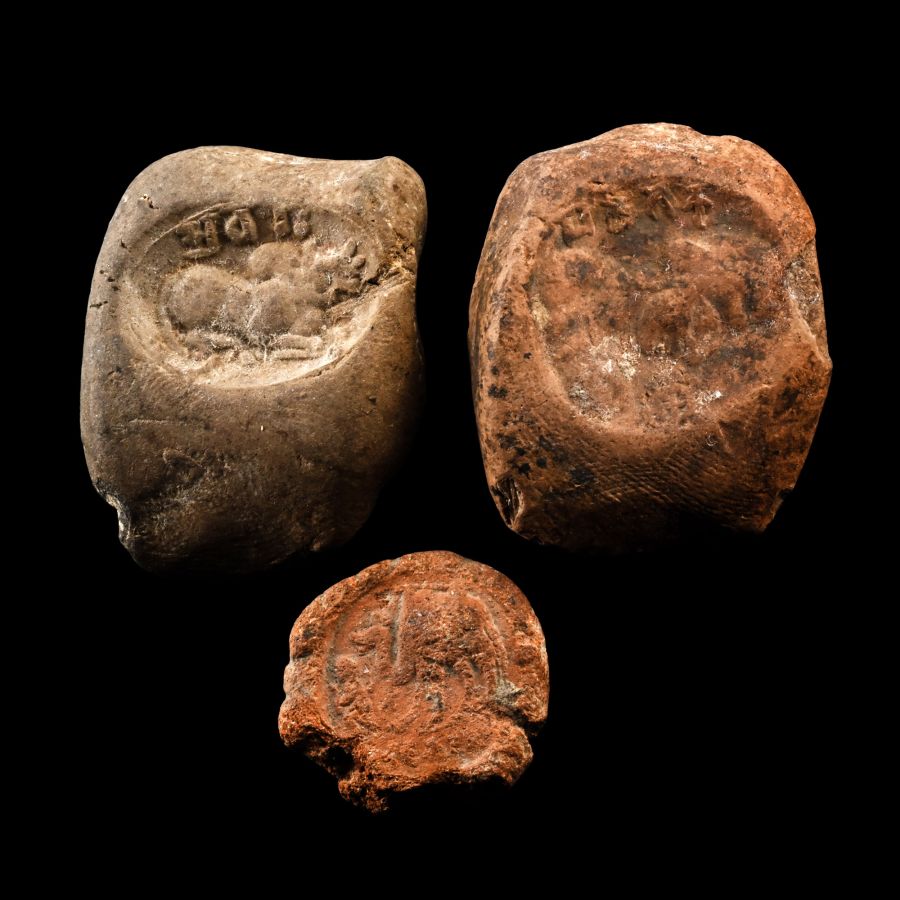
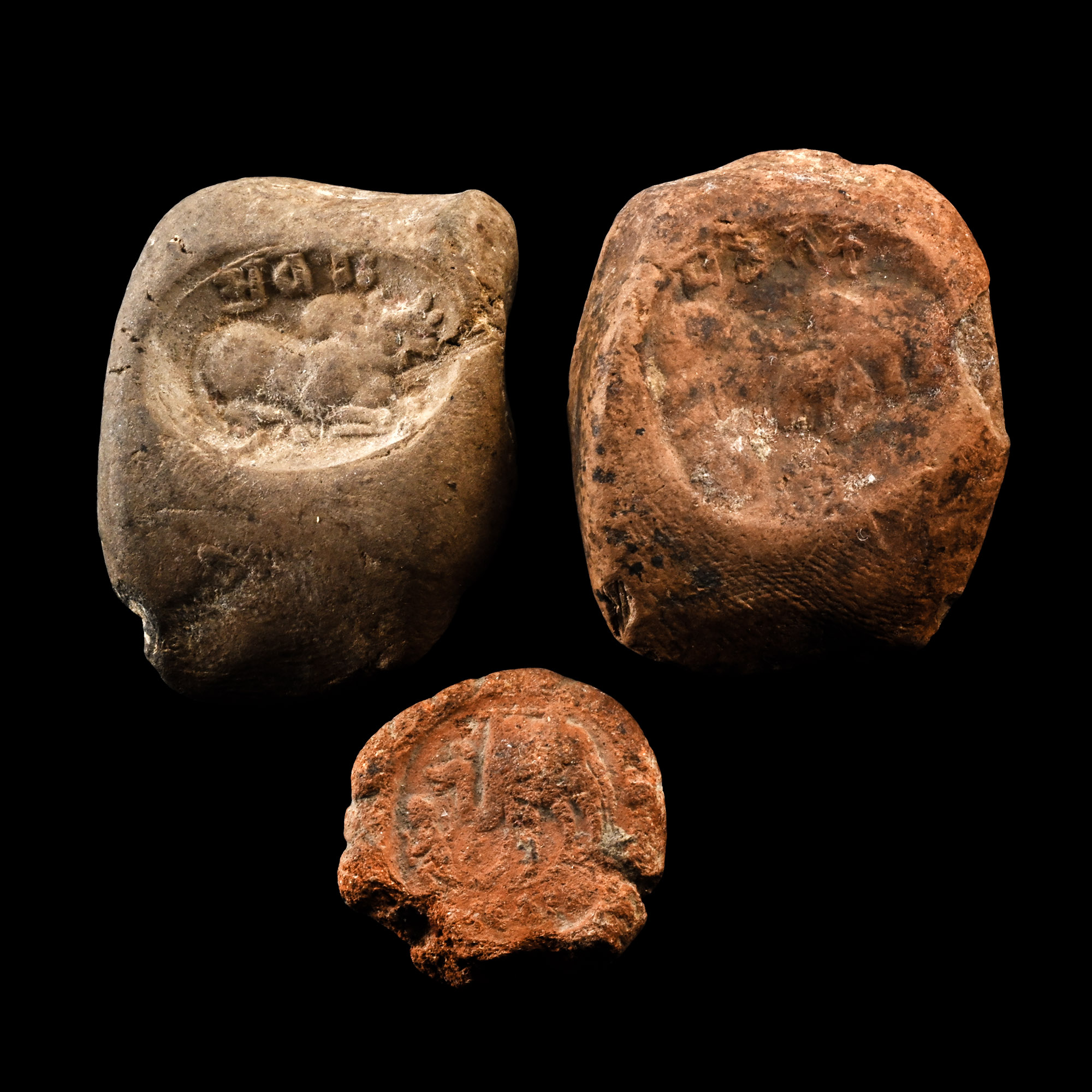
Eastern Roman Terracotta Tesserae and Bulla Group
CIRCA 2ND-3RD CENTURY A.D.
5/8 - 1 in. (13.1 grams total, 17-27 mm).
Comprising a zebu with folded legs and text above, profile bust with text behind the head and camel in profile with burden. [3, No Reserve]
ProvenanceFrom the private collection of a European gentleman (1942-2024), formed since the 1970s.
LiteratureCf. Rostovtzeff, M., ‘The Caravan-Gods of Palmyra’ in The Journal of Roman Studies, Vol. 22, Part 1: Papers Dedicated to Sir George Macdonald K.C.B., 1932, pp.107-116, Pls. XXVI-XXVIII, for similar tesserae.
CONDITIONTimeLine Auctions follows a vetting process to ensure the authenticity and legality of all items, reinforcing our commitment to integrity and responsible trading. Each antiquity, antique, and coin lot undergoes thorough examination by a vetting committee of at least ten external specialists, professional trade association members, scientists, and archaeologists: Our Vetting Process
AUCTIONS:
TimeLine is a leading auction house specialising in antiquities, ancient art, collectables, natural history, coins, medals, and books. Our auctions offer museums, collectors, historians, and enthusiasts the opportunity to acquire unique and historically significant pieces.
LOT 1036
Eastern Roman Terracotta Tesserae and Bulla Group
Estimate £50 - 70€58 - 81 (for guidance only)$68 - 95 (for guidance only)
Opening Bid
£5 (EUR 6; USD 7) +BP*
-
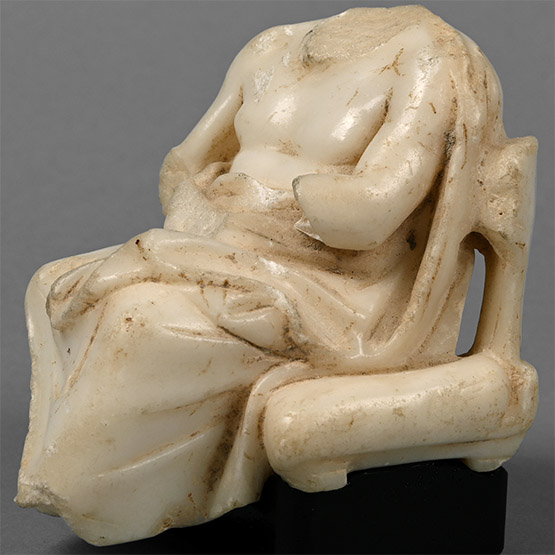
Roman Marble Figure of a Seated Philosopher
Roman Imperial, 1st century A.D.Estimate: £12,000 - 17,000 (‡+bp*)
Opening Bid: £6,500
Carved in the round as a male figure in a seated pose wearing a loosely draped pallium on the shoulders and lower body, legs crossed at the knees; openwork frame to the chair with deep undercuts; mounted on a custom-made stand. 563 grams total, 86 mm high including stand
Formerly in a private collection, London. European private collection, acquired in 2002. Accompanied by a copy of an Art Loss Register certificate, 8 June 2004. This lot has been checked against the Interpol Database of stolen works of art and is accompanied by search certificate no.13210-249309.
The statuette could represent Zeus or Chronos, based on similarities with two statues in the Vatican Museums and two statues in the Thebes Museum. The god is depicted seated, with his torso exposed, and his left hand, which normally holds the sceptre in statues of seated Zeus, is instead stretched out across his legs. -
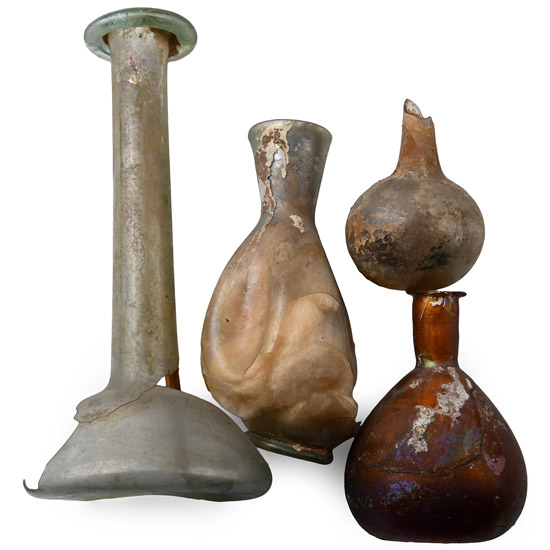
Roman Broken Glass Vessel Group
Circa 1st-4th century A.D.Estimate: £20 - 30 (+bp*)
Opening Bid: £5
Comprising: large fragment of a bell-shaped bottle with a tall neck, a large fragment of a bottle with a dimpled body, and two bulbous bottle fragments. 149 grams total, 5.1-16.2 cm
From the private collection of Peter Clayton, FCILIP, Dip, Arch, FSA, FRNS, Hemel Hempstead, Hertfordshire, UK; formed since the late 1950s. -
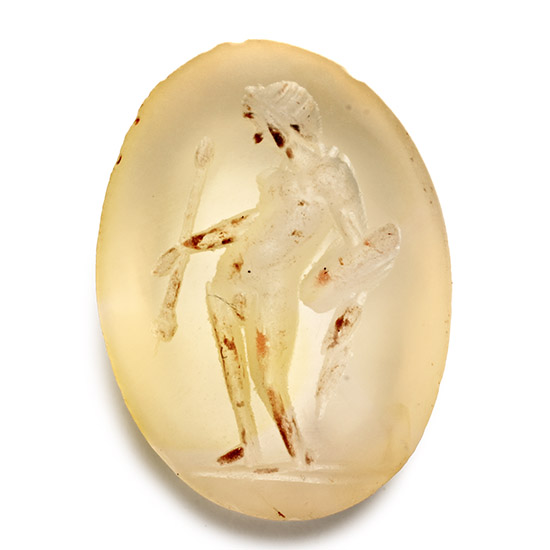
Roman Chalcedony Gemstone with Nude Male
2nd century A.D.Estimate: £400 - 600 (‡+bp*)
Opening Bid: £180
Oval with an engraved standing nude god in contrapposto facing left, holding a short sceptre and a shield. 0.88 grams, 15 mm
Ex London, UK, art dealer, 1985-1990. with Bonhams, 1 May 2008, no.309 (part).
