
Loading, please wait...
LOT 0135
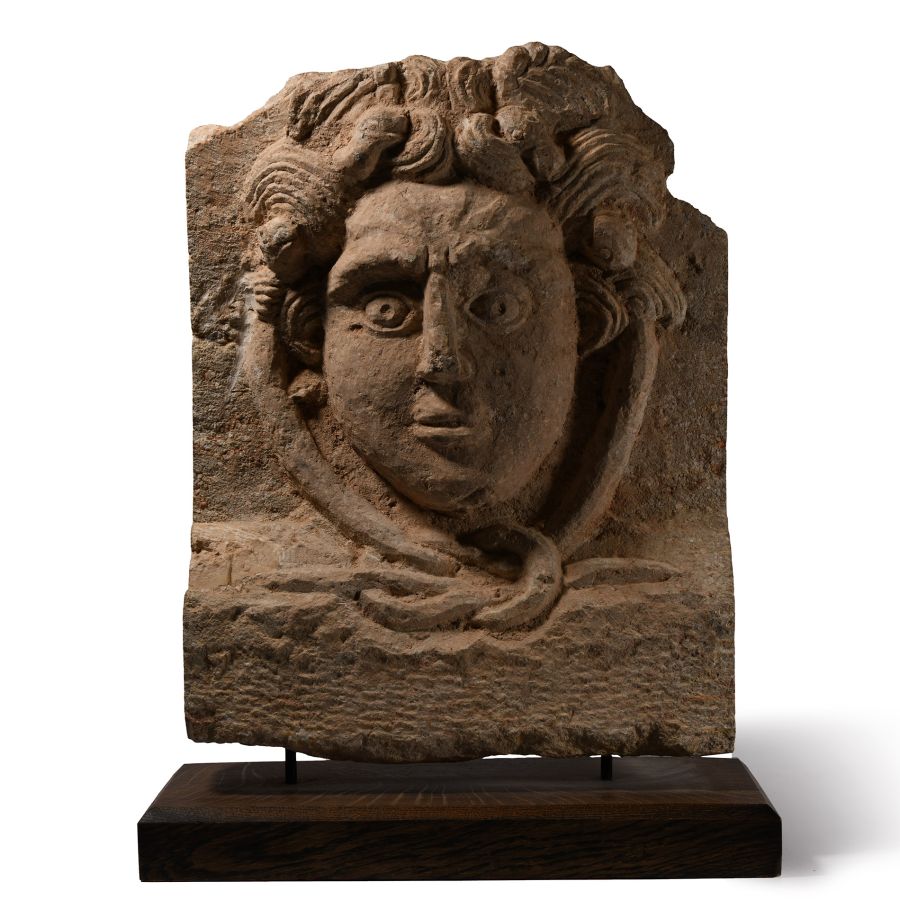
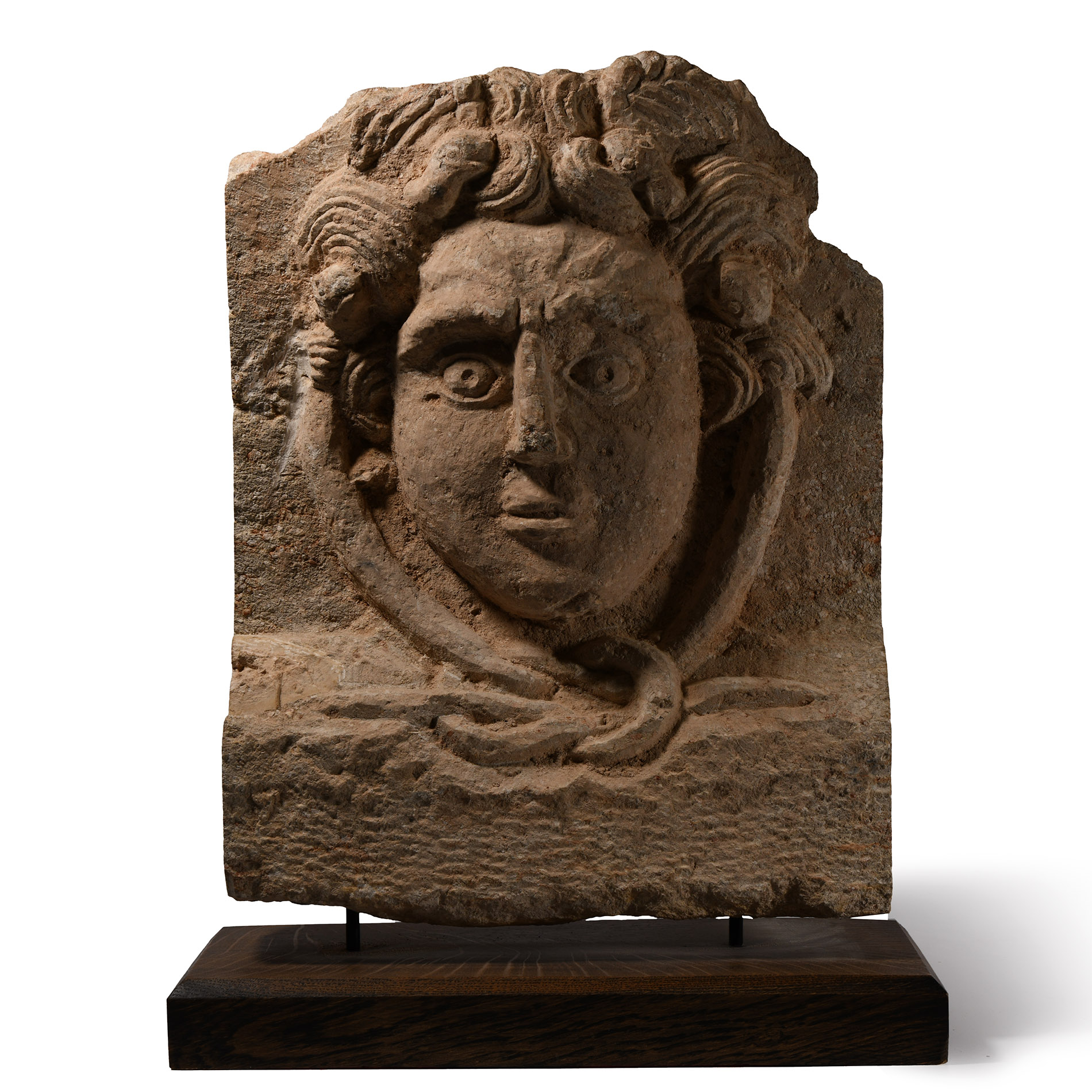
Eastern Roman Stone Relief of Medusa
2ND-3RD CENTURY A.D.
21 in. (33.1 kg total, 53 cm including stand).
With a ledge to the base, carved high-relief mask of Medusa with complex banded hairstyle with diadem to the brow, lateral tresses framing the face developing to serpents forming a 'Hercules knot' beneath the chin; the face with deep-set eyes beneath a heavy brow, prominent nose above pursed lip; the base keyed to accept a plaster overlay; mounted on a custom-made stand.
ProvenanceEx P.A., Hertfordshire, UK, specialist collection of Greek art, 1980-1990s.
LiteratureCf. similar in the Metropolitan Museum of Art, New York, under accession number 20.215.
CONDITIONTimeLine Auctions follows a vetting process to ensure the authenticity and legality of all items, reinforcing our commitment to integrity and responsible trading. Each antiquity, antique, and coin lot undergoes thorough examination by a vetting committee of at least ten external specialists, professional trade association members, scientists, and archaeologists: Our Vetting Process
AUCTIONS:
TimeLine is a leading auction house specialising in antiquities, ancient art, collectables, natural history, coins, medals, and books. Our auctions offer museums, collectors, historians, and enthusiasts the opportunity to acquire unique and historically significant pieces.
-
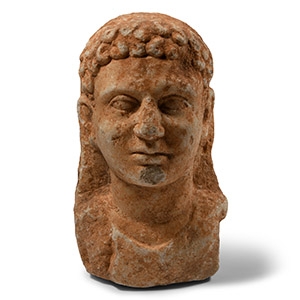
Roman Marble Bust of a Kouros
Circa 1st century A.D.Estimate: £3,500 - 4,500 (+bp*)
Opening Bid: £1,750
Carved in the half-round as a bust of a kouros youth with soft features and tiered hair hanging in hanks to the sides of the clean-shaven face; flat to the reverse. 4.1 kg, 22 cm high
Ex Paris collection. French gallery, Paris, 1990-2000s. This lot has been checked against the Interpol Database of stolen works of art and is accompanied by search certificate no.11959-209638. -
.jpg)
Roman Mercury Gemstone
Circa 2nd century A.D.Sold for (Inc. bp): £715
With intaglio figure of Mercury seated on a throne with coin-purse and caduceus, on a baseline; supplied with a museum-quality impression. 1.73 grams, 18 mm
From the collection of a Swiss gentleman formed in Europe from 1970-1980s; thence by descent from the family in London. -
.jpg)
Roman Carnelian Gemstone with Cock Fight
Circa 2nd century A.D.Sold for (Inc. bp): £624
With two cockerels fighting beneath a starburst, all on a baseline; supplied with a museum-quality impression. 1.11 grams, 16 mm
From the collection of a Swiss gentleman formed in Europe from 1970-1980s; thence by descent from the family in London.
